Blue Hydrogen Production
Blue Hydrogen Production
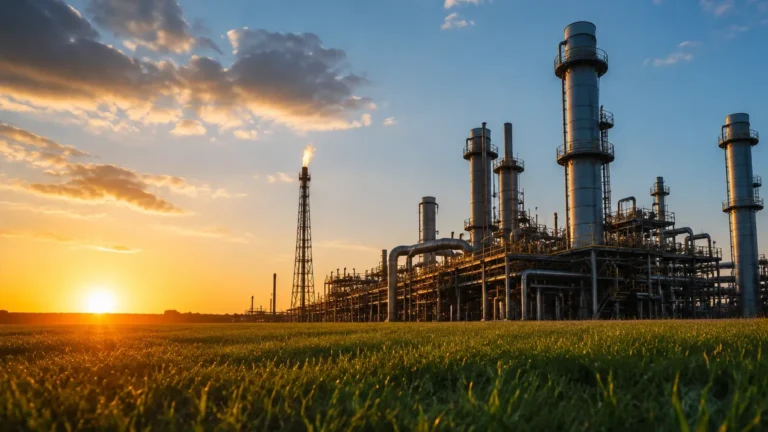
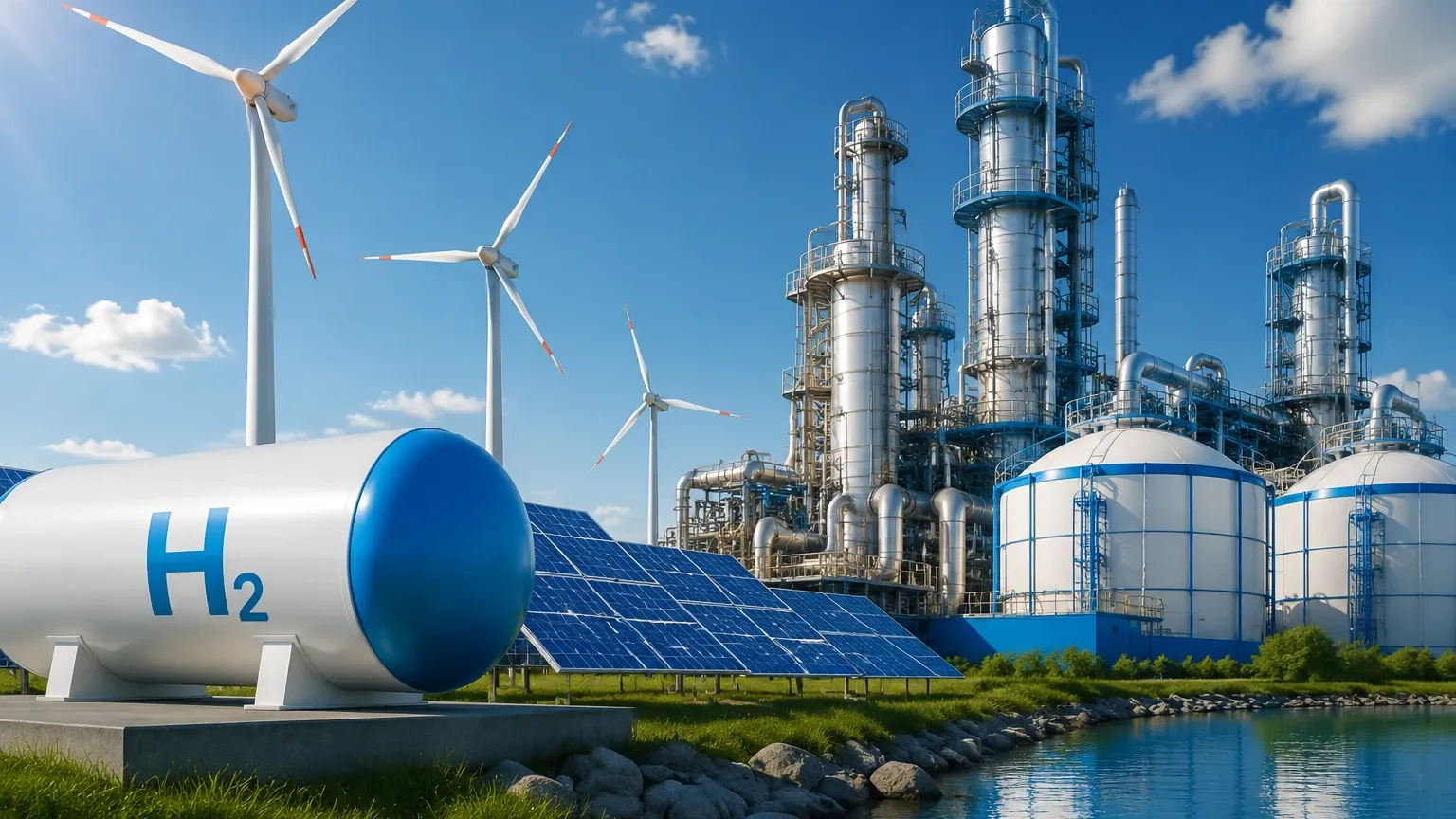
Blue hydrogen production represents a critical bridge in the global energy transition, offering a method to scale up hydrogen capacity while significantly reducing the carbon footprint of traditional industrial processes. Unlike green hydrogen, which relies on electrolysis powered by renewable energy, blue hydrogen is produced from fossil fuels—primarily natural gas—integrated with Carbon Capture and Storage (CCS) technology. For process engineers and plant operators, the success of a blue hydrogen facility depends on the precise control of complex chemical reactions, high-pressure separations, and the management of captured CO2.
In these high-stakes environments, accurate level measurement is not merely a matter of inventory management; it is a fundamental requirement for safety, efficiency, and environmental compliance. Companies like Welk provide specialized industrial level measurement instruments designed to withstand the rigorous demands of the hydrogen economy. Understanding the interplay between production technologies and instrumentation is essential for optimizing any blue hydrogen project.
Understanding Blue Hydrogen Production Technologies
The core of blue hydrogen production involves the conversion of methane (CH4) into hydrogen (H2) and carbon dioxide (CO2). The "blue" designation is earned when the resulting CO2 is captured and sequestered underground or utilized in industrial applications, rather than being released into the atmosphere.
Steam Methane Reforming (SMR)
SMR is currently the most widely used technology for hydrogen production. In this process, natural gas is reacted with high-temperature steam (700°C to 1,000°C) under pressure in the presence of a catalyst. This produces syngas—a mixture of hydrogen and carbon monoxide. A subsequent "water-gas shift" reaction converts the carbon monoxide and additional steam into more hydrogen and CO2.
Autothermal Reforming (ATR)
ATR is gaining traction for large-scale blue hydrogen production. It combines SMR with partial oxidation. By using oxygen and steam to react with methane, the process generates its own heat, making it more thermally efficient and easier to integrate with carbon capture technologies, as the flue gas has a higher concentration of CO2.
Carbon Capture and Storage (CCS)
To transition from grey to blue hydrogen, the facility must capture 90% to 99% of the produced CO2. This is typically achieved through amine scrubbing, where an adsorbent liquid (amine) reacts with the CO2 in an absorption tower. The CO2 is later stripped from the amine, compressed into a supercritical fluid, and transported for storage.
The Role of Level Measurement in Blue Hydrogen Facilities
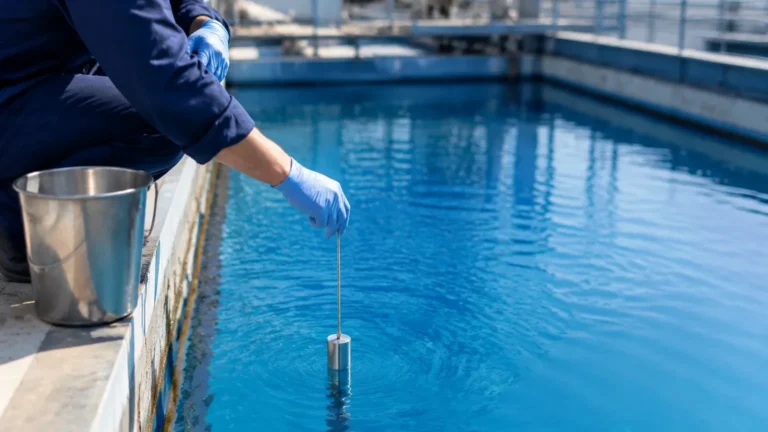
Every stage of blue hydrogen production involves fluid handling, from raw feedstock storage to the complex separation of gases and liquids. Level measurement instruments ensure that reactors do not overflow, pumps do not run dry, and separators maintain the correct interface between different phases.
In the context of CCS, level control is vital in the absorption and stripping columns. If the level of the amine solvent is too high, it can lead to "flooding," where the gas flow is restricted, reducing capture efficiency. Conversely, a level that is too low can result in gas blow-through, damaging downstream equipment. For a comprehensive overview of available instrumentation for these tasks, engineers often consult the Main Page of specialized manufacturers to match sensor specifications with process requirements.
Principles of Level Measurement for Hydrogen Applications
Before selecting a specific device, it is essential to understand the physical principles that govern level measurement in industrial settings. Each technology has distinct advantages and limitations depending on the pressure, temperature, and chemical composition of the medium.
Radar Level Measurement (ToF)
Radar level meters operate on the Time of Flight (ToF) principle. The device emits a high-frequency electromagnetic pulse (typically in the 80GHz range) that travels to the surface of the medium and reflects back. By measuring the time interval between emission and reception, the meter calculates the distance to the product surface.
* Advantage: Non-contact measurement is unaffected by changes in pressure, temperature, or gas density, making it ideal for high-pressure hydrogen reactors.
* Limitation: Requires a clear line of sight and can be affected by heavy foam on the liquid surface.
Ultrasonic Level Measurement
Ultrasonic sensors use sound waves instead of electromagnetic pulses. The sensor calculates the distance based on the time it takes for the sound wave to bounce off the surface and return.
* Advantage: Cost-effective for atmospheric storage tanks and water treatment systems within the plant.
* Limitation: The speed of sound varies significantly with gas composition and temperature. In a hydrogen-rich atmosphere, ultrasonic waves travel much faster than in air, leading to significant errors unless the device is specifically calibrated for the gas mixture.
Hydrostatic Level Measurement
This method measures the pressure exerted by a liquid column. The pressure at the bottom of a tank is directly proportional to the height of the liquid and its density ($P = \rho gh$).
* Advantage: Simple to install and highly reliable for vented tanks.
* Limitation: In pressurized blue hydrogen vessels, a differential pressure (DP) transmitter is required to subtract the top-side gas pressure from the total bottom pressure. Changes in liquid density due to temperature fluctuations must also be compensated.
Magnetic Level Gauges
Magnetic level gauges utilize a float containing a permanent magnet that moves with the liquid level inside a bypass chamber. This magnet flips external flags or interacts with a magnetostrictive sensor to provide local and remote indication.
* Advantage: Provides a clear visual redundant check and is highly robust for high-pressure separators.
* Limitation: Limited to liquids with specific gravity ranges that can support a float.
Selecting the Right Level Instrument for Blue Hydrogen Production
Choosing the correct instrument requires a detailed analysis of the process conditions. The following table provides a general selection guide for common applications in a blue hydrogen facility.
| Application | Medium | Typical Conditions | Recommended Technology |
| :— | :— | :— | :— |
| SMR Steam Drum | Boiling Water/Steam | 100+ bar, 300°C+ | Guided Wave Radar or DP Transmitter |
| Amine Absorber | Amine Solution/CO2 | 30-70 bar, 40-60°C | Non-contact Radar (80GHz) |
| Flash Tank | Condensate/Gas | Variable Pressure | Magnetic Level Gauge with Transmitter |
| H2 Storage Tank | Liquid Hydrogen | -253°C, Cryogenic | Specialized Cryogenic DP or Radar |
| Feedstock Storage | Natural Gas (LNG) | Cryogenic/Atmospheric | Radar or Ultrasonic (for non-pressurized) |
Critical Installation and Safety Considerations
In blue hydrogen production, safety is the paramount concern. Hydrogen is a highly flammable gas with a wide flammability range and a low ignition energy. Furthermore, the presence of CO2 and various chemical solvents introduces corrosion risks.
1. Hazardous Area Certification: All electronic level meters must carry appropriate certifications, such as ATEX or IECEx, for use in Zone 0 or Zone 1 environments. Welk ensures that its industrial sensors meet these international safety standards.
2. Material Compatibility: Hydrogen embrittlement is a significant risk for metallic components. Wetted parts of level transmitters, such as diaphragms and probes, should be constructed from 316L Stainless Steel, Hastelloy, or Monel to prevent cracking and failure.
3. Mounting Positions: For radar and ultrasonic sensors, avoid mounting the device near the tank inlet to prevent interference from turbulence. Ensure the beam path is clear of internal obstructions like heating coils or agitators.
4. Redundancy: For critical safety functions (e.g., preventing a separator overflow), it is best practice to use two different measurement technologies (e.g., Radar and Magnetic Level Gauge) to provide diverse redundancy.
Challenges and Limitations in Hydrogen Environments
While modern instrumentation is highly advanced, blue hydrogen production presents unique challenges that engineers must account for:
* Gas Stratification: In large storage vessels, the gas composition can vary at different heights, affecting the dielectric constant (for radar) or sound speed (for ultrasonic). High-frequency 80GHz radar is less sensitive to these variations than lower-frequency models.
* High Pressure and Temperature: The SMR process operates at extremes. Instruments must be rated for these conditions, often requiring cooling fins or remote seals to protect the electronics from heat.
* Foaming in CCS: Amine solvents are prone to foaming, which can absorb radar signals or cause false echoes. Selecting a radar meter with advanced signal processing algorithms is necessary to filter out noise caused by foam.
Frequently Asked Questions (FAQ)
Q: Why is 80GHz radar preferred over 26GHz for blue hydrogen applications?
A: 80GHz radar has a narrower beam angle and a higher dynamic range. This allows it to focus better in narrow vessels with internal obstructions and provides a more reliable reflection from low-dielectric liquids like liquid hydrogen or hydrocarbons.
Q: Can hydrostatic transmitters be used for liquid hydrogen?
A: While theoretically possible, the extremely low density of liquid hydrogen (approx. 70 kg/m³) makes hydrostatic measurement very difficult, as the pressure signal is very weak. Radar or capacitance-based sensors are generally preferred for cryogenic hydrogen.
Q: How often should level meters in a blue hydrogen plant be calibrated?
A: Calibration frequency depends on the criticality of the loop. For safety-instrumented systems (SIS), annual proof testing is common. Modern digital sensors with self-diagnostic capabilities can often extend the intervals between physical calibrations.
Conclusion
Successful blue hydrogen production relies on the seamless integration of chemical engineering and precision instrumentation. By selecting the appropriate level measurement technology—whether it be advanced 80GHz radar for carbon capture towers or robust magnetic gauges for separators—operators can ensure the safety and efficiency of their facilities. As the industry evolves, the demand for reliable, accurate, and cost-effective solutions will only grow. For those seeking to optimize their measurement loops, reviewing the technical capabilities of professional manufacturers like Welk is a vital step in the engineering process. For more information on product specifications and application support, visit the Main Page to explore the full range of level measurement solutions.