Coriolis Mass Flowmeter
Coriolis Mass Flowmeter
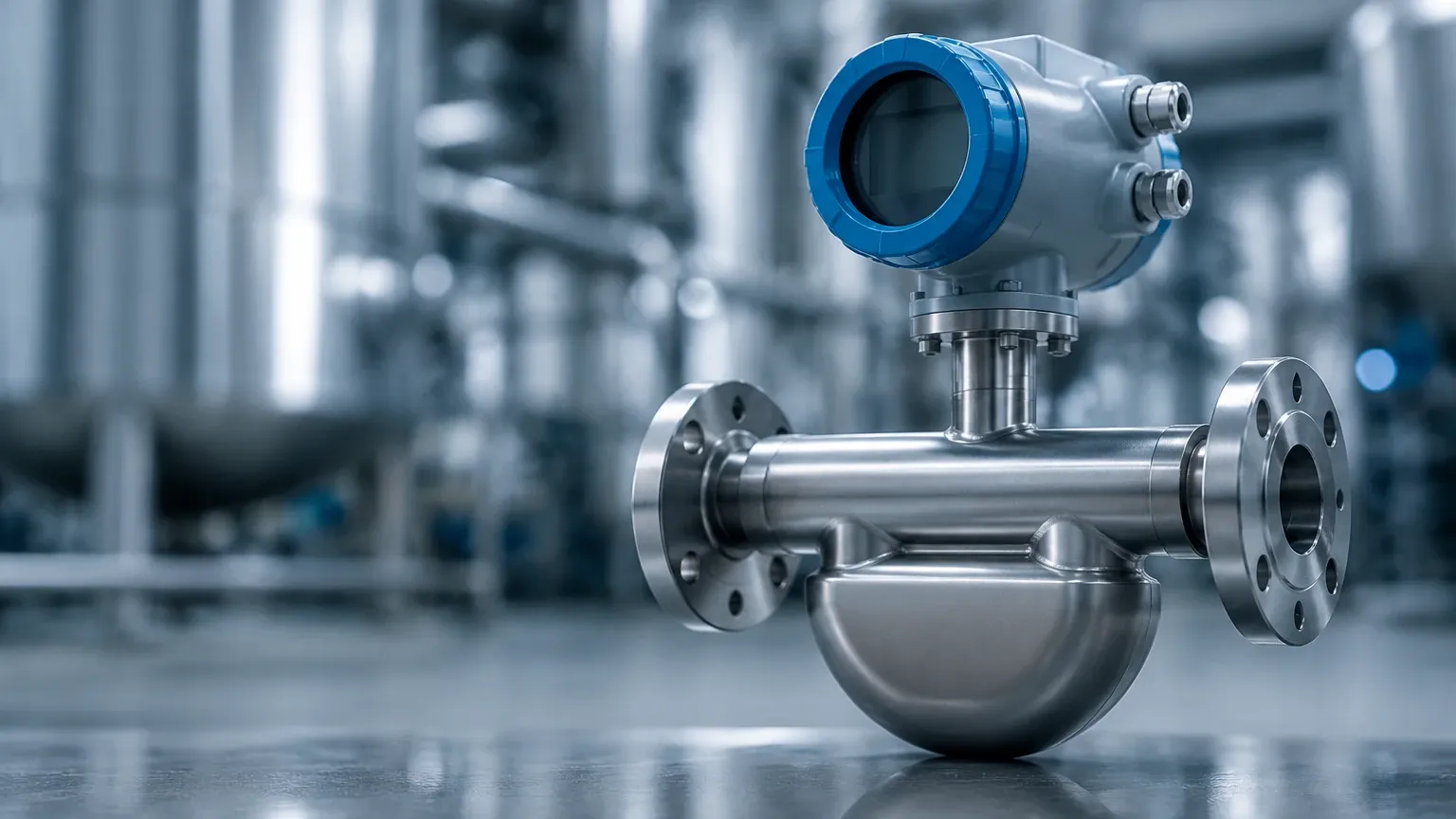
In the landscape of industrial process control, the Coriolis mass flowmeter stands as one of the most versatile and accurate instruments available. Unlike volumetric flowmeters, which require compensations for temperature and pressure to calculate mass, a Coriolis meter measures mass flow directly. This capability is critical in industries ranging from chemical processing and oil and gas to food and beverage production, where precise mass balance is essential for quality control and fiscal billing.
While level measurement technologies—such as those found on the Welk Main Page—provide critical data regarding vessel inventory, mass flowmeters offer the dynamic data necessary to monitor the movement of materials between those vessels. Understanding the engineering principles, selection criteria, and installation requirements of these instruments is vital for any process engineer aiming to optimize system performance.
Understanding the Coriolis Measurement Principle
The operation of a Coriolis mass flowmeter is based on the principles of classical mechanics, specifically the Coriolis effect. This effect describes the inertial force acting on an object that is in motion within a frame of reference that is rotating or vibrating.
The Vibrating Tube Mechanism
Inside the flowmeter, one or two measuring tubes are induced to vibrate at their natural resonant frequency by an electromagnetic drive coil. When there is no fluid flowing through the tubes, the tubes vibrate uniformly. Sensors (pick-offs) located at the inlet and outlet sections of the tube record this vibration as a symmetrical sine wave.
The Coriolis Force and Phase Shift
As fluid enters the meter and moves through the vibrating tube, it is forced to take on the vertical momentum of the vibrating tube. On the inlet side, the fluid resists this upward motion, pushing down on the tube. On the outlet side, the fluid has already gained momentum and resists the slowing motion of the tube, pushing up. This opposing force causes the tube to twist slightly.
This twisting motion results in a "phase shift" or a time difference ($Δt$) between the sine waves recorded by the inlet and outlet sensors. The magnitude of this phase shift is directly proportional to the mass flow rate of the fluid. Because mass is an intrinsic property that does not change with temperature or pressure, the measurement remains highly accurate regardless of changing process conditions.
Multivariable Measurement
Beyond mass flow, Coriolis meters are inherently multivariable instruments:
* Density: The resonant frequency at which the tubes vibrate depends on the total mass of the tube and the fluid inside it. By measuring this frequency, the meter can calculate the fluid's density in real-time.
* Temperature: Since the elasticity of the measuring tubes changes with temperature, an internal RTD (Resistance Temperature Detector) monitors the tube temperature to provide compensation and output a temperature reading.
* Volume Flow: By dividing the measured mass flow by the measured density, the meter can provide an accurate volumetric flow rate.
Key Evaluation Criteria for Mass Flow Selection
Selecting the correct Coriolis mass flowmeter requires a detailed analysis of the process fluid and the environmental conditions. Engineers should prioritize the following criteria:
1. Accuracy and Repeatability
Coriolis meters are known for exceptional accuracy, often reaching ±0.1% or even ±0.05% of the flow rate for liquids. For gas applications, accuracy typically ranges from ±0.25% to ±0.5%. Repeatability is usually better than 0.05%.
2. Fluid Properties and Material Compatibility
The wetted parts of the meter must be compatible with the process fluid. Common materials include 316L stainless steel for general applications, while Hastelloy® C-22 or Tantalum are used for highly corrosive chemicals. Additionally, the viscosity of the fluid must be considered; while Coriolis meters handle high-viscosity fluids well, the resulting pressure drop must be calculated.
3. Flow Range and Turndown Ratio
The turndown ratio (the ratio of maximum to minimum flow) for Coriolis meters is typically very high, often 100:1 or better. However, accuracy tends to degrade at the very low end of the flow range as the signal-to-noise ratio decreases.
4. Pressure Rating and Pressure Drop
Because the fluid must pass through relatively narrow measuring tubes, Coriolis meters can introduce a significant pressure drop (often between 0.5 bar and 1.5 bar depending on flow velocity). It is essential to ensure that the system's pump capacity can handle this loss and that the fluid pressure remains above the vapor pressure to prevent cavitation.
Practical Selection Table for Industrial Applications
The following table compares the two primary tube geometries used in modern Coriolis mass flowmeters.
| Feature | U-Shaped (Bent) Tube Design | Straight Tube Design |
| :— | :— | :— |
| Sensitivity | High; larger phase shift for lower flows. | Lower; requires more sophisticated electronics. |
| Pressure Drop | Generally higher due to the bends. | Minimal; similar to a length of process pipe. |
| Cleanability | Harder to drain; may retain residue. | Excellent; ideal for CIP (Clean-in-Place). |
| Installation Space | Requires larger vertical or horizontal footprint. | Compact; fits easily into existing pipelines. |
| Solids Handling | Risk of erosion or buildup in the bends. | Superior performance with slurries and solids. |
| Vibration Resistance | Generally more susceptible to pipe vibration. | More robust against external mechanical noise. |
Installation Considerations and Best Practices
Proper installation is the most critical factor in ensuring the long-term reliability and accuracy of a Coriolis mass flowmeter. Unlike many other flow technologies, Coriolis meters do not require long straight runs of pipe upstream or downstream, but they are sensitive to mechanical stress and vibration.
Mounting and Support
The meter should be supported by the process piping, but the piping itself must be rigidly anchored. High-performance meters should be installed using heavy-duty brackets to prevent the transmission of external vibrations from pumps or motors into the measuring tubes. The meter should never be used to support the weight of the pipe.
Orientation for Different Media
* Liquids: The preferred orientation is often the "U" pointing downward (for bent tubes) or vertical with upward flow. This ensures the tubes remain full and prevents gas bubbles from becoming trapped, which can cause measurement errors.
* Gases: The "U" should point upward to allow any condensed liquids to drain out of the tubes by gravity.
* Slurries: Vertical installation with upward flow is recommended to prevent solids from settling in the tubes.
Zero Calibration (Zeroing)
After installation and once the meter is filled with the process fluid at operating temperature and pressure, a "zero calibration" must be performed. This involves stopping the flow completely (using shut-off valves) and allowing the transmitter to calibrate the zero-flow signal. This step compensates for any mechanical stresses introduced during installation.
Limitations and Common Risks in Process Environments
While highly capable, Coriolis mass flowmeters are not universal solutions. Engineers must be aware of specific limitations:
1. Entrained Gas (Two-Phase Flow): Small amounts of gas in a liquid stream (or liquid droplets in a gas stream) can dampen the vibration of the tubes. This leads to "slug flow" conditions where the meter may lose its drive signal or report highly inaccurate data. Advanced digital signal processing (DSP) can mitigate this, but it remains a primary challenge.
2. Initial Capital Cost: Coriolis meters are significantly more expensive than electromagnetic or vortex flowmeters. The investment is usually justified by the reduction in maintenance and the high accuracy, but it may be prohibitive for non-critical water lines.
3. Mechanical Vibration: If the process plant has significant background vibration at a frequency near the resonant frequency of the meter tubes, it can cause interference. Modern meters use dual-tube designs to cancel out common-mode noise, but extreme cases still require vibration isolation.
4. Size Constraints: Large-diameter Coriolis meters (above 250 mm or 10 inches) become extremely heavy and bulky, making them difficult to install compared to other technologies.
Integrating Mass Flow with Level Measurement Systems
In a comprehensive process control strategy, mass flow and level measurement work in tandem. For instance, in a chemical reactor, a radar level meter provides the primary safety and inventory data, while a Coriolis mass flowmeter measures the precise amount of catalyst added to the batch.
By comparing the mass flow entering a tank with the change in level (converted to mass via density and tank geometry), operators can perform a "mass balance" check. Discrepancies between these two readings can alert maintenance teams to potential leaks, sensor drift, or buildup on the tank walls. For facilities looking to integrate these technologies, reviewing the range of sensors on the Main Page can help in selecting the right level instruments to complement a mass flow system.
Frequently Asked Questions (FAQs)
Q: Can a Coriolis mass flowmeter measure non-conductive liquids?
A: Yes. Unlike electromagnetic flowmeters, Coriolis meters do not rely on electrical conductivity. They can measure oils, deionized water, and various hydrocarbons with high precision.
Q: How often does a Coriolis meter require recalibration?
A: Because there are no moving parts to wear out in the fluid stream, the calibration of a Coriolis meter is exceptionally stable. Many users find that the meter maintains its accuracy for several years, though annual "zero checks" are recommended.
Q: Does the viscosity of the fluid affect the accuracy?
A: In general, no. Coriolis meters are largely independent of viscosity. However, extremely high viscosity will increase the pressure drop across the meter, which must be accounted for during the system design phase.
Q: What is the maximum temperature a Coriolis meter can handle?
A: Standard models typically handle up to 200°C (392°F), but specialized high-temperature versions are available that can operate at up to 350°C (662°F) or higher using remote electronics to protect the transmitter from heat.
Q: Can it measure the flow of steam?
A: While Coriolis meters can measure gases, they are generally not used for saturated steam due to the high velocities and the potential for water hammer/droplets, which can damage the tubes or cause measurement instability. Vortex flowmeters are usually preferred for steam applications.