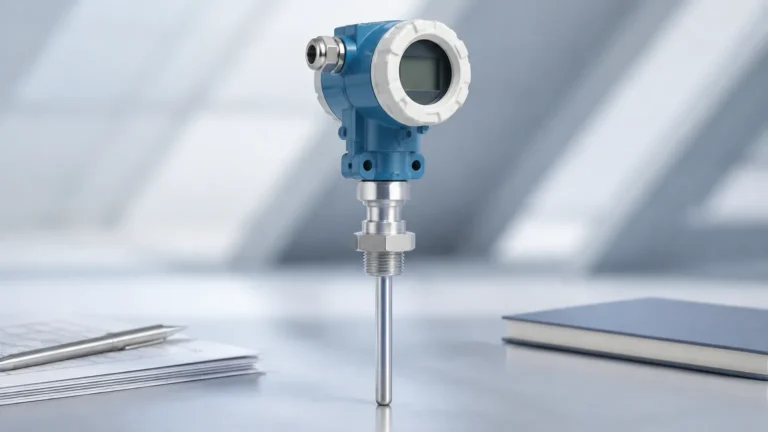
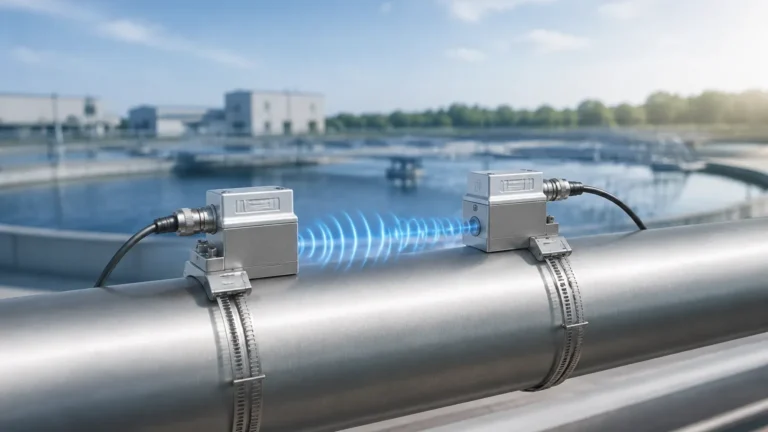
Cell Density Sensor
Cell Density Sensor
In modern bioprocessing, pharmaceutical manufacturing, and advanced wastewater treatment, the ability to monitor biological growth in real-time is critical for process optimization. A cell density sensor serves as a primary analytical tool for determining the concentration of microorganisms, mammalian cells, or plant cells within a bioreactor or fermenter. Unlike manual sampling, which is time-consuming and introduces contamination risks, these sensors provide continuous data streams that allow for automated feeding strategies, precise harvest timing, and improved batch-to-batch consistency.
As industrial automation evolves, the integration of specialized analytical instruments like the cell density sensor with traditional process controls—such as those found on our Main Page—enables a holistic approach to facility management. Understanding the underlying physics and application constraints of these sensors is the first step for any process engineer looking to implement an automated monitoring solution.
Measurement Principles of Cell Density Sensors
To select the correct instrument, one must first understand how different sensors interact with cellular matter. There are two primary technologies used in industrial environments: Optical Density (Turbidity) and Dielectric Spectroscopy (Capacitance).
Optical Density (OD) and Turbidity
Optical cell density sensors typically operate in the Near-Infrared (NIR) spectrum, usually around 840 nm to 910 nm. This wavelength is chosen because it minimizes interference from the color of the media while remaining sensitive to the physical presence of cells.
* Transmittance/Absorbance: The sensor emits a light beam across a fixed gap. As the cell concentration increases, more light is absorbed or scattered, reducing the amount of light reaching the detector. This follows the Beer-Lambert law at low concentrations but becomes non-linear at higher densities.
* Backscatter: For high-density cultures, backscatter sensors measure the light reflected back at an angle (often 120 to 180 degrees). This method is less prone to the "saturation" effects seen in transmittance sensors when dealing with extremely opaque broths.
Optical sensors measure total cell density, meaning they cannot distinguish between viable (living) cells and dead cells, or even non-biological debris of a similar size.
Dielectric Spectroscopy (Capacitance)
Capacitance-based measurement is the industry standard for determining viable cell density. This principle relies on the fact that living cells have intact, non-conducting plasma membranes that act as tiny capacitors when exposed to an alternating electric field.
When a low-frequency radio signal is applied through the sensor probes, ions in the medium move toward the electrodes, but ions inside the living cells are trapped by the cell membrane, creating a charge separation (polarization). The resulting capacitance is directly proportional to the volume of living cells (biovolume). Dead cells with ruptured membranes do not polarize, and therefore do not contribute to the signal. This provides a real-time measurement of the active biomass.
Key Evaluation Criteria for Selection
Choosing a cell density sensor requires a balance between the biological requirements of the culture and the mechanical requirements of the vessel. Engineers should evaluate the following criteria:
1. Measurement Goal: If the objective is simply to monitor the start of a growth phase or the clarity of a filtrate, a simple optical sensor is often sufficient. If the goal is to control nutrient feeding based on metabolic activity, a capacitance sensor is required to track viable biomass.
2. Cell Type and Size: Optical sensors are sensitive to changes in cell morphology (size and shape). Capacitance sensors are generally more robust across different cell types but require different frequency settings for bacteria (small) versus mammalian cells (large).
3. Sterilization Requirements: Most industrial bioprocesses require Steam-in-Place (SIP) or Autoclave sterilization. Ensure the sensor head and internal electronics are rated for temperatures up to 135°C (275°F) and pressures up to 3 bar (43.5 psi).
4. Vessel Scale: For benchtop R&D, 12 mm diameter probes are standard. For industrial-scale stainless steel fermenters, 25 mm Ingold-style ports are more common to provide the necessary mechanical stability.
Practical Selection Table
| Feature | Optical (NIR) Sensor | Capacitance (Viable) Sensor |
| :— | :— | :— |
| Primary Measurement | Total Cell Density / Turbidity | Viable Cell Volume (Biomass) |
| Sensitivity to Dead Cells | High (Included in total) | None (Ignores dead cells) |
| Sensitivity to Bubbles | High (Can cause noise) | Low (Bubbles have low capacitance) |
| Linear Range | Best at low to medium density | Excellent at high density |
| Maintenance | Low (Keep optical window clean) | Moderate (Electrode conditioning) |
| Common Applications | Wastewater, Basic Fermentation | Monoclonal Antibodies, Vaccines |
| Cost | Generally lower | Higher due to complex electronics |
Installation Considerations
Proper installation is paramount to ensuring the longevity and accuracy of a cell density sensor. Because these sensors are often used in pressurized vessels alongside other instrumentation, such as radar or ultrasonic level meters, mechanical compatibility must be verified.
Probe Placement
The sensor should be installed in a location with high turbulence to prevent the build-up of cells (fouling) on the sensing surface. However, it should not be placed directly in the path of the sparger (air inlet), as excessive gas bubbles can interfere with optical signals. In large-scale vessels, the probe should be submerged at a depth that remains covered even at the minimum working volume of the batch.
Port Compatibility
Standard industrial ports include:
* PG13.5: Common for 12 mm probes in smaller vessels.
* Ingold (25mm): The standard for large-scale industrial fermenters, allowing for a robust seal using an O-ring and a safety nut.
* Tri-Clamp: Often used in pharmaceutical applications for sanitary, easy-to-remove connections.
Signal Integration
Modern sensors typically output a 4-20mA analog signal or use digital protocols like Modbus RTU or HART. When integrating these into a control system, ensure the cable shielding is grounded to prevent electromagnetic interference (EMI) from large motors or agitators, which is especially critical for the sensitive low-voltage signals in capacitance probes.
Limitations and Process Challenges
While highly effective, the cell density sensor is not a "plug-and-play" device for every application. Engineers must be aware of several physical limitations:
* Media Interference: High concentrations of certain salts or complex media components (like yeast extract) can shift the baseline of the sensor. A "zeroing" step in the sterile medium before inoculation is usually required.
* Fouling (Biofilm): Over long fermentation runs (e.g., 14-21 days), cells may adhere to the sensor face. Some optical sensors use sapphire windows to reduce adhesion, while others may require mechanical wipers in non-sterile applications like wastewater.
* Metabolic Shifts: In capacitance sensors, changes in the internal conductivity of the cells (due to extreme stress or metabolic shifts) can occasionally alter the correlation between capacitance and cell count. Regular offline verification via manual sampling is still recommended as a quality control measure.
Integration with Level and Process Control
In a complete industrial setup, cell density is just one variable. For instance, as cell density increases, the volume of the culture may change due to the addition of feeds and base (for pH control). Reliable level measurement, such as the solutions discussed on our Main Page, ensures that the cell density sensor remains fully submerged and that the total biomass (Density × Volume) can be calculated accurately.
Furthermore, combining density data with dissolved oxygen (DO) and pH readings allows for sophisticated "feedback loops." For example, if the cell density sensor detects a plateau in growth while oxygen levels remain high, it may indicate a nutrient limitation, triggering an automated feed pump.
Frequently Asked Questions (FAQ)
Q: How often does a cell density sensor need calibration?
A: For most optical sensors, a factory calibration is stable for several months, but a "media offset" should be performed before every batch. Capacitance sensors are typically pre-calibrated for biovolume, but users should perform a correlation study to map the capacitance (pF/cm) to their specific cell line's dry weight or cell count.
Q: Can these sensors be used in hazardous areas?
A: Yes, many industrial models are available with ATEX or IECEx certifications for use in environments where flammable solvents or gases may be present, common in certain chemical synthesis or biofuel applications.
Q: What is the minimum detectable cell density?
A: This depends on the technology. Optical sensors can detect very low concentrations (e.g., 0.1 g/L or 10^5 cells/mL). Capacitance sensors generally require a higher minimum biomass to generate a stable signal, typically around 1 g/L or 10^6 mammalian cells/mL.
Q: Do bubbles affect the reading?
A: Optical sensors are significantly affected by bubbles, as they scatter light similarly to cells. Capacitance sensors are much more robust against aeration because gas bubbles have a very low dielectric constant compared to biological cells.
Summary of Technical Specifications
When drafting a procurement specification for a cell density sensor, ensure the following technical parameters are defined:
* Wetted Materials: Typically 316L Stainless Steel, PEEK, or Glass.
* Surface Finish: Ra < 0.4 µm or 0.8 µm for sanitary applications.
* Temperature Range: 0°C to 135°C for SIP compatibility.
* Pressure Rating: Typically up to 6 bar (87 psi) for standard vessels.
* Output: 4-20 mA, Modbus, or Profibus.
By carefully selecting a sensor based on the measurement principle—either total density via NIR or viable density via capacitance—and ensuring proper mechanical installation, facilities can significantly reduce the uncertainty in their biological processes. This leads to higher yields, lower labor costs, and a more robust path to industrial scale-up.