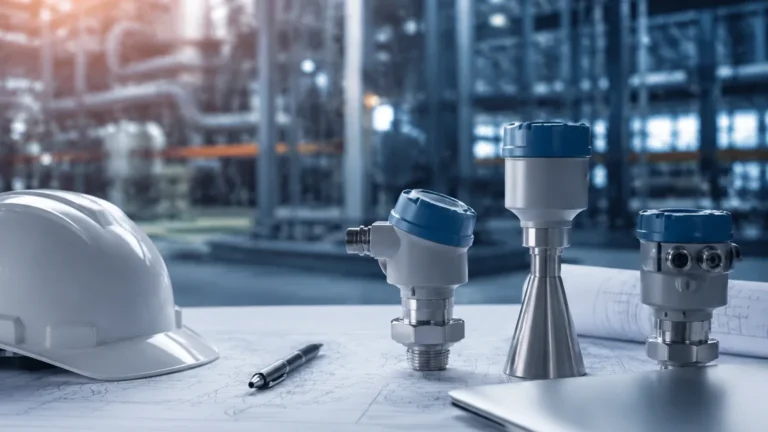
Cfia Rennes Salon Agroalimentaire Emballage
Cfia Rennes Salon Agroalimentaire Emballage
The CFIA (Carrefour des Fournisseurs de l'Industrie Agroalimentaire) in Rennes stands as a cornerstone event for the European food processing and packaging sectors. As a premier "salon agroalimentaire emballage," it brings together thousands of professionals to explore the intersection of raw ingredients, process equipment, and innovative packaging solutions. For engineers and plant managers, the event highlights a critical component of modern production: the integration of precise instrumentation to ensure food safety, minimize waste, and maintain the rigorous hygiene standards required by the industry.
In the context of food processing, level measurement is not merely a logistical necessity but a fundamental requirement for process control. Whether managing bulk ingredients in silos or monitoring finished products in filling machines, selecting the right level sensor is vital. This guide explores the technical landscape of level measurement technologies commonly showcased at events like CFIA Rennes, providing a practical engineering reference for the food and beverage industry.
The Role of Level Measurement in the Food Industry
Food and beverage production environments are among the most demanding for industrial instrumentation. Sensors must withstand Clean-in-Place (CIP) and Sterilization-in-Place (SIP) cycles, which involve high-temperature caustic washes and steam. Furthermore, the physical properties of the media—ranging from viscous syrups and foaming liquids to abrasive grains—require specific measurement principles to ensure long-term reliability.
At a major exhibition like CFIA Rennes, the focus often shifts toward automation and the digitalization of the supply chain. High-accuracy level sensors provide the data necessary for real-time inventory management and automated batching, which are essential for the "Emballage" (packaging) stage where precision directly impacts profitability.
Core Measurement Principles
Before selecting a device from a Main Page of technical specifications, it is essential to understand the underlying physics of different level measurement technologies. Each principle offers distinct advantages depending on the tank geometry and material properties.
1. Radar Level Measurement (Non-Contact)
Radar level meters, particularly those operating at high frequencies such as 80 GHz, have become the gold standard in food processing. They emit microwave pulses that reflect off the surface of the medium. The time-of-flight is used to calculate the distance.
* Advantages: Unaffected by dust, steam, or pressure changes. High-frequency radar can penetrate foam to some extent and has a narrow beam angle, which is ideal for tanks with internal obstructions like agitators.
* Hygienic Application: Non-contact design means the sensor does not touch the product, reducing contamination risks.
2. Ultrasonic Level Sensors
Ultrasonic sensors use sound waves to detect the surface of a liquid or solid. They are a cost-effective solution for many standard applications.
* Advantages: Simple to install and maintain. No moving parts.
* Limitations: The speed of sound is affected by temperature fluctuations and the presence of heavy vapors or foam, which can attenuate the signal. They are generally best suited for stable environments like water treatment within a food plant.
3. Hydrostatic Level Transmitters
These sensors measure the pressure exerted by a liquid column at the bottom of a tank. Since pressure is proportional to the height of the liquid and its density, the level can be calculated precisely.
* Advantages: Excellent for vented tanks and deep wells. They are highly reliable for homogeneous liquids.
* Hygienic Application: Flush-mounted diaphragms prevent food particles from getting trapped, making them compatible with CIP processes.
4. Magnetic Level Gauges and Switches
Magnetic gauges provide a visual bypass indication, while level switches (such as tuning forks or float switches) provide point-level detection for overflow prevention or pump protection.
* Advantages: Highly reliable for critical safety functions. They do not require complex electronics for basic operation.
Selection Criteria for Food and Packaging Applications
Choosing the correct instrument requires a detailed analysis of the process conditions. The following table provides a comparison of the primary technologies used in the "salon agroalimentaire emballage" context.
Level Technology Selection Table
| Feature | Radar (Non-Contact) | Ultrasonic | Hydrostatic | Magnetic Gauge |
| :— | :— | :— | :— | :— |
| Accuracy | ±1 mm to ±5 mm | ±0.25% of range | ±0.1% to ±0.5% | ±5 mm to ±10 mm |
| Media Type | Liquids, Solids, Slurries | Liquids, Granules | Clean Liquids | Liquids |
| CIP/SIP Compatible | Excellent | Limited | Excellent | Good |
| Foam Sensitivity | Low (with 80GHz) | High | None | None |
| Pressure Range | Up to 40 bar+ | Atmospheric | Varies by sensor | Up to 100 bar |
| Typical Use Case | Storage silos, reactors | Water tanks, sumps | Buffer tanks, milk vats | Boiler drums, bypass |
Integration with Packaging Lines (Emballage)
In the packaging segment of CFIA Rennes, the focus is on speed and repeatability. Level sensors play a vital role in the filling process. For example, in a bottling line, a hydrostatic transmitter or a high-speed radar sensor ensures that the header tank (the reservoir feeding the filling valves) maintains a constant head pressure. This consistency is crucial for ensuring that every bottle receives the exact volume of product required by regulatory standards.
Furthermore, point-level switches are often used as redundant safety measures. If a filling machine experiences a downstream blockage, these switches can trigger an immediate emergency stop to prevent product overflow and equipment damage.

Installation and Engineering Considerations
Proper installation is as critical as the choice of technology. Engineers must consider the following factors to ensure accurate readings:
1. Nozzle Height and Diameter: For radar and ultrasonic sensors, the nozzle must not interfere with the signal beam. A nozzle that is too long or too narrow can create "ringing" or false echoes.
2. Dead Zones (Blocking Distance): Every non-contact sensor has a minimum distance it cannot measure (the dead zone). This must be accounted for in the tank design to prevent the sensor from being submerged or losing signal when the tank is full.
3. Agitators and Obstructions: If a tank contains a mixer, the sensor should be positioned to avoid the blades. Modern radar sensors use "false echo suppression" software to ignore static internal structures, but proper placement remains the first line of defense against interference.
4. Hygienic Connections: In the food industry, sensors should use standard hygienic fittings such as Tri-Clamp, DIN 11851, or Varivent. These connections ensure there are no crevices where bacteria can grow.
Limitations and Common Risks
While modern instrumentation is highly advanced, certain environmental factors can still pose risks to accuracy:
* Condensation: In hot processes, steam can condense on the sensor face. While some radar sensors are designed with convex lenses to shed droplets, heavy condensation can still cause signal attenuation.
* Material Buildup: Viscous products like chocolate or honey can coat the sensor diaphragm or probe. Choosing a non-contact method or a sensor with a coating-resistant finish is essential in these cases.
* Density Variations: Hydrostatic sensors rely on a constant density to calculate level. If the product density changes due to temperature or recipe variations, the level reading will drift unless a compensation algorithm is used.
Frequently Asked Questions (FAQ)
Q: Why is 80 GHz radar preferred over 26 GHz for food applications?
A: 80 GHz radar has a much narrower beam (typically 3° to 6°) compared to 26 GHz. This allows it to be installed in smaller nozzles and avoids interference from tank walls or internal agitators, which are common in food processing vessels.
Q: Can ultrasonic sensors be used in vacuum tanks?
A: No. Ultrasonic waves require a medium (air or gas) to travel. In a vacuum, the sound waves cannot propagate, making the sensor non-functional. Radar is the preferred choice for vacuum applications.
Q: What materials are required for food-grade sensors?
A: Wetted parts should typically be made of Stainless Steel 316L (1.4404) or high-performance plastics like PTFE or PEEK, which are FDA-compliant and resistant to chemical cleaning agents.
Q: How often should level sensors be calibrated in a food plant?
A: Calibration frequency depends on the criticality of the process and local regulations. Most plants perform a verification annually, though high-precision filling applications may require more frequent checks.
Conclusion
The CFIA Rennes Salon Agroalimentaire Emballage serves as a vital platform for discovering the latest advancements in process automation. For the food industry, the move toward smarter, more hygienic level measurement is a key driver of efficiency. By understanding the principles of radar, ultrasonic, and hydrostatic measurement, and by following strict installation guidelines, manufacturers can ensure their processes remain safe, compliant, and optimized for the competitive global market. For more detailed technical specifications and product support, engineers are encouraged to consult professional manufacturers and review their Main Page for specific application guidance.
Download Cfia Rennes Salon Agroalimentaire Emballage as a PDF