Chemical Distribution
Chemical Distribution
In the industrial sector, chemical distribution represents a complex logistical and engineering challenge. It involves the bulk storage, precise blending, and safe transport of a wide variety of substances, ranging from inert water-based solutions to highly corrosive acids and volatile solvents. For facilities involved in chemical distribution, maintaining accurate inventory and ensuring process safety are paramount. Central to these objectives is the implementation of reliable level measurement instrumentation.
Effective level monitoring allows distributors to optimize supply chains, prevent hazardous overfills, and ensure that downstream processes receive the correct volume of material. This article explores the technical requirements for level measurement within the chemical distribution framework, detailing the principles of operation for various sensors and providing a practical guide for instrument selection.
The Role of Level Measurement in Chemical Distribution
Chemical distribution centers often manage hundreds of storage tanks of varying sizes and materials. These tanks may contain hazardous chemicals such as sulfuric acid, caustic soda, or flammable hydrocarbons. Level measurement serves three primary functions in these environments:
1. Inventory Management: Real-time data on tank levels allows for precise ordering and prevents stockouts or excessive inventory holding costs.
2. Safety and Overfill Prevention: High-level alarms and automated shut-off systems are critical for preventing spills that could lead to environmental contamination or personnel injury.
3. Process Efficiency: In blending and packaging operations, accurate level data ensures that chemical mixtures meet specific concentration requirements.
To achieve these goals, engineers must select instruments that can withstand the aggressive nature of the chemicals while providing the necessary precision. You can Review product options and application support to see how modern instrumentation addresses these specific industrial needs.
Measurement Principles for Chemical Storage and Handling
Before selecting a device, it is essential to understand the underlying physical principles used to detect liquid levels. Each technology has distinct advantages and limitations depending on the chemical properties and tank conditions.
Non-Contact Radar Level Meters
Non-contact radar technology, particularly high-frequency 80 GHz radar, has become a standard in chemical distribution. These devices emit a high-frequency microwave pulse toward the liquid surface. The time it takes for the pulse to reflect back to the sensor is measured to calculate the distance.
Because radar waves do not require a physical medium and are largely unaffected by temperature, pressure, or vapor clouds, they are ideal for volatile chemicals. Furthermore, since the sensor does not touch the liquid, it is less susceptible to corrosion, provided the antenna material is compatible with the tank's atmosphere.
Ultrasonic Level Sensors
Ultrasonic sensors operate by emitting sound waves at frequencies above the range of human hearing. The sensor measures the time-of-flight for the sound wave to travel to the surface and back. While cost-effective, ultrasonic sensors are sensitive to the speed of sound, which changes with air temperature and the presence of heavy vapors. They are best suited for stable, water-based chemicals in atmospheric tanks where significant vapor layers are not present.
Hydrostatic Level Transmitters
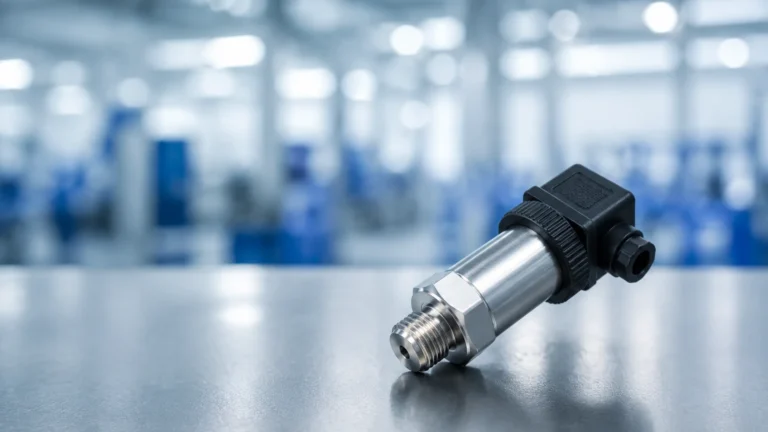
Hydrostatic measurement relies on the principle that the pressure at the bottom of a tank is directly proportional to the height of the liquid column above it. A pressure transmitter is installed at or near the bottom of the vessel.
* Formula: $P = \rho \cdot g \cdot h$
* $P$ = Pressure
* $\rho$ = Density of the liquid
* $g$ = Gravitational constant
* $h$ = Height of the liquid
This method is highly reliable but requires the density of the chemical to remain constant. If the chemical distribution facility handles liquids with varying densities in the same tank, the transmitter must be recalibrated or compensated.
Magnetic Level Gauges
Magnetic level gauges are used for visual indication and can be equipped with reed switches or transmitters for remote monitoring. They consist of a bypass chamber connected to the tank. A float containing a magnet moves with the liquid level, flipping colored flaps on an external scale. This is a robust solution for high-pressure or high-temperature applications where a clear visual reference is required for onsite operators.
Key Evaluation Criteria for Instrument Selection
When designing a level monitoring system for chemical distribution, several factors must be evaluated to ensure long-term reliability and accuracy.
Chemical Compatibility
The most critical factor is the material of construction for the wetted parts. For aggressive acids like hydrochloric acid (HCl), standard stainless steel is insufficient. Engineers must specify materials such as PTFE (Polytetrafluoroethylene), PVDF (Polyvinylidene fluoride), or specialized alloys like Hastelloy. Even non-contact sensors must consider the compatibility of the flange and sealing materials with the chemical vapors.
Vapor and Foam Management
Many chemicals stored in distribution centers produce thick vapors or surface foam. Vapors can attenuate ultrasonic signals, leading to false readings or signal loss. Foam can absorb radar or ultrasonic pulses, making the surface difficult to detect. In cases of heavy foam, a contact-based technology like a guided wave radar or a mechanical float-based system may be more appropriate than non-contact methods.
Tank Geometry and Mounting
The physical layout of the tank affects sensor performance. Internal obstructions such as agitators, heating coils, or ladders can create false echoes for radar and ultrasonic sensors.
* Beam Angle: Sensors with a narrow beam angle (common in 80 GHz radar) are better at avoiding internal obstructions.
* Nozzle Height: The sensor must be mounted in a way that the "dead zone" (the area immediately below the sensor where measurement is impossible) does not interfere with the maximum fill level.
Practical Selection Table for Common Chemicals
The following table provides a general guideline for selecting level measurement technologies based on common chemicals found in distribution centers.
| Chemical Type | Recommended Technology | Material Considerations | Typical Accuracy |
| :— | :— | :— | :— |
| Acids (H2SO4, HCl) | Non-contact Radar | PTFE or PVDF Encapsulated | ±2 mm (0.08 in) |
| Bases (NaOH) | Ultrasonic or Radar | Stainless Steel or Plastic | ±5 mm (0.20 in) |
| Solvents/Alcohols | Guided Wave Radar | Explosion-proof housing | ±3 mm (0.12 in) |
| Waste Water | Hydrostatic | Ceramic Diaphragm | ±0.2% of span |
| Oils/Lubricants | Ultrasonic | Standard PVC/PP | ±0.25% of range |

Installation and Maintenance Guidelines
Proper installation is as important as selecting the right technology. For chemical distribution applications, follow these engineering best practices:
1. Avoid the Inflow: Never install a level sensor directly in the path of the filling stream. Turbulence and the falling liquid will cause erratic readings.
2. Stilling Wells: In tanks with high turbulence or heavy foam, installing the sensor inside a stilling well (a vertical pipe) can provide a calm surface for measurement.
3. Grounding and Shielding: For electronic sensors, ensure proper electrical grounding to prevent interference from nearby pumps or motors. This is especially critical in hazardous areas where static discharge must be avoided.
4. Calibration Verification: In chemical distribution, where custody transfer or high-accuracy blending occurs, sensors should be verified annually against a manual tape measure or a known volume to ensure they remain within the specified tolerance.
Limitations and Common Risks
While modern instrumentation is highly advanced, there are inherent risks in chemical distribution environments that can compromise measurement integrity:
* Condensation: In outdoor storage tanks, temperature swings can cause condensation on sensor faces. While some radar sensors can "see through" light condensation, heavy droplets can cause signal drift. Using a sensor with a convex lens or a purging system can mitigate this.
* Crystallization: Some chemicals, like brine or certain caustic solutions, can crystallize on the sensor. This buildup can eventually block the signal. Regular inspection and cleaning schedules are necessary for these applications.
* Dielectric Constant: Radar measurement relies on the dielectric constant ($ε_r$) of the liquid. Low dielectric liquids (like certain hydrocarbons) reflect less energy. For these materials, guided wave radar or high-sensitivity non-contact radar is required.
Frequently Asked Questions (FAQ)
Q: Can I use one sensor for different chemicals if the tank is repurposed?
A: It depends on the technology. Radar is generally versatile, but you must ensure the wetted materials are compatible with the new chemical. Hydrostatic sensors will require recalibration if the density of the new chemical is different from the previous one.
Q: How do I measure the level in a pressurized chemical tank?
A: For pressurized tanks, non-contact radar or differential pressure (DP) transmitters are the preferred choices. DP transmitters account for the headspace pressure by measuring the difference between the bottom pressure and the top pressure.
Q: What is the maximum range for ultrasonic sensors in chemical distribution?
A: Most industrial ultrasonic sensors have an effective range of up to 15 meters (approx. 49 feet) to 20 meters (approx. 65 feet). For taller silos or bulk storage tanks exceeding this height, radar is the superior choice, with ranges often reaching 30 meters (98 feet) or more.
Q: Are there specific requirements for flammable chemical distribution?
A: Yes. Instruments must be rated for hazardous locations (e.g., ATEX, IECEx, or Class/Division ratings). This ensures the device will not act as an ignition source in the presence of flammable vapors.
Conclusion
Selecting the correct level measurement technology for chemical distribution requires a thorough understanding of the chemical properties, the storage environment, and the operational goals of the facility. By prioritizing material compatibility and choosing the measurement principle that best fits the process conditions—whether it be the precision of 80 GHz radar or the simplicity of hydrostatic pressure—distributors can ensure safety and efficiency. For more detailed technical specifications and to explore a wide range of industrial solutions, visit the Main Page of our instrumentation guide.