Cip Process in Food Industry
Cip Process in Food Industry
In the modern food and beverage sector, maintaining the highest standards of hygiene is not merely a regulatory requirement but a fundamental pillar of operational integrity. The Clean-in-Place (CIP) process has revolutionized how processing plants manage sanitation, moving away from manual disassembly toward automated, repeatable, and verifiable cleaning cycles. For engineers and plant managers, understanding the intricacies of the cip process in food industry applications is essential for optimizing water usage, reducing chemical waste, and ensuring product safety.
Effective CIP systems rely heavily on precise instrumentation to monitor the flow, temperature, concentration, and level of cleaning agents. As a professional manufacturer of industrial level measurement instruments, Welk provides the technological foundation necessary to automate these complex cycles. This article explores the mechanical and chemical principles of CIP, the role of advanced level measurement, and practical considerations for system design.
Understanding the CIP Cycle Principles
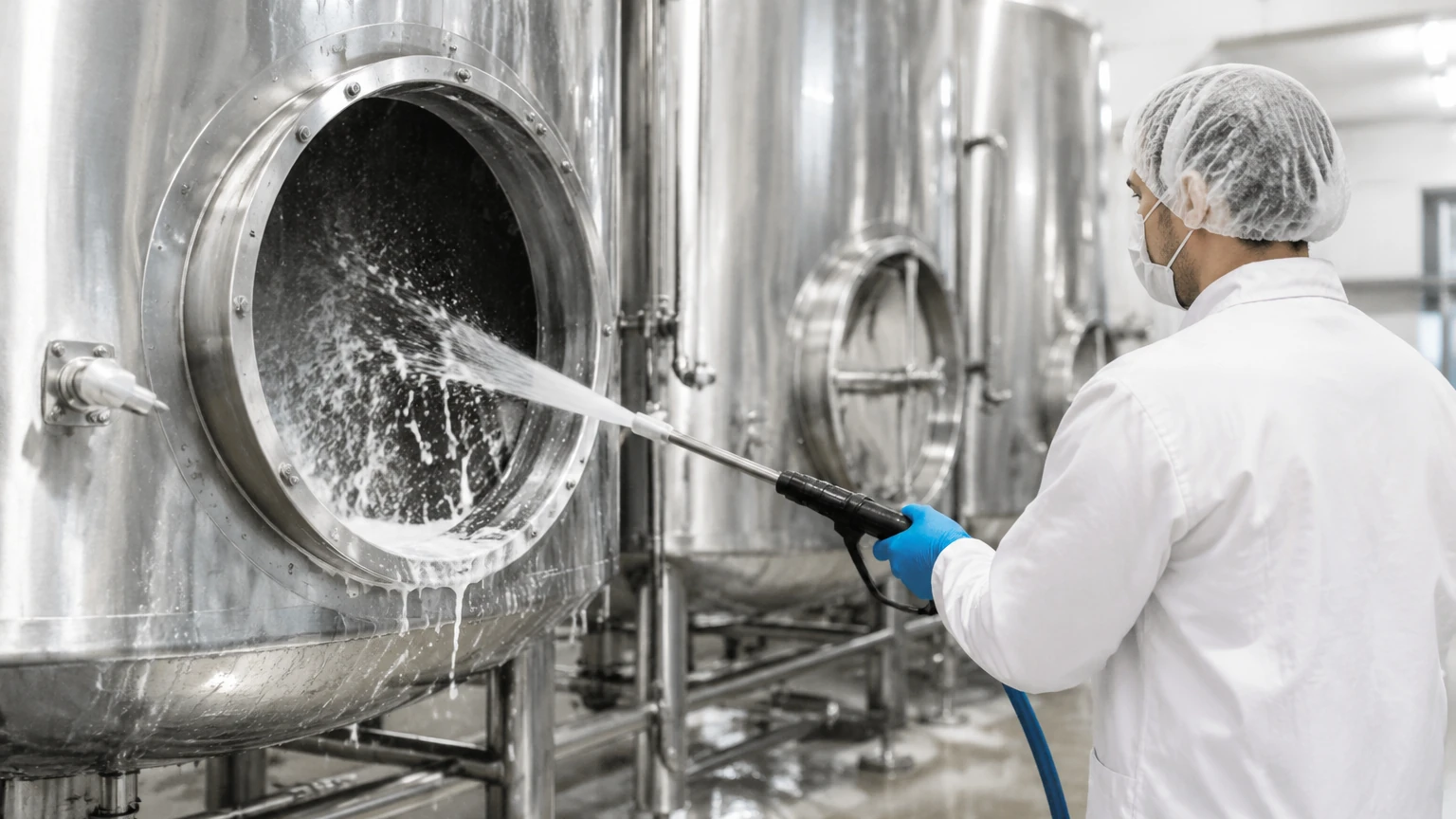
The CIP process is designed to clean the interior surfaces of pipes, vessels, process equipment, filters, and associated fittings without the need for manual scrubbing or disassembly. The efficacy of a CIP cycle is generally determined by four variable factors, often referred to as Sinner’s Circle: Time, Temperature, Mechanical Action (Flow/Pressure), and Chemical Concentration.
A typical CIP sequence in a food processing environment follows a structured path to ensure all organic and inorganic residues are removed:
1. Pre-Rinse: Potable water or recovered final rinse water is used to flush out bulk soil and loose product debris. This step prevents the subsequent chemical wash from becoming prematurely saturated with solids.
2. Caustic Wash: A high-temperature (typically 65°C to 85°C) alkaline solution, usually Sodium Hydroxide (NaOH), is circulated. This step is critical for dissolving fats and breaking down proteins.
3. Intermediate Rinse: Fresh water flushes out the remaining caustic solution and suspended soils.
4. Acid Wash: If required (common in dairy applications), a mild phosphoric or nitric acid solution is used to neutralize remaining alkalinity and remove mineral scales, such as "milk stone."
5. Final Rinse: High-quality water is used to remove all traces of chemicals.
6. Sanitization: A final pass with a chemical sanitizer (like peracetic acid) or hot water/steam ensures the elimination of microorganisms before the next production run.
The Role of Level Measurement in CIP Systems
For the cip process in food industry facilities to be efficient, the CIP skid—the central unit containing the tanks for water and chemicals—must be precisely monitored. Level sensors are used to manage inventory, prevent pump cavitation, and ensure that the correct volume of cleaning solution is available for each circuit.
Measurement Principles
Before selecting instrumentation, it is vital to understand the physics of the measurement technologies used in these environments:
* Radar Level Measurement (FMCW): Frequency Modulated Continuous Wave radar emits a high-frequency signal that reflects off the liquid surface. By measuring the frequency shift, the sensor calculates the distance. This is highly effective in CIP because it is non-contact and unaffected by the steam or vapor common in hot wash cycles.
* Ultrasonic Level Sensors: These sensors emit sound waves that bounce off the liquid surface. While cost-effective, they can be sensitive to the air temperature gradients and steam layers often found in CIP chemical tanks.
* Hydrostatic Pressure: This method measures the pressure exerted by the liquid column at the bottom of the tank. Since pressure is proportional to the height and density of the liquid, it provides a reliable continuous level reading, provided the tank is vented or the sensor is compensated for headspace pressure.
* Point Level Switches: Often using tuning fork (vibration) or capacitive principles, these act as high-level alarms to prevent overflows or low-level alarms to protect pumps from running dry.
To explore specific hardware options for these applications, engineers can Review product options and application support on our Main Page.
Selection Criteria for CIP Instrumentation
Selecting the right sensor for a CIP environment requires a balance between accuracy, durability, and hygiene. The food industry demands "hygienic design," which means the instruments must not have crevices where bacteria can grow.
Material Compatibility and Hygiene
Instruments must be constructed from food-grade materials. Stainless steel 316L (1.4404) is the standard for wetted parts. For non-metallic components, such as gaskets or sensor faces, materials like PEEK (Polyether ether ketone) or PTFE (Polytetrafluoroethylene) are preferred due to their resistance to aggressive caustic and acid washes.
Process Connections
Standard threaded connections are generally avoided in the food industry because the threads can trap product. Instead, hygienic connections such as Tri-Clamp, DIN 11851 (dairy pipe), or SMS unions are used. These allow for a flush-mounted sensor diaphragm, ensuring that the CIP spray balls can reach every part of the sensor surface.
Environmental Resistance
CIP sensors must withstand:
* Thermal Shock: Rapid transitions from ambient temperatures to 85°C+.
* Ingress Protection: Sensors must be rated at least IP67, though IP69K is preferred to withstand high-pressure washdowns of the exterior equipment.
* Chemical Resistance: Constant exposure to pH levels ranging from 1 to 14.
Practical Selection Table for CIP Applications
| Technology | Best Use Case | Advantages | Limitations |
| :— | :— | :— | :— |
| 80GHz Radar | Chemical storage & Balance tanks | Non-contact; ignores steam/foam; high accuracy (1-2 mm). | Higher initial cost than ultrasonic. |
| Ultrasonic | Ambient water recovery tanks | Low cost; easy to install. | Affected by steam, heavy foam, and high temperatures. |
| Hydrostatic | Tall, narrow chemical tanks | Very reliable; simple electronics; measures mass/volume. | Requires contact with the fluid; diaphragm is sensitive to mechanical damage. |
| Vibrating Fork | Pump protection / Overflow | Robust; unaffected by bubbles or foam. | Point level only; requires a hole in the vessel. |
| Magnetic Gauge | Visual bypass monitoring | No power required for visual; clear local indication. | Not suitable for sticky or highly viscous food products. |
Installation Considerations and Best Practices
Proper installation is as critical as the choice of technology. In the cip process in food industry setups, poor installation can lead to "dead legs"—areas where the cleaning fluid cannot circulate effectively.
1. Avoid Dead Legs: A dead leg is typically defined as a pipe section where the length is more than two times its diameter. Sensors should be mounted flush with the vessel wall to ensure the cleaning solution can scrub the sensor face.
2. Spray Ball Interference: When using non-contact sensors like radar, ensure the beam path does not intersect with the spray ball or the path of the incoming CIP fluid. This prevents "false echoes" and erratic readings.
3. Turbulence Management: CIP return lines often create significant turbulence and foam. If using hydrostatic sensors, ensure they are located away from the inlet. If using radar, 80GHz high-frequency models are recommended as they have a narrower beam and better signal processing for turbulent surfaces.
4. Venting: For hydrostatic level measurement in closed tanks, ensure the tank is properly vented or use a differential pressure sensor to account for the pressure of the cleaning vapors in the headspace.
Challenges and Limitations
Despite advancements, certain challenges persist in CIP level monitoring. Foam is perhaps the most significant. Many food-grade detergents produce thick foam during circulation. While radar can penetrate some foam, extremely dense, wet foam may reflect the signal prematurely. In such cases, hydrostatic sensors or specialized "foam-immune" point level switches are required.
Another limitation is the presence of heavy steam. In boiling-out procedures or high-temperature caustic washes, steam can attenuate ultrasonic signals. This makes radar or contact-based pressure sensors the superior choice for high-temperature CIP stages.
Frequently Asked Questions (FAQ)
Q: How often should CIP level sensors be calibrated?
A: In most food industry applications, an annual calibration check is standard. However, if the process involves extreme thermal cycling, semi-annual verification is recommended to ensure the sensor's zero-point has not drifted.
Q: Can I use a standard industrial pressure transmitter for CIP?
A: No. Standard transmitters often have internal cavities or non-food-grade fill fluids (like standard mineral oil). Hygienic transmitters use FDA-approved fill fluids and flush diaphragms to prevent contamination.
Q: What is the benefit of 80GHz radar over 26GHz radar in CIP?
A: 80GHz radar has a much narrower beam angle, which allows it to be installed in smaller tanks with internal obstructions (like agitators or spray balls) without receiving interference from the tank walls.
Q: Does the concentration of the CIP chemical affect the level reading?
A: For hydrostatic sensors, yes. Since hydrostatic pressure depends on density, a highly concentrated caustic solution (which is denser than water) will result in a slightly higher level reading than water. Modern transmitters can be programmed to compensate for these density changes if the concentration is known.
Conclusion
Optimizing the cip process in food industry operations requires a holistic view of the cleaning cycle and the instrumentation that governs it. By implementing reliable level measurement solutions, manufacturers can ensure that their cleaning cycles are both effective and resource-efficient. Whether managing a simple water recovery tank or a complex multi-stage chemical skid, the right measurement technology is the key to food safety and process automation. For more detailed technical specifications and engineering support on level measurement, visit the Welk Main Page.