Coking Furnace
Coking Furnace
In the heavy industrial landscape, the coking furnace—often referred to as a coke oven—stands as a critical asset for the production of metallurgical coke. This process involves the destructive distillation of coal, heating it to temperatures often exceeding 1,000°C (1,832°F) in the absence of oxygen. The resulting coke is a vital fuel and reducing agent in blast furnace operations for steel production. Managing a coking furnace facility requires rigorous attention to material handling, byproduct recovery, and process safety, all of which rely heavily on accurate level measurement.
From the initial coal storage bunkers to the complex byproduct recovery plants that handle coal tar, ammonia liquor, and benzol, level instrumentation ensures that the process remains continuous and safe. For engineering professionals and plant managers, selecting the correct measurement technology is essential to withstand the extreme heat, corrosive vapors, and heavy dust typical of these environments. To explore a full range of industrial measurement solutions, visit the Main Page for detailed technical specifications.
Understanding the Coking Furnace Process
The operation of a coking furnace is a cyclical process. Coal is crushed and blended before being fed into the oven chambers. These chambers are narrow, tall, and deep, arranged in batteries. Once the coal is charged, the doors are sealed, and the heating process begins, lasting anywhere from 12 to 20 hours. During this time, volatile matter is driven off, leaving behind the solid carbon structure of coke.
Level measurement is integrated into several stages of this cycle:
1. Coal Bunkers and Silos: Ensuring a steady supply of raw material.
2. Charging Cars: Measuring the volume of coal being loaded into the ovens.
3. Quenching Towers: Monitoring water levels used to cool the hot coke.
4. Byproduct Processing: Managing the separation of liquids like tar and water in decanters.
Measurement Principles for High-Temperature Level Sensing
Before selecting an instrument for a coking furnace application, it is necessary to understand the physics behind the primary measurement technologies used in the industry.
Radar Level Measurement (ToF)
Radar sensors operate on the Time-of-Flight (ToF) principle. The device emits high-frequency electromagnetic waves (typically in the 26GHz or 80GHz range). These waves travel to the material surface, reflect, and return to the sensor. The distance is calculated based on the time elapsed and the speed of light.
* Advantages: Radar is non-contact and largely unaffected by temperature fluctuations, pressure changes, or the presence of heavy dust, making it the gold standard for coal silos and byproduct tanks.
Ultrasonic Level Measurement
Ultrasonic sensors use sound waves rather than electromagnetic waves. The sensor emits a mechanical pulse that reflects off the surface. The time taken for the echo to return determines the level.
* Considerations: In coking environments, ultrasonic sensors face challenges. The speed of sound is highly dependent on air temperature and gas composition. Since coking furnaces involve high heat and varying gas densities, ultrasonic sensors require careful temperature compensation and are generally limited to lower-temperature areas like water treatment or quenching sumps.
Hydrostatic Pressure Measurement
This principle measures the pressure exerted by a liquid column. The pressure at the bottom of a tank is proportional to the height of the liquid and its density ($P = \rho gh$).
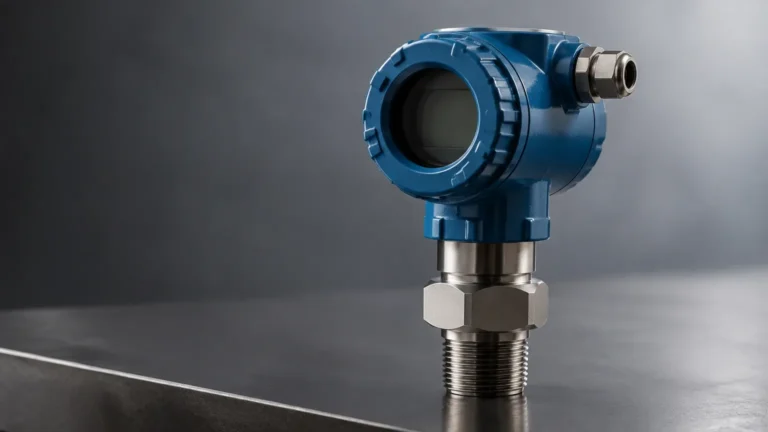
* Application: Hydrostatic transmitters are frequently used in the byproduct plant for liquor tanks where the density of the fluid remains relatively constant.
Magnetic Level Gauges
Magnetic gauges utilize a float containing a magnet that moves with the liquid level in a bypass chamber. Outside the chamber, magnetic flags or a transmitter track the float's position.
* Application: These are highly effective for high-pressure, high-temperature byproduct storage where visual indication is required alongside electronic transmission.
Level Measurement Challenges in Coking Operations
Operating level instruments in the vicinity of a coking furnace presents several technical hurdles that must be addressed during the engineering phase.
1. Extreme Temperatures
The heat radiated from the oven batteries can damage sensitive electronics. While the sensor head might be rated for high temperatures, the housing often requires cooling jackets or stand-off mounting to prevent thermal failure.
2. Heavy Dust and Steam
Coal charging and coke pushing generate significant amounts of dust. In the quenching area, steam is prevalent. These particles can attenuate signals. High-frequency radar (80GHz) is preferred here as it has a narrower beam angle and better signal processing to filter out "noise" caused by dust clouds.
3. Material Buildup
Coal dust mixed with moisture or tar vapors can create a sticky residue that coats sensor faces. Non-contact sensors with PTFE or ceramic seals are often used, and air purging systems are frequently installed to keep the sensor face clean.
4. Corrosive Byproducts
The chemicals recovered from coking furnace gas—such as ammonia, hydrogen sulfide, and phenol—are highly corrosive. Wetted parts of any level instrument must be constructed from compatible materials like 316L stainless steel, Hastelloy, or specialized plastics.
Selection Guide for Level Instrumentation
The following table provides a general reference for selecting level measurement technologies based on specific coking furnace facility zones.
| Application Area | Typical Medium | Recommended Technology | Key Selection Factor |
| :— | :— | :— | :— |
| Coal Storage Silo | Crushed Coal | 80GHz Radar | Dust penetration and beam narrowness |
| Quench Water Tank | Process Water | Ultrasonic or Radar | Resistance to steam and humidity |
| Tar Decanter | Coal Tar / Water | Hydrostatic or Radar | Interface measurement capability |
| Ammonia Liquor Tank | Corrosive Liquid | Magnetic Level Gauge | Material compatibility and local display |
| Coke Breeze Sump | Water/Solid Slurry | Hydrostatic (Flush Diaphragm) | Resistance to clogging and abrasion |
| Acid Storage | Sulfuric Acid | PTFE-coated Radar | Chemical resistance |

Installation Considerations and Engineering Best Practices
Successful integration of level sensors in a coking furnace plant depends on proper installation. Even the most advanced sensor will fail if the installation environment is not controlled.
Mounting and Positioning
For coal bunkers, sensors should be mounted away from the filling stream to avoid direct impact and signal interference. In byproduct tanks with internal agitators or heating coils, radar sensors must be positioned to avoid these internal obstructions. Utilizing a "false signal suppression" feature during commissioning can help the sensor ignore fixed internal structures.
Thermal Protection
When installing instruments near the oven top or battery sides, use heat shields. For radar units, a "waveguide" or a "stilling well" can be used to move the electronics further away from the heat source while still maintaining a clear path to the process medium.
Purging Systems
In applications involving tar or heavy dust, an air purge connection is vital. A continuous flow of clean, dry instrument air at a low pressure (approx. 0.1 to 0.2 bar above process pressure) creates a protective curtain over the sensor lens, preventing buildup.
Grounding and Explosion Protection
Coking furnace environments are often classified as hazardous areas due to the presence of explosive gases (coke oven gas) and combustible dust. All instruments must carry the appropriate ATEX, IECEx, or local equivalent certifications. Proper grounding is essential to prevent static buildup, especially in coal handling areas.
Limitations and Maintenance Guidelines
While modern instrumentation is robust, there are inherent limitations to consider:
* Radar Limitations: Radar signals can be affected by very low dielectric constant (εr) materials. While coal is generally measurable, extremely dry, aerated powders may require high-sensitivity radar settings.
* Ultrasonic Limitations: Not suitable for vacuum conditions or high-pressure environments where the gas medium cannot effectively transmit sound waves.
* Maintenance: A quarterly inspection schedule is recommended for coking furnace applications. This includes checking the air purge flow, inspecting the sensor face for buildup, and verifying the integrity of heat shields and cable conduits.
Frequently Asked Questions (FAQs)
Q: Can radar level meters measure the level of coal inside the furnace during the coking process?
A: Generally, no. The internal temperatures of 1,100°C and the corrosive nature of the gases exceed the limits of standard industrial radar sensors. Level measurement is typically performed in the coal bunkers and charging cars before the coal enters the furnace, or via specialized radiometric (gamma) gauges for internal oven monitoring, though these are less common due to regulatory requirements.
Q: How does steam in the quenching tower affect level measurement?
A: Steam changes the density of the air, which significantly impacts the speed of sound. This makes ultrasonic sensors inaccurate unless they have advanced temperature and gas compensation. Radar is unaffected by steam and is the preferred choice for quenching applications.
Q: What is the best way to measure the interface between tar and ammonia liquor?
A: Guided Wave Radar (GWR) or specialized hydrostatic transmitters are often used. GWR can detect the change in dielectric constant between the upper liquor layer and the lower tar layer, providing a reliable interface measurement.
Q: Why use 80GHz radar instead of 26GHz for coal silos?
A: 80GHz radar has a much smaller wavelength, allowing for a narrower beam (often as small as 3 degrees). This helps avoid reflections from silo walls and internal bracing, and it provides a stronger reflection from the uneven surface of a coal pile.
For more information on selecting the right measurement technology for your specific industrial application, please refer to the Main Page for a comprehensive overview of our radar, ultrasonic, and hydrostatic solutions.