Commercial Sewage Lift Station
Commercial Sewage Lift Station
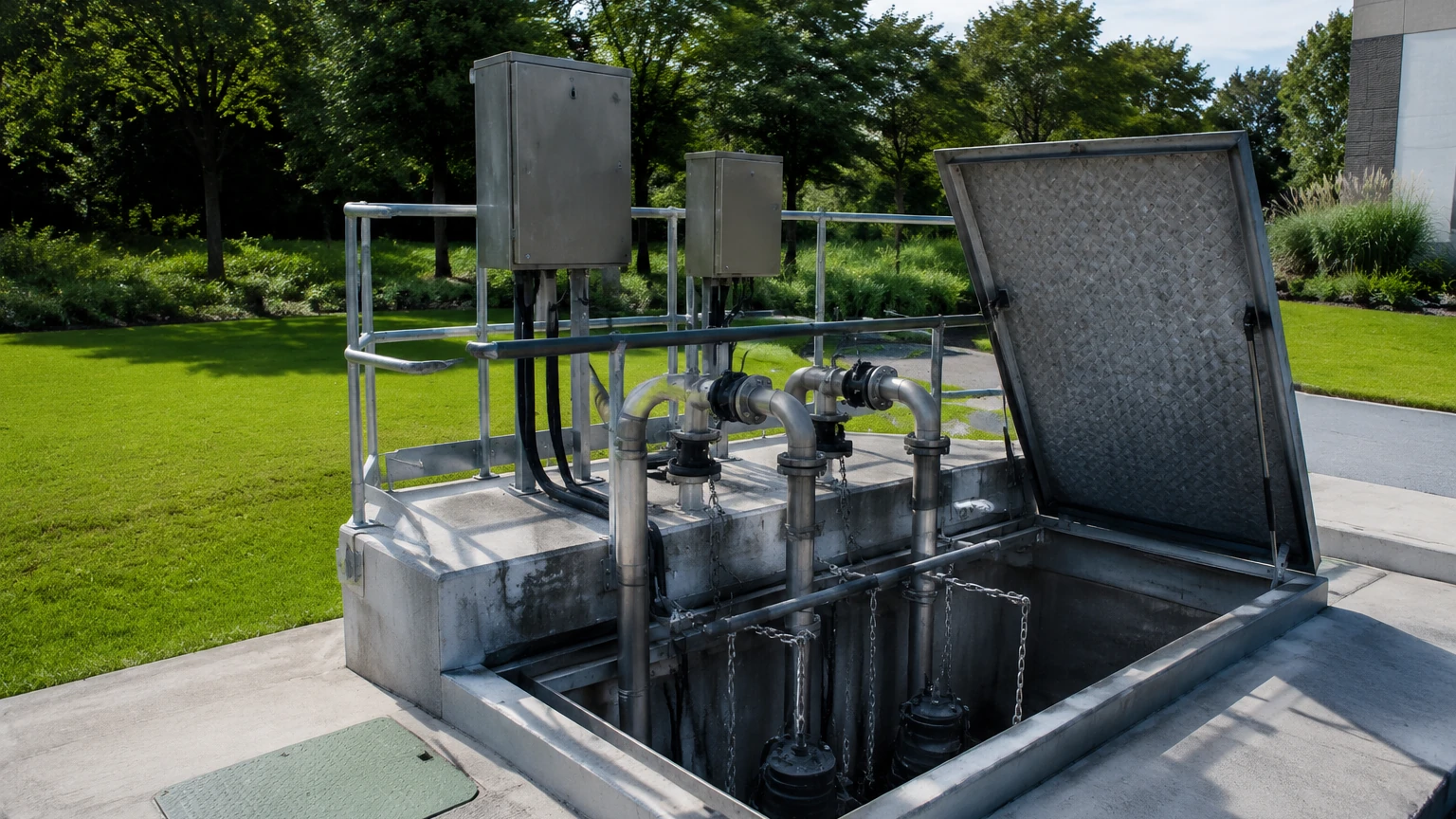
A commercial sewage lift station is a critical component of modern wastewater infrastructure, designed to move raw sewage from lower to higher elevations when gravity flow is not feasible. These stations are commonly found in shopping centers, office complexes, industrial parks, and multi-unit residential developments. The efficiency and reliability of a lift station depend heavily on the accuracy of its level measurement system, which dictates when pumps should start, stop, or trigger high-level alarms.
In the context of a commercial sewage lift station, the environment is inherently challenging. Sensors must operate reliably amidst turbulence, foam, floating solids, and corrosive gases such as hydrogen sulfide (H2S). Selecting the appropriate level measurement technology is not merely a matter of cost but a requirement for operational safety and environmental compliance.
Core Principles of Level Measurement in Sewage Applications
Before selecting a sensor for a commercial sewage lift station, it is essential to understand the physics behind the most common measurement principles. Level sensors generally fall into two categories: contact and non-contact.
Ultrasonic Level Measurement (Non-Contact)
Ultrasonic sensors operate on the "time-of-flight" principle. The sensor emits a high-frequency sound pulse that travels through the air, reflects off the surface of the sewage, and returns to the transducer. By measuring the time taken for the pulse to return and knowing the speed of sound, the device calculates the distance to the liquid surface.
In a commercial sewage lift station, ultrasonic sensors are popular because they do not touch the corrosive media. However, they are sensitive to air temperature fluctuations and the presence of heavy foam, which can absorb the sound pulse and lead to signal loss.
Radar Level Measurement (Non-Contact)
Radar sensors, specifically high-frequency 80GHz radar, also use the time-of-flight principle but employ electromagnetic waves instead of sound. These waves travel at the speed of light and are virtually unaffected by temperature, pressure, or the presence of vapors and gases. Radar is highly effective at penetrating light foam and ignoring heavy steam, making it a robust choice for deep wet wells or stations prone to rapid temperature changes.
Hydrostatic Level Measurement (Contact)
Hydrostatic transmitters measure the pressure exerted by the liquid column above the sensor. Based on the principle that pressure is proportional to the height of the liquid (P = ρgh, where ρ is density, g is gravity, and h is height), the sensor converts the pressure reading into a level measurement. In sewage applications, these sensors are typically submersible and must feature a flush diaphragm to prevent solids and grease from clogging the sensing element.
Technology Comparison for Commercial Sewage Lift Stations
Choosing the right technology requires balancing the specific needs of the facility with the characteristics of the wastewater. The following table provides a comparison of the primary technologies used in a commercial sewage lift station.
| Feature | Ultrasonic | Radar (80GHz) | Hydrostatic |
| :— | :— | :— | :— |
| Measurement Type | Non-contact | Non-contact | Contact (Pressure) |
| Accuracy | ±0.25% of range | ±2 mm (0.08 in) | ±0.2% to 0.5% of range |
| Resistance to Foam | Low (Signal absorption) | Moderate to High | High (Unaffected) |
| Resistance to Vapor | Low (Speed of sound changes) | High | High |
| Maintenance Needs | Low (Keep face clean) | Minimal | Moderate (Check for buildup) |
| Installation Complexity | Moderate | Moderate | Simple (Submersible) |
| Typical Life Span | 5–7 years | 10+ years | 3–5 years |
For a comprehensive overview of available hardware and integration support, engineers should consult the Main Page of the equipment manufacturer to ensure compatibility with existing SCADA or PLC systems.
Engineering Considerations for Sensor Selection
When designing or upgrading a commercial sewage lift station, several engineering factors must be evaluated to ensure the level sensor provides actionable data.
1. The "Dead Zone" or Blocking Distance
Non-contact sensors (ultrasonic and radar) have a minimum distance near the face of the transducer where they cannot accurately measure. This is known as the dead zone. If the sewage level rises into this zone, the sensor may report an incorrect value or a "full" error. In a commercial sewage lift station with limited vertical space, selecting a sensor with a small dead zone (e.g., 50 mm to 100 mm) is vital to maximize the usable volume of the wet well.
2. Beam Angle and Obstructions
The beam angle determines the spread of the signal. In narrow wet wells containing ladders, pump discharge pipes, or cables, a wide beam angle may cause false reflections. 80GHz radar sensors offer very narrow beam angles (often as low as 3 degrees), allowing them to "see" between obstructions that would interfere with an ultrasonic sensor's broader 10-degree beam.
3. Chemical Compatibility
Sewage is often acidic or alkaline and frequently contains H2S gas, which is highly corrosive to copper and certain plastics. Sensors should be housed in corrosion-resistant materials such as PVDF (Polyvinylidene fluoride), PP (Polypropylene), or high-grade stainless steel (316L). Submersible cables for hydrostatic sensors must be jacketed in durable materials like PUR (Polyurethane) or FEP (Fluorinated ethylene propylene) to prevent degradation.
Installation Guidelines for Lift Stations
Proper installation is as important as selecting the right sensor. Even the most advanced radar unit will fail if positioned incorrectly in a commercial sewage lift station.
* Avoid Inflow Turbulence: Do not mount the sensor directly above the influent pipe. The turbulence and splashing will create an unstable surface, leading to erratic readings. If the station is small and turbulence is unavoidable, a stilling well (a vertical pipe that dampens surface movement) should be used for hydrostatic or ultrasonic sensors.
* Mounting Position: Sensors should be mounted perfectly vertical. For non-contact sensors, the transducer face must be parallel to the liquid surface. For hydrostatic sensors, the probe should be suspended at least 100 mm to 200 mm (4 to 8 inches) above the bottom of the pit to avoid being buried in settled silt and sludge.
* Cable Management: Ensure that submersible cables are properly supported by a strain-relief clamp. Do not allow the cable to kink, as the internal vent tube (used to compensate for atmospheric pressure in hydrostatic sensors) must remain open to ensure accuracy.
Managing Environmental Challenges: Foam, Grease, and Gas
Commercial sewage often contains high concentrations of Fats, Oils, and Grease (FOG), particularly if the station serves restaurants or food processing facilities. FOG tends to float on the surface and can solidify into "fatbergs."
* Foam: Heavy foam acts as an insulator for ultrasonic waves. If foam is a persistent issue, radar is the preferred non-contact solution. Alternatively, a hydrostatic sensor is unaffected by surface foam as it measures the weight of the liquid below.
* Grease Buildup: In a commercial sewage lift station, grease can coat the diaphragm of a hydrostatic sensor or the face of an ultrasonic transducer. Regular maintenance schedules should include a visual inspection and cleaning with a mild detergent if necessary. Some modern radar sensors feature "tank mapping" software that can ignore signal interference caused by minor buildup on the sensor face.
* H2S and Moisture: Wet wells are high-humidity environments. Sensors should have an IP68 ingress protection rating to ensure they remain watertight even during accidental submersion or heavy condensation.
Maintenance and Reliability Protocols
To ensure the longevity of a commercial sewage lift station, a proactive maintenance strategy is required. This includes:
1. Calibration Verification: Periodically compare the sensor's reading against a manual tape measure or a physical float switch. Most digital level meters allow for field calibration via a handheld programmer or a Bluetooth-connected mobile app.
2. Cleaning: Remove any rags, grease, or debris that may have wrapped around submersible sensors or cables.
3. Signal Integrity Check: Monitor the signal strength (echo curve) on radar and ultrasonic units. A degrading signal often indicates that the sensor face needs cleaning or that the internal electronics are reaching the end of their service life.
For those seeking specific instrument models or customized OEM solutions for large-scale projects, further technical documentation and selection tools are available on the Main Page.
Frequently Asked Questions (FAQs)
Q: Can I use a float switch instead of a continuous level sensor in a commercial sewage lift station?
A: Float switches are excellent for redundant high-level alarms or simple on/off pump control. However, they do not provide real-time data on inflow rates or pump performance. Continuous level sensors (radar, ultrasonic, hydrostatic) allow for sophisticated control strategies, such as alternating pump starts to ensure even wear and detecting blockages before they cause an overflow.
Q: How does temperature affect level measurement in an outdoor lift station?
A: Temperature primarily affects ultrasonic sensors because the speed of sound changes with air density. While most ultrasonic sensors have built-in temperature compensation, rapid changes (e.g., sun hitting the sensor housing) can still cause errors. Radar and hydrostatic sensors are largely immune to these air temperature fluctuations.
Q: What is the best sensor for a very deep commercial sewage lift station?
A: For depths exceeding 10 meters (33 feet), radar is often the most reliable choice due to its narrow beam and high signal strength. Hydrostatic sensors are also capable of measuring great depths but require careful cable management to prevent stretching or damage over long vertical runs.
Q: How do I prevent lightning damage to sensors in remote lift stations?
A: Lift stations are often located in open areas and are susceptible to lightning strikes. Using sensors with integrated surge protection and ensuring the entire system is properly grounded is essential. Signal isolators and surge protectors should also be installed in the control panel to protect the PLC from transients traveling up the sensor cable.
By understanding the principles of measurement and the specific demands of the environment, engineers can specify a level measurement solution that ensures the commercial sewage lift station operates efficiently, minimizing the risk of costly overflows and maintenance emergencies.