Continuous Hydrogen Analyzer
Continuous Hydrogen Analyzer
In the landscape of modern industrial processing, the continuous hydrogen analyzer stands as a critical instrument for safety, efficiency, and quality control. Whether utilized in power generation, petroleum refining, or the emerging green hydrogen economy, the ability to monitor hydrogen concentrations in real-time is indispensable. This guide explores the technical foundations of hydrogen analysis, its integration with broader process instrumentation, and the engineering considerations necessary for selecting the right system.
Fundamental Principles of Hydrogen Gas Analysis
Before selecting a continuous hydrogen analyzer, it is essential to understand the physical and chemical principles that govern gas detection. Hydrogen possesses unique characteristics—such as high thermal conductivity and small molecular size—that allow for several distinct measurement methodologies.
Thermal Conductivity Detection (TCD)
Thermal conductivity is the most prevalent method for continuous hydrogen analysis in binary or quasi-binary gas mixtures. Hydrogen has the highest thermal conductivity of all common gases (approximately seven times that of air).
A TCD sensor typically employs a Wheatstone bridge circuit containing four filaments. Two filaments are exposed to a reference gas, while the other two are exposed to the sample gas. As the concentration of hydrogen in the sample changes, the rate of heat loss from the filaments varies, causing a change in electrical resistance. This delta is proportional to the hydrogen concentration. This method is robust and requires no consumable reagents, making it ideal for high-concentration measurements in stable process streams.
Electrochemical Sensors
Electrochemical analyzers operate by reacting the target gas with an electrode to produce an electrical current. For hydrogen, this usually involves an oxidation reaction at the sensing electrode. The resulting current is directly proportional to the partial pressure of hydrogen. These sensors are highly sensitive and are often used for trace-level detection (ppm) or for monitoring hydrogen purity in environments where other gases might interfere with thermal conductivity readings.
Palladium-Based Solid-State Sensors
Palladium has a unique affinity for hydrogen; it can absorb up to 900 times its own volume of hydrogen gas. In solid-state sensors, a thin film of palladium or a palladium alloy is used. When hydrogen is absorbed, the physical properties of the film—such as electrical resistance or capacitance—change. These sensors are highly specific to hydrogen, reducing the risk of cross-sensitivity with other combustible gases.
Key Applications in Industrial Processes
Continuous hydrogen analyzers are deployed across a wide range of sectors, each with specific technical requirements for accuracy and response time.
Power Generation
In large-scale power plants, hydrogen is used as a coolant for synchronous generators due to its high heat capacity and low density, which reduces windage losses. A continuous hydrogen analyzer is used to monitor the purity of the hydrogen within the cooling loop. Maintaining purity above 97–99% is vital to prevent the formation of explosive mixtures with air and to ensure optimal cooling efficiency.
Petroleum Refining and Petrochemicals
Hydrogen is a fundamental utility in refineries, used in hydrotreating and hydrocracking processes to remove impurities from crude oil and break down heavy hydrocarbons. Continuous monitoring of hydrogen in recycle gas loops ensures that the chemical reactions remain within stoichiometric limits, protecting expensive catalysts from deactivation.
Electrolyzer Monitoring (Green Hydrogen)
As the industry shifts toward decarbonization, water electrolysis has become a primary method for producing green hydrogen. Analyzers are used here to monitor the "Oxygen in Hydrogen" (O2 in H2) and "Hydrogen in Oxygen" (H2 in O2) levels. This is a critical safety application; if the concentration of one gas in the other reaches the Lower Explosive Limit (LEL), the system must be purged immediately.
Integrating Gas Analysis with Level Measurement Systems
In many industrial setups, gas analysis does not exist in a vacuum. It is often paired with sophisticated level measurement technologies to provide a complete picture of the process environment. For instance, in hydrogen production facilities, the management of liquid buffers, electrolyte tanks, and separator vessels requires precise level control.
Instruments such as radar level meters and ultrasonic level sensors are frequently used in tandem with gas analyzers. In an electrolyzer skid, while the continuous hydrogen analyzer monitors gas purity, a hydrostatic level transmitter or a magnetic level gauge ensures that the liquid levels in the gas-liquid separators are maintained. This prevents gas carry-over into liquid lines or liquid carry-over into the gas analysis system, which could damage the TCD or electrochemical sensors.
For engineers designing these integrated systems, sourcing reliable instrumentation is paramount. High-quality level measurement solutions, including those found on the Main Page of specialized manufacturers, provide the necessary data to automate the safety interlocks that protect both the gas analyzers and the broader plant infrastructure.
Selection Criteria for a Continuous Hydrogen Analyzer
Selecting the appropriate analyzer requires a detailed analysis of the process conditions. Engineers should evaluate the following criteria:
| Feature | Thermal Conductivity (TCD) | Electrochemical | Palladium-Based |
| :— | :— | :— | :— |
| Measurement Range | 0–100% Vol | 0–10,000 ppm | 0–5% Vol (LEL focus) |
| Accuracy | ±1% of Span | ±2% of Reading | ±3% of Span |
| Response Time (T90) | < 15 Seconds | < 30 Seconds | < 10 Seconds |
| Cross-Sensitivity | High (to CO2, CH4) | Low | Very Low |
| Maintenance | Low | Moderate (Sensor replacement) | Low |
Environmental and Safety Certifications
Given that hydrogen is highly flammable (with a wide flammability range of 4% to 75% in air), the analyzer must often be installed in hazardous areas. It is mandatory to confirm that the device carries the appropriate ATEX, IECEx, or UL certifications for Zone 1 or Zone 2 environments. Explosion-proof (Ex d) or intrinsically safe (Ex i) designs are standard requirements for these installations.
Sample Conditioning
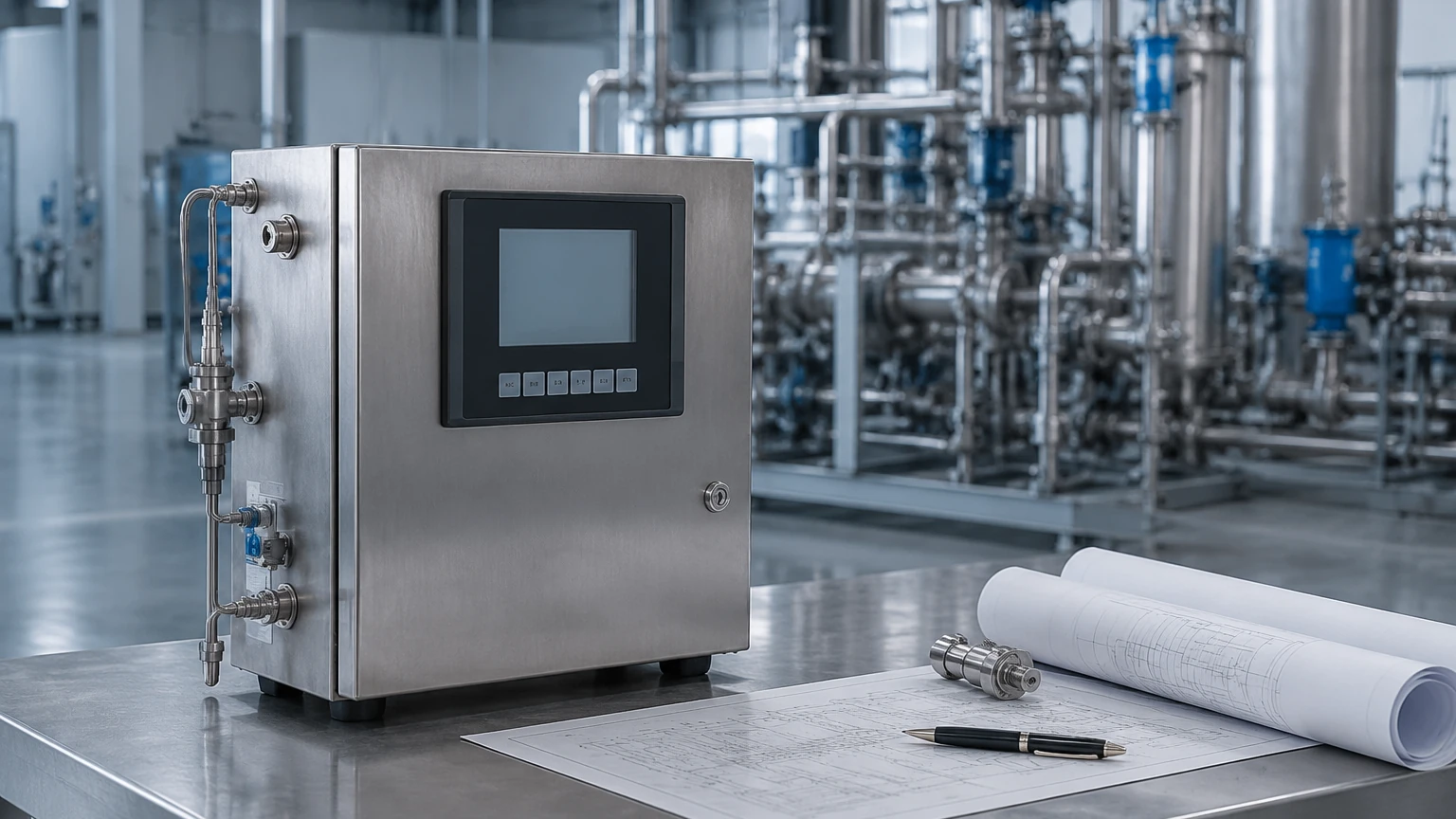
The longevity of a continuous hydrogen analyzer is often determined by the quality of the sample conditioning system (SCS). Hydrogen gas streams in industrial processes often contain moisture, particulates, or corrosive contaminants. An effective SCS should include:
* Coalescing Filters: To remove liquid droplets and aerosols.
* Pressure Regulators: To ensure the gas enters the sensor chamber at a constant, low pressure (typically 0.5 to 1.5 bar).
* Coolers/Dryers: To reduce the dew point of the sample gas, preventing condensation inside the analyzer.
Installation Considerations and Best Practices
Proper installation is as important as the technology itself. Poorly placed sensors can lead to delayed response times or false readings.
1. Sampling Point Location: The sample probe should be located in a section of the pipe where the gas is well-mixed, ideally in a straight run of pipe at least five diameters downstream of any bends or valves.
2. Ventilation: Hydrogen is lighter than air and will collect in high spots. Analyzers installed in enclosures must have adequate ventilation or hydrogen leak detectors installed at the highest point of the ceiling.
3. Calibration Gas Porting: Ensure that the installation allows for easy introduction of zero and span calibration gases. Regular calibration (typically every 3 to 6 months depending on the technology) is vital for maintaining accuracy.
4. Signal Integration: Most modern analyzers provide 4-20mA analog outputs or digital protocols like Modbus RTU or HART. These should be integrated into the plant's Distributed Control System (DCS) or PLC to trigger alarms if hydrogen levels deviate from setpoints.
Limitations and Risks
While continuous hydrogen analyzers are highly effective, they have limitations. TCD-based units are sensitive to flow rate fluctuations; therefore, a constant flow regulator is necessary. Furthermore, if the background gas composition changes significantly (e.g., a shift from Nitrogen to Carbon Dioxide as the carrier gas), the TCD will produce an erroneous reading because the thermal conductivity of the background has changed.
Electrochemical sensors have a finite lifespan, usually 12 to 24 months, as the internal electrolyte is consumed or the sensing electrode becomes poisoned by contaminants like Hydrogen Sulfide (H2S). Engineers must factor in the total cost of ownership, including these recurring sensor replacements.
Frequently Asked Questions (FAQs)
Q: Can a continuous hydrogen analyzer detect hydrogen in a vacuum?
A: Most standard analyzers require a positive pressure to move the sample through the sensor. For vacuum applications, a specialized sampling pump or an extractive system designed for sub-atmospheric pressure must be used.
Q: How does temperature affect hydrogen measurement?
A: Hydrogen measurement is temperature-dependent. Most high-quality analyzers include internal temperature compensation or maintain the sensor cell at a constant heated temperature (e.g., 50°C) to eliminate drift caused by ambient temperature changes.
Q: Is it possible to measure hydrogen in a mixture of other combustible gases?
A: Yes, but it requires specific technology. A standard TCD may struggle if other gases like Methane (CH4) are present, as their thermal conductivities are closer to each other. In these cases, a palladium-based sensor or a gas chromatograph (GC) is preferred for its high selectivity.
Q: What is the difference between a hydrogen leak detector and a continuous hydrogen analyzer?
A: A leak detector is typically a safety device designed to detect the presence of hydrogen in the ambient air (0–100% LEL). A continuous hydrogen analyzer is a process instrument designed to measure the concentration of hydrogen *within* a process pipe or vessel, often at much higher concentrations or for purity analysis.
By carefully considering the measurement principle, the sample conditioning requirements, and the integration with other process instruments like level meters, industrial operators can ensure safe and efficient hydrogen management. For further technical specifications on the level instrumentation that supports these processes, engineers are encouraged to Review product options and application support to find the most compatible solutions for their specific infrastructure.