Tomatoes Pulper
Tomatoes Pulper
In the industrial food processing sector, the tomatoes pulper is a foundational piece of equipment responsible for converting raw tomatoes into a refined base for sauces, ketchups, and juices. The process involves separating the pulp and juice from the seeds, skins, and stems. While the mechanical design of the pulper is critical for yield and texture, the efficiency of the entire production line depends heavily on the integration of precise level measurement and control systems. Without accurate monitoring of feed hoppers, collection tanks, and waste chutes, the pulping process can suffer from overflows, pump cavitation, and inconsistent product quality.
Efficient tomato processing requires a deep understanding of how level instrumentation interacts with the physical properties of tomato solids and liquids. This guide explores the technical requirements for level measurement in tomatoes pulper applications, providing engineering insights into technology selection, installation, and maintenance.
Understanding the Tomatoes Pulper Process
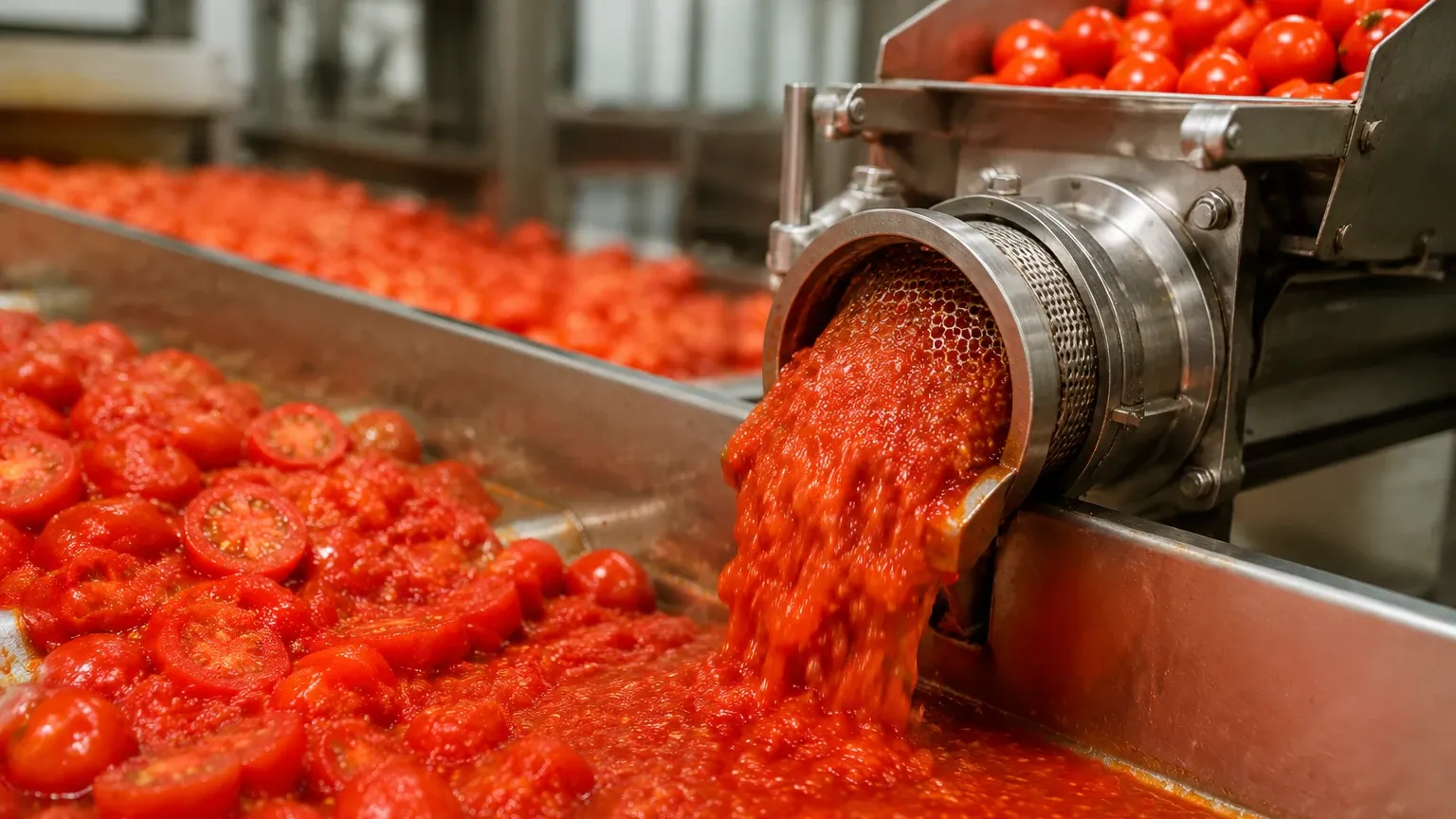
A tomatoes pulper typically operates using centrifugal force. Raw or pre-heated tomatoes enter a cylindrical chamber containing a high-speed rotating beater or paddle assembly. As the tomatoes are forced against a perforated screen, the juice and pulp pass through the holes, while the skins and seeds are discharged at the end of the cylinder as pomace.
From a level control perspective, there are three primary zones of interest:
1. Feed Hopper: The entry point where raw tomatoes are stored before entering the pulper. Maintaining a consistent head of material ensures a steady feed rate.
2. Collection Tank (Juice/Pulp): The vessel located beneath the pulper that catches the refined product. This tank often features agitators to prevent settling.
3. Waste/Pomace Chute: The discharge area for solids. Monitoring the level here prevents blockages that could back up into the pulping chamber.
Tomato pulp is a challenging medium. It is non-Newtonian, often acidic (pH 4.0–4.6), and prone to coating surfaces. Furthermore, processing often occurs at elevated temperatures (60°C to 90°C), creating steam and condensation that can interfere with certain sensing technologies.
The Importance of Level Measurement in Pulping Operations
In a B2B manufacturing environment, downtime is the primary enemy of profitability. In tomato processing, which is often seasonal and high-volume, the tomatoes pulper must run continuously. Level sensors provide the data necessary for automation, ensuring that the inflow matches the outflow.
If the level in the collection tank is too high, the pulper may need to be shut down abruptly, leading to product loss and intensive cleaning cycles. Conversely, if the level is too low, downstream pumps may run dry, leading to mechanical seal failure. By utilizing advanced level measurement solutions, such as those found on our Main Page, operators can maintain optimal throughput and protect their capital equipment.
Level Measurement Principles for Tomato Processing
Selecting the right measurement principle is the first step in optimizing a tomatoes pulper system. Each technology has specific strengths and limitations when dealing with food-grade liquids and solids.
1. Radar Level Measurement (Non-contact)
Radar transmitters, particularly those operating at high frequencies (e.g., 80 GHz), are widely considered the gold standard for tomato pulp. They emit a microwave signal that reflects off the surface of the medium. The time-of-flight is used to calculate the distance.
* Advantages: Non-contact measurement means the sensor does not touch the acidic pulp, reducing wear and hygiene risks. High-frequency radar can penetrate steam and is relatively unaffected by the heavy condensation common in hot pulping stages.
* Considerations: While radar is highly accurate, the mounting position must avoid internal obstructions like agitator blades or spray balls.
2. Ultrasonic Level Sensors
Ultrasonic sensors use sound waves to measure the distance to the product surface. They are a cost-effective solution for many water-based applications but face challenges in tomato pulping.
* Advantages: Lower initial cost and simple installation.
* Limitations: Sound waves are significantly affected by air temperature fluctuations and steam. In the hot environment of a tomatoes pulper, the speed of sound changes, leading to measurement errors unless sophisticated temperature compensation is used. Additionally, heavy foam—often generated during high-speed pulping—can absorb the ultrasonic signal.
3. Hydrostatic Pressure Transmitters
This technology measures the pressure exerted by the liquid column at the bottom of a tank. Since pressure is proportional to the height of the liquid and its density, the level can be calculated.
* Advantages: Unaffected by foam or surface turbulence. It provides a direct measurement of the "mass" of the pulp in the tank.
* Limitations: Requires a flush-mounted diaphragm to prevent pulp from clogging the sensing element. Because tomato pulp density can vary based on the variety of tomato and the degree of concentration, the sensor may require recalibration if the product density changes significantly.
4. Point Level Switches (Tuning Forks)
Vibrating level switches are used for high-level alarm (overflow protection) or low-level alarm (pump protection). The fork vibrates at a specific frequency; when covered by the pulp, the frequency changes, triggering a relay.
* Advantages: Extremely reliable and unaffected by bubbles, foam, or vibration from the tomatoes pulper itself.
* Limitations: Only provides point detection, not a continuous level reading.
Technical Selection Guide for Tomato Pulping
The following table summarizes the suitability of different technologies for specific zones within a tomatoes pulper setup.
| Application Zone | Recommended Technology | Why? |
| :— | :— | :— |
| Raw Feed Hopper | Radar (Non-contact) | Handles uneven solid surfaces and dust without contact. |
| Collection Tank | Radar or Hydrostatic | Radar handles steam; Hydrostatic handles foam. |
| Waste Chute | Ultrasonic or Radar | Detects solids buildup to prevent mechanical blockages. |
| Overflow Protection | Vibrating Tuning Fork | Provides a redundant safety layer that is highly reliable. |
| CIP (Clean-in-Place) | Radar (80 GHz) | Small beam angle avoids spray balls and internal tank structures. |
Installation Considerations and Sanitary Requirements
In food processing, the installation of level meters must comply with strict sanitary standards (such as EHEDG or 3-A). When integrating sensors with a tomatoes pulper system, consider the following:
Material Compatibility
All wetted parts must be made of food-grade materials. Stainless steel 316L is the standard for housings and diaphragms, while PTFE or PEEK is used for antenna covers in radar units. These materials resist the natural acidity of tomatoes and the caustic chemicals used during Clean-in-Place (CIP) cycles.
Process Connections
Avoid threaded connections where pulp can become trapped and rot. Instead, use sanitary fittings such as Tri-Clamp or SMS unions. These allow for easy removal of the sensor for inspection and ensure a crevice-free seal.
Dead Zones and Mounting
Every sensor has a "dead zone" or "blocking distance" (typically 50 mm to 200 mm) near the sensor face where measurement is not possible. Ensure the sensor is mounted high enough so that the maximum level of the tomato pulp never enters this zone. For the tomatoes pulper collection tank, mount the sensor away from the inlet pipe to avoid the falling stream of product, which can cause false readings.
Limitations and Common Challenges
Even with the best technology, tomato processing presents unique hurdles:
* Product Coating: Tomato pulp is sticky. Over time, a film can build up on the sensor face. While modern radar sensors can "see through" a thin film of coating, heavy buildup will eventually degrade the signal. Regular cleaning or the use of sensors with specialized lens antennas is recommended.
* Temperature Shocks: During CIP, a tank might be rinsed with cold water immediately after a hot process. This rapid temperature change can cause condensation on the sensor. Choosing a sensor with a high IP rating (IP68 or IP69K) and a hermetically sealed housing is essential to prevent moisture ingress.
* Agitation: Collection tanks under a tomatoes pulper often have agitators. If using radar, the software should include "false echo suppression" to ignore the signal reflected by the moving blades.
Frequently Asked Questions (FAQ)
Q: Can I use a float switch in a tomato pulp tank?
A: It is not recommended. Tomato pulp contains fibers and solids that can easily jam the mechanical movement of a float, leading to failure. Non-contact or vibrating sensors are much more reliable.
Q: How does the acidity of the tomato affect the sensor?
A: Tomatoes have a pH around 4.0–4.6. This is mildly acidic but can corrode lower-grade metals over time. Using 316L stainless steel for all wetted parts prevents corrosion and ensures the longevity of the instrument.
Q: What is the best way to handle foam in the collection tank?
A: Foam is a common byproduct of the pulping process. High-frequency radar is generally effective at penetrating light foam, but for extremely thick, dense foam, a hydrostatic pressure transmitter is the more stable choice as it measures the liquid head regardless of surface conditions.
Q: How often should level sensors be calibrated in a food plant?
A: For critical control points, annual calibration is standard. However, if you change tomato varieties (which may have different densities), hydrostatic sensors should be checked for accuracy more frequently.
Conclusion
The tomatoes pulper is the heart of the tomato processing line, but its performance is only as good as the control systems surrounding it. By selecting the appropriate level measurement technology—prioritizing non-contact radar for its hygiene and accuracy—manufacturers can ensure a seamless transition from raw fruit to high-quality pulp.
For engineers and plant managers looking to upgrade their level monitoring capabilities, reviewing technical specifications and application-specific hardware is a vital next step. Detailed product options and engineering support for these applications can be found by visiting our Main Page. Proper instrumentation not only prevents costly overflows but also optimizes the yield and consistency of the final product, ensuring the tomatoes pulper operates at its maximum potential.