Cubemass
Cubemass
In the landscape of industrial process control, the requirement for high-precision measurement in confined spaces has led to the development of specialized instrumentation. Among these, the cubemass category of compact Coriolis mass flowmeters represents a critical solution for applications where traditional, bulky flowmeters are impractical. While level measurement technologies—such as those found on the Main Page of industrial instrumentation catalogs—focus on the volume or height of a medium within a vessel, cubemass technology focuses on the direct mass flow, density, and temperature of fluids as they move through a pipeline.
This guide explores the engineering principles, application criteria, and technical considerations for integrating cubemass technology into modern industrial systems, particularly in synergy with level measurement frameworks.
Measurement Principles of Cubemass Technology
Cubemass instruments operate on the Coriolis principle, which allows for the direct measurement of mass flow without the need for external pressure or temperature compensation. This is fundamentally different from volumetric flowmeters or hydrostatic level transmitters that require density corrections to determine mass.
The Coriolis Effect
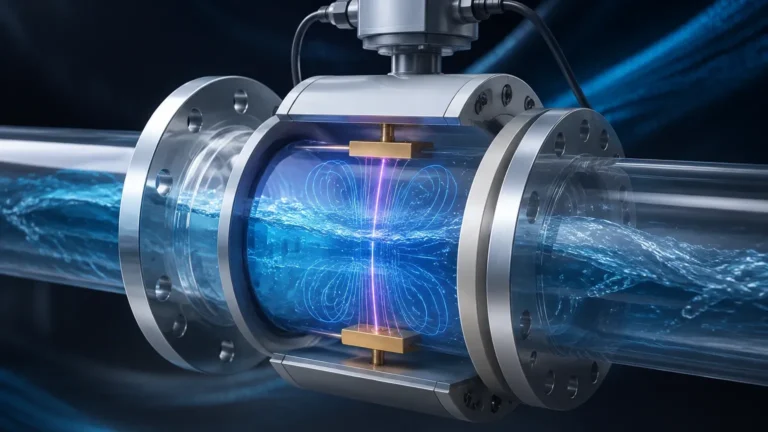
Inside a cubemass meter, one or two measuring tubes are induced to vibrate at their resonant frequency by an electro-magnetic drive coil. When a fluid (liquid or gas) flows through these vibrating tubes, the Coriolis force is exerted. This force causes a "twisting" or phase shift in the tube's vibration.
1. Mass Flow: The sensors located at the inlet and outlet of the tubes detect this phase shift. The magnitude of the shift is directly proportional to the mass flow rate. Since mass is a conserved quantity, this measurement is unaffected by changes in fluid viscosity, conductivity, or flow profile.
2. Density: The resonant frequency of the tube vibration depends on the total mass of the tube and the fluid inside it. By measuring this frequency, the instrument can calculate the fluid's density in real-time.
3. Temperature: Integrated PT100 sensors monitor the tube temperature to compensate for thermal expansion and provide a secondary process variable.
Compact Design Philosophy
The "cube" designation typically refers to the compact, space-saving housing designed for skid-mounted systems, laboratory environments, and additive dosing. Unlike standard Coriolis meters that may require significant installation lengths, cubemass units are engineered for minimal footprint, often featuring DN1 to DN6 (1/24" to 1/4") connection sizes.
Practical Selection Criteria
Selecting a cubemass meter requires an understanding of the specific process conditions. Because these meters are often used for high-value fluids or critical dosing, the margin for error in selection is narrow.
Material Compatibility
Given that the measuring tubes are subject to constant high-frequency vibration, the material must be resistant to both chemical corrosion and mechanical fatigue. Common materials include Stainless Steel 316L or Alloy C22. Engineers must verify that the process fluid will not cause pitting or stress corrosion cracking, which could lead to tube failure.
Pressure and Temperature Limits
Compact Coriolis meters are frequently used in high-pressure applications, such as chemical injection or CNG (Compressed Natural Gas) dispensing. It is common to find cubemass units rated for pressures up to 400 bar (40 MPa). Temperature ratings typically span from -50°C to +200°C, though specialized cryogenic or high-heat versions exist.
Selection Comparison Table
| Feature | Cubemass (Coriolis) | Radar Level Meter | Ultrasonic Level Meter |
| :— | :— | :— | :— |
| Primary Measurement | Mass Flow, Density | Distance to Surface | Distance to Surface |
| Accuracy | ±0.1% of rate | ±1 mm to ±5 mm | ±0.25% of range |
| Installation Type | Inline (Pipeline) | Top-mount (Non-contact) | Top-mount (Non-contact) |
| Space Requirement | Very Low (Compact) | Moderate (Antenna size) | Moderate |
| Media Influence | Independent of Viscosity | Affected by Dielectric | Affected by Vapor/Foam |
| Typical Application | Precision Dosing | Tank Inventory | Wastewater/Open Channel |
Applications in Industrial Automation
Cubemass technology is not a replacement for level measurement but rather a complementary tool. In many B2B industrial scenarios, the two technologies work in tandem to provide a complete mass balance of the system.
Precision Dosing and Filling
In the pharmaceutical and food industries, adding small amounts of concentrated ingredients requires extreme precision. A cubemass meter can control a dosing pump to deliver exactly 500 grams of a reagent, regardless of whether the reagent's density changes due to ambient temperature fluctuations. A level meter in the supply tank ensures the process does not run dry.
High-Pressure Gas Measurement
For hydrogen refueling stations or CNG dispensers, the compact nature of cubemass meters allows them to be fitted inside the dispenser cabinet. Their ability to measure mass directly is essential here, as gas volume changes drastically with pressure, making volumetric measurement unreliable.
Chemical Injection Skids
In oil and gas production, chemical inhibitors are injected into wellheads at high pressures to prevent scale or corrosion. The small flow rates and high pressures make cubemass the preferred technology for ensuring the correct dosage is maintained, protecting multi-million dollar infrastructure.
Installation and Engineering Considerations
While cubemass meters are robust, their reliance on high-frequency vibration makes them sensitive to certain environmental factors.
1. Vibration Decoupling: The meter should be installed in a location free from external mechanical vibrations. If the pipework vibrates at a frequency near the meter's resonant frequency, it can cause measurement errors. Using flexible connectors or rigid mounting brackets on either side of the meter is recommended.
2. Orientation: To prevent the accumulation of air bubbles (in liquid service) or condensate (in gas service), the orientation of the "cube" is vital. For liquids, the tubes should ideally point downward or be installed in a vertical rising pipe. For gases, the tubes should point upward.
3. Zero Point Calibration: After installation and under full process pressure, a "zero-point adjustment" must be performed with the flow stopped. This accounts for the unique stresses exerted by the specific piping arrangement on the meter tubes.

Common Risks and Mitigation
Integrating cubemass technology involves addressing potential failure points to ensure long-term reliability.
* Gas Entrainment: Coriolis meters struggle with "two-phase flow" (liquid containing gas bubbles). Even a small percentage of air can dampen the tube vibration, leading to a "measurement error" or "empty tube" alarm. Mitigation involves installing air eliminators upstream or ensuring sufficient backpressure to keep gases in solution.
* Pressure Drop: Because cubemass meters often use small-diameter tubes, the pressure drop across the device can be significant. Engineers must calculate the available Net Positive Suction Head (NPSH) to ensure the meter does not cause cavitation in the pump or restrict the flow below required levels.
* Abrasive Media: High-velocity fluids containing solids can erode the thin walls of the measuring tubes. For slurry applications, larger Coriolis meters or electromagnetic flowmeters are often more appropriate, while cubemass remains reserved for clean fluids.
Choosing Between Mass Flow and Level Measurement
A common question in process design is whether to measure the consumption of a liquid via a level transmitter or a mass flowmeter.
* Use Level Measurement (Radar/Ultrasonic): When the primary goal is inventory management, overfill protection, or when the tank geometry is simple. Level meters are generally more cost-effective for large-scale storage. For a comprehensive range of these instruments, engineers often consult the Main Page of specialized manufacturers to compare radar versus hydrostatic options.
* Use Cubemass: When the process requires high-speed dosing, when the fluid density is highly variable, or when the measurement must be taken in a pipeline rather than a tank. Cubemass is the superior choice for custody transfer and batching operations where every gram counts.
FAQ: Frequently Asked Questions
Q: Does a cubemass meter require straight pipe runs like an orifice plate?
A: No. One of the major advantages of Coriolis technology is that it is generally independent of the flow profile. It does not require long straight runs of pipe upstream or downstream, making it ideal for tight skids.
Q: How often does a cubemass meter need recalibration?
A: Because there are no moving parts subject to wear (like bearings in a turbine meter), the calibration is very stable. Most industrial standards recommend a check every 2 to 5 years, depending on the criticality of the application and the corrosivity of the fluid.
Q: Can cubemass measure non-conductive liquids?
A: Yes. Unlike electromagnetic flowmeters, Coriolis technology does not require the fluid to be conductive. It works perfectly with oils, solvents, and deionized water.
Q: What is the impact of ambient temperature on the housing?
A: The internal PT100 sensors compensate for the effect of temperature on the tube's elasticity. However, in extreme environments, insulation or heat tracing may be required to prevent the process fluid from freezing or changing state within the small measuring tubes.
Conclusion
Cubemass technology provides a specialized, high-precision solution for modern industrial challenges. By delivering accurate mass flow, density, and temperature data in a compact form factor, it fills a gap that traditional level and volumetric flow instruments cannot. When integrated correctly—with careful attention to vibration decoupling and fluid properties—it serves as a cornerstone of efficient, automated process control. For broader inventory and vessel management, combining these meters with the level measurement solutions found on the Main Page ensures a robust and redundant engineering architecture.