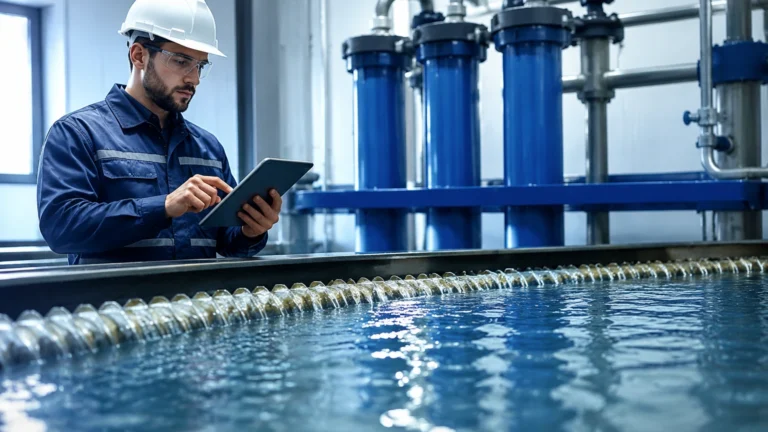
Daniel Ultrasonic Flow Meter
Daniel Ultrasonic Flow Meter
In the landscape of industrial process control and fiscal measurement, the Daniel ultrasonic flow meter represents a standard for high-accuracy custody transfer and process monitoring. Primarily utilized in the oil and gas, chemical, and power generation sectors, these instruments leverage acoustic technology to measure the velocity of a fluid within a closed conduit. Unlike mechanical meters, ultrasonic flow meters offer a non-intrusive measurement path, which significantly reduces pressure drop and maintenance requirements. Understanding the engineering principles, selection criteria, and installation nuances is essential for process engineers looking to optimize their flow measurement infrastructure.
Measurement Principles of Ultrasonic Technology
To effectively evaluate a Daniel ultrasonic flow meter, one must first understand the underlying physics of ultrasonic measurement. Most high-precision industrial meters, including the Daniel product line, utilize the transit-time (or time-of-flight) principle.
Transit-Time Principle
Transit-time ultrasonic flow meters operate by transmitting and receiving high-frequency sound pulses between pairs of transducers. These transducers are typically arranged in a diagonal path across the pipe. When the fluid is moving, the pulse traveling with the flow (downstream) moves faster than the pulse traveling against the flow (upstream).
Mathematically, the difference in travel time is expressed as:
$$\Delta t = t_{up} – t_{down}$$
Where:
* $t_{up}$: Time taken for the pulse to travel upstream.
* $t_{down}$: Time taken for the pulse to travel downstream.
Since the speed of sound in the fluid is constant (under stable temperature and pressure), the difference in time ($\Delta t$) is directly proportional to the velocity of the fluid. Once the average velocity is determined, the meter calculates the volumetric flow rate by multiplying the velocity by the cross-sectional area of the pipe.
Multi-Path Configuration
One of the defining characteristics of Daniel ultrasonic flow meters is their multi-path design. While a single-path meter measures velocity along a single chord, it is susceptible to errors caused by non-uniform flow profiles (swirl or turbulence). Daniel meters often utilize four, eight, or more paths. By sampling the velocity profile at multiple points across the pipe diameter, the meter can mathematically compensate for profile distortions, achieving the high levels of accuracy required for custody transfer (often within ±0.1% to ±0.5%).
Key Evaluation Criteria for Selection
Selecting the correct flow meter requires a deep dive into the application's specific parameters. While Daniel meters are robust, they are not a "one-size-fits-all" solution. Engineers must confirm the following criteria before procurement.
Fluid Properties and Phase
Transit-time meters require relatively clean fluids. In gas applications, the gas must be dry and free of excessive liquids (condensate). In liquid applications, the presence of entrained air or high concentrations of suspended solids can scatter the ultrasonic signal, leading to signal loss. For applications involving heavy slurries or highly aerated liquids, a Doppler-style meter might be more appropriate, though Daniel's core strength lies in the transit-time domain for clean or semi-clean fluids.
Accuracy and Uncertainty Requirements
For fiscal measurement or "custody transfer," where ownership of the fluid changes hands, the Daniel ultrasonic flow meter is often the preferred choice due to its low uncertainty. If the application is merely for internal process monitoring or balance, a simpler single-path or clamp-on ultrasonic meter may suffice. However, for high-value hydrocarbons, the multi-path Daniel meter provides the necessary redundancy and diagnostic capabilities.
Pressure and Temperature Ratings
Industrial processes often operate at extremes. It is vital to verify that the meter body, transducers, and seals are rated for the maximum operating pressure (often exceeding 100 bar in gas transmission) and the temperature range of the process. High-temperature transducers are available, but they require specific mounting considerations to protect the sensitive piezoelectric elements.
Practical Selection Table
The following table provides a general comparison between common ultrasonic flow meter configurations used in industrial settings.
| Feature | Single-Path (General Purpose) | Multi-Path (Daniel Type) | Clamp-On (Portable/Retrofit) |
| :— | :— | :— | :— |
| Typical Accuracy | ±1.0% to ±2.0% | ±0.1% to ±0.5% | ±1.0% to ±3.0% |
| Installation | Inline (Flanged) | Inline (Flanged) | External (Strapped) |
| Maintenance | Low | Low (Self-Diagnostic) | Very Low |
| Pressure Drop | Negligible | Negligible | Zero |
| Primary Use | Process Water/Chemicals | Oil & Gas Custody Transfer | Temporary Audits/Check-metering |
| Cost | Moderate | High | Moderate |
Installation Considerations and Best Practices
Even the most advanced Daniel ultrasonic flow meter will fail to meet its accuracy specifications if installed incorrectly. Proper installation is the bridge between theoretical performance and field reality.
Straight Run Requirements
Ultrasonic meters are sensitive to the velocity profile of the fluid. Disturbances such as elbows, valves, and reducers create swirl and turbulence. To ensure a "fully developed" flow profile, manufacturers typically require a specific length of straight pipe upstream and downstream of the meter.
* Upstream: Usually 10 to 20 pipe diameters (D).
* Downstream: Usually 3 to 5 pipe diameters (D).
If space is limited, a flow conditioner (a perforated plate or vane-type device) can be installed upstream to straighten the flow, allowing for shorter straight-run requirements.
Orientation and Mounting
For liquid applications, the meter should be installed in a section of pipe that is always full. Vertical upward flow is often preferred to ensure the pipe remains full and to prevent the accumulation of sediment. For horizontal installations, the transducers should be positioned on the sides of the pipe (3 o'clock and 9 o'clock positions) to prevent interference from air bubbles at the top or sediment at the bottom.
Electronics and Cabling
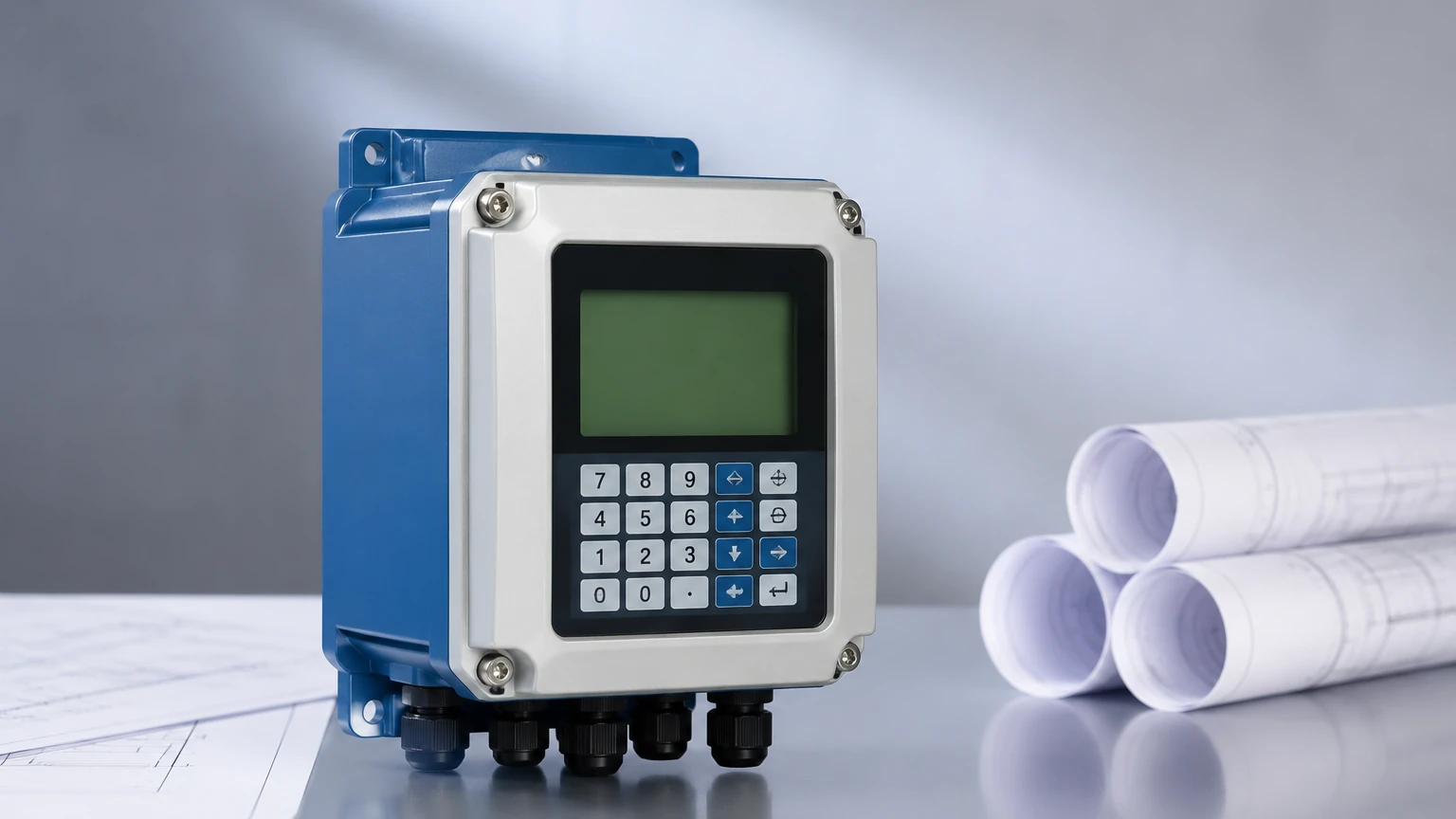
The electronics of a Daniel ultrasonic flow meter are highly sensitive. Signal cables should be shielded and separated from high-voltage power lines to prevent electromagnetic interference (EMI). Furthermore, the electronics housing should be accessible for maintenance and verification without requiring a total process shutdown.
Common Risks and Limitations
While the Daniel ultrasonic flow meter is a pinnacle of flow measurement technology, it is not without limitations. Engineers should be aware of the following risks:
1. Signal Attenuation: In high-pressure gas applications, the density of the gas can affect signal strength. Similarly, in liquids, high viscosity can dampen the ultrasonic pulses.
2. Transducer Fouling: Although the meter is non-intrusive, the transducers are still in contact with the process fluid (in wetted designs). Over time, wax, scale, or paraffin buildup can coat the transducer faces, weakening the signal.
3. Acoustic Noise: Control valves located too close to the meter can generate ultrasonic noise that interferes with the meter's operating frequency. This "noise" can lead to measurement errors or complete signal loss.
Integration with Level Measurement Systems
In many B2B industrial applications, flow measurement is only one part of a larger fluid management strategy. For instance, in tank farm automation or chemical processing, flow data from a Daniel ultrasonic flow meter is often cross-referenced with level data from storage tanks.
Welk, a professional manufacturer of industrial level measurement instruments, provides the complementary technology needed for these integrated systems. While flow meters measure the rate of movement, level instruments like radar level meters, ultrasonic level sensors, and magnetic level gauges provide the "inventory" or static volume data. For engineers designing a complete process control loop, reviewing the wide range of level measurement options is a critical step. You can explore these solutions further on the Main Page of our product catalog.
By combining high-accuracy flow data with reliable level measurement, operators can perform mass balance calculations, detect leaks in real-time, and ensure overfill protection, thereby enhancing both safety and profitability.
Frequently Asked Questions (FAQ)
Can a Daniel ultrasonic flow meter measure bi-directional flow?
Yes, transit-time ultrasonic meters are inherently bi-directional. They can measure flow in both directions with equal accuracy, provided the installation meets straight-run requirements for both sides.
How often do the transducers need to be replaced?
Under normal operating conditions, transducers can last for many years. However, Daniel meters often feature "extractable" transducers that can be removed and replaced under pressure (using a hot-tap tool) if a failure occurs or if maintenance is required.
What is the difference between a 4-path and an 8-path meter?
An 8-path meter provides more data points across the pipe's cross-section. This results in better performance in applications with complex flow profiles or where the straight-run pipe is shorter than recommended. It also provides higher redundancy; if one path fails, the meter can still operate with high accuracy using the remaining paths.
Is the Daniel ultrasonic flow meter suitable for steam measurement?
While ultrasonic technology can measure steam, it requires specialized high-temperature transducers and specific engineering considerations due to the high velocity and potential for condensate (two-phase flow) in steam lines. It is essential to consult the technical specifications for steam-specific models.
Conclusion
The Daniel ultrasonic flow meter remains a cornerstone of modern industrial flow measurement. Its ability to provide high-accuracy, low-maintenance, and non-intrusive measurement makes it indispensable for high-value fluid transactions. However, the success of the instrument depends heavily on correct selection, adherence to installation standards, and an understanding of the fluid's characteristics. When integrated with robust level measurement solutions, such as those provided by Welk, these flow meters form the backbone of efficient and safe industrial operations worldwide.