Decarbonization Services
Decarbonization Services
In the current industrial landscape, the drive toward net-zero emissions has transformed from a corporate social responsibility goal into a fundamental operational requirement. Decarbonization services encompass a broad range of strategic and technical interventions designed to reduce the carbon footprint of industrial processes. While many associate these services with renewable energy procurement or carbon offsetting, a significant portion of industrial decarbonization occurs at the process level. Precise measurement and control of fluids, chemicals, and waste products are essential for optimizing energy consumption and reducing the environmental impact of manufacturing, water treatment, and oil and gas operations.
For engineers and plant managers, the integration of advanced level measurement technology is a prerequisite for effective decarbonization. Without accurate data on inventory, flow, and consumption, it is impossible to establish the baselines necessary for carbon reporting or to identify the inefficiencies that lead to energy waste. This guide explores the technical principles of level measurement and how these instruments serve as the backbone for modern decarbonization services.
Principles of Level Measurement in Industrial Efficiency
Before implementing a decarbonization strategy, it is critical to understand the measurement principles that govern industrial level sensors. Each technology offers specific advantages depending on the physical properties of the medium and the environmental conditions of the process.
Radar Level Measurement (ToF)
Radar level meters operate on the Time-of-Flight (ToF) principle. They emit high-frequency microwave pulses (typically in the 26 GHz or 80 GHz range) that travel at the speed of light. When these pulses hit the surface of the medium, they are reflected back to the sensor. The distance is calculated based on the time interval between emission and reception.
In the context of decarbonization, radar technology is highly valued because it is non-contact and unaffected by temperature fluctuations, pressure changes, or the presence of vapors and dust. This reliability ensures that processes—such as chemical dosing or fuel storage—operate within strict parameters, preventing the over-consumption of resources.
Ultrasonic Level Sensors
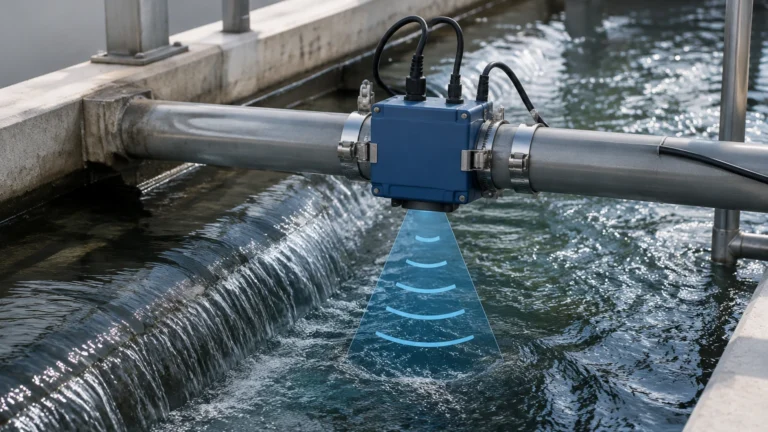
Ultrasonic sensors also use the ToF principle but utilize sound waves instead of electromagnetic waves. A transducer emits an ultrasonic pulse that reflects off the liquid surface. The time taken for the echo to return is proportional to the distance. While more cost-effective than radar, ultrasonic sensors are sensitive to air temperature changes (which affect the speed of sound) and surface foam. They are frequently used in water treatment facilities to monitor open channels and tanks, helping to optimize pumping schedules and reduce electricity consumption.
Hydrostatic Level Transmitters
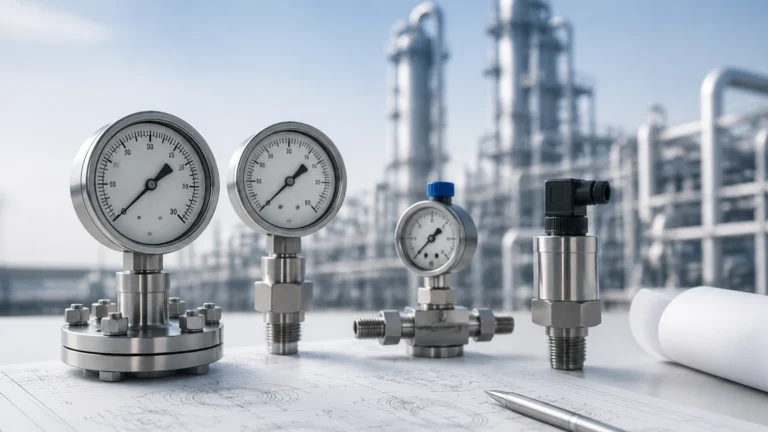
Hydrostatic measurement relies on the principle that the pressure at the bottom of a liquid column is directly proportional to the height of the liquid and its specific gravity. A pressure sensor (often a diaphragm) measures the "head pressure" of the liquid. This technology is robust and ideal for deep wells or large storage tanks where top-down mounting is impractical. By accurately monitoring tank levels, facilities can prevent dry-running pumps, which is a major source of mechanical wear and energy inefficiency.
Magnetic Level Gauges and Switches
Magnetic gauges use a float containing a permanent magnet that moves with the liquid level. This float interacts with a series of external flags or a sensing rod to provide visual or electronic feedback. Level switches, on the other hand, provide point-level detection to trigger alarms or shut off valves. These are vital for spill prevention; avoiding a single chemical spill can save a facility from the massive carbon expenditure associated with environmental remediation and hazardous waste processing.
The Role of Instrumentation in Decarbonization Services
Decarbonization services rely on "data-driven decarbonization." This involves using real-time monitoring to eliminate the "safety margins" that lead to resource waste. For example, in traditional chemical processing, an operator might over-fill a vessel by 5% to ensure a reaction never runs dry. With high-precision radar level meters, that margin can be reduced to 0.5%, significantly lowering the volume of chemicals that must be heated, pumped, and eventually treated as waste.
Key areas where level measurement supports decarbonization include:
1. Energy Optimization in Pumping: Pumping systems are among the largest consumers of electricity in industrial plants. By using continuous level monitoring to maintain optimal head pressure and automate pump cycles, energy demand can be reduced by 10-20%.
2. Leak and Loss Detection: Sudden drops in level that do not correlate with process demand indicate leaks. Early detection prevents the loss of processed fluids, which represent "embedded carbon" (the energy already spent to extract, transport, and refine them).
3. Optimized Logistics: For industries relying on bulk liquid deliveries, accurate level data allows for "just-in-time" refilling. This reduces the number of transport truck trips required, directly lowering Scope 3 emissions.
Technical Selection Criteria
Choosing the correct instrument is vital for ensuring the longevity and accuracy of the data used in decarbonization audits. The following table provides a comparison of common technologies used in industrial applications.
| Technology | Accuracy | Range (Typical) | Best For | Limitations |
| :— | :— | :— | :— | :— |
| 80 GHz Radar | ±1 mm | Up to 120m | Corrosive liquids, solids, precision inventory | High initial cost |
| Guided Wave Radar | ±2 mm | Up to 30m | Low dielectric liquids, interface measurement | Contacting (probe can foul) |
| Ultrasonic | ±0.25% of range | Up to 15m | Water, wastewater, open channels | Affected by foam and wind |
| Hydrostatic | ±0.1% to 0.5% | Up to 200m | Deep wells, vented tanks | Density changes affect accuracy |
| Magnetic Gauge | ±5 mm | Up to 6m | High pressure, high temperature | Moving parts require maintenance |
Installation Considerations for Maximum Accuracy
To ensure that level measurement instruments provide the reliable data required for decarbonization services, proper installation is mandatory. Even the most advanced 80 GHz radar can provide false readings if installed incorrectly.
* Nozzle Geometry: For radar and ultrasonic sensors, the mounting nozzle should be as short as possible. If the nozzle is too long or narrow, internal reflections (ringing) can interfere with the signal near the top of the tank, creating a "dead zone."
* Obstruction Clearance: Instruments must be positioned away from internal tank structures such as agitators, ladders, or heating coils. If obstructions are unavoidable, modern sensors offer "false echo suppression" software to map out these static reflections.
* Beam Angle: The beam angle of the sensor determines the footprint of the signal. A narrower beam angle (common in higher frequency radar) allows for installation closer to tank walls without interference.
* Venting and Pressure: For hydrostatic sensors, the atmospheric side of the sensor must be properly vented. In pressurized tanks, a differential pressure (DP) setup is required to subtract the gas-phase pressure from the total pressure at the bottom.

Limitations and Challenges
While technology has advanced, there are inherent limitations that engineers must account for when designing decarbonization-focused monitoring systems:
1. Dielectric Constant (εr): Radar signals rely on the dielectric difference between the air and the medium. Liquids with very low dielectric constants (such as certain oils or liquefied gases) reflect less energy, requiring high-sensitivity sensors or guided wave radar.
2. Surface Turbulence: Rapid filling or agitation can create a turbulent surface that scatters radar or ultrasonic signals. In these cases, a stilling well or a bypass chamber may be necessary to provide a calm surface for measurement.
Heavy Foam: Thick, dense foam can absorb ultrasonic and radar signals entirely. If foam is a persistent issue, hydrostatic transmitters or magnetic level gauges are often more reliable alternatives.
Frequently Asked Questions
Q: How does level measurement contribute to Scope 1 emissions reduction?
A: Scope 1 emissions are direct emissions from owned or controlled sources. By using precise level meters to optimize boiler feed water or fuel consumption in on-site power generation, facilities can reduce the amount of fuel burned, directly lowering their Scope 1 CO2 output.
Q: Can I retro-fit old tanks with new sensors for decarbonization tracking?
A: Yes. Non-contact radar and ultrasonic sensors are ideal for retrofitting because they can often be installed on existing flanges without emptying the tank. This allows facilities to upgrade their monitoring capabilities with minimal downtime.
Q: What is the maintenance requirement for these sensors?
A: Non-contact sensors (Radar/Ultrasonic) have no moving parts and generally require very little maintenance beyond occasional cleaning of the lens if the medium is prone to heavy buildup. Contacting sensors like magnetic floats or hydrostatic diaphragms should be inspected annually for fouling or mechanical wear.
Q: Is wireless transmission suitable for decarbonization data?
A: Wireless protocols like WirelessHART or LoRaWAN are increasingly used to transmit level data to centralized energy management systems. This is particularly useful for remote storage tanks where cabling costs would be prohibitive, enabling a more comprehensive view of the facility's resource footprint.
Conclusion
Effective decarbonization services are built upon a foundation of precision and reliability. In the industrial sector, this begins with the accurate measurement of the liquids and solids that drive production. By selecting the appropriate level measurement technology—whether it be high-frequency radar for precision inventory or hydrostatic transmitters for deep-well monitoring—companies can gain the insights needed to eliminate waste, optimize energy use, and meet stringent environmental targets. For those looking to upgrade their facility's monitoring capabilities, it is essential to Review product options and application support to ensure the selected instrumentation aligns with both process requirements and sustainability goals. Through the strategic application of Welk's industrial level measurement solutions, the path to a lower-carbon future becomes both measurable and achievable.