Single-use Sensors
Single-use Sensors
In the rapidly evolving landscape of biopharmaceutical manufacturing and high-purity chemical processing, the shift toward flexible, modular production has driven the adoption of single-use technology (SUT). At the heart of this transition are single-use sensors—disposable measurement devices designed to monitor critical process parameters such as level, pressure, and temperature without the need for cleaning or sterilization between batches.
For engineers and facility managers accustomed to the robust, stainless-steel world of traditional level measurement, single-use sensors represent a fundamental change in both hardware design and operational logic. This guide examines the principles, selection criteria, and practical implementation of single-use level and pressure sensing technologies in industrial environments.
Measurement Principles of Single-use Sensors
Unlike traditional level meters that are designed for years of repeated service and rigorous Clean-in-Place (CIP) or Steam-in-Place (SIP) cycles, single-use sensors are integrated directly into disposable plastic process containers (bioreactors, mixing bags, or storage carboys). The measurement principles must accommodate the unique material properties of these plastic vessels.
1. Hydrostatic Pressure Measurement
Hydrostatic single-use sensors measure the weight of the liquid column above a sensing element located at the bottom of the vessel. The principle follows the standard formula: $P = \rho gh$, where $P$ is pressure, $\rho$ is fluid density, $g$ is gravity, and $h$ is the height of the liquid.
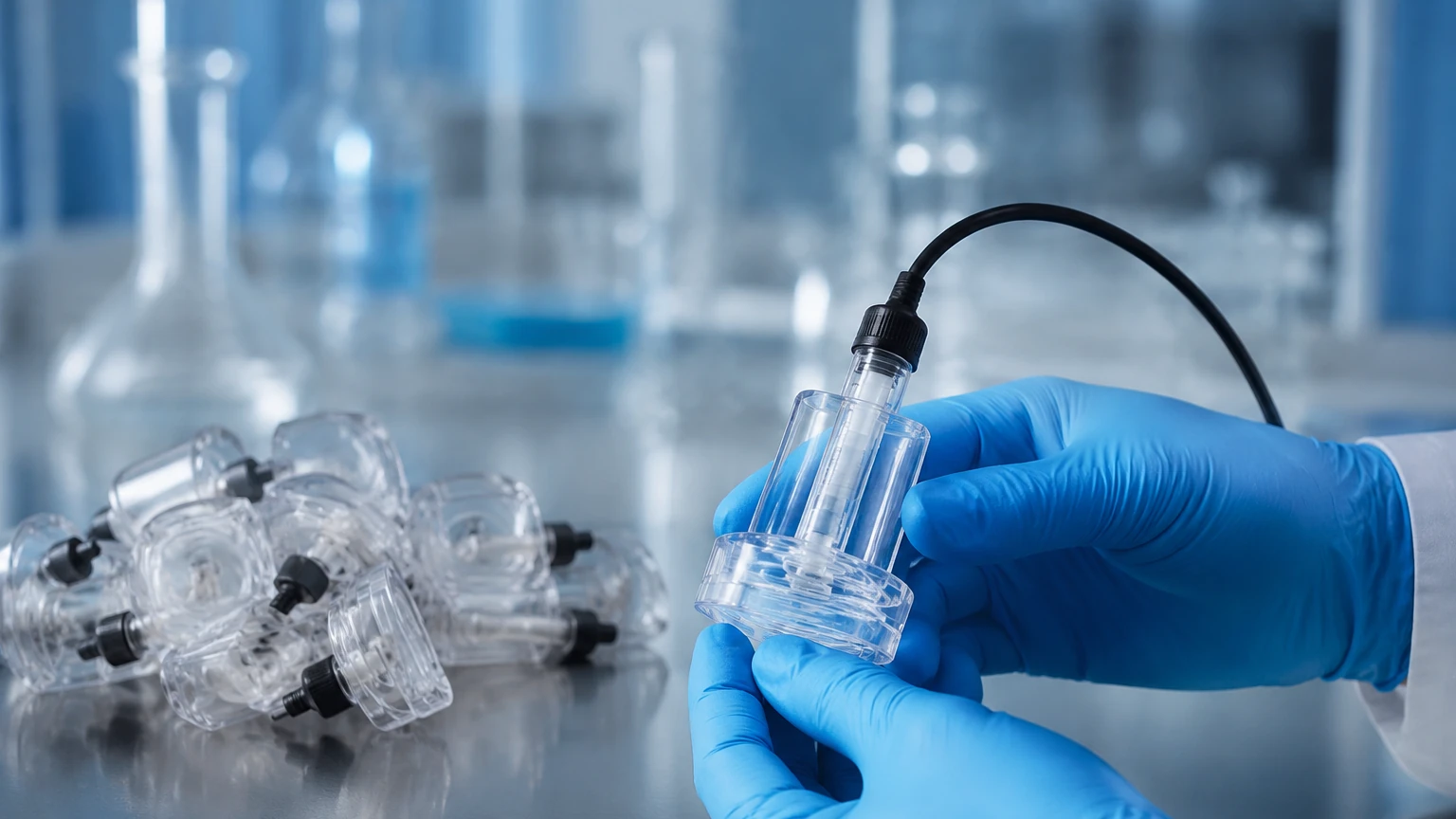
In a single-use context, the sensing element is typically a piezoresistive silicon chip or a capacitive ceramic diaphragm integrated into a plastic housing (often polycarbonate or polysulfone). This housing is welded or connected via a sanitary fitting to the single-use bag. The sensor converts mechanical pressure into an electrical signal, which is then transmitted to a reusable monitor or PLC.
2. Ultrasonic Time-of-Flight
Ultrasonic technology is frequently used in single-use applications because it can often be implemented non-invasively. The sensor emits a high-frequency sound wave that travels through the liquid and reflects off the surface. By measuring the time it takes for the echo to return, the system calculates the distance to the liquid level.
In single-use setups, ultrasonic sensors may be "clamp-on" types that attach to the outside of flexible tubing or rigid plastic walls. Alternatively, some single-use sensors involve a disposable plastic wave-guide or reflector integrated into the bag, while the active transducer remains external and reusable.
3. Capacitive Level Sensing
Capacitive sensors detect changes in electrical capacitance caused by the presence of a liquid. Because plastic containers have a low dielectric constant compared to water-based process fluids, the sensor can often "see" through the wall of the single-use bag. As the liquid level rises, the capacitance at the sensing point increases, triggering a level switch or providing a continuous level reading. This method is highly valued for its non-contact nature, ensuring zero risk of contamination.
Key Evaluation Criteria for Industrial Applications
Selecting the right single-use sensors requires a departure from traditional instrumentation specifications. Engineers must evaluate the following factors to ensure process integrity and measurement accuracy:
Material Compatibility and Sterility
The most critical factor is the sensor's ability to withstand gamma irradiation, which is the standard sterilization method for single-use assemblies. The sensor materials (plastics, adhesives, and electronic components) must not degrade or lose calibration when exposed to doses typically ranging from 25 to 50 kGy. Furthermore, all wetted materials must meet USP Class VI standards and be free of animal-derived components to prevent leachables and extractables (L&E) from contaminating the product.
Integration and Connectivity
Single-use sensors must integrate seamlessly into the existing automation architecture. Most industrial systems require standard outputs such as 4-20 mA, 0-10 V, or digital protocols like Modbus or HART. Because the sensor itself is disposable, the connection between the disposable sensing element and the reusable transmitter/cable must be robust, easy to clean, and error-proof (often utilizing keyed connectors).
Accuracy and Calibration
In traditional level measurement, sensors are calibrated on-site. With single-use sensors, the disposable element is often pre-calibrated by the manufacturer. Engineers must verify the "lot-to-lot" consistency of these sensors. For high-precision applications, the system should allow for a single-point offset adjustment once the sensor is installed in the process bag to account for atmospheric pressure variations or installation geometry.
Practical Selection Table
The following table provides a comparison of common level measurement technologies used in single-use formats:
| Feature | Hydrostatic (Wetted) | Ultrasonic (Non-invasive) | Capacitive (Point Level) |
| :— | :— | :— | :— |
| Measurement Type | Continuous Level | Continuous Level | Point Level (High/Low) |
| Media Contact | Yes | No | No |
| Accuracy | ±0.5% to ±1.0% FS | ±2 mm to ±5 mm | High (Repeatability ±1 mm) |
| Typical Range | 0.1 bar to 2 bar | 0.1 m to 3 m | N/A (Fixed point) |
| Sterilization | Gamma Stable | N/A (External) | N/A (External) |
| Best Use Case | Bioreactor volume tracking | Buffer tank monitoring | Overfill protection |
Installation Considerations and Best Practices
Proper installation is paramount to the performance of single-use sensors. Unlike rigid metal tanks, single-use bags are flexible and can shift during filling, which may affect sensor alignment.
1. Positioning: For hydrostatic sensors, ensure the sensor is located at the lowest possible point of the bag to maximize the measurable range. The bag must be properly supported by a rigid outer container (tote or tank) to prevent the weight of the liquid from distorting the sensor housing.
2. Air Bubbles: For wetted pressure sensors, air bubbles trapped against the diaphragm can cause significant measurement errors. Ensure the bag is vented correctly during the initial fill.
3. Cable Management: Since the sensors are replaced frequently, cable management systems should be implemented to prevent strain on the sensor connectors. Reusable cables should be routed away from high-traffic areas to avoid accidental disconnection.
4. Zeroing: Always perform a zero-pressure calibration when the bag is empty but fully expanded within its support structure. This compensates for the weight of the empty bag and any mechanical tension on the sensor.
Limitations and Common Risks
While single-use sensors offer significant advantages in terms of speed and reduced cleaning costs, they are not without limitations:
* Leachables and Extractables (L&E): Even with USP Class VI materials, there is a risk of chemicals migrating from the sensor plastic into the process fluid. This is especially critical in long-term storage or high-temperature applications. Manufacturers should provide comprehensive L&E data packages.
* Pressure Limits: Most single-use level and pressure sensors are designed for low-pressure applications (typically below 5 bar / 75 psi). They are not suitable for high-pressure chemical synthesis.
* Environmental Impact: The disposal of plastic sensors contributes to the facility's waste stream. While often offset by the reduction in water and chemical usage from CIP/SIP, it remains a consideration for corporate sustainability goals.
* Fragility: The plastic housings and delicate diaphragms of single-use sensors are more susceptible to mechanical damage during shipping and handling compared to their stainless-steel counterparts.
Frequently Asked Questions (FAQs)
Q: Can single-use sensors be reused if they are cleaned?
A: Generally, no. Single-use sensors are designed and validated for a single process cycle. The materials may not withstand repeated sterilization cycles (autoclave or chemical), and the calibration may drift significantly after the first use.
Q: How do single-use sensors handle high-viscosity fluids?
A: Hydrostatic sensors are generally effective for high-viscosity fluids as long as the fluid density is known and constant. Non-invasive ultrasonic sensors may struggle if the fluid contains high levels of entrained air or if the viscosity affects the sound velocity significantly.
Q: Are single-use sensors compatible with organic solvents?
A: It depends on the housing material. While many are made of polycarbonate (which has limited solvent resistance), some are available in PEEK or other high-performance plastics. Always check the chemical compatibility chart for the specific sensor housing.
Conclusion
Single-use sensors have become indispensable tools in modern bioprocessing, offering a path to greater flexibility and reduced cross-contamination risk. By understanding the underlying measurement principles—whether hydrostatic, ultrasonic, or capacitive—and rigorously evaluating material compatibility and integration requirements, engineering teams can successfully implement these technologies.
For facilities transitioning from traditional stainless-steel infrastructure to hybrid or fully disposable workflows, it is essential to partner with experienced instrumentation providers. To explore a wider range of industrial level measurement technologies, including both traditional and advanced sensing solutions, you can Main Page to review product options and application support. Selecting the right sensor technology is the first step toward ensuring process stability and product quality in any industrial automation environment.