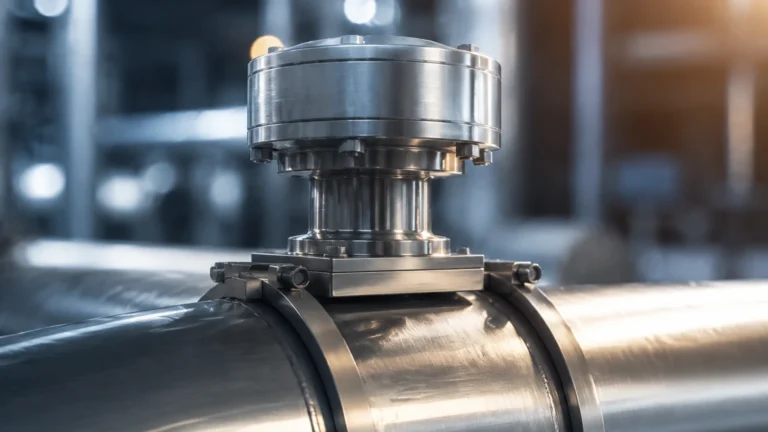
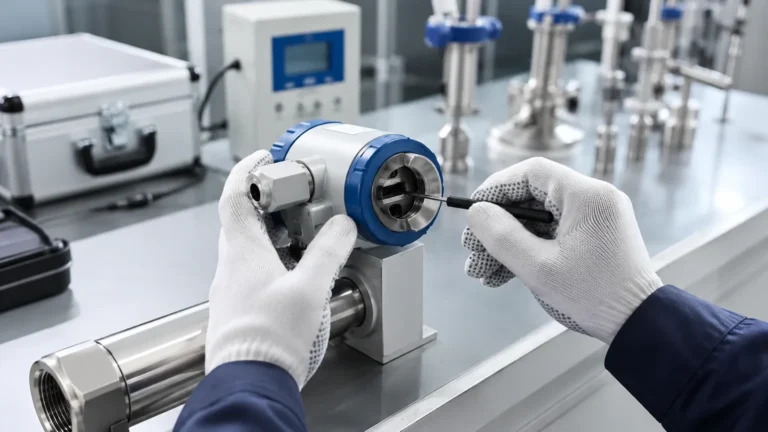
Digital Pressure Transducer
Digital Pressure Transducer
In the landscape of industrial automation and process control, the digital pressure transducer has emerged as a cornerstone technology for precision measurement. Unlike traditional analog sensors that output a continuous voltage or current signal, a digital pressure transducer converts mechanical pressure into a discrete digital value. This transition to digital architecture allows for enhanced data integrity, easier integration with modern control systems, and advanced diagnostic capabilities. For engineers and system integrators, understanding the underlying principles and selection criteria of these devices is essential for optimizing plant performance and ensuring long-term reliability.
Measurement Principles and Digital Conversion
The operation of a digital pressure transducer begins with a physical sensing element, typically a diaphragm, which deflects when exposed to fluid or gas pressure. The method used to detect this deflection determines the sensor's performance characteristics.
Piezoresistive Sensing
This is the most common principle used in industrial applications. Piezoresistive sensors utilize strain gauges—often made of silicon—bonded to or diffused into a diaphragm. When pressure is applied, the diaphragm deforms, changing the electrical resistance of the strain gauges. In a digital transducer, this change in resistance is measured by a Wheatstone bridge circuit and then passed to an onboard Analog-to-Digital Converter (ADC).
Capacitive Sensing
Capacitive transducers measure the change in electrical capacitance between a flexible diaphragm and a fixed backplate. As pressure moves the diaphragm, the distance between the plates changes, altering the capacitance. This method is highly sensitive and is often preferred for low-pressure measurements or applications requiring high overpressure resistance.
The Digital Processing Chain
Once the sensing element generates an analog signal, the internal electronics of the digital pressure transducer take over. An integrated microprocessor or Application-Specific Integrated Circuit (ASIC) performs several critical functions:
1. A/D Conversion: The analog signal is sampled at high frequency and converted into a high-resolution digital format (often 16-bit or 24-bit).
2. Linearization: No sensor is perfectly linear. The microprocessor applies polynomial correction factors to compensate for non-linearities inherent in the sensing element.
3. Temperature Compensation: Pressure sensors are naturally sensitive to temperature changes. Digital transducers often include an internal temperature sensor, allowing the processor to correct the pressure reading in real-time based on a factory-calibrated thermal map.
4. Signal Output: The corrected data is then transmitted via a digital protocol such as RS485 (Modbus RTU), CANopen, or HART.
Digital Pressure Transducers in Level Measurement
One of the primary applications for a digital pressure transducer is hydrostatic level measurement. In this context, the transducer is used to measure the weight of a liquid column above it. The relationship is governed by the formula:
P = ρ × g × h
Where:
* P is the hydrostatic pressure (measured in Pascals or bar).
* ρ (rho) is the density of the liquid (kg/m³).
* g is the gravitational constant (approx. 9.81 m/s²).
* h is the height of the liquid (meters).
By using a digital pressure transducer at the bottom of a tank or submerged in a well, operators can calculate the exact liquid level with high precision. Digital units are particularly advantageous here because they can transmit data over long distances—such as from a deep borehole to a surface controller—without the signal degradation or electromagnetic interference (EMI) that often plagues 4-20mA analog loops.
For a comprehensive overview of how these sensors integrate into broader industrial systems, professionals can Review product options and application support on our Main Page.
Key Selection Criteria for Industrial Applications
Selecting the correct digital pressure transducer requires a detailed analysis of the process environment and the required data output. The following factors are critical:
1. Pressure Type
* Gauge Pressure: Measured relative to atmospheric pressure. The transducer requires a vent (often a tube inside the cable) to balance the internal side of the diaphragm with the ambient air.
* Absolute Pressure: Measured relative to a perfect vacuum. These are used in vacuum processes or where atmospheric pressure fluctuations would introduce errors.
* Differential Pressure: Measures the difference between two pressure ports, commonly used for filter monitoring or flow measurement.
2. Digital Protocol and Interface
Compatibility with the existing PLC or SCADA system is paramount. Common interfaces include:
* RS485/Modbus RTU: Ideal for multi-drop networks where multiple sensors are connected to a single pair of wires.
* HART: A hybrid protocol that superimposes a digital signal on a standard 4-20mA loop, allowing for digital diagnostics while maintaining analog compatibility.
* I2C/SPI: Typically used for board-level integration in OEM equipment.
3. Accuracy and Long-term Stability
Accuracy is usually expressed as a percentage of Full Scale (FS). While 0.5% FS is standard for many industrial tasks, high-precision digital pressure transducers can achieve 0.1% or even 0.05% FS. Long-term stability, or "drift," is also vital; high-quality digital sensors are designed to maintain their calibration for years, reducing the need for frequent field adjustments.
Practical Selection Table
| Feature | Piezoresistive Digital Transducer | Ceramic Capacitive Digital Transducer |
| :— | :— | :— |
| Best For | General purpose, high pressure, clean liquids | Corrosive media, low pressure, slurry |
| Typical Accuracy | 0.1% to 0.25% FS | 0.2% to 0.5% FS |
| Overpressure Limit | 2x to 3x Rated Pressure | Up to 10x Rated Pressure |
| Wetted Materials | SS316L, Hastelloy, Tantalum | Ceramic (Al2O3), PVDF, PTFE |
| Signal Output | Modbus RTU, CANopen, HART | Modbus RTU, 4-20mA + HART |
| Temperature Range | -40°C to +125°C | -20°C to +80°C (standard) |
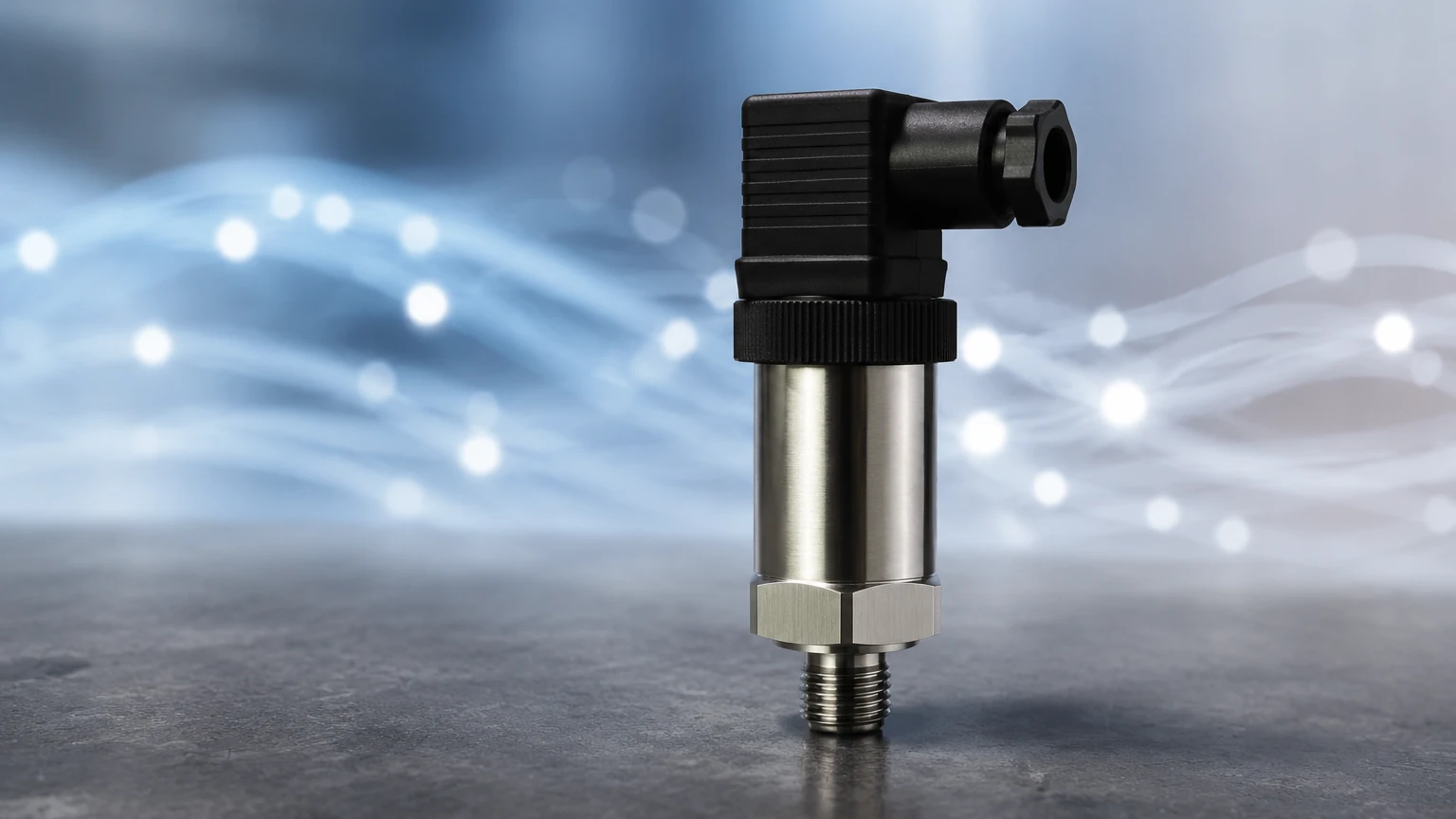
Installation and Maintenance Considerations
Proper installation is the most significant factor in the longevity of a digital pressure transducer. Even the most advanced sensor will fail if environmental factors are ignored.
Mounting and Orientation
For liquid applications, the transducer should ideally be mounted at a point where it remains submerged or in constant contact with the fluid. Avoid areas with high turbulence (near agitators) or where sediment can accumulate and block the sensing diaphragm. If mounting in a pipe, ensure the sensor is positioned to avoid air pockets.
Cable Protection and Venting
For gauge pressure sensors, the vent tube in the cable must remain unobstructed. It should terminate in a dry environment or be protected by a specialized vent filter or bellows to prevent moisture from entering the transducer housing. Moisture ingress is a leading cause of internal electronics failure.
Electrical Protection
Digital circuits can be sensitive to voltage spikes. In outdoor or lightning-prone areas, surge protection devices should be installed at both the sensor end and the controller end of the signal cable. Using shielded, twisted-pair cabling is mandatory to minimize the impact of EMI from nearby motors or variable frequency drives (VFDs).
Limitations and Operational Boundaries
While highly versatile, digital pressure transducers have specific limitations:
* Temperature Extremes: While digital compensation helps, extreme temperatures can still cause mechanical stress on the sensing element. For very high-temperature steam or chemical processes, impulse lines or cooling siphons are required to protect the electronics.
* Mechanical Shock and Vibration: High-frequency vibration can lead to fatigue in the sensing diaphragm or internal bond wires. In such environments, dampened mounts or remote-mounted electronics should be considered.
* Response Time: While digital sensors are fast, the A/D conversion and digital filtering introduce a small amount of latency (typically in milliseconds). This is rarely an issue for level or process pressure but should be noted for high-speed explosion suppression or hydraulic spike detection.
Frequently Asked Questions (FAQs)
Q: Can a digital pressure transducer be used in hazardous areas?
A: Yes, many digital transducers are available with ATEX, IECEx, or UL certifications for use in intrinsically safe or explosion-proof environments. Always verify the specific classification required for your zone.
Q: How often should a digital pressure transducer be calibrated?
A: Most industrial manufacturers recommend a calibration check every 12 to 24 months. However, because digital sensors track their own internal health, some models can provide diagnostic alerts when they drift out of specified tolerances.
Q: What is the maximum cable length for a Modbus RS485 digital transducer?
A: Under ideal conditions with proper termination and high-quality shielded cable, RS485 can reach up to 1,200 meters (approx. 4,000 feet). This makes it superior to most analog signals for large-scale industrial sites.
Q: Is it possible to change the pressure unit (e.g., from bar to PSI) in the field?
A: Yes, one of the main advantages of a digital interface is the ability to reconfigure parameters. Using software or a handheld communicator, users can typically change units, zero the sensor, or adjust the damping factor without hardware changes.
Conclusion
The digital pressure transducer represents a significant leap forward in process measurement technology. By integrating sensing and digital processing into a single robust package, these devices provide the accuracy and reliability required for modern industrial automation. Whether used for monitoring pipeline pressure or calculating liquid levels in a chemical storage tank, selecting the right transducer involves balancing accuracy requirements, material compatibility, and digital communication standards. For those seeking reliable, cost-effective level measurement solutions, visiting the Main Page provides access to a wide range of industrial instruments designed for the most demanding applications.