Do Pressure Sensor Work at 450 Degree Celsius
Do Pressure Sensor Work at 450 Degree Celsius
In the realm of industrial automation and process control, temperature is often the most significant adversary to instrument longevity and accuracy. Engineering teams frequently encounter environments—such as power generation, chemical synthesis, and metal refining—where process temperatures exceed the operating limits of standard electronic components. A common question arises in these high-stakes environments: do pressure sensor work at 450 degree celsius?
The short answer is that while standard silicon-based or piezoresistive sensing elements cannot survive direct contact with such extreme heat, specialized pressure measurement systems are designed specifically to operate under these conditions. To understand how this is achieved, one must look beyond the sensor itself and examine the engineering of the entire measurement interface.
Understanding the Fundamentals of Pressure and Level Measurement
Before addressing the complexities of high-temperature applications, it is essential to review the measurement principles used in industrial level and pressure sensing. Most hydrostatic level transmitters operate on the principle that the pressure at the bottom of a liquid column is directly proportional to the height of that liquid and its density ($P = \rho gh$).
In a standard configuration, a flexible diaphragm is exposed to the process fluid. The pressure deforms this diaphragm, and that mechanical movement is transferred to a sensing element—typically a strain gauge or a capacitive cell. This element converts the physical force into an electrical signal (4-20mA, HART, or Modbus).
However, the materials used in these sensors have thermal limits. Standard electronics typically fail above 85°C (185°F), and even high-end specialized sensors rarely exceed 125°C (257°F) at the electronics housing. When the process fluid reaches 450°C (842°F), direct contact would lead to immediate sensor destruction, fluid boiling within the sensor body, or the permanent loss of calibration due to the Curie point of magnetic materials or the melting of internal solder joints.
The Thermal Limits of Standard Pressure Sensing Technology
To answer why we must ask "do pressure sensor work at 450 degree celsius," we must look at the three primary failure modes caused by heat:
1. Electronic Degradation: Semiconductor materials lose their ability to control electron flow at high temperatures. At 450°C, the silicon chips used in modern transmitters would undergo irreversible structural damage.
2. Mechanical Fatigue: Diaphragms are engineered for specific elasticity. Extreme heat alters the Young's modulus of the metal (usually 316L stainless steel or Hastelloy), making the diaphragm too soft or causing it to warp, which results in significant measurement drift.
3. Fill Fluid Expansion: Most high-accuracy sensors use a fill fluid (like silicone oil) to transmit pressure from the diaphragm to the internal sensing chip. At 450°C, standard oils will vaporize or expand so violently that they rupture the diaphragm from the inside.
Engineering Solutions: How Do Pressure Sensor Work at 450 Degree Celsius?
To facilitate measurement at 450°C, engineers use thermal isolation and remote seal technology. This allows the sensing element to remain at a safe ambient temperature while the process interface handles the extreme heat.
Remote Diaphragm Seals and Capillaries
A remote seal system consists of a process diaphragm connected to the pressure transmitter via a thin, flexible capillary tube. The entire system is vacuum-filled with a specialized high-temperature transfer fluid. The capillary acts as a thermal barrier; by the time the pressure signal (transmitted through the fluid) reaches the sensor, the heat has dissipated into the surrounding air.
Cooling Fins and Impose Lines
For less volatile applications, cooling fins or "siphons" are used. These are mechanical extensions that increase the surface area of the sensor's neck, allowing convective cooling to reduce the temperature of the fluid before it contacts the sensor internals. In steam applications, a pigtail siphon is used to create a water seal (condensate) that protects the sensor from live steam.
Specialized Fill Fluids
For a system to function at 450°C, the fill fluid must have a high boiling point and low thermal expansion. While standard silicone oils are rated for up to 200°C, specialized fluids like certain synthetic oils or even liquid metals (such as NaK – Sodium-Potassium alloy) are used in extreme cases. However, for most 450°C industrial applications, a combination of a long capillary and a high-performance silicone oil (like DC 704 or 705) is sufficient, provided the sensor body is mounted far enough from the heat source.
Critical Components for High-Temperature Hydrostatic Measurement
When selecting a system for 450°C, the material science of the wetted parts is just as important as the thermal isolation. At these temperatures, oxidation and chemical corrosion are accelerated.
* Wetted Materials: While 316L Stainless Steel is the industry standard, at 450°C, many engineers opt for Inconel 600 or Hastelloy C-276 to prevent intergranular corrosion and maintain structural integrity.
* Gaskets and Seals: Standard Viton or PTFE seals will fail at 450°C. Metallic O-rings or graphite-reinforced gaskets are required to ensure a leak-proof process connection.
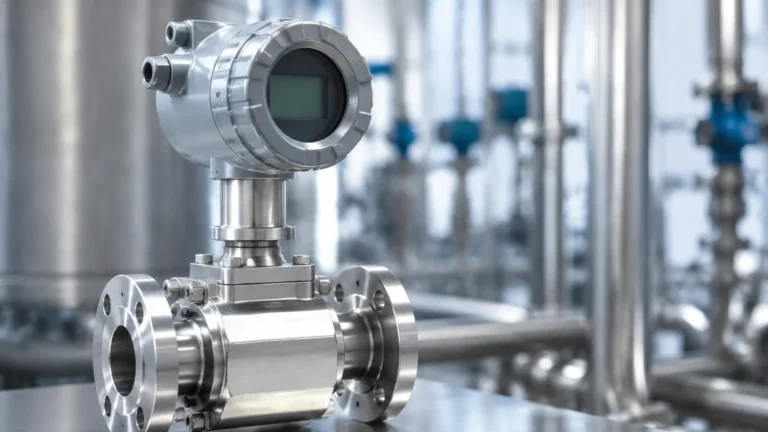
* Transmitter Housing: Even with a remote seal, the transmitter housing must be robust. For more information on durable housing options and various sensor technologies, you can Review product options and application support on our Main Page.
Installation Best Practices for Extreme Temperature Environments
Success in high-temperature pressure measurement is 30% hardware selection and 70% installation technique. If the installation is flawed, even the most expensive 450°C-rated system will provide inaccurate data.
1. Capillary Routing: Capillaries should never be insulated. They need to dissipate heat. If they are tucked under the tank's insulation jacket, the sensor will overheat. Conversely, both capillaries in a differential pressure setup should be kept at the same ambient temperature to prevent "density drift" in the fill fluid.
2. Mounting Position: The pressure transmitter should be mounted below the process tap if measuring liquids and above the process tap if measuring gases. For 450°C applications, mounting the transmitter at least 1 to 2 meters away from the heat source is standard practice.
3. Zero Calibration: Thermal expansion of the fill fluid will cause a "zero shift." It is critical to perform a zero-point calibration at the actual operating temperature, not just at ambient temperature during installation.

Selection Guide and Technical Specifications
When evaluating if a specific pressure sensor setup will work at 450°C, use the following table as a reference for technology selection:
| Feature | Standard Hydrostatic | High-Temp Integrated | Remote Seal System |
| :— | :— | :— | :— |
| Max Process Temp | 120°C (248°F) | 200°C (392°F) | Up to 600°C (1112°F) |
| Cooling Method | None | Cooling Fins/Heat Sink | Capillary + Remote Mount |
| Accuracy | 0.075% to 0.1% | 0.1% to 0.2% | 0.2% to 0.5% (due to temp drift) |
| Response Time | Fast (<10ms) | Fast (<50ms) | Slower (depends on capillary length) |
| Typical Use Case | Water tanks, ambient chemicals | Low-pressure steam, hot oils | Molten salts, refineries, reactors |
Limitations and Risks
While we have established that the answer to "do pressure sensor work at 450 degree celsius" is yes, it comes with trade-offs.
* Response Lag: The use of long capillaries and viscous high-temp fill fluids can slow down the response time of the sensor. This is usually acceptable for level measurement but may be a concern for high-speed pressure control loops.
* Ambient Temperature Sensitivity: Because the system relies on a fill fluid, changes in the *outside* temperature (summer vs. winter) can cause the fluid to expand or contract, leading to small measurement errors. This is often mitigated using temperature-compensated transmitters.
* Maintenance Complexity: Remote seal systems are factory-sealed. If a diaphragm is damaged or a capillary is kinked, the entire unit usually needs to be returned to the manufacturer for repair and vacuum refilling.
Frequently Asked Questions (FAQs)
Q: Can I use a standard pressure sensor with a long pipe (impulse line) to measure 450°C?
A: Yes, this is a common technique called an "impulse line." By using a long uninsulated pipe, the process fluid (if it is a gas or can stagnate) cools down before reaching the sensor. However, for viscous liquids or fluids that solidify when cooled, this will cause a blockage, making a remote diaphragm seal a better choice.
Q: What is the most common fill fluid for 450°C applications?
A: For temperatures up to 400°C, high-temperature silicone oils are common. For the 450°C threshold, specialized synthetic fluids or NaK (Sodium-Potassium) systems are typically employed, though NaK requires extreme care due to its reactivity with water.
Q: Does the orientation of the sensor matter at high temperatures?
A: Absolutely. In high-heat applications, the transmitter should be mounted in a way that prevents rising heat from the process connection from flowing directly into the electronics housing. Horizontal mounting or mounting below the tap is preferred.
Q: How often should I calibrate a high-temperature pressure sensor?
A: Due to the thermal stress on the diaphragm and the potential for fill fluid degradation, it is recommended to check the calibration every 6 to 12 months, or whenever the process undergoes a significant thermal cycling event.
Conclusion
In conclusion, if you are asking do pressure sensor work at 450 degree celsius, the answer lies in the integration of specialized isolation hardware. By utilizing remote diaphragm seals, high-temperature fill fluids, and strategic installation patterns, industrial level and pressure measurement can be performed reliably even in the most extreme thermal environments.
For engineers and procurement specialists looking for robust solutions, it is vital to partner with a manufacturer that understands these thermal dynamics. Welk provides a range of advanced level and pressure instruments tailored for industrial automation. To explore our full catalog and find the right instrument for your specific temperature requirements, please visit our Main Page for detailed technical data and application support.
Download Do Pressure Sensor Work at 450 Degree Celsius as a PDF