Echopod
Echopod
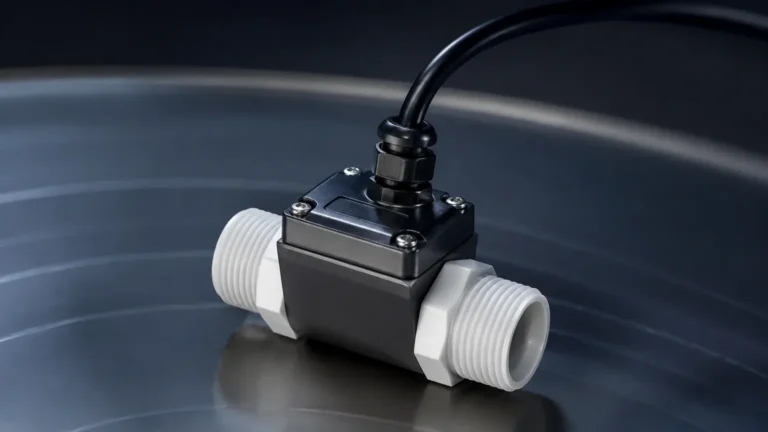
In the landscape of industrial automation and fluid management, the demand for compact, reliable, and non-contact level measurement has led to the widespread adoption of ultrasonic sensors. Among these, the Echopod series represents a specialized category of ultrasonic level transmitters designed for small-tank applications. These devices integrate a transducer, processor, and transmitter into a single, space-saving housing, making them ideal for chemical feed, water treatment, and industrial sump monitoring.
Selecting the right instrumentation requires a deep understanding of how these sensors interact with the process environment. This guide explores the measurement principles, selection criteria, installation requirements, and technical limitations of Echopod-style ultrasonic sensors to assist engineers in optimizing their level control systems.
The Ultrasonic Measurement Principle
Ultrasonic level measurement is based on the "Time-of-Flight" (ToF) principle. The sensor’s transducer acts as both a speaker and a microphone. It emits a high-frequency acoustic pulse (usually between 20 kHz and 200 kHz) that travels through the air gap toward the liquid surface. When the pulse hits the surface, it reflects back to the transducer.
The Calculation of Distance
The internal microprocessor measures the time interval between the emission of the pulse and the reception of the echo. The distance from the sensor to the liquid surface is calculated using the following formula:
**D = (v * t) / 2**
Where:
* D is the distance to the liquid surface (meters).
* v is the speed of sound in air (approximately 343 m/s at 20°C).
* t is the total time elapsed for the round trip (seconds).
Since the height of the tank (H) is a known constant, the actual fluid level (L) is determined by subtracting the measured distance from the total tank height: L = H – D.
The Role of Temperature Compensation
The speed of sound is not constant; it fluctuates based on the temperature of the medium through which it travels (usually air). A change in temperature can lead to significant measurement errors if not addressed. Most professional-grade ultrasonic sensors, including those found on the Main Page of industrial suppliers, include integrated thermistors. these components monitor the ambient air temperature and automatically adjust the ToF calculation to maintain accuracy, typically within ±0.25% of the detected range.
Key Evaluation Criteria for Echopod Sensors
When evaluating an Echopod sensor for a specific application, several technical parameters must be scrutinized to ensure long-term reliability. Unlike larger radar systems, compact ultrasonic sensors have specific physical constraints.
Dead Band (Blanking Distance)
Every ultrasonic sensor has a "dead band" or "blanking zone" directly beneath the transducer face. This is the minimum distance required for the transducer to stop vibrating from the initial pulse and become ready to receive the returning echo. If the liquid level enters this zone, the sensor cannot provide an accurate reading. For compact Echopod models, this dead band typically ranges from 50 mm to 100 mm (approx. 2" to 4").
Beam Angle and Signal Spread
The ultrasonic pulse does not travel in a straight line; it spreads out in a conical shape. The beam angle defines the width of this cone. A narrower beam angle is generally preferred because it minimizes the risk of the signal hitting tank walls, ladders, or internal pipes, which would cause false echoes. Typical beam angles for these compact units range from 5° to 8°.
Chemical Compatibility
Because the sensor is often mounted in enclosed tanks containing corrosive chemicals, the material of the transducer face and the housing is critical. Common materials include Polycarbonate (PC) and Polyvinylidene Fluoride (PVDF). PVDF is highly recommended for applications involving aggressive acids or bases.
Practical Selection Table
The following table provides a comparison of typical specifications for compact ultrasonic sensors used in industrial environments.
| Feature | Small Tank Model (e.g., 1.5m) | Medium Tank Model (e.g., 5.5m) | High-Performance Model |
| :— | :— | :— | :— |
| Measurement Range | 1.25 meters | 5.5 meters | Up to 10 meters |
| Dead Band | 50 mm | 100 mm | 200 mm |
| Beam Angle | 5° | 8° | 8° |
| Output Signal | 4-20 mA / RS485 | 4-20 mA / RS485 | 4-20 mA / HART |
| Accuracy | ±0.125% of range | ±0.2% of range | ±0.2% of range |
| Enclosure Rating | IP67 / NEMA 6 | IP68 | IP68 |
| Housing Material | Polycarbonate | PVDF | PVDF / Stainless Steel |
Installation Considerations and Best Practices
Proper installation is the single most important factor in the performance of an Echopod sensor. Even the most advanced sensor will fail if it is poorly positioned.
1. Vertical Alignment
The sensor must be mounted perfectly perpendicular to the liquid surface. If the sensor is tilted, the ultrasonic pulse will reflect off the surface at an angle and may not return to the transducer, resulting in a "signal loss" error.
2. Avoiding Obstructions
Due to the beam angle spread, the sensor must be positioned far enough away from the tank side walls and any internal structures. A general rule of thumb is to maintain a clearance of at least 100 mm for every 1 meter of depth. For example, if a tank is 3 meters deep, the sensor should be mounted at least 300 mm away from the wall.
3. Turbulence and Fill Streams
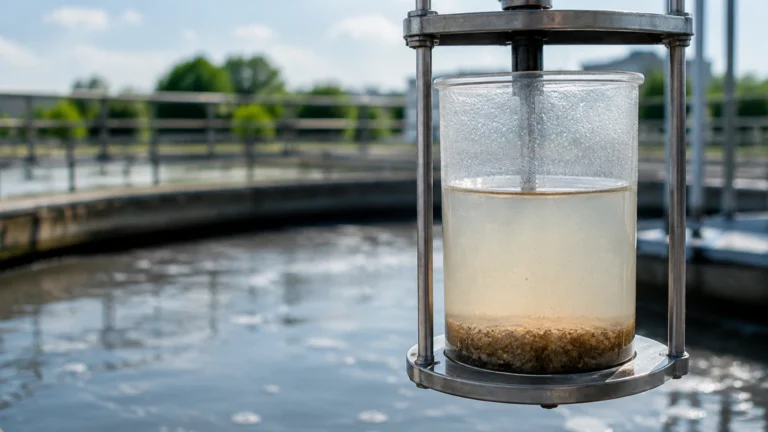
Never mount the sensor directly above the tank's fill inlet. The falling liquid will interfere with the ultrasonic pulse and create significant noise. Furthermore, if the liquid surface is highly turbulent (e.g., due to an agitator), a stilling well (a vertical pipe submerged in the liquid) should be used to provide a calm surface for measurement.
4. Environmental Shielding
While many sensors are rated for outdoor use, direct sunlight can heat the sensor housing to temperatures significantly higher than the ambient air. This can trick the internal temperature compensation and lead to inaccurate readings. Installing a simple sunshade can prevent this issue.

Technical Limitations and Risks
While Echopod sensors are versatile, they are not universal solutions. Engineers must be aware of the following physical limitations:
* Vacuum Applications: Sound waves require a medium (air or gas) to travel. Ultrasonic sensors cannot function in a vacuum.
* Heavy Foam: Foam acts as an acoustic insulator, absorbing the ultrasonic pulse rather than reflecting it. If a thick layer of foam is present, the sensor may report a "lost signal" or provide erratic data.
* Vapor and Condensation: While light condensation on the transducer face is often manageable, heavy steam or dense chemical vapors can change the speed of sound in the air gap, leading to errors. In high-vapor environments, a radar level meter is often a more reliable choice.
* High Pressure: Most compact ultrasonic sensors are designed for atmospheric pressure or very low-pressure tanks (typically up to 2 bar). High pressure increases the density of the air, which can affect signal propagation.
Frequently Asked Questions (FAQ)
Q: Can I use an Echopod sensor to measure solids like grain or powder?
A: Generally, no. Solids do not reflect sound waves in the same way liquids do. They often have an irregular "angle of repose" that scatters the signal. Specialized ultrasonic sensors with higher power and different signal processing are required for solids.
Q: How do I program the sensor?
A: Most modern compact sensors are programmed via a USB interface or a handheld configuration tool. Users define the "Empty" and "Full" points (4mA and 20mA) relative to the distance from the sensor face.
Q: What happens if the sensor gets wet?
A: Most Echopod-style units are rated IP67 or IP68, meaning they are waterproof. However, if water droplets cling to the transducer face, they can attenuate the signal. Many sensors use a self-cleaning transducer design that sheds moisture.
Conclusion
The Echopod series and similar compact ultrasonic transmitters offer a cost-effective and low-maintenance solution for a wide variety of liquid level monitoring tasks. By understanding the acoustic principles and adhering to strict installation guidelines, facilities can achieve precise control over their chemical and water assets. For applications involving more complex variables such as high pressure, extreme temperatures, or heavy foam, it is advisable to consult the broader range of radar and hydrostatic technologies available on the Main Page to ensure the most robust instrumentation choice.