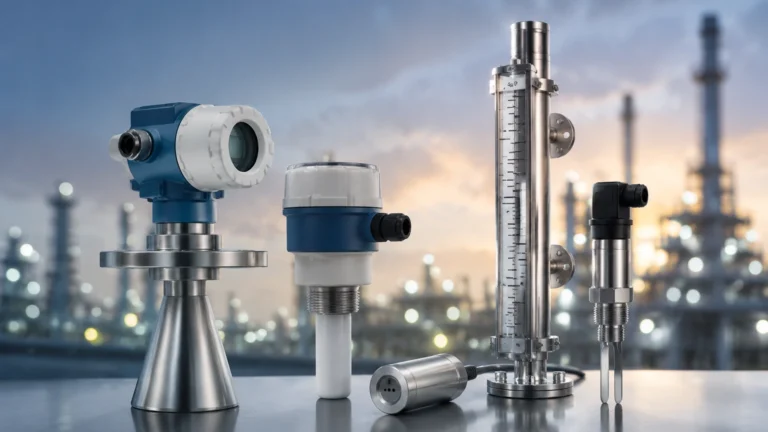
Electronic Level Sensor
Electronic Level Sensor
In the landscape of modern industrial automation, the electronic level sensor has become an indispensable tool for ensuring process efficiency, safety, and inventory accuracy. Unlike traditional manual gauging or simple mechanical floats, electronic sensors provide real-time data integration, high precision, and the ability to monitor hazardous or inaccessible environments without human intervention. This guide explores the fundamental principles, selection criteria, and technical considerations for implementing electronic level measurement solutions in various industrial sectors.
Core Principles of Electronic Level Measurement
Before selecting an electronic level sensor, it is essential to understand the physics behind the measurement. Electronic sensors convert a physical quantity—such as time of flight, pressure, or capacitance—into a standardized electrical signal (e.g., 4-20 mA, HART, or Modbus). The following are the most common measurement principles used in industrial applications.
Radar Level Measurement (Time-of-Flight)
Radar sensors are among the most robust electronic level sensors available. They function by emitting high-frequency electromagnetic waves (typically in the GHz range) toward the surface of the medium. The waves reflect off the surface and return to the sensor. By measuring the time it takes for the signal to travel to the surface and back, the sensor calculates the distance.
* Non-Contact Radar: These sensors emit signals through the air. They are ideal for corrosive or hygienic applications because the instrument never touches the process medium.
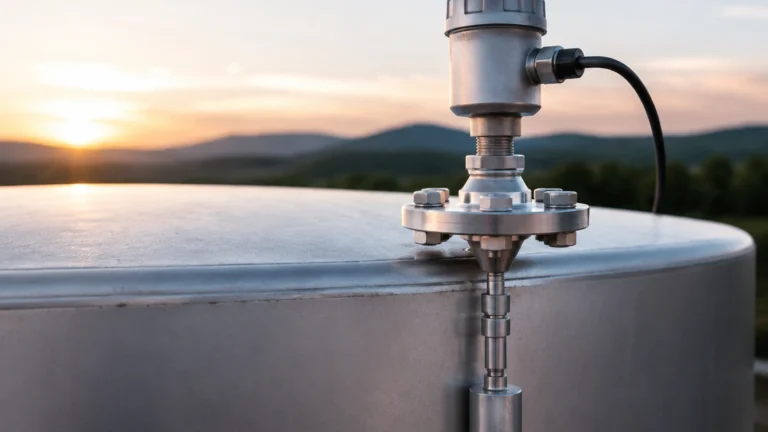
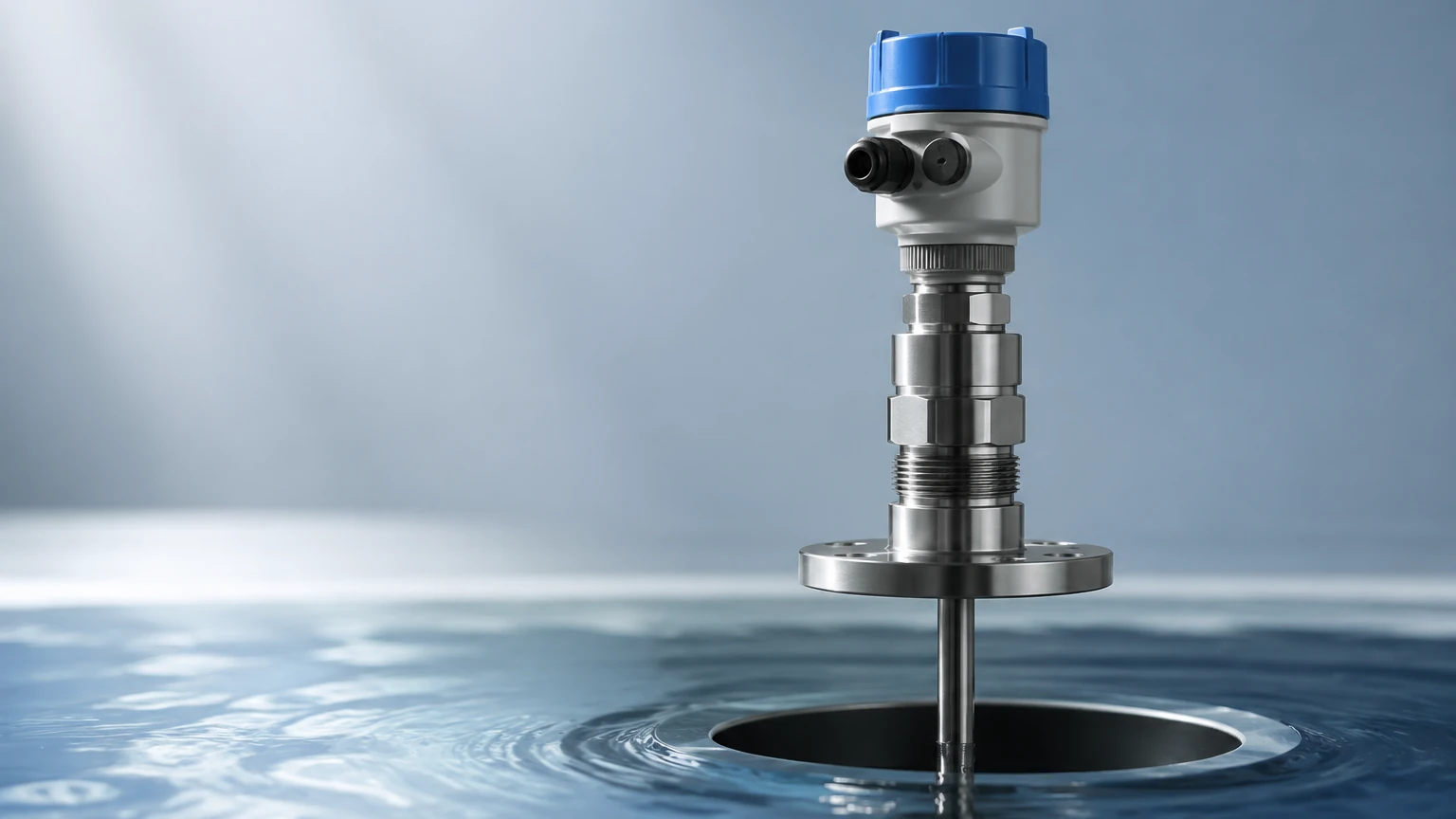
* Guided Wave Radar (GWR): These sensors use a probe or cable to guide the electromagnetic pulse. GWR is particularly effective in low-dielectric liquids or applications with heavy foam and turbulence.
Ultrasonic Level Measurement
Similar to radar, ultrasonic sensors use the time-of-flight principle but rely on sound waves rather than electromagnetic waves. A transducer emits an ultrasonic pulse that bounces off the material surface. The sensor then calculates the distance based on the speed of sound. Because the speed of sound is affected by air temperature, most high-quality ultrasonic sensors include integrated temperature compensation.
Hydrostatic Level Measurement
Hydrostatic sensors operate on the principle that the pressure at the bottom of a liquid column is directly proportional to the height of the liquid and its density. The formula used is $P = \rho \cdot g \cdot h$, where $P$ is pressure, $\rho$ is density, $g$ is gravity, and $h$ is the height of the liquid. These sensors are typically submersible or mounted to the bottom of a tank via a flange or thread.
Capacitance Level Measurement
This method treats the tank and the sensor probe as two plates of a capacitor. As the level of the medium rises, it changes the dielectric constant between the plates, thereby changing the measured capacitance. This change is then converted into a level reading. This technology is highly versatile but requires the dielectric constant of the medium to remain relatively stable.
Magnetic Level Transmitters
While often associated with visual indicators, modern magnetic level gauges are frequently equipped with electronic transmitters. A float containing a magnet moves with the liquid level, and an external electronic sensor (often using reed switches or magnetostrictive technology) detects the position of the float to provide a continuous electronic output.
Practical Selection Criteria
Choosing the right electronic level sensor requires a thorough analysis of the process environment. Engineers must evaluate the following factors to ensure long-term reliability.
| Feature | Radar (Non-Contact) | Ultrasonic | Hydrostatic | Capacitance |
| :— | :— | :— | :— | :— |
| Accuracy | High (±2 mm) | Moderate (±0.25% of range) | High (±0.1% to 0.5%) | Moderate |
| Medium Type | Liquids, Solids, Slurries | Liquids, Coarse Solids | Liquids only | Liquids, Solids |
| Pressure Range | Up to 160 bar (16 MPa) | Atmospheric | Up to 40 bar (4 MPa) | Up to 100 bar (10 MPa) |
| Temperature Range | -40°C to +450°C | -40°C to +80°C | -20°C to +100°C | -50°C to +200°C |
| Cost | High | Low to Moderate | Moderate | Moderate |
| Key Limitation | High cost for simple tanks | Affected by foam/vapor | Requires constant density | Affected by coating/buildup |
For a comprehensive overview of available technologies and specific product specifications, you may review product options and application support on our Main Page.
Installation Considerations and Best Practices
The performance of an electronic level sensor is often determined by the quality of the installation. Even the most advanced radar or ultrasonic unit will fail if positioned incorrectly.
1. Avoid the "Dead Zone": Every electronic level sensor has a "dead zone" or "blocking distance" near the sensor face where measurement is impossible. Ensure the maximum expected liquid level does not enter this zone.
2. Mounting Position: Sensors should generally be mounted away from the tank wall to avoid false reflections (especially for radar and ultrasonic). However, they should also be kept clear of the inflow stream to prevent turbulence and signal interference.
3. Nozzle Geometry: For non-contact sensors, the height and diameter of the mounting nozzle can interfere with the signal beam. Ensure the nozzle is as short as possible or that the sensor is designed to handle "false echoes" from the nozzle interior.
4. Venting and Pressure: For hydrostatic sensors in sealed tanks, a differential pressure measurement or a vented cable is necessary to compensate for changes in atmospheric or headspace pressure.
5. Cable Management: In submersible applications, the cable often contains a vent tube. This tube must be kept clear of moisture and kinks to ensure the sensor can accurately reference atmospheric pressure.
Limitations and Common Risks
While electronic level sensors offer significant advantages, they are not "set and forget" devices. Users must be aware of potential risks:
* Signal Absorption and Scattering: In ultrasonic and radar applications, heavy foam can absorb the signal, while high turbulence or steep angles of repose in solids can scatter the signal away from the receiver.
* Material Buildup: In capacitance and some contact-based sensors, the buildup of sticky or conductive material on the probe can lead to false readings. Choosing a sensor with "active shield" technology can mitigate this.
* Chemical Compatibility: The wetted parts of the sensor (diaphragms, probes, or housings) must be compatible with the process medium. For example, aggressive acids may require PTFE-coated probes or specialized PVDF housings.
* Environmental Interference: External factors such as heavy dust, steam, or electromagnetic interference (EMI) from large motors can disrupt electronic signals. Proper shielding and grounding are essential.
Information to Confirm Before Procurement
To ensure the selected electronic level sensor meets the project requirements, the following technical data should be confirmed with the manufacturer:
* Medium Properties: What is the dielectric constant (for radar/capacitance), the density (for hydrostatic), and the viscosity of the material?
* Process Conditions: What are the maximum and minimum operating pressures and temperatures? Are there rapid fluctuations?
* Tank Geometry: What is the total height, diameter, and internal structure (e.g., agitators, baffles, or heating coils) of the vessel?
* Output Requirements: Does the control system require a simple 4-20mA loop, or is digital communication like HART or Profibus necessary for remote diagnostics?
* Certifications: Does the installation site require explosion-proof (Ex-d) or intrinsically safe (Ex-i) ratings? For food and beverage, are 3-A or EHEDG certifications required?
Frequently Asked Questions (FAQ)
Q: Can an electronic level sensor measure solids as well as liquids?
A: Yes, but the technology choice is critical. Radar and ultrasonic sensors are commonly used for solids, though they must be rated for the dust and the specific angle of repose of the material. Hydrostatic sensors cannot be used for solids.
Q: How often do electronic level sensors need calibration?
A: This depends on the technology and the application. Many modern radar sensors are virtually maintenance-free and do not drift over time. However, hydrostatic sensors may require periodic zero-point checks to account for sensor fatigue or changes in liquid density.
Q: What is the difference between a level sensor and a level switch?
A: An electronic level sensor provides continuous measurement (e.g., 0% to 100% of the tank volume), whereas a level switch provides a point-level signal (e.g., "tank is full" or "tank is empty").
Q: Does foam affect electronic level sensors?
A: Foam is a common challenge. Ultrasonic waves are often absorbed by foam, leading to signal loss. High-frequency radar (80 GHz) is generally better at penetrating foam, while guided wave radar is the most reliable contact-based electronic solution for foamy environments.
By carefully matching the measurement principle to the specific constraints of the application, engineers can implement electronic level sensor solutions that provide years of accurate, maintenance-free service in even the most demanding industrial environments.