Eudiometers
Eudiometers
In the field of analytical chemistry and process engineering, the measurement of gas volumes and the changes therein is a fundamental requirement. The eudiometer, a laboratory instrument with a history dating back to the late 18th century, serves as the primary tool for this purpose. While modern industrial processes often rely on automated sensors, the principles established by the eudiometer remain central to how we understand gas-liquid interfaces and volumetric displacement. For engineers and technicians transitioning from laboratory analysis to large-scale industrial automation, understanding these principles is essential for selecting the correct measurement instrumentation.
This guide explores the mechanics of eudiometers, their relationship to broader level measurement technologies, and how the data derived from these instruments informs the selection of industrial-grade solutions available on our Main Page.
Understanding the Eudiometer: Principles and Operation
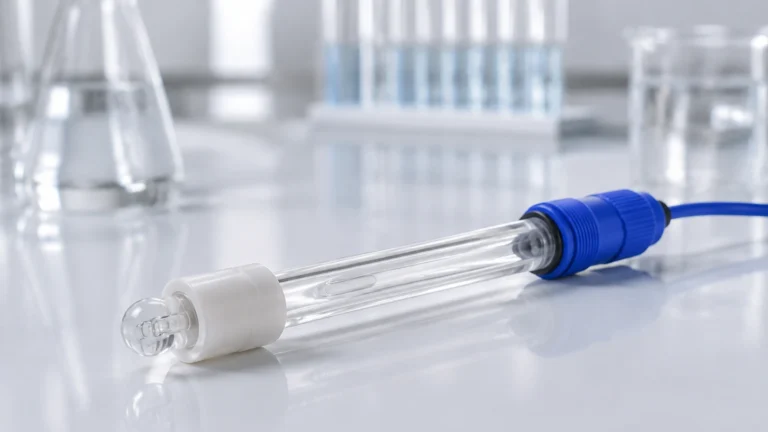
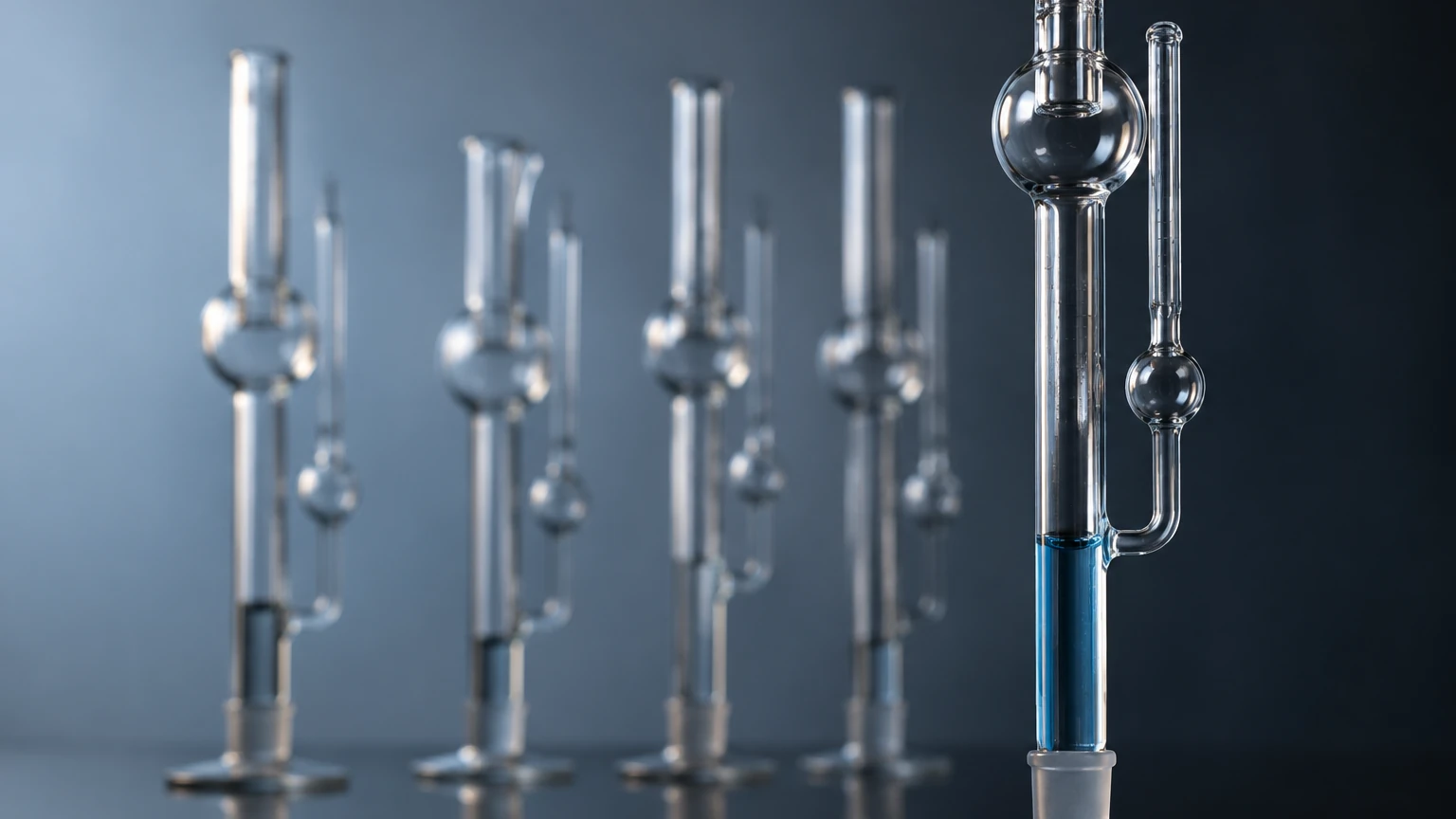
A eudiometer is essentially a graduated glass tube used to measure the change in volume of a gas mixture following a physical or chemical change. The name is derived from the Greek words for "good" and "measure," reflecting its early use in assessing the "goodness" or purity of air (specifically its oxygen content).
The Basic Measurement Principle
The operation of a eudiometer is based on the displacement of a liquid (usually water or mercury) by a gas. The tube is typically closed at the top and submerged in a reservoir of liquid at the bottom. As gas is introduced into the tube or produced via a reaction within it, the liquid level is pushed downward. The volume of the gas is then read directly from the graduations on the side of the tube.
In many applications, the eudiometer includes two platinum wires sealed into the glass at the closed end. These electrodes allow an electric spark to be passed through the gas mixture, triggering a combustion reaction. For example, when measuring the oxygen content in a sample, a known volume of hydrogen may be added. After the spark induces the formation of water (which condenses), the resulting decrease in gas volume allows the user to calculate the original oxygen concentration based on stoichiometric ratios.
Correcting for Environmental Variables
To achieve high accuracy, eudiometer measurements must account for the gas laws. The volume of gas is highly sensitive to temperature and pressure. Therefore, readings are typically corrected to Standard Temperature and Pressure (STP) using the combined gas law:
\[ \frac{P_1 V_1}{T_1} = \frac{P_2 V_2}{T_2} \]
Where:
* P is pressure (measured in kPa or mmHg).
* V is volume (measured in ml or cm³).
* T is temperature (measured in Kelvin).
In industrial level measurement, these same variables—pressure and temperature—are the primary factors that influence the accuracy of hydrostatic and ultrasonic sensors.
The Evolution from Laboratory Analysis to Industrial Level Measurement
While the eudiometer is an indispensable tool for discrete batch analysis in a lab, industrial applications require continuous, real-time monitoring of volumes in tanks, silos, and reactors. The transition from a graduated glass tube to an industrial level meter involves moving from manual visual inspection to electronic sensing.
Volumetric vs. Level Measurement
A eudiometer measures volume directly. In contrast, most industrial instruments measure the *level* (height) of a substance, which is then converted into volume based on the vessel's geometry (strapping table).
1. Hydrostatic Pressure: Just as the liquid column in a eudiometer exerts pressure, industrial hydrostatic transmitters measure the pressure exerted by a liquid column to determine its height. This is particularly relevant in water treatment and chemical storage.
2. Time-of-Flight (ToF): Technologies such as ultrasonic and radar level meters measure the distance from the sensor to the surface of the material. This is analogous to measuring the "headspace" or the empty part of a eudiometer tube to determine how much gas is present.
3. Displacement: Magnetic level gauges utilize a float that moves with the liquid level, similar to how the meniscus in a eudiometer moves in response to gas volume changes.
Key Evaluation Criteria for Volumetric and Level Accuracy
When selecting a measurement system—whether it is a specialized eudiometer for a pilot plant or an industrial radar meter for a 50-meter tank—several criteria must be evaluated to ensure data integrity.
1. Chemical Compatibility
In laboratory eudiometers, mercury was historically used because it does not absorb gases like carbon dioxide. However, due to toxicity, it has largely been replaced. In industrial settings, the wetted parts of a level sensor (e.g., PTFE, Stainless Steel 316L, or Hastelloy) must be compatible with the process media to prevent corrosion and sensor failure.
2. Precision and Resolution
Laboratory eudiometers often provide resolution down to 0.1 ml. Industrial radar level meters, such as those utilizing 80GHz technology, can provide accuracy within ±1 mm over a range of 30 meters. Understanding the required precision is the first step in narrowing down technology options.
3. Temperature and Pressure Extremes
Eudiometers are generally limited to ambient or near-ambient pressures and temperatures. Industrial processes, however, may operate at pressures exceeding 40 bar or temperatures above 250°C. In these environments, contact-type sensors (like hydrostatic transmitters) or high-frequency non-contact radar are preferred.
Technical Comparison: Laboratory Eudiometers vs. Industrial Level Sensors
The following table provides a comparison between the traditional eudiometer and common industrial level measurement technologies used to achieve similar volumetric data.
| Feature | Eudiometer (Lab) | Radar Level Meter | Ultrasonic Level Sensor | Hydrostatic Transmitter |
| :— | :— | :— | :— | :— |
| Primary Measurement | Gas Volume (Direct) | Distance to Surface | Distance to Surface | Liquid Head Pressure |
| Medium | Gases / Liquids | Liquids / Solids | Liquids / Slurries | Liquids Only |
| Accuracy | Very High (Manual) | ±1 mm to ±3 mm | ±0.25% of Range | ±0.1% to ±0.5% Span |
| Operating Range | 10 ml – 500 ml | Up to 120 m | 0.3 m – 15 m | 0.5 m – 200 m |
| Pressure Limits | Low / Atmospheric | High (up to 40+ bar) | Low (Atmospheric) | High (Submersible) |
| Common Use Case | Gas Analysis | Oil & Gas / Chemical | Water Treatment | Deep Wells / Tanks |
Installation Considerations for Gas and Liquid Measurement Systems
Proper installation is critical for translating the theoretical accuracy of a measurement principle into practical reliability. Whether you are setting up a eudiometer on a lab bench or mounting a radar sensor on a process vessel, the following factors must be considered:
Mounting and Alignment
For eudiometers, the tube must be perfectly vertical to ensure the meniscus can be read accurately against the graduations. Similarly, ultrasonic and radar sensors must be mounted perpendicular to the liquid surface. If a sensor is tilted, the signal may bounce away from the receiver, leading to "loss of echo" errors.
Obstructions and Dead Zones
In industrial tanks, internal structures like agitators, ladders, or heating coils can interfere with the signal of non-contact sensors. This is known as the "dead zone" or "blocking distance." Engineers must ensure the sensor is positioned away from these obstructions or use software to "mask" the interference reflections.
Environmental Compensation
Just as eudiometer readings require correction for temperature, ultrasonic sensors must compensate for the speed of sound, which changes with air temperature. Most modern industrial sensors include integrated temperature probes to perform these calculations automatically.
Limitations, Risks, and Environmental Factors
No measurement technology is universal. Understanding the limitations of eudiometers and their industrial counterparts prevents costly errors in process design.
* Gas Solubility: In eudiometers, if the displacement liquid absorbs the gas being measured (e.g., CO2 dissolving in water), the volume reading will be lower than reality. In industrial level measurement, vapors or heavy foam on the surface of a liquid can absorb ultrasonic waves, making radar a better choice for foaming applications.
* Condensation: In gas volume measurement, moisture can condense on the walls of the tube, affecting the volume. In industrial sensors, condensation on the antenna or transducer face can cause signal attenuation. Many industrial meters now feature "drip-off" antenna designs to mitigate this.
* Safety in Explosive Atmospheres: Eudiometers involving sparks must be handled with extreme care. In industrial plants where flammable gases are present, level meters must be certified as intrinsically safe (Ex ia) or explosion-proof (Ex d) to prevent the electronics from becoming an ignition source.
Frequently Asked Questions (FAQs)
Q: Can a eudiometer be used for continuous process monitoring?
A: No. Eudiometers are batch-testing instruments. For continuous monitoring, industrial sensors like those found on our Main Page are required to provide a constant 4-20mA or digital signal (HART, Modbus).
Q: Why is mercury no longer common in eudiometers?
A: Mercury is a potent neurotoxin and poses significant environmental risks. While it provided excellent accuracy due to its lack of gas absorption and clear meniscus, modern synthetic oils and electronic sensors have rendered it largely obsolete in standard laboratory and industrial settings.
Q: How do I convert a level measurement into a volume measurement?
A: Most industrial level transmitters allow you to input a linearization table or "strapping table." This correlates specific heights (mm) to specific volumes (liters or m³), accounting for the shape of the tank (e.g., horizontal cylindrical tanks with dished ends).
Q: What is the difference between a eudiometer and a burette?
A: While both are graduated glass tubes, a burette is designed to dispense a measured volume of liquid (titration), whereas a eudiometer is designed to contain and measure a volume of gas produced or consumed during a reaction.
Conclusion and Next Steps
The eudiometer remains a cornerstone of gas volumetric analysis, providing the foundational logic for many of the automated systems we use today. By understanding the relationship between gas displacement, pressure, and volume, engineers can make more informed decisions when specifying industrial level measurement hardware.
When moving from the laboratory to the plant floor, the priority shifts toward durability, continuous data output, and integration with control systems. Whether you require the high-frequency precision of radar, the cost-effectiveness of ultrasonic sensors, or the rugged reliability of hydrostatic transmitters, choosing the right technology depends on your specific process parameters.
For a comprehensive range of industrial level measurement solutions and technical support in selecting the right instrument for your application, visit our Main Page. Our team of experts is available to help you transition from manual measurement to high-accuracy industrial automation.