Flow Meter Calibration Services
Flow Meter Calibration Services
In industrial process control, the accuracy of flow measurement is a cornerstone of operational efficiency, safety, and regulatory compliance. Whether managing water treatment facilities, chemical processing plants, or oil and gas refineries, the data provided by flow meters informs critical decisions regarding mass balance, chemical dosing, and billing. However, all measurement instruments are subject to drift over time due to mechanical wear, electronic component aging, or changes in the process environment. This is where professional flow meter calibration services become essential.
By systematically comparing a meter’s output against a traceable reference standard, calibration ensures that the device performs within its specified tolerance. This guide explores the technical principles of flow calibration, the types of services available, and the criteria for selecting a service provider to maintain the integrity of industrial measurement systems.
Understanding Flow Measurement Principles
Before evaluating calibration services, it is necessary to understand the underlying physical principles of the instruments being tested. Flow meters do not measure "flow" directly as a fundamental unit; instead, they measure a physical property related to the fluid's movement and convert it into a volumetric or mass flow rate. For a comprehensive look at the instruments used in these applications, engineers often refer to the Main Page of specialized manufacturers like Welk to understand the integration of level and flow technologies.
1. Velocity-Based Measurement
Instruments such as ultrasonic and electromagnetic flow meters measure the velocity of the fluid. Ultrasonic meters use the transit-time difference of acoustic signals, while electromagnetic meters utilize Faraday’s Law of Induction, where a conductor (the fluid) moving through a magnetic field generates a voltage proportional to its velocity. Calibration for these devices focuses on verifying the linearity of the velocity-to-signal conversion across different flow regimes.
2. Differential Pressure (DP)
DP meters, including orifice plates and Venturi tubes, rely on Bernoulli’s principle. By creating a constriction in the pipe, they generate a pressure drop. The square root of this pressure difference is proportional to the flow rate. Calibration involves not only the primary element (the constriction) but also the pressure transmitters that interpret the signal.
3. Level-to-Flow Conversion
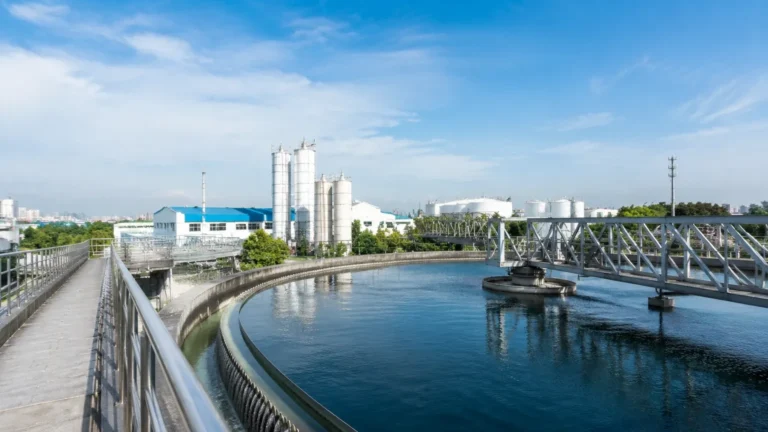
In open-channel applications, such as wastewater treatment, flow is often determined by measuring the head (level) of the liquid as it passes through a flume or weir. Here, the accuracy of the level sensor—whether ultrasonic, radar, or hydrostatic—is the primary driver of flow accuracy. Professional calibration services must verify the level-to-flow mathematical curve (the discharge equation) programmed into the transmitter.
The Role of Flow Meter Calibration Services
Flow meter calibration services provide the technical infrastructure and traceability required to validate instrument performance. Traceability is the unbroken chain of comparisons back to national or international standards (such as NIST or PTB), ensuring that a measurement in one facility is consistent with measurements taken elsewhere.
Primary vs. Secondary Standards
Calibration laboratories typically use one of two types of standards:
* Primary Standards: These are the most accurate and involve fundamental measurements. For flow, this usually means a gravimetric system where the fluid is weighed over a specific time interval using high-precision scales.
* Secondary (Master) Standards: These involve using a "master meter" that has been previously calibrated against a primary standard. This method is faster and often used for higher flow rates where weighing large volumes of fluid becomes impractical.
Common Calibration Methods
When selecting flow meter calibration services, the method used must align with the required uncertainty and the specific fluid properties of the application.
| Method | Principle | Typical Uncertainty | Best For |
| :— | :— | :— | :— |
| Gravimetric (Static Weighing) | Fluid is diverted into a tank on a scale for a timed duration. | 0.01% – 0.1% | High-precision laboratory calibration; custody transfer meters. |
| Master Meter Comparison | The test meter is placed in series with a high-accuracy reference meter. | 0.2% – 0.5% | Industrial-grade meters; high-volume throughput testing. |
| Piston Prover | A piston moves through a known volume, displacing fluid through the meter. | 0.05% – 0.1% | Low flow rates; high-viscosity fluids; oil and gas applications. |
| In-Situ (Field) Calibration | Using a portable master meter or clamp-on ultrasonic meter at the site. | 1.0% – 5.0% | Large pipes; processes that cannot be shut down. |
Selection Criteria for Calibration Providers
Choosing the right service provider involves more than comparing costs. Industrial operators should confirm several technical and regulatory factors before proceeding.
ISO/IEC 17025 Accreditation
This is the single most important credential for a calibration laboratory. It demonstrates that the facility has the technical competence to produce valid results and operates under a rigorous quality management system. The scope of accreditation will specify the flow ranges and fluid types the lab is authorized to test.
Measurement Uncertainty
Every calibration certificate must state the measurement uncertainty. This is the "doubt" associated with the measurement. If your process requires a meter with 0.5% accuracy, the calibration service must use a standard with an uncertainty significantly better than that (typically a 4:1 Test Uncertainty Ratio, or TUR).
Fluid Compatibility and Reynolds Number
Flow characteristics change based on the fluid's viscosity and density. A meter calibrated on water may not perform accurately in a high-viscosity oil application. Ensure the calibration service can simulate the Reynolds number—a dimensionless value representing the ratio of inertial forces to viscous forces—relevant to your specific process.

Installation Considerations and Their Impact on Calibration
One of the most common risks in flow measurement is the "installation effect." A meter may perform perfectly in a laboratory environment but fail in the field due to poor piping configurations. When utilizing flow meter calibration services, consider the following:
1. Straight Run Requirements: Most flow meters require a certain length of straight pipe upstream and downstream to ensure a fully developed, non-turbulent flow profile. If the field installation has elbows or valves close to the meter, the lab calibration might not reflect field performance.
2. As-Found vs. As-Left Data: A professional service should provide "as-found" data (the meter’s performance before any adjustments) and "as-left" data (performance after adjustment). As-found data is critical for determining if the process was operating within limits since the last calibration.
3. Environmental Factors: Temperature and pressure fluctuations can affect the physical dimensions of the meter body and the properties of the fluid. Ensure the service provider accounts for these variables, especially in high-pressure gas or steam applications.
Limitations and Common Risks
While calibration is essential, it is not a cure-all for measurement problems. There are inherent limitations to be aware of:
* Fluid Cleanliness: If a meter is calibrated with clean water but used with slurry or aerated liquids, the calibration constants may not hold true.
* Mechanical Degradation: Calibration can identify that a meter is inaccurate, but it cannot fix a damaged liner in an electromagnetic meter or a pitted orifice plate. In these cases, repair or replacement is necessary.
* Signal Noise: Calibration labs are often electrically "quiet." In an industrial plant, Variable Frequency Drives (VFDs) and heavy machinery can introduce electrical noise that affects the meter’s output, a factor that laboratory calibration cannot simulate.
Frequently Asked Questions (FAQ)
Q: How often should flow meters be calibrated?
A: The frequency depends on the criticality of the measurement, the harshness of the fluid, and regulatory requirements. Typically, industrial meters are calibrated annually, but custody transfer meters may require quarterly verification.
Q: Can I use a clamp-on ultrasonic meter to calibrate my inline meters?
A: A clamp-on meter can be used for a "check" or field verification, but it is rarely considered a formal calibration unless the clamp-on meter itself is a high-precision, recently calibrated master standard and the pipe conditions are ideal.
Q: What is the difference between calibration and validation?
A: Calibration is the act of comparing a device to a standard and adjusting it. Validation (or verification) is the process of proving that the device still meets its specified requirements without necessarily making adjustments.
Q: Why is my meter accurate in the lab but wrong in the field?
A: This is usually due to installation effects, such as insufficient straight pipe runs, air entrainment in the liquid, or mismatched fluid properties between the lab and the process.
Conclusion
Flow meter calibration services are a vital component of industrial asset management. By ensuring that instruments provide accurate and traceable data, these services help prevent waste, ensure product quality, and maintain safety standards. When selecting a service, engineers must prioritize ISO/IEC 17025 accreditation, understand the relevance of the Reynolds number to their process, and account for the differences between laboratory conditions and field installations. For those seeking reliable instrumentation and further technical guidance on level and flow integration, visiting the Main Page of an established manufacturer like Welk provides a foundation for building robust measurement systems.