Flow Meter Company
Flow Meter Company
In the landscape of industrial automation, selecting a reliable flow meter company or instrumentation partner is a critical decision for process engineers and procurement managers. While flow and level measurement are often categorized separately, they are intrinsically linked in many industrial applications, particularly in water treatment, chemical processing, and open-channel monitoring. Choosing a manufacturer that understands the nuances of fluid dynamics and hydrostatic pressure ensures that the instruments integrated into a system provide the accuracy required for safety and efficiency.
Understanding the Synergy Between Level and Flow Measurement
Before evaluating a flow meter company, it is essential to understand the measurement principles that bridge the gap between level and flow. Many industrial processes calculate flow rates based on level data, a method commonly referred to as level-to-flow conversion.
Ultrasonic and Radar Time-of-Flight Principles
Both ultrasonic and radar sensors operate on the "Time-of-Flight" (ToF) principle. The sensor emits a signal (sound waves for ultrasonic, electromagnetic waves for radar) that reflects off the surface of the liquid and returns to the transducer. By measuring the time taken for the signal to return, the instrument calculates the distance to the liquid surface.
In flow applications, specifically in open channels like flumes or weirs, the height of the liquid at a specific point is directly proportional to the flow rate. A sophisticated instrument from a professional manufacturer can apply pre-programmed formulas (such as the Manning equation or specific weir curves) to convert this level reading into a real-time flow measurement.
Hydrostatic Pressure Principle
Hydrostatic level transmitters measure the pressure exerted by a liquid column. Since pressure is equal to the density of the liquid multiplied by gravity and the height of the column ($P = \rho gh$), these sensors are highly effective for determining the volume of liquid in a tank. For tanks with known geometries, the rate of change in level over time allows for the calculation of inflow or outflow rates, effectively serving as a secondary flow monitoring system.
Evaluation Criteria for an Industrial Instrumentation Partner
When identifying a suitable flow meter company or level instrument provider, technical specifications are only one part of the equation. A B2B partnership requires a manufacturer that offers comprehensive support and quality assurance.
1. Technological Breadth: A provider should offer a variety of technologies, including radar, ultrasonic, and magnetic level gauges. This ensures that the recommendation is based on the application's needs rather than a limited product catalog.
2. Customization (OEM/ODM Services): Industrial environments are rarely "one size fits all." A manufacturer like Welk provides customized OEM/ODM services, allowing for specific housing materials, signal outputs (4-20mA, HART, RS485), and mounting configurations tailored to unique plant layouts.
3. Quality Control Standards: Reliable instruments must withstand harsh environments. Look for companies that implement strict quality control protocols, ensuring that every unit is calibrated and tested for accuracy and ingress protection (IP ratings).
4. Application Expertise: The provider should act as a consultant, helping engineers navigate the complexities of fluid properties, such as viscosity, foam, and steam, which can interfere with certain measurement technologies.
For those seeking a comprehensive range of industrial measurement tools, you can Review product options and application support to find solutions that align with specific project requirements.
Open Channel Flow: A Primary Intersection
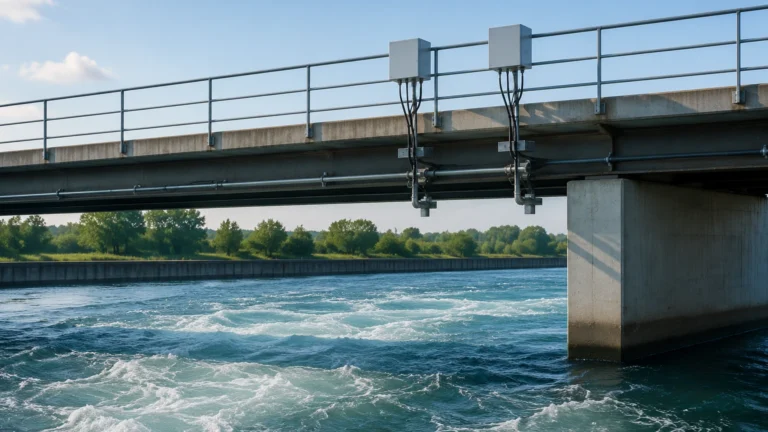
One of the most common reasons an engineer seeks a flow meter company is for open channel flow measurement in wastewater treatment or irrigation. In these scenarios, traditional inline flow meters (like electromagnetic or ultrasonic clamp-on meters) are often impractical due to the lack of a closed pipe.
In open channel systems, the level sensor is the heart of the flow measurement. An ultrasonic level sensor is frequently the preferred choice due to its non-contact nature and cost-effectiveness. However, in environments with high steam, dust, or temperature fluctuations, an 80GHz high-frequency radar sensor provides superior reliability because electromagnetic waves are not affected by air density or surface turbulence in the same way sound waves are.
Selection Table for Level and Flow Instrumentation
The following table provides a comparison of technologies often provided by an industrial instrumentation manufacturer to help in the selection process.
| Technology | Measurement Principle | Best Application | Primary Limitation |
| :— | :— | :— | :— |
| Radar Level Meter | Electromagnetic ToF | Chemical tanks, high-temp, high-pressure | Higher initial cost than ultrasonic |
| Ultrasonic Sensor | Sound Wave ToF | Open channel flow, water treatment | Sensitive to foam and heavy steam |
| Hydrostatic Transmitter | Pressure Sensing | Deep wells, vented tanks, fuel storage | Requires contact with the medium |
| Magnetic Level Gauge | Buoyancy/Magnetic | High-pressure boilers, oil/gas | Limited to liquids with specific gravity |
| Level Switch | Vibration/Conductivity | Point level detection, overflow alarm | Does not provide continuous measurement |
Installation Considerations for Accurate Measurement
Even the highest quality instrument from a top-tier flow meter company will fail to perform if installation guidelines are ignored. Accuracy is highly dependent on the physical environment surrounding the sensor.
* Dead Zones (Blocking Distance): Every non-contact sensor has a "dead zone" directly beneath the transducer where it cannot measure. Ensure the sensor is mounted high enough so the maximum liquid level never enters this zone.
* Mounting Position: Sensors should be mounted away from the tank wall to avoid false reflections. In open channels, they must be placed at a specific distance upstream from the weir or flume as dictated by hydraulic standards (usually 3 to 4 times the maximum head height).
* Turbulence and Foam: If the liquid surface is turbulent, a stilling well may be required for hydrostatic or ultrasonic sensors. For heavy foam, radar is generally the only reliable non-contact option, as foam absorbs ultrasonic sound waves.
* Alignment: The sensor must be perpendicular to the liquid surface. A deviation of even a few degrees can cause the signal to bounce away from the receiver, leading to signal loss.
Limitations and Common Risks in Process Monitoring
While modern instrumentation is highly advanced, there are inherent limitations that engineers must account for:
* Environmental Interference: Ultrasonic sensors are affected by changes in air temperature, as the speed of sound varies with temperature. While most professional sensors include integrated temperature compensation, extreme gradients can still introduce errors.
* Material Compatibility: In chemical applications, the wetted parts of the sensor (such as the diaphragm of a hydrostatic transmitter or the flange of a radar meter) must be compatible with the process media. Common materials include 316L stainless steel, PTFE, and PP.
* Signal Obstruction: Internal tank structures like agitators, ladders, or pipes can create "ghost echoes." Advanced software in modern radar meters allows for "false echo suppression," where the instrument is taught to ignore these static reflections.
Frequently Asked Questions (FAQs)
Q: Can a level meter really be used as a flow meter?
A: Yes, in open channel applications or in tanks with a known discharge orifice. By measuring the head (level) and using the appropriate hydraulic formula, the flow rate can be calculated with high precision.
Q: What is the advantage of an 80GHz radar over a 26GHz radar?
A: 80GHz radar has a much narrower beam angle and a smaller blind zone. This allows it to be used in smaller tanks, closer to walls, and provides better penetration through steam and dust.
Q: How often should these instruments be calibrated?
A: Calibration frequency depends on the criticality of the process and the nature of the media. For most industrial applications, an annual calibration check is recommended. However, in regulated industries like wastewater or pharmaceutical, more frequent intervals may be required.
Q: Does a flow meter company usually provide level sensors as well?
A: Many specialized manufacturers, such as Welk, focus on the broader category of industrial instrumentation. Because level and flow are so closely related in process control, a professional manufacturer typically provides solutions for both to ensure system compatibility.
By understanding these technical foundations and selecting a partner that prioritizes accuracy and customization, industrial operators can ensure long-term reliability in their measurement systems. Whether the goal is monitoring a simple water tank or managing a complex chemical reactor, the right instrumentation is the cornerstone of operational excellence.