Vacuum Flow Meter
Vacuum Flow Meter
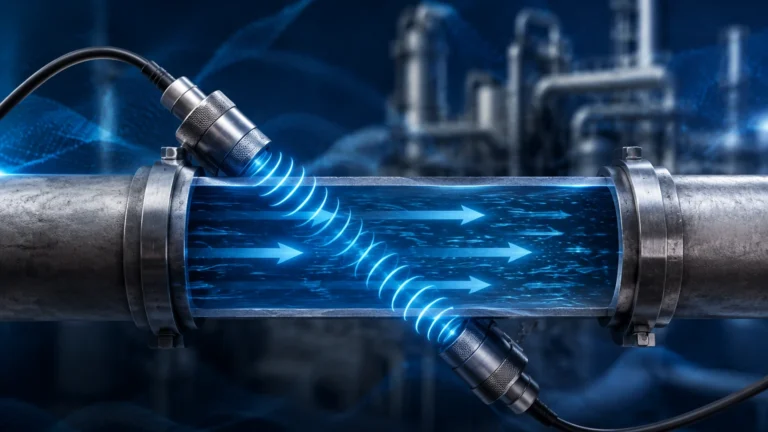
In industrial process engineering, measuring the flow of gases under vacuum conditions presents a unique set of challenges compared to positive-pressure applications. A vacuum flow meter is a specialized instrument designed to quantify the movement of gas molecules within a system operating below atmospheric pressure. These devices are critical in industries such as semiconductor manufacturing, thin-film deposition, pharmaceutical freeze-drying, and chemical processing, where precise gas delivery or evacuation rates directly impact product quality and system safety.
Unlike standard flow meters, which often rely on the density and velocity of a gas at high pressures, vacuum flow meters must account for the significant expansion of gas volumes and the transition between different flow regimes. As pressure drops, the mean free path of gas molecules increases, shifting the flow from viscous (continuum) flow to transitional or molecular flow. Understanding these physical transitions is essential for selecting the correct measurement technology.
Understanding Gas Behavior in Vacuum Systems
Before selecting a vacuum flow meter, it is necessary to understand how gas behaves as pressure decreases. In a standard atmosphere, gas molecules collide frequently with each other. However, in a high-vacuum environment, molecules are more likely to collide with the walls of the pipe than with one another.
Flow in vacuum systems is typically categorized by the Knudsen number (Kn), which is the ratio of the molecular mean free path to the physical diameter of the conduit.
1. Viscous Flow (Kn < 0.01): Occurs at higher pressures (rough vacuum). The gas behaves as a continuous fluid.
2. Transitional Flow (0.01 < Kn < 1.0): A mix of viscous and molecular behavior.
3. Molecular Flow (Kn > 1.0): Occurs at very low pressures (high vacuum). Molecules move independently.
Most industrial vacuum flow meters are calibrated for the viscous or transitional regimes. Measuring flow in the deep molecular regime often requires indirect methods or highly specialized ion-based sensors.
Core Measurement Principles for Vacuum Flow
Several technologies are utilized to measure vacuum flow, each with distinct operating principles and ideal use cases.
Thermal Mass Flow Measurement
Thermal mass flow meters (TMFMs) are the most common choice for vacuum applications. They operate on the principle of heat transfer. A heated sensor is placed in the flow stream, and as gas molecules pass over it, they carry away heat.
There are two primary methods within this category:
* Constant Temperature Differential: The instrument maintains a fixed temperature difference between a heated sensor and a reference sensor. The electrical power required to maintain this differential is proportional to the mass flow rate.
* Temperature Gradient: A heater is placed between two temperature sensors. As gas flows, it creates a temperature imbalance between the upstream and downstream sensors, which is used to calculate the mass flow.
Because these meters measure mass flow rather than volumetric flow, they are inherently compensated for changes in pressure and temperature, making them highly reliable in fluctuating vacuum environments.
Laminar Flow Elements (LFE)
Laminar flow meters work by forcing the gas through a series of thin channels (the element) to ensure the flow is laminar. According to Poiseuille's Law, in a laminar state, the pressure drop across the element is linearly proportional to the volumetric flow rate. In vacuum systems, this pressure drop is measured using high-precision differential pressure transducers. This method is highly accurate but requires the gas to remain in the viscous flow regime.
Differential Pressure (DP) Meters
Standard DP meters, such as orifice plates or Venturi tubes, are occasionally used in very large-scale vacuum systems (e.g., power plant condensers). However, their effectiveness diminishes at low pressures because the pressure drop becomes too small to measure accurately. They are generally limited to "rough" vacuum applications where gas density remains sufficiently high.
Key Selection Criteria for Industrial Vacuum Applications
Selecting a vacuum flow meter requires a detailed analysis of the process parameters. Engineers must confirm several factors before finalizing a specification.
Pressure Range and Sensitivity
The operating pressure range is the most critical factor. A meter designed for atmospheric pressure will likely fail to provide a reading at 10⁻³ mbar. It is vital to ensure the sensor's sensitivity matches the expected vacuum level. For processes involving level control in vacuum tanks, such as those monitored by Welk's radar or ultrasonic sensors, the flow meter must be able to track the evacuation rate accurately to prevent cavitation or pump damage.
Gas Composition and Compatibility
Vacuum processes often involve corrosive or reactive gases (e.g., in etching or CVD processes). The wetted materials of the flow meter—typically 316L stainless steel, Hastelloy, or Viton—must be chemically compatible with the process gas. Furthermore, since thermal mass flow meters are gas-specific, the instrument must be calibrated for the specific gas or gas mixture being used.
Response Time
In automated systems, the speed at which a meter responds to a change in flow is paramount. Thermal mass flow meters typically offer response times in the range of 50 to 500 milliseconds, which is sufficient for most vacuum control loops.
Technical Comparison of Vacuum Flow Technologies
The following table provides a generalized comparison of common technologies used in vacuum flow measurement.
| Feature | Thermal Mass Flow | Laminar Flow Element | Differential Pressure |
| :— | :— | :— | :— |
| Measurement Type | Mass Flow | Volumetric Flow | Volumetric Flow |
| Vacuum Range | Rough to High Vacuum | Rough Vacuum | Rough Vacuum only |
| Accuracy | ±1% of Full Scale | ±0.5% to 1% of Reading | ±2% to 3% of Full Scale |
| Pressure Drop | Negligible | Moderate | High |
| Gas Dependency | High (Requires Calibration) | Low (Viscosity based) | High (Density based) |
| Moving Parts | None | None | None |
| Primary Limitation | Gas-specific calibration | Risk of clogging | Poor low-flow sensitivity |
Installation and Integration Best Practices
Correct installation is as important as the selection of the meter itself. In vacuum systems, the integrity of the seal is the highest priority.
1. Leak Integrity: All connections should use vacuum-rated flanges (e.g., KF, ISO, or CF) rather than standard NPT threads, which are prone to micro-leaks. Even a tiny leak can introduce atmospheric oxygen or moisture, ruining the process and providing false flow readings.
2. Orientation: While many mass flow meters are orientation-insensitive, it is generally recommended to install them horizontally to prevent the accumulation of particulates or condensates on the sensor element.
3. Upstream/Downstream Piping: To ensure a stable flow profile, provide straight pipe runs of at least 10 to 20 pipe diameters upstream of the meter and 5 diameters downstream. This is particularly important for differential pressure and laminar flow meters.
4. Integration with Level Systems: In applications involving vacuum distillation or storage, the flow meter should be integrated with level measurement instruments. For example, when monitoring the level of a liquid in a vacuum-sealed vessel, the flow meter provides the data necessary to calculate mass balance. For comprehensive process monitoring solutions, including the level measurement of liquids and solids within vacuum-rated vessels, engineers can visit the Main Page to review product options and application support.
Limitations and Operational Challenges
While vacuum flow meters are highly advanced, they are not without limitations.
* Outgassing: At high vacuum levels, the materials of the meter itself may release trapped gas molecules (outgassing). This can interfere with high-purity processes. Choosing electropolished surfaces can mitigate this risk.
* Condensation: If the process gas contains vapors, a drop in temperature or pressure within the flow meter may cause condensation. This will lead to erratic readings and potential damage to thermal sensors. Heat-traced flow meters are often required in these scenarios.
* Zero Drift: In vacuum applications, the "zero" point of a sensor can shift due to changes in ambient temperature or long-term sensor aging. Regular zero-point calibration under a static vacuum is recommended.
Frequently Asked Questions (FAQ)
Q: Can I use a standard rotameter for vacuum flow?
A: While theoretically possible, it is not recommended. Rotameters are calibrated for specific pressures (usually atmospheric). Under vacuum, the float will not provide an accurate reading because the gas density is significantly lower. Furthermore, standard rotameters often have needle valves that are not vacuum-tight.
Q: How often should a vacuum flow meter be calibrated?
A: For critical processes like semiconductor manufacturing, annual calibration is standard. For general industrial vacuum use, calibration every 18 to 24 months is usually sufficient, provided the gas remains clean and non-corrosive.
Q: Does the orientation of the vacuum flow meter affect its accuracy?
A: For thermal mass flow meters, orientation can cause a small shift in the zero-point due to convection effects within the sensor tube. It is best to calibrate the unit in the same orientation in which it will be installed.
Q: What is the difference between sccm and slm in vacuum flow?
A: These are units of mass flow. sccm stands for Standard Cubic Centimeters per Minute, and slm stands for Standard Liters per Minute. The "standard" indicates that the volume is referenced to a specific temperature and pressure (usually 0°C or 25°C and 101.325 kPa), effectively making them units of mass.
Conclusion
Successful vacuum flow measurement requires a shift in perspective from traditional fluid dynamics. By focusing on mass flow and understanding the specific requirements of low-pressure environments, engineers can ensure stable and repeatable processes. Whether the goal is to monitor the evacuation of a chamber or to precisely dose gases into a vacuum furnace, selecting the right technology—and ensuring it is properly integrated with other process instruments like level sensors—is the key to operational efficiency. For those seeking reliable instrumentation for industrial level and flow challenges, exploring the technical resources on the Main Page provides a foundation for informed equipment selection.