Flow Meter for Gas
Flow Meter for Gas
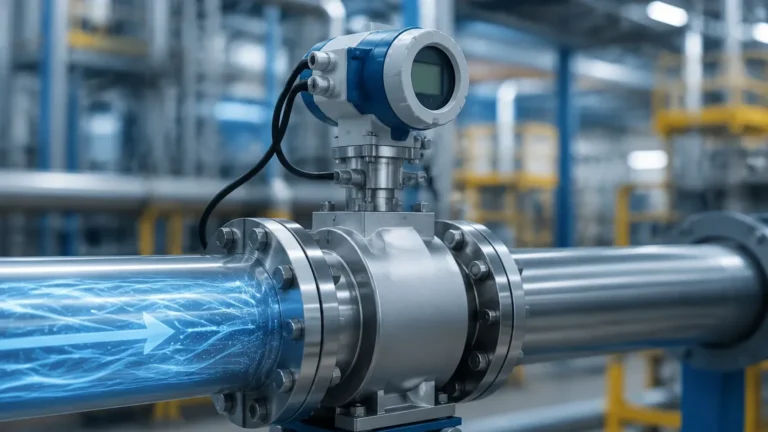
Accurate gas flow measurement is a critical requirement in modern industrial processes, ranging from chemical manufacturing and oil and gas extraction to water treatment and power generation. Unlike liquids, gases are highly compressible, and their density changes significantly with fluctuations in temperature and pressure. Consequently, selecting a flow meter for gas requires a deep understanding of fluid dynamics, the specific properties of the gas being measured, and the operational constraints of the installation site.
In industrial automation, flow measurement often works in tandem with level measurement to provide a complete picture of mass balance and process efficiency. As a professional manufacturer, Welk provides comprehensive instrumentation solutions, ensuring that engineers have access to the right technology for their specific environmental conditions. This guide examines the primary measurement principles, selection criteria, and installation best practices for gas flow instrumentation.
Core Principles of Gas Flow Measurement
Before selecting a specific instrument, it is essential to understand the physics behind the various measurement technologies. Gas flow meters are generally categorized into two types: volumetric flow meters and mass flow meters.
1. Thermal Dispersion (Thermal Mass Flow)
Thermal mass flow meters operate on the principle of thermal dispersion. The sensor typically consists of two RTDs (Resistance Temperature Detectors). One RTD measures the ambient temperature of the gas, while the other is heated to a constant differential temperature above the ambient. As gas flows past the heated sensor, it carries away heat. The instrument measures the amount of electrical power required to maintain the temperature differential, which is directly proportional to the mass flow rate of the gas.
* Advantages: Direct mass flow measurement without additional pressure or temperature compensation; high sensitivity at low flow rates; no moving parts.
* Limitations: Accuracy can be affected by changes in gas composition; sensors must be kept clean of coatings or moisture.
2. Vortex Shedding
Vortex flow meters utilize the von Kármán effect. When a gas flows past a non-streamlined "bluff body" placed in the stream, vortices are shed alternately from each side of the body. The frequency of this vortex shedding is directly proportional to the velocity of the gas. By multiplying the velocity by the cross-sectional area of the pipe, the volumetric flow rate is determined.
* Advantages: Wide temperature and pressure ranges; low maintenance due to no moving parts; suitable for steam and various industrial gases.
* Limitations: Requires a minimum Reynolds number to function; sensitive to pipe vibration; significant pressure drop compared to ultrasonic methods.
3. Differential Pressure (DP)
Differential pressure remains one of the most common methods for gas measurement. It relies on Bernoulli’s principle, which states that as the speed of a moving fluid increases, the pressure within the fluid decreases. By placing a restriction in the pipe (such as an orifice plate, Venturi tube, or Pitot tube), a pressure drop is created. The square root of the pressure difference between the upstream and downstream sides is proportional to the flow rate.
* Advantages: Well-understood technology with international standards (ISO 5167); low initial cost for large pipe sizes.
* Limitations: Limited turndown ratio (typically 4:1 or 5:1); creates a permanent pressure loss; requires separate sensors for temperature and pressure to calculate mass flow.
4. Ultrasonic (Transit-Time)
Ultrasonic flow meters for gas use acoustic transducers to send sound pulses diagonally across the pipe. The time taken for a pulse to travel with the flow is compared to the time taken to travel against the flow. The difference in transit time is used to calculate the gas velocity. Modern multi-path ultrasonic meters provide high accuracy and are often used for custody transfer.
* Advantages: Non-intrusive (no pressure drop); high accuracy; wide turndown ratio; can handle high-pressure applications.
* Limitations: Higher initial investment; requires sophisticated signal processing; performance can be degraded by high levels of acoustic noise or heavy particulates.
5. Coriolis Mass Flow
Coriolis meters measure mass flow directly by vibrating a tube (or tubes) through which the gas flows. The mass of the gas flowing through the vibrating tube causes a measurable twist or phase shift due to the Coriolis force. This phase shift is directly proportional to the mass flow rate.
* Advantages: Highest accuracy available; direct mass measurement; measures density and temperature simultaneously.
* Limitations: High cost, especially for large pipe diameters; significant pressure drop in high-velocity gas applications; bulky physical footprint.
Selection Criteria for Industrial Gas Applications
Choosing the correct flow meter for gas involves evaluating several process parameters. Engineers must look beyond the initial purchase price and consider the total cost of ownership, including calibration, maintenance, and energy loss due to pressure drops.
Gas Properties and Composition
The chemical compatibility of the meter’s wetted parts with the gas is paramount. For example, corrosive gases like hydrogen sulfide (H2S) in oil and gas applications require specialized alloys like Hastelloy. Additionally, if the gas composition varies (as is common with biogas or flare gas), technologies like thermal mass flow may require frequent recalibration or real-time gas analysis to maintain accuracy.
Process Conditions
* Pressure and Temperature: Ensure the meter body and sensors are rated for the maximum process pressure and temperature. High-pressure gas measurement often favors ultrasonic or DP meters, while high-temperature applications may require vortex meters with remote electronics.
* Flow Range (Turndown Ratio): The turndown ratio is the ratio of the maximum flow to the minimum flow that the meter can accurately measure. If a process has high seasonal or batch-based variability, a meter with a high turndown ratio, such as an ultrasonic or thermal mass meter, is necessary.
Accuracy and Repeatability
In custody transfer, where gas is being sold, an accuracy of ±0.5% or better is often required. For simple process monitoring or control, an accuracy of ±1% to ±3% may be sufficient. It is important to distinguish between "percent of rate" and "percent of full scale" when reviewing manufacturer specifications.
Technical Comparison Table
| Technology | Measurement Type | Typical Accuracy | Turndown Ratio | Pressure Drop | Best For |
| :— | :— | :— | :— | :— | :— |
| Thermal Mass | Direct Mass | ±1.0% of Rate | 100:1 | Negligible | Low flow, Nitrogen, Compressed air |
| Vortex | Volumetric | ±1.0% of Rate | 10:1 to 20:1 | Medium | Steam, High-velocity gas |
| DP (Orifice) | Volumetric | ±2.0% of FS | 4:1 | High | General purpose, stable flows |
| Ultrasonic | Volumetric | ±0.5% to 1.0% | 50:1 | None | Custody transfer, Large pipes |
| Coriolis | Direct Mass | ±0.5% of Rate | 20:1 | High | High-value gases, Chemical dosing |
Installation Best Practices
The performance of a flow meter for gas is heavily dependent on how it is installed. Even the most expensive meter will provide inaccurate data if the flow profile is disturbed.
Straight Pipe Requirements
Most gas flow meters require a certain length of straight pipe upstream and downstream of the sensor to ensure a fully developed, laminar flow profile. Obstructions like elbows, valves, and reducers create turbulence and swirls.
* Upstream: Typically 10 to 20 pipe diameters (D).
* Downstream: Typically 5 pipe diameters (D).
If space is limited, flow conditioners or rectifiers can be installed to break up vortices and stabilize the flow profile in a shorter distance.
Orientation and Moisture Management
In gas systems, moisture or condensate can accumulate in the pipe. To prevent measurement errors or damage:
* Install the flow meter at a high point in the piping system to allow condensate to drain away.
* For thermal and ultrasonic sensors, horizontal installation with the sensor mounted on the side (3 o'clock or 9 o'clock position) is often preferred to prevent liquid from pooling on the sensor face or gas bubbles from being trapped.
Calibration and Verification
Gas flow meters should be calibrated under conditions that mimic the actual process as closely as possible. Because gas density changes with pressure, a factory calibration at atmospheric pressure may not be accurate for a meter intended for use at 10 bar (1 MPa). On-site verification using master meters or sonic nozzles is recommended for critical applications.
Limitations and Common Challenges
1. Compressibility: Unlike liquids, the volume of a gas changes with pressure. If using a volumetric meter (Vortex, DP, Ultrasonic), integrated pressure and temperature compensation is mandatory to calculate Standard Cubic Meters (Sm³) or Normal Cubic Meters (Nm³).
2. Pressure Drop: Meters like orifice plates and Coriolis tubes introduce a restriction in the line. This results in a permanent pressure loss, which increases the energy required by compressors to move the gas through the system.
3. Low Flow Sensitivity: Many meters, particularly Vortex and DP, have a "cut-off" point below which they cannot sense flow. If your process requires measuring very low leak rates, thermal mass flow technology is usually the superior choice.
4. Gas Purity: Particulates or oil mist in the gas stream can coat sensors (thermal) or erode bluff bodies (vortex), leading to drift in measurement over time.
Frequently Asked Questions (FAQs)
Q: Can I use a liquid flow meter for gas measurement?
A: Generally, no. The sensors and physics are tuned for different densities and velocities. Using a liquid meter on gas will result in extreme inaccuracies and potential hardware failure due to over-speeding.
Q: What is the difference between "Standard" and "Actual" flow?
A: "Actual" flow (ACFM or m³/h) is the volume of gas at the current process pressure and temperature. "Standard" flow (SCFM or Nm³/h) is the volume the gas would occupy at a reference pressure (usually 1.013 bar) and temperature (usually 0°C or 15°C).
Q: How often should a gas flow meter be recalibrated?
A: This depends on the application and the technology. For non-critical process monitoring, every 2-3 years may suffice. For custody transfer or highly corrosive environments, annual or even semi-annual calibration is standard.
Q: Does pipe vibration affect gas flow meters?
A: Yes, particularly Vortex and Coriolis meters. Vortex meters may interpret pipe vibration as shedding vortices, leading to a false high reading. Coriolis meters rely on precise tube vibration and can be disrupted by external mechanical noise.
Conclusion
Selecting the appropriate flow meter for gas is a multi-faceted engineering decision that impacts the efficiency, safety, and profitability of an industrial operation. By understanding the underlying principles—whether thermal, ultrasonic, or differential pressure—and accounting for the specific characteristics of the gas and the installation environment, engineers can ensure long-term reliability. For those managing complex industrial systems, integrating high-quality flow instrumentation with reliable level measurement is the key to optimized process control. To explore a wide range of industrial measurement instruments and technical support, you can Review product options and application support on our Main Page. Proper selection today prevents costly maintenance and measurement errors tomorrow.