Flow Meter Manufacturers in Usa
Flow Meter Manufacturers in Usa
In the complex landscape of industrial automation, the precision of fluid handling is a cornerstone of operational efficiency. For engineers and procurement specialists sourcing instrumentation, identifying reliable flow meter manufacturers in usa is often the first step in optimizing process control. However, flow measurement rarely exists in a vacuum. It is intrinsically linked to level measurement, where the volume and pressure of stored media dictate the performance of downstream flow systems.
This guide explores the technical landscape of flow and level instrumentation, providing a practical engineering reference for selecting the right technologies and partners for industrial applications.
Understanding the Principles of Fluid Measurement
Before evaluating specific flow meter manufacturers in usa, it is essential to understand the physics governing different measurement technologies. Most industrial instruments rely on a few core principles to derive either flow rate or liquid volume.
Flow Measurement Principles
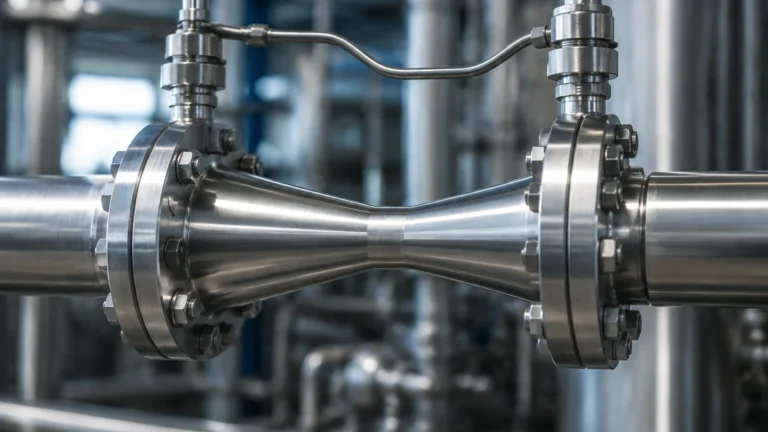
1. Differential Pressure (DP): Based on Bernoulli’s principle, these meters measure the pressure drop across an obstruction (like an orifice plate). The square root of the pressure difference is proportional to the flow rate.
2. Electromagnetic (Mag Meters): Utilizing Faraday’s Law of Induction, these sensors measure the voltage generated by a conductive fluid moving through a magnetic field. They are ideal for wastewater and chemical slurries.
3. Ultrasonic (Transit-Time/Doppler): These non-intrusive meters use sound waves to calculate velocity. Transit-time meters measure the time difference between signals sent upstream and downstream, while Doppler meters track frequency shifts from particles or bubbles.
4. Coriolis: These measure mass flow directly by detecting the inertia caused by fluid flowing through vibrating tubes. They are highly accurate but often come at a higher capital cost.
Level Measurement Principles
Level instruments, such as those provided by Welk, often serve as the primary data source for flow calculations in open channels or tank inventory management.
* Radar Level Meters: Use Time-of-Flight (ToF) microwave pulses. They are unaffected by temperature or pressure changes in the headspace.
* Ultrasonic Level Sensors: Use sound waves to detect the distance to the liquid surface. These are cost-effective for water treatment applications.
* Hydrostatic Transmitters: Measure the pressure exerted by a liquid column, which is directly proportional to the height of the liquid.
Evaluating Flow Meter Manufacturers in Usa: Key Criteria
When selecting from the various flow meter manufacturers in usa, technical specifications must be weighed against support capabilities and compliance standards. The following criteria are vital for ensuring long-term reliability:
Material Compatibility and Build Quality
In the chemical and oil and gas sectors, the wetted parts of a meter must withstand corrosive media. Manufacturers should offer a range of materials, including 316L stainless steel, PTFE linings, or Hastelloy. For level measurement, Welk emphasizes the use of robust housing and chemical-resistant sensors to ensure longevity in harsh environments.
Regulatory Compliance and Certification
Instruments used in the United States must often adhere to specific standards:
* NEMA/IP Ratings: For protection against dust and water ingress (e.g., NEMA 4X or IP67).
* ANSI/ASME: For flange dimensions and pressure ratings.
* Hazardous Area Certifications: Such as Class I, Div 1 (ATEX/IECEx equivalent) for explosive atmospheres.
Technical Support and Customization
B2B procurement is not just about the hardware; it is about the engineering support. Top-tier manufacturers provide OEM/ODM services, allowing for customized probe lengths, specialized communication protocols (HART, Modbus, Profibus), and site-specific calibration. For a comprehensive overview of integrated level and flow solutions, engineers can consult the Main Page of specialized manufacturers to compare technical data sheets.
Selection Guide for Industrial Instrumentation
The table below provides a comparison of common technologies used by flow meter manufacturers in usa and their level measurement counterparts to assist in the selection process.
| Technology | Typical Application | Accuracy | Limitations |
| :— | :— | :— | :— |
| Electromagnetic Flow | Conductive liquids, Wastewater | ±0.5% | Requires conductive fluid; minimum velocity needed. |
| Radar Level (80GHz) | Chemical tanks, Corrosive media | ±1 mm | Higher initial cost compared to ultrasonic. |
| Ultrasonic Flow | Large pipes, Retrofitting | ±1.0% to 2.0% | Sensitive to entrained air/bubbles (Transit-time). |
| Hydrostatic Level | Deep wells, Vented tanks | ±0.25% | Density changes affect accuracy; contact-based. |
| Vortex Flow | Steam, Gas, Low-viscosity liquids | ±1.0% | Sensitive to vibration; requires high Reynolds number. |
Installation Considerations and Best Practices
Even the highest quality instrument from leading flow meter manufacturers in usa will fail to perform if installation guidelines are ignored. Proper engineering design must account for the following:
Straight Pipe Requirements
Flow meters generally require a specific length of straight pipe both upstream and downstream to eliminate turbulence. A common rule of thumb is 10D (ten times the pipe diameter) upstream and 5D downstream. If space is limited, flow conditioners may be necessary.
Mounting and Orientation
* Flow Meters: Should ideally be installed in vertical pipes with upward flow to ensure the pipe is always full. If horizontal installation is required, the sensor should be placed away from the top of the pipe where air pockets might collect.
* Level Meters: Radar and ultrasonic sensors must be mounted perpendicular to the liquid surface. They should be placed away from the tank wall (to avoid false echoes) and away from inflow streams that cause turbulence.
Calibration and Zeroing
Initial commissioning should include a zero-point calibration under actual process conditions. For hydrostatic level transmitters, this involves accounting for the atmospheric pressure if the tank is vented.

The Intersection of Flow and Level in Open Channels
A critical area where flow meter manufacturers in usa and level measurement specialists overlap is in open channel flow measurement (e.g., flumes and weirs). In these systems, the flow rate is calculated based on the level of the liquid as it passes through a structure of known geometry.
Using a high-precision ultrasonic or radar level sensor, the height (head) is measured and converted into a flow rate (e.g., liters per second or gallons per minute) using standard formulas like the Manning equation. This application highlights why sourcing reliable level instruments is just as important as sourcing the flow meter itself. A 1% error in level measurement in a flume can result in a significantly higher error in the calculated flow rate due to the exponential nature of the flow-to-head relationship.
Common Risks and Mitigation
When navigating the market for flow meter manufacturers in usa, engineers should be aware of common pitfalls:
1. Over-specifying Accuracy: Demanding 0.1% accuracy for a non-critical greywater line increases costs unnecessarily. Match the accuracy to the process requirement.
2. Ignoring Maintenance Needs: Some flow meters have moving parts (like turbines) that wear over time. Non-contact solutions, such as radar level meters or ultrasonic flow meters, reduce long-term maintenance overhead.
3. Incompatible Communication: Ensure the instrument’s output (4-20mA, RS485, etc.) is compatible with the existing PLC or SCADA system.
Frequently Asked Questions (FAQ)
Q: Can I use a level sensor to measure flow in a closed pipe?
A: Generally, no. Level sensors measure the surface of a liquid. For closed pipes, you require a flow meter that measures velocity or mass. However, for partially filled pipes, a combination of level and velocity sensors is used.
Q: What is the advantage of sourcing from US-based manufacturers?
A: Sourcing from flow meter manufacturers in usa often provides advantages in terms of shipping speeds, alignment with US technical standards (ANSI/NEMA), and easier access to on-site technical support.
Q: How does temperature affect flow and level measurement?
A: Temperature changes can alter fluid density and viscosity. In level measurement, temperature fluctuations in the headspace can affect the speed of sound for ultrasonic sensors, whereas radar is largely unaffected. Many modern flow meters include integrated temperature compensation.
Q: Is radar better than ultrasonic for level measurement?
A: Radar is generally superior in environments with dust, steam, or varying temperatures. Ultrasonic is a cost-effective choice for stable, ambient-temperature water applications.
Conclusion
Selecting the right instrumentation requires a holistic view of the process. While the search for flow meter manufacturers in usa is a primary focus for many, the integration of high-quality level measurement is essential for a complete data picture. By understanding the underlying measurement principles and adhering to strict installation standards, industrial operators can achieve the accuracy and reliability required for modern automation. For those seeking specialized level measurement solutions to complement their flow systems, reviewing the technical options on the Main Page is a recommended next step in the engineering process.