Flow Meter Straightener
Flow Meter Straightener
In industrial process control, the accuracy of flow measurement is often compromised by the physical layout of piping systems. Pumps, valves, elbows, and headers introduce turbulence and swirl, which distort the velocity profile of the fluid. A flow meter straightener, also known as a flow conditioner, is a critical engineering component designed to eliminate these disturbances. By restoring a predictable and uniform flow profile, these devices allow flow meters to operate within their specified accuracy limits, even when standard straight-run pipe requirements cannot be met.
For engineers and plant managers, understanding the mechanics of flow conditioning is essential for optimizing system performance. Whether managing water treatment facilities or complex chemical processing plants, the integration of a flow meter straightener ensures that data used for billing, dosing, and process safety remains reliable. For comprehensive information on industrial measurement solutions, including level and flow instrumentation, professionals often consult the Main Page of specialist manufacturers to align their hardware with specific application needs.
Principles of Fluid Dynamics and Flow Distortion
To understand why a flow meter straightener is necessary, one must first examine how fluid behaves within a pipe. In an ideal scenario, fluid moves in a "fully developed flow profile." In laminar flow, this profile is parabolic; in turbulent flow, it is more rectangular but still symmetrical. Most flow meters—including ultrasonic, electromagnetic, and turbine types—are calibrated based on this fully developed profile.
Swirl and Velocity Profile Distortion
When fluid encounters a disturbance, such as two elbows in different planes, it develops a rotational component known as swirl. Swirl persists for many pipe diameters downstream, often exceeding 40D to 100D (40 to 100 times the pipe diameter). Other disturbances, like a partially closed valve or a pipe reducer, cause velocity profile distortion, where the fluid moves faster on one side of the pipe than the other.
If a flow meter is placed in these conditions without a flow meter straightener, the sensor will record an inaccurate reading. For example, a turbine meter might spin faster due to swirl, leading to an over-registration of flow, while an ultrasonic meter might experience signal interference due to the asymmetric velocity profile.
The Reynolds Number ($Re$)
The necessity of flow conditioning is also tied to the Reynolds Number, a dimensionless value that determines whether flow is laminar, transitional, or turbulent. Industrial applications typically operate in the turbulent regime ($Re > 4000$). A flow meter straightener works by breaking up large-scale eddies and redistributing the fluid's kinetic energy to accelerate the transition to a stable turbulent profile.
Types of Flow Meter Straighteners
There are several designs of flow conditioners, each suited to different types of disturbances and pressure loss requirements. Choosing the correct type depends on the specific flow meter technology in use and the space constraints of the installation.
1. Tube Bundles (Vane-Type)
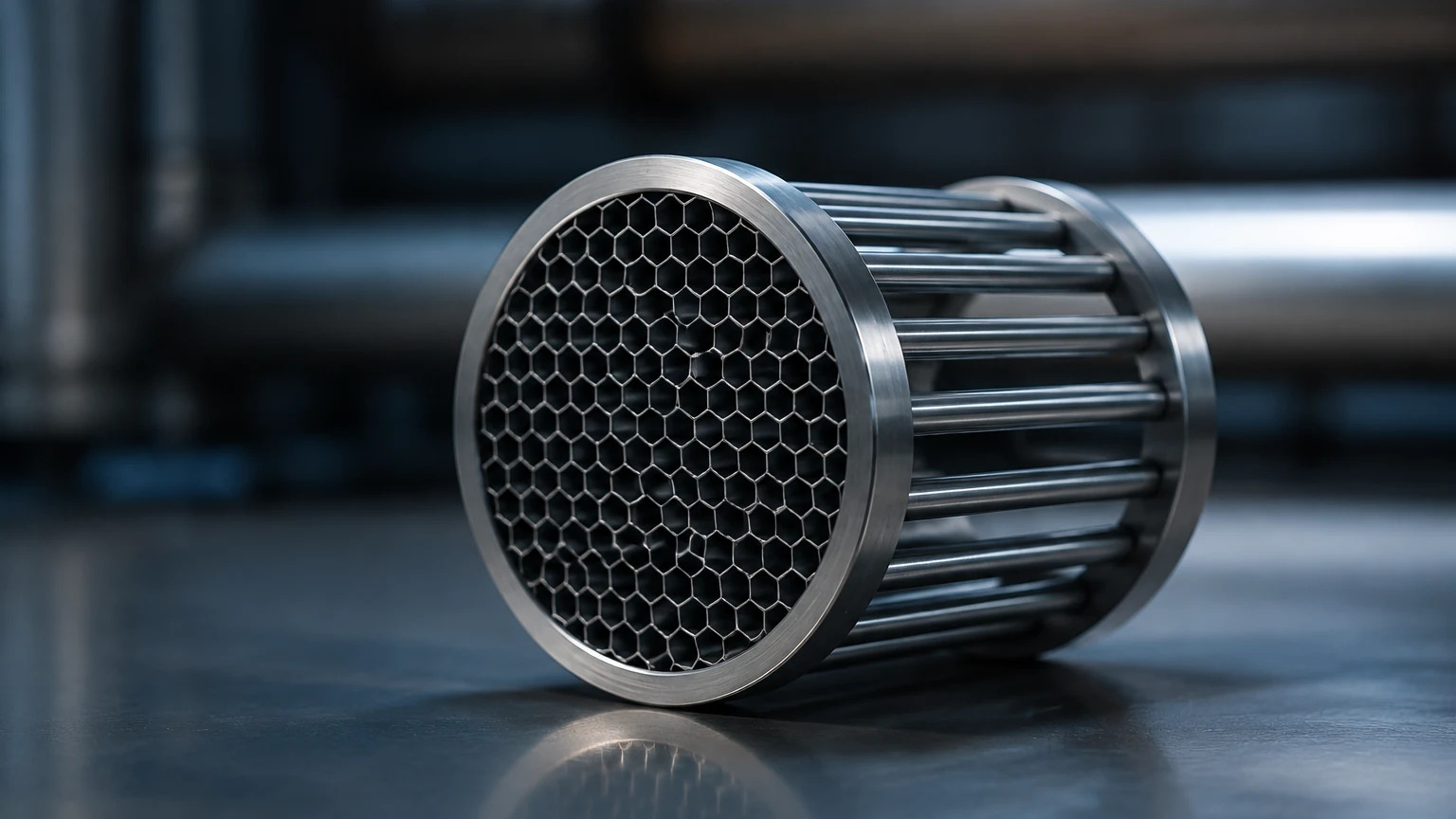
One of the most common designs consists of a cluster of small-diameter tubes nested together and inserted into the main pipe. These tubes effectively "comb" the flow, stripping away the rotational swirl. While excellent at removing swirl, tube bundles are less effective at correcting severe velocity profile distortions compared to perforated plates.
2. Perforated Plate Conditioners
These devices consist of a metal plate with a specific pattern of holes. They work by creating a controlled pressure drop that forces the fluid to redistribute itself evenly across the pipe cross-section. Notable designs include:
* Zanker Plate: Uses a combination of a perforated plate and a honeycomb-like structure to handle both swirl and profile distortion.
* Mitsubishi Type: A simpler perforated plate often used in steam and gas applications.
* Laws Plate: Features a specific hole distribution designed to minimize the straight-pipe run required for high-accuracy orifice meters.
3. Honeycomb Straighteners
Similar to tube bundles but with much thinner walls and smaller cell sizes, honeycombs are highly effective at removing swirl with minimal pressure drop. However, they are more susceptible to fouling if the fluid contains particulates or debris.
Technical Selection Criteria
Selecting a flow meter straightener requires balancing the need for flow stability against the physical and hydraulic costs to the system. Engineers should evaluate the following factors:
| Criteria | Description | Consideration |
| :— | :— | :— |
| Pressure Drop | The energy loss across the device. | Perforated plates have higher pressure drops than tube bundles. |
| Space Constraints | The available length of straight pipe. | High-performance conditioners can reduce straight-run requirements from 20D to 5D. |
| Fluid Properties | Viscosity, density, and cleanliness. | Avoid honeycombs in "dirty" fluids to prevent clogging. |
| Meter Type | The sensitivity of the primary element. | Vortex and Turbine meters are highly sensitive to swirl. |
| Material Compatibility | The chemical nature of the fluid. | Stainless steel (316L) is standard for corrosive chemical applications. |
Installation and Positioning Guidelines
Proper installation is as important as the selection of the straightener itself. If the device is placed too close to the meter or too close to the upstream disturbance, it may not function effectively.
Upstream and Downstream Distances
In a standard installation, the flow meter straightener is typically placed between the disturbance (e.g., a pump) and the flow meter. A common configuration is to place the straightener 2D to 5D downstream of the disturbance, followed by another 5D to 10D of straight pipe before the meter. This allows the small-scale turbulence created by the straightener itself to dissipate before reaching the sensor.
Orientation and Alignment
For vane-type straighteners, alignment with the pipe axis is critical. Misalignment can actually introduce new flow distortions. Furthermore, in horizontal pipes carrying liquids with potential gas pockets, or gases with potential condensate, the straightener must be oriented to avoid trapping these secondary phases, which could lead to corrosion or increased pressure drop.
The Relationship Between Flow Stability and Level Measurement
While flow meter straighteners are primarily associated with velocity measurement, they play a supporting role in accurate level measurement within integrated systems. In many industrial processes, level sensors and flow meters work in tandem. For example, in a dynamic tank filling system, the flow rate must be precisely known to calculate the expected change in level.
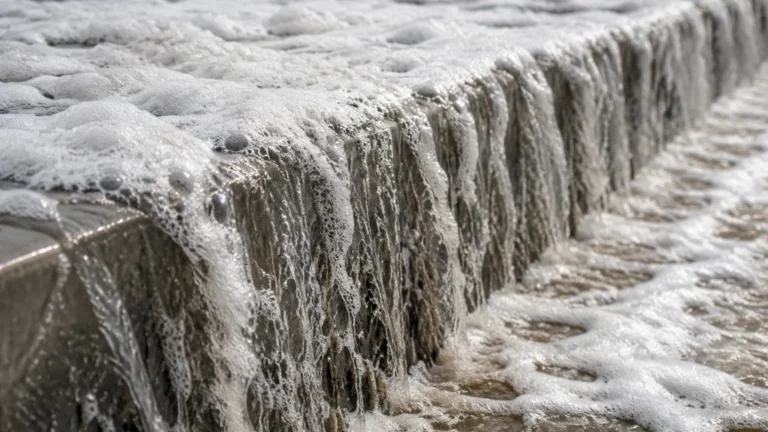
In applications like open-channel flow (e.g., flumes and weirs), the level of the liquid is used to calculate the flow rate. If the incoming flow is turbulent or surging, the level sensor (often ultrasonic or radar) will detect a "noisy" surface, leading to erratic flow calculations. In these cases, flow straightening baffles or stilling wells are used to provide a calm surface for the level instrument. Welk provides a range of level measurement instruments that benefit significantly from such stabilized environments, ensuring that the Main Page remains a vital resource for total process accuracy.
Limitations and Operational Risks
Despite their benefits, flow meter straighteners are not a universal solution and come with specific trade-offs:
1. Pressure Loss: Every straightener introduces a permanent pressure loss ($ ΔP $). In low-pressure systems or gravity-fed lines, this loss may be unacceptable, requiring a larger pipe diameter or a different meter technology that is less sensitive to flow profiles.
2. Clogging and Fouling: In wastewater or slurry applications, the small openings in a perforated plate or tube bundle can trap solids. This not only increases pressure drop but can also create more distortion than it solves. Regular inspection intervals are required in these environments.
3. Cost and Complexity: Adding a straightener increases the initial capital expenditure and the complexity of the piping spool. It should only be used when the required straight-pipe run is physically impossible to achieve.
4. Structural Integrity: In high-velocity steam or high-pressure gas lines, the straightener is subject to significant mechanical stress. If not properly manufactured and secured, components can break loose and damage downstream equipment like turbines or control valves.
Frequently Asked Questions (FAQ)
Q: Can a flow meter straightener replace the need for all straight pipe runs?
No. While it significantly reduces the required length, most flow meters still require a minimum of 3D to 5D of straight pipe after the straightener to allow the flow to settle.
Q: Which flow meters are most in need of a straightener?
Turbine meters, vortex shedding meters, and ultrasonic (specifically single-path) meters are highly sensitive to swirl and profile distortion. Electromagnetic meters are generally more robust but still benefit from conditioning in tight installations.
Q: Are flow straighteners and flow conditioners the same thing?
Technically, a "straightener" primarily removes swirl (like a tube bundle), while a "conditioner" removes swirl and corrects the velocity profile (like a Zanker plate). In common industry parlance, the terms are often used interchangeably.
Q: How do I calculate the pressure drop across a straightener?
Pressure drop is typically provided by the manufacturer as a K-factor or $C_v$ value. It is proportional to the square of the flow velocity and the density of the fluid.
Conclusion
The flow meter straightener is an indispensable tool for achieving high-precision measurement in the spatially constrained environments of modern industrial plants. By understanding the principles of flow distortion and selecting the appropriate conditioning technology, engineers can ensure their systems operate with maximum efficiency and minimal error. When integrated with high-quality level and flow instrumentation, such as those found on the Welk Main Page, these devices form the backbone of reliable industrial automation and process control.