Flow Systems
Flow Systems
In the landscape of industrial automation, flow systems represent the critical infrastructure required to transport, manage, and monitor liquids and gases across diverse sectors. From municipal water treatment plants to complex chemical processing facilities, the efficiency of these systems is inextricably linked to the precision of the instrumentation used to monitor them. While flow meters measure the velocity or volume of moving media, level measurement instruments provide the essential data required to manage inventory, prevent overflows, and calculate flow rates in open-channel environments.
As a professional manufacturer, Welk specializes in the integration of radar, ultrasonic, and hydrostatic technologies to ensure that flow systems operate within their designed parameters. Understanding the relationship between level sensing and flow dynamics is fundamental for any engineer tasked with system design or optimization.
Understanding the Synergy Between Level Measurement and Flow Systems
Flow systems are rarely composed of pipes alone. They involve storage tanks, buffer vessels, sumps, and open channels where the "flow" is governed by gravity or pressure differentials. In these contexts, level measurement serves as a primary data point for flow calculation.
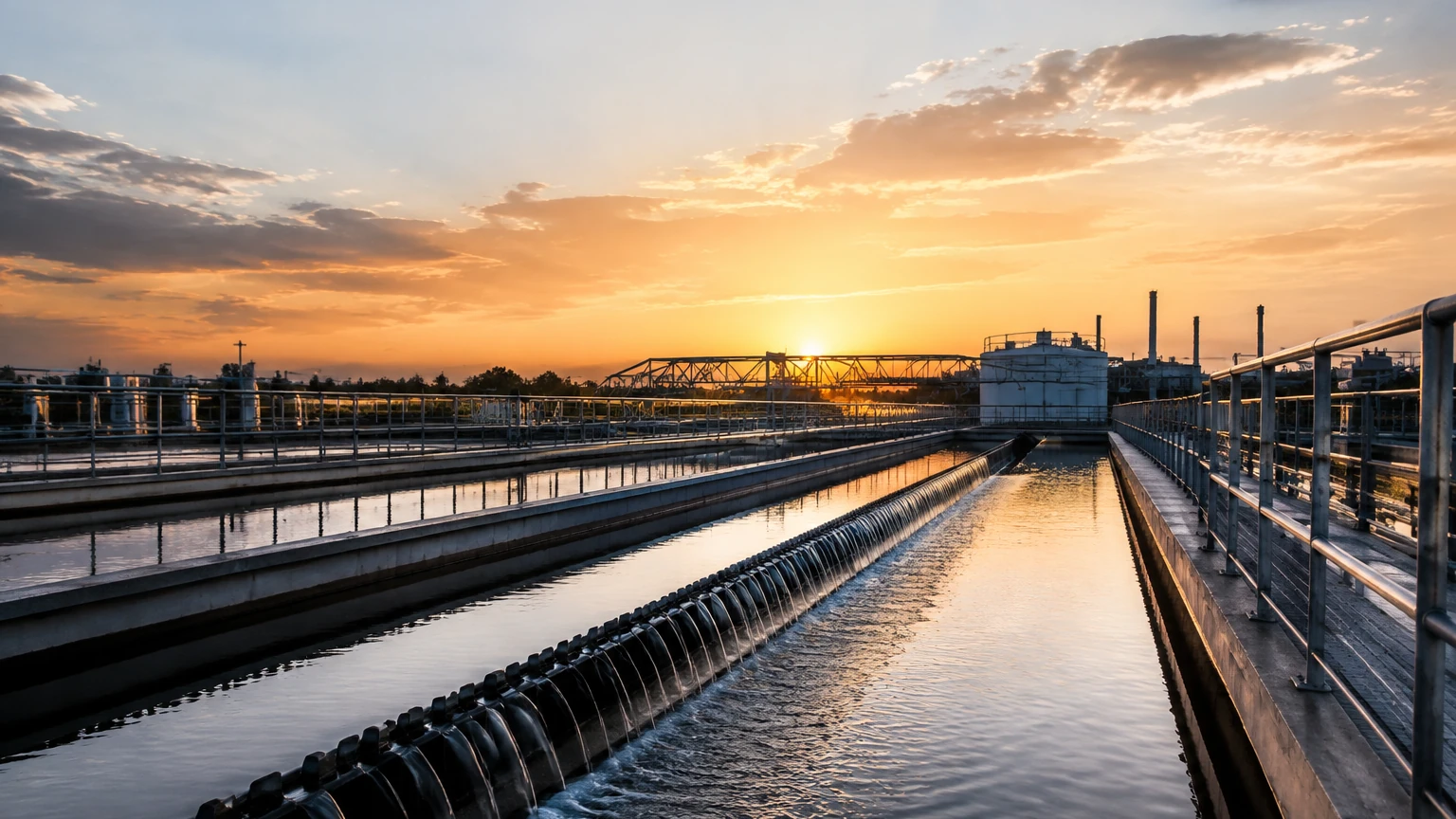
For example, in open-channel flow systems—such as those found in wastewater treatment—weirs and flumes are used to create a predictable relationship between the level of the liquid and the rate of flow. By measuring the head (level) of the water at a specific point, a level transmitter can provide a highly accurate flow rate reading based on established hydraulic formulas (such as the Manning equation or specific flume coefficients).
Furthermore, in closed-loop flow systems, level sensors in header tanks ensure that pumps always have sufficient Net Positive Suction Head (NPSH), preventing cavitation and system failure. Without accurate level data, the stability of the entire flow system is compromised.
Core Measurement Principles
Before selecting instrumentation for flow systems, it is vital to understand the physics governing different measurement technologies. Each principle offers distinct advantages depending on the media properties and environmental conditions.
Radar Level Measurement (FMCW)
Frequency Modulated Continuous Wave (FMCW) radar is the gold standard for high-precision level measurement in modern flow systems. The sensor emits a continuous signal with a constantly changing frequency. The signal reflects off the surface of the media and returns to the antenna. The difference in frequency between the emitted and received signal is proportional to the distance.
* Advantages: Non-contact, unaffected by temperature fluctuations, vacuum, or high pressure. It can penetrate steam and dust, making it ideal for volatile chemical flow systems.
* Application: High-accuracy storage tanks and process vessels where media consistency varies.
Ultrasonic Level Sensing
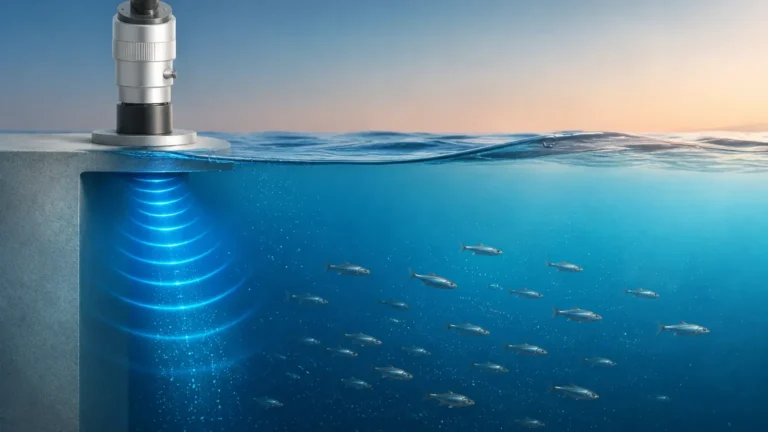
Ultrasonic sensors operate on the Time-of-Flight (ToF) principle. The transducer emits an ultrasonic pulse that travels through the air, hits the liquid surface, and bounces back. The distance is calculated based on the speed of sound.
* Advantages: Cost-effective and easy to install. Highly effective for water-based liquids in open channels.
* Limitations: The speed of sound is affected by air temperature and gas composition. Heavy foam or surface turbulence can scatter the signal.
* Application: Sump monitoring and open-channel flow measurement in water treatment.
Hydrostatic Pressure Measurement
This principle relies on the relationship between the height of a liquid column and the pressure it exerts at the base: $P = \rho \cdot g \cdot h$ (where $P$ is pressure, $\rho$ is density, $g$ is gravity, and $h$ is height). A submersible or externally mounted transmitter measures this pressure to determine the level.
* Advantages: Robust, simple, and capable of measuring level regardless of surface foam or turbulence.
* Application: Deep wells, vented tanks, and lift stations within municipal flow systems.
Selection Criteria for Flow System Instrumentation
Choosing the right instrument requires a technical evaluation of the process environment. The following table provides a comparison of common technologies used to support industrial flow systems.
| Technology | Accuracy | Media Type | Max Range | Key Advantage |
| :— | :— | :— | :— | :— |
| 80GHz Radar | ±1 mm | Liquids/Solids | Up to 120m | Highest precision; narrow beam angle |
| Ultrasonic | ±0.25% of range | Water/Wastewater | Up to 30m | Cost-effective for open channels |
| Hydrostatic | ±0.1% to ±0.5% | Clear/Dirty Liquids | Up to 200m | Unaffected by surface foam |
| Magnetic Gauge | Visual | Corrosive Liquids | Custom | No power required for local display |
When evaluating these options, engineers must confirm the chemical compatibility of the wetted parts (e.g., SS316L, PTFE, or PP) and the required ingress protection (IP67 or IP68) for the specific installation site. For comprehensive technical specifications and product options, professionals can Review product options and application support to align their hardware with specific project requirements.
Installation Guidelines and Best Practices
The performance of sensors within flow systems is often dictated by the quality of the installation. Even the most advanced radar meter will fail if placed in an environment that violates its physical operating constraints.
1. Avoiding Obstructions
For non-contact sensors (Radar and Ultrasonic), the "beam angle" is critical. The sensor must have a clear line of sight to the liquid surface. Internal structures like ladders, heating coils, or agitators can create false reflections (echoes). Modern instruments allow for "false echo suppression," but physical clearance is always preferred.
2. Turbulence Management
In flow systems where liquid enters a tank at high velocity, surface turbulence is common. This can cause erratic readings for ultrasonic sensors. In such cases, installing a stilling well (a vertical pipe that stabilizes the liquid surface) or switching to a hydrostatic pressure transmitter is recommended.
3. Dead Zones (Blocking Distance)
All ToF sensors have a "dead zone" directly beneath the transducer where measurements cannot be taken. For example, an ultrasonic sensor might have a 0.3m (300mm) dead zone. The sensor must be mounted high enough so that the maximum liquid level never enters this zone.
4. Nozzle Mounting
When mounting on a nozzle, the sensor's antenna or transducer should ideally extend slightly beyond the nozzle end to prevent signal interference from the nozzle walls. If the nozzle is long and narrow, a high-frequency radar (80GHz) is preferred due to its narrow beam.
Limitations and Operational Constraints
While modern instrumentation is highly versatile, certain conditions present significant challenges for flow systems:
* Extreme Foam: Heavy, dense foam can absorb ultrasonic and radar signals. In these scenarios, a guided wave radar (GWR) or a hydrostatic sensor is often the only reliable solution.
* Vacuum Conditions: Ultrasonic sensors cannot operate in a vacuum because sound waves require a medium (air) to travel. Radar is the preferred technology for vacuum-sealed process vessels.
* Rapid Temperature Changes: Sudden shifts in temperature can change the air density above the liquid, affecting the speed of sound and leading to errors in ultrasonic measurements. Radar is immune to these changes.
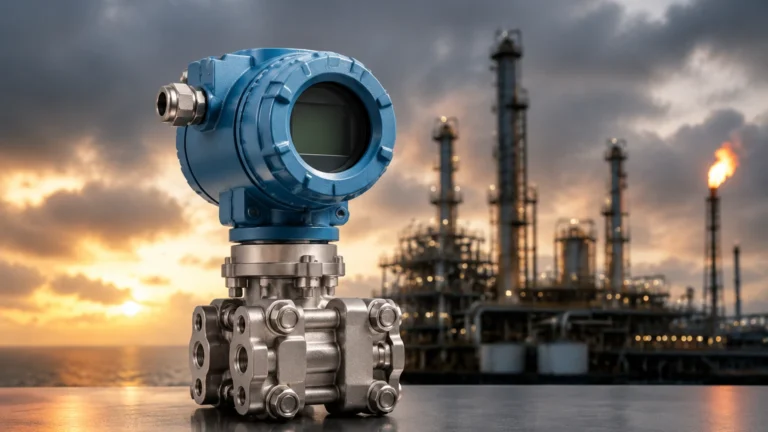
* High-Pressure Environments: Hydrostatic sensors must be rated for the total system pressure, not just the liquid head. In pressurized tanks, a differential pressure (DP) transmitter is required to compensate for the headspace pressure.
Maintenance and Calibration Protocols
To ensure the longevity of flow systems, instrumentation requires periodic verification.
1. Visual Inspection: Check for buildup on sensor faces. In chemical flow systems, crystallization on a radar antenna can degrade signal strength.
2. Zero-Point Calibration: For hydrostatic sensors, ensuring the sensor reads zero when the tank is empty is vital for accuracy.
3. Signal Mapping: Periodically re-map the tank internals to account for any new hardware or changes in the vessel structure that might cause false echoes.
Frequently Asked Questions (FAQ)
Q: Can I use a level sensor to measure flow in a pipe?
A: Generally, no. Level sensors measure the height of a liquid. In a fully flooded pipe, the level is constant. You would need a dedicated flow meter (electromagnetic, ultrasonic transit-time, or vortex). However, if the pipe is partially filled (gravity flow), an ultrasonic level sensor combined with a specialized controller can calculate flow.
Q: What is the benefit of 80GHz radar over 26GHz radar in flow systems?
A: The 80GHz radar has a much narrower beam angle (typically around 3 to 6 degrees). This allows it to be installed in smaller nozzles and avoids interference from tank walls or internal obstructions more effectively than 26GHz models.
Q: How do I handle measurement in a tank with an agitator?
A: Use a radar sensor with a fast sampling rate and enable the "agitator filter" in the software. Alternatively, install the sensor in a stilling well to shield the liquid surface from the turbulence caused by the blades.
Q: Are hydrostatic sensors affected by changes in liquid density?
A: Yes. Since hydrostatic pressure is a function of density, if the media changes (e.g., switching from water to an oil-based chemical), the level reading will be incorrect unless the transmitter is recalibrated for the new specific gravity.
Conclusion
Effective flow systems rely on the seamless integration of level measurement technologies to maintain process stability and accuracy. By understanding the underlying measurement principles—whether it be the precision of FMCW radar, the cost-effectiveness of ultrasonic ToF, or the ruggedness of hydrostatic pressure—engineers can design systems that are both reliable and efficient. Proper selection, combined with rigorous adherence to installation best practices, ensures that industrial flow systems meet the demanding requirements of modern manufacturing and environmental management.