Tempature Switch
Tempature Switch
In the landscape of industrial automation and process control, the monitoring of thermal states is as critical as the measurement of fluid levels. A tempature switch serves as a fundamental safety and control component, designed to open or close electrical contacts when a specific temperature threshold is reached. While level measurement instruments—such as those found on our Main Page—provide data on volume and inventory, temperature switches ensure that the physical properties of the media remain within safe operational boundaries.
This guide explores the engineering principles behind temperature switching technology, its integration with level control systems, and the practical criteria required for selecting the right instrument for industrial applications.
Measurement Principles of Temperature Switches
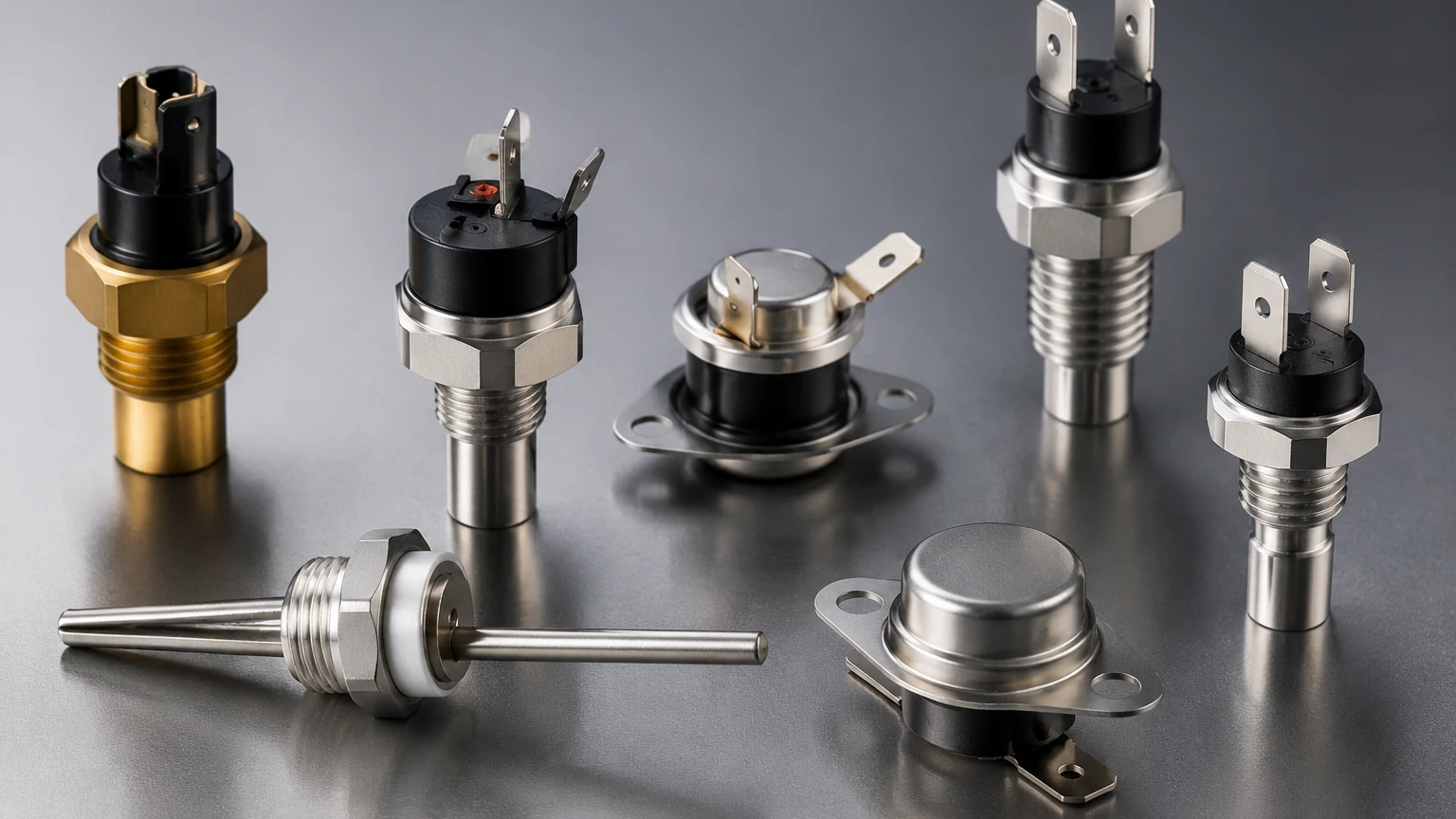
Before selecting a device, it is essential to understand the underlying physics that govern how a tempature switch detects thermal changes. Industrial switches generally fall into three categories based on their sensing element: bimetallic, fluid-filled (bulb and capillary), and electronic (RTD or thermistor).
Bimetallic Principles
The bimetallic switch operates on the principle of differential thermal expansion. Two different metals, such as brass and steel, are bonded together. Because each metal has a unique coefficient of expansion, the strip will bend in a predictable direction when heated. This mechanical movement is used to actuate a microswitch. These are typically used in applications where ruggedness is prioritized over high precision.
Fluid-Filled and Vapor-Tension Principles
These switches utilize a bulb connected to a bellows or diaphragm via a capillary tube. The system is filled with a temperature-sensitive fluid or gas. As the temperature at the bulb increases, the internal pressure rises, expanding the bellows. Once the pressure overcomes a pre-set spring tension, the switch triggers. This method allows the sensing bulb to be located several meters away from the actual switching mechanism, which is advantageous in hazardous or high-vibration environments.
Electronic Sensing Principles
Modern electronic temperature switches use Resistance Temperature Detectors (RTDs), typically Pt100 or Pt1000 sensors, or thermistors. A microprocessor monitors the resistance change relative to temperature. When the measured value matches the programmed set point, a solid-state or mechanical relay is toggled. Electronic switches offer the highest accuracy, adjustable hysteresis, and often include a local digital display for real-time monitoring.
The Synergy Between Temperature and Level Measurement
In many B2B industrial sectors, such as chemical processing and oil and gas, level and temperature are interdependent variables. Understanding this relationship is vital for process engineers.
1. Density Compensation: The accuracy of hydrostatic level transmitters depends on the density of the liquid. Since density changes with temperature, a tempature switch or sensor is often used to provide data for compensation algorithms to ensure the level reading remains accurate.
2. Safety Interlocking: In storage tanks containing volatile chemicals, a high-level alarm from an ultrasonic sensor is often paired with a high-temperature switch. If the temperature rises unexpectedly, it may indicate an exothermic reaction or external heating, triggering an emergency shutdown regardless of the fluid level.
3. Viscosity Control: In heavy oil applications, temperature switches control heating elements. If the temperature drops too low, the fluid becomes too viscous for accurate measurement by certain level meters, or it may even solidify, damaging the equipment.
Practical Selection Criteria
Selecting a tempature switch requires a detailed analysis of the process environment. Engineers should evaluate the following parameters before procurement:
Set Point and Deadband (Hysteresis)
The set point is the temperature at which the switch changes state. The deadband is the difference between the set point and the reset point. For example, if a switch turns on a cooling fan at 50°C and turns it off at 45°C, the deadband is 5°C. A narrow deadband allows for tighter control but may lead to "chattering" (rapid cycling) of the equipment.
Wetted Materials and Environment
The sensing probe must be compatible with the process media. Stainless steel (316L) is the standard for water treatment and food grade applications, while exotic alloys like Hastelloy may be required for corrosive acids. Additionally, the housing must meet specific Ingress Protection (IP) ratings or explosion-proof certifications (ATEX/IECEx) if installed in hazardous zones.
Response Time
Thermal lag is a significant factor in switch performance. A probe encased in a heavy-duty thermowell will react more slowly to temperature spikes than a direct-immersion sensor. Engineers must balance the need for sensor protection with the required speed of the safety response.
Technical Selection Table
| Feature | Bimetallic Switch | Fluid-Filled Switch | Electronic Switch |
| :— | :— | :— | :— |
| Typical Range | -50°C to +400°C | -100°C to +600°C | -200°C to +800°C |
| Accuracy | Low to Moderate | Moderate to High | Very High |
| Power Required | No | No | Yes (24V DC / 220V AC) |
| Vibration Resistance | Poor | Fair | Excellent |
| Adjustability | Limited | Moderate | Fully Programmable |
| Common Use Case | HVAC, Simple Alarms | Remote Tank Monitoring | Precision Automation |
Installation and Maintenance Considerations
Proper installation is paramount to ensure the tempature switch performs according to its specifications.
Immersion Depth
To avoid errors caused by ambient temperature conduction through the housing, the sensing element must be sufficiently immersed in the media. A general rule of thumb is an immersion depth of at least 5 to 10 times the diameter of the protection tube or thermowell.
Use of Thermowells
In high-pressure systems or applications involving corrosive media, a thermowell should be used. This allows the tempature switch to be removed for calibration or replacement without draining the tank or stopping the process. When using a thermowell, applying a thermal conductive paste inside the well can significantly reduce response lag.
Wiring and Signal Integrity
For electronic switches, shielded cabling should be used to prevent electromagnetic interference (EMI) from motors or variable frequency drives (VFDs) from causing false trips. Ensure that the contact ratings (Amperes and Voltage) of the switch are compatible with the load it is intended to drive, or use an intermediate relay.
Limitations and Common Risks
While highly reliable, temperature switches have limitations that must be acknowledged in the system design:
* Mechanical Fatigue: Bimetallic and bellows-operated switches have moving parts that will eventually wear out. In high-cycle applications, electronic switches are preferred.
* Ambient Temperature Influence: Non-compensated fluid-filled switches can be affected by the temperature of the air surrounding the capillary tube. In outdoor installations with high seasonal variance, compensated capillaries or electronic sensors are necessary.
* Calibration Drift: Over time, the set point may drift due to material aging or extreme thermal cycling. Annual verification against a calibrated heat source is recommended for critical safety loops.
Frequently Asked Questions (FAQs)
Q: Can a tempature switch be used for continuous temperature monitoring?
A: Standard mechanical switches only provide a binary (on/off) output. If you require a continuous 4-20mA or Modbus signal, you should specify a temperature transmitter or a hybrid electronic switch that offers both a display and a signal output.
Q: What is the difference between an SPDT and a DPDT contact?
A: A Single Pole Double Throw (SPDT) switch can control one circuit. A Double Pole Double Throw (DPDT) switch can control two independent circuits simultaneously, which is useful for triggering an alarm and a shutdown sequence at the same time.
Q: How do I choose between a fixed and an adjustable deadband?
A: Fixed deadbands are more cost-effective and prevent tampering in simple applications. Adjustable deadbands are necessary in complex processes where the user needs to fine-tune the system to prevent equipment wear caused by frequent cycling.
Conclusion
Integrating a reliable tempature switch into your process control strategy is essential for protecting both equipment and personnel. By understanding the specific requirements of your application—from the chemical compatibility of the probe to the electrical requirements of the switch contacts—you can ensure a long-lasting and accurate solution. For comprehensive level measurement solutions that work in tandem with these thermal controls, we invite you to explore the technical resources and product specifications available on our Main Page. Selecting the right combination of level and temperature instrumentation is the first step toward a safer and more efficient industrial operation.