Food Processing Industry Wastewater Treatment Solutions
Food Processing Industry Wastewater Treatment Solutions
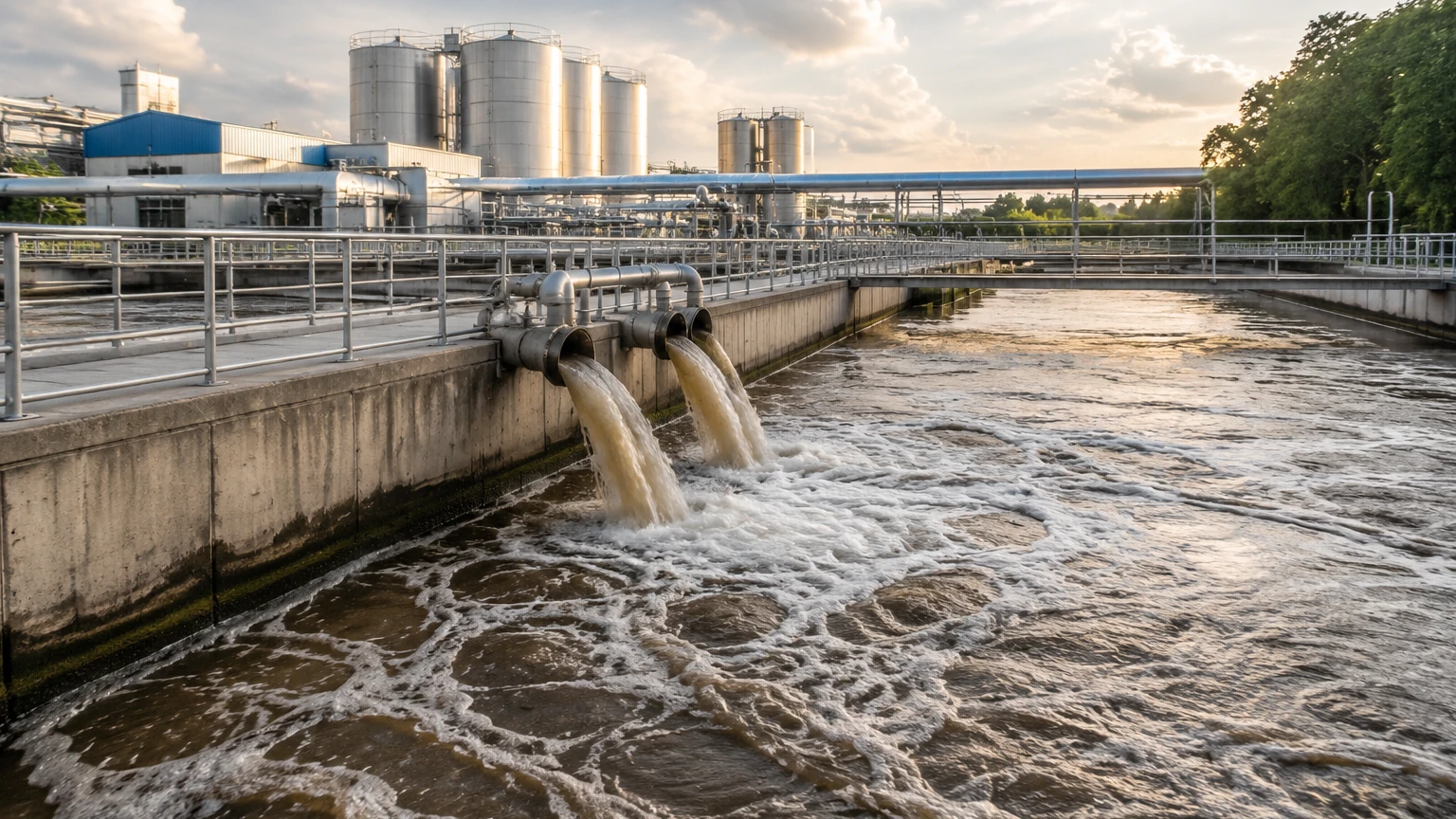
The food and beverage sector is one of the most water-intensive industries globally. From slaughterhouses and dairies to fruit processing and brewery operations, the volume of effluent generated is significant and chemically complex. Implementing effective food processing industry wastewater treatment solutions is not merely a regulatory requirement but a critical component of operational efficiency and environmental stewardship. Central to these solutions is the precise monitoring of fluid levels throughout the treatment train, ensuring that pumps, aerators, and chemical dosing systems operate within their designed parameters.
Effective management of wastewater requires a robust understanding of the physical and chemical characteristics of the waste stream, which often includes high levels of Biochemical Oxygen Demand (BOD), Chemical Oxygen Demand (COD), suspended solids, and fats, oils, and grease (FOG). This article examines the technological frameworks and instrumentation strategies necessary to optimize wastewater treatment in food processing environments.
Level Measurement Principles for Wastewater Environments
Before selecting specific instrumentation for food processing industry wastewater treatment solutions, it is essential to understand the physical principles governing level measurement. In wastewater applications, sensors must contend with turbulence, foam, corrosive chemicals, and varying densities. Welk provides several core technologies to address these challenges.
Radar Level Measurement (Non-Contact)
Radar level meters operate on the Time-of-Flight (ToF) principle. The sensor emits a high-frequency microwave signal (typically 26GHz or 80GHz) that travels to the surface of the liquid, reflects, and returns to the receiver. The distance is calculated based on the time elapsed.
* 80GHz Radar: This high-frequency technology offers a narrow beam angle (as small as 3 degrees), which is ideal for avoiding internal tank obstructions like agitators or ladders. It is highly resistant to steam and temperature fluctuations, making it a premium choice for hot washdown processes.
* 26GHz Radar: A versatile option for larger basins where a wider beam is acceptable and cost-effectiveness is a priority.
Ultrasonic Level Measurement (Non-Contact)
Ultrasonic sensors emit acoustic pulses that reflect off the liquid surface. Like radar, they use the ToF principle. However, because sound requires a medium (air) to travel, the accuracy of ultrasonic sensors can be influenced by air temperature, humidity, and heavy foam, which can absorb the sound waves. They are best suited for stable outdoor lagoons or ambient temperature sumps.
Hydrostatic Level Measurement (Contact)
Hydrostatic transmitters measure the pressure exerted by the liquid column above the sensor diaphragm. The relationship is defined by the formula: $P = \rho \cdot g \cdot h$, where $P$ is pressure, $\rho$ (rho) is the density of the liquid, $g$ is gravity, and $h$ is the height of the liquid. These sensors are submerged at the bottom of a tank or well. They are excellent for deep lift stations but require consideration if the liquid density changes significantly due to high organic loads.
Point Level Detection (Switches)
Level switches, including tuning fork and float switches, provide discrete signals (on/off) at specific heights. These are critical for overflow prevention and dry-run protection for pumps in wastewater treatment plants.
Selecting Level Instrumentation for Specific Treatment Stages
Food processing industry wastewater treatment solutions are typically divided into several stages, each presenting unique environmental conditions for level sensors.
1. Primary Screening and Equalization
The initial stage involves removing large solids and balancing the flow rate and pH of the incoming wastewater. Equalization (EQ) tanks experience significant turbulence and varying concentrations of FOG.
* Recommendation: Non-contact 80GHz radar is preferred here. Since it does not touch the medium, it avoids the build-up of fats and grease that would foul a hydrostatic diaphragm or a float switch.
2. Biological Treatment (Aeration Basins)
In the secondary treatment stage, microorganisms break down organic matter. Aeration basins are characterized by heavy surface foam and high oxygen injection.
* Recommendation: Radar is superior to ultrasonic in this environment because microwaves penetrate foam more effectively than sound waves. If the foam is exceptionally thick and dense, a guided wave radar (GWR) or a specialized hydrostatic probe with a large, flush diaphragm may be used to minimize maintenance.
3. Clarification and Sedimentation
Clarifiers allow solids to settle at the bottom while clear water overflows at the top. Monitoring the "sludge blanket" level is vital for efficient solids removal.
* Recommendation: Ultrasonic sensors are often used for surface level, while specialized hydrostatic sensors or submerged ultrasonic transducers are employed to track the interface between the water and the settling sludge.
4. Chemical Dosing and pH Adjustment
Chemical tanks for flocculants, acids, or bases require high-accuracy monitoring to ensure precise dosing.
* Recommendation: For corrosive chemicals, PTFE-lined radar sensors or ultrasonic sensors provide excellent chemical resistance. To review specific product options and application support for chemical handling, engineers should consult the Main Page of the manufacturer’s technical catalog.
Technical Selection Guide and Comparison
The following table provides a comparison of technologies used within food processing industry wastewater treatment solutions to assist in the selection process.
| Technology | Measurement Range | Accuracy | Suitable Medium | Limitations |
| :— | :— | :— | :— | :— |
| 80GHz Radar | Up to 120m | ±1mm | All liquids, foam, steam | Higher initial cost |
| Ultrasonic | 0.3m – 20m | ±0.25% FS | Water, effluent, chemicals | Affected by steam, wind, and heavy foam |
| Hydrostatic | 1m – 200m | ±0.1% to 0.5% | Clear water, sludge, sumps | Contacting; sensitive to density changes |
| Level Switch | Point level | N/A | High/Low alarms | No continuous measurement |
Installation Best Practices and Environmental Considerations
Proper installation is as critical as sensor selection for the success of food processing industry wastewater treatment solutions. Engineers must account for the following factors:
Nozzle Height and Dead Zones
Every non-contact sensor has a "dead zone" (blocking distance) near the transducer face where measurement is impossible. For ultrasonic sensors, this is typically 200mm to 500mm (8 to 20 inches). Ensure the sensor is mounted high enough that the maximum liquid level never enters this zone.
Avoiding Obstructions
For radar and ultrasonic sensors, the signal beam spreads as it travels. Sensors should be installed away from tank walls, inlet pipes, and agitators. A general rule is to maintain a distance from the wall equal to 1/10th of the tank height.
Stilling Wells and Bypass Chambers
In tanks with extreme turbulence or heavy surface foam, installing the sensor inside a stilling well (a vertical pipe) can provide a calm surface for measurement. This is particularly useful for hydrostatic sensors in high-flow lift stations to prevent the sensor from being moved by the current.
Mounting Orientation
Non-contact sensors must be mounted perpendicular to the liquid surface. Even a small tilt can cause the signal to reflect away from the receiver, leading to signal loss. Welk radar units often include adjustable flanges to simplify alignment during installation.
Addressing Limitations and Maintenance Challenges
While modern instrumentation is highly reliable, food processing wastewater presents specific challenges that can impact performance.
1. Coating and Build-up: In dairy or meat processing, proteins and fats can solidify on sensors. Non-contact radar is the primary defense against this. If using contacting sensors, a regular cleaning schedule or the use of flush-diaphragm hydrostatic transmitters is necessary.
2. Vapor and Steam: High-temperature cleaning (CIP) processes generate steam. Ultrasonic sensors will often fail in these conditions as the speed of sound changes with temperature and humidity. Radar is unaffected by these atmospheric changes.
3. Dielectric Constant (dk): Radar relies on the dielectric constant of the liquid to reflect the signal. While most wastewater is water-based (high dk), some organic oils have low dk values. In these rare cases, guided wave radar or hydrostatic sensors are more reliable.
Frequently Asked Questions (FAQs)
Q: Can ultrasonic sensors be used in outdoor wastewater lagoons?
A: Yes, but they should be equipped with sunshields to prevent temperature fluctuations from affecting the transducer, and they may require recalibration for seasonal temperature shifts.
Q: How does foam affect radar level meters?
A: Most foams are transparent to radar signals, allowing the sensor to measure the true liquid level beneath. However, very dense, thick foam (like that found in some protein-rich food waste) may reflect a signal. In those cases, 80GHz radar with advanced signal processing is required.
Q: What is the maintenance requirement for hydrostatic sensors in sludge tanks?
A: Hydrostatic sensors in sludge applications should be checked periodically for sediment build-up around the diaphragm. Using a sensor with a large, flat diaphragm helps prevent clogging.
Q: Are these sensors compatible with Clean-In-Place (CIP) chemicals?
A: Yes, provided the wetted materials are specified correctly. Stainless steel (316L), PTFE, and PVDF are common materials used by Welk to ensure compatibility with caustic and acidic cleaning agents.
Conclusion
Optimizing food processing industry wastewater treatment solutions requires a precision-driven approach to level monitoring. By understanding the measurement principles of radar, ultrasonic, and hydrostatic technologies, facility managers can select the right tools for each stage of the treatment process. Whether managing the high-turbulence environment of an equalization tank or the precise chemical dosing required for pH balance, the right instrumentation ensures regulatory compliance, reduces waste, and protects the downstream environment. For technical specifications and to explore the full range of industrial level measurement hardware, professionals are encouraged to review the available resources on the Main Page.
Download Food Processing Industry Wastewater Treatment Solutions as a PDF