Foust Marketing Featured Product Memdos Smart Pumps Functionalities
Foust Marketing Featured Product Memdos Smart Pumps Functionalities
In the realm of industrial chemical dosing and water treatment, precision is not merely a preference but a fundamental requirement for process stability and safety. Among the high-performance solutions highlighted in the industry, the Memdos Smart series of motor-driven diaphragm metering pumps stands out for its integration of advanced drive technology and intelligent control. As a featured product often discussed by technical representatives like Foust Marketing, these pumps represent a shift from traditional stroke-length adjustment to sophisticated electronic speed control.
For engineers and plant operators, understanding the functionalities of these smart pumps is essential for optimizing chemical feed systems. This guide explores the mechanical principles, operational modes, and the critical role of ancillary systems—specifically level measurement—in ensuring the reliability of dosing operations.
The Stepper Motor Principle: A Shift in Dosing Logic
Before diving into specific functionalities, it is vital to understand the underlying measurement and movement principle that differentiates the Memdos Smart series from conventional solenoid or standard motor-driven pumps.
Traditional motor-driven pumps often rely on a constant motor speed, where the dosing volume is adjusted by mechanically limiting the stroke length of the diaphragm. This can lead to a "pulsating" flow profile, especially at low injection rates, as the pump spends more time in the idle phase of the stroke cycle.
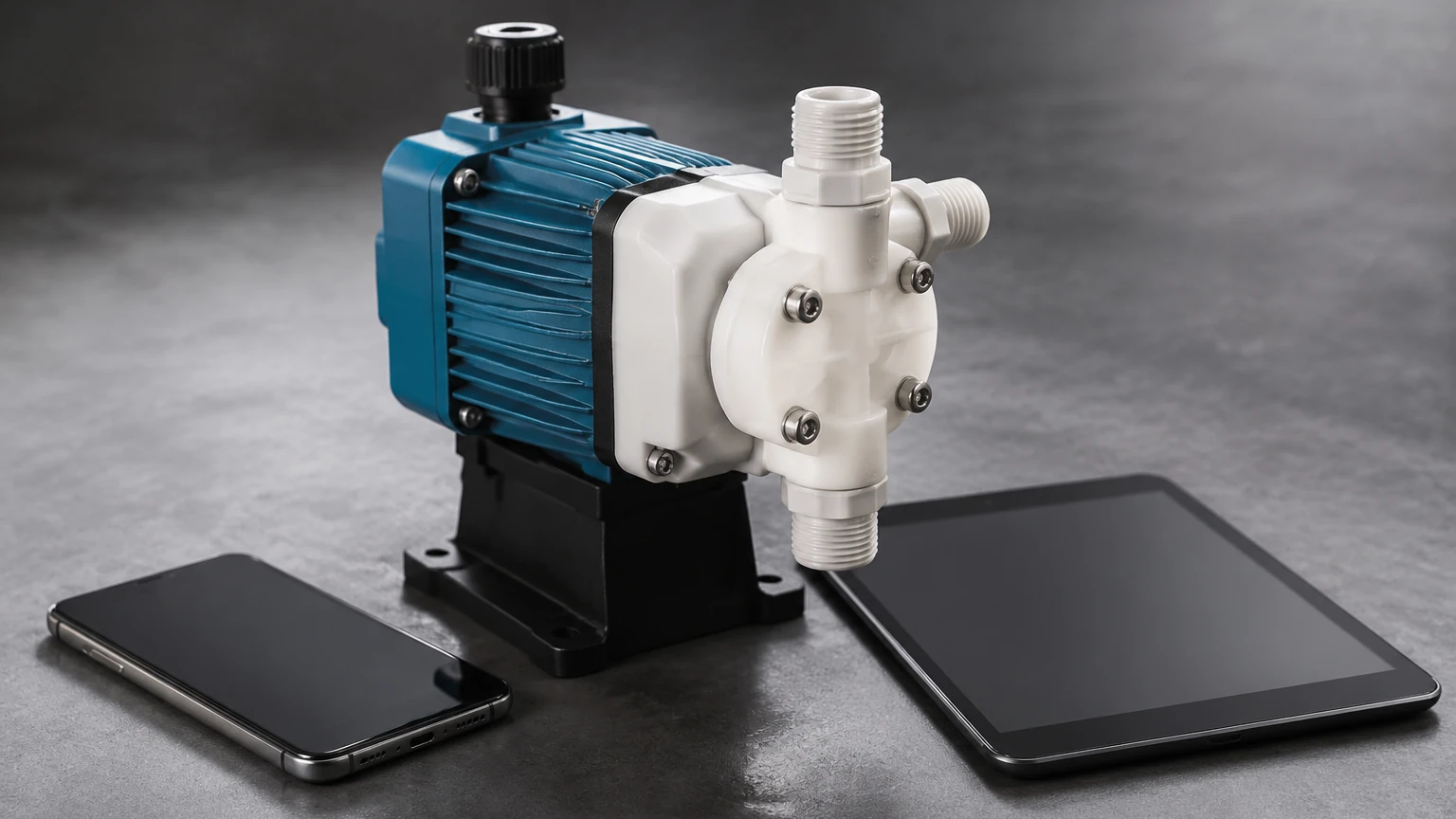
In contrast, the Memdos Smart utilizes a high-precision stepper motor drive. The stepper motor allows for discrete control over the diaphragm movement during both the suction and discharge phases.
Constant Discharge Profile
By adjusting the speed of the motor throughout the stroke, the pump can extend the discharge stroke to occupy nearly the entire cycle time. This results in a nearly continuous flow of chemicals into the process line, which is critical for applications requiring immediate mixing or those sensitive to pressure spikes. In technical terms, this "slow mode" or extended discharge functionality ensures that even at 10% of maximum capacity, the chemical is introduced steadily rather than in high-concentration bursts.
Key Functionalities of Memdos Smart Pumps
The "Smart" designation refers to the internal microprocessor and software that allow the pump to interface with complex industrial automation systems. Depending on the specific model—typically categorized into versions like the Smart LB (Basic) and Smart LP (Professional)—the functionalities vary to meet different budgetary and technical needs.
1. Manual and Pulse Control
At its most basic level, the pump allows for manual stroke frequency adjustment via a keypad and display. However, its utility increases significantly with pulse control. In this mode, the pump receives a potential-free contact signal (often from a water meter or a PLC) and executes a predefined number of strokes or a specific volume per pulse. This is a staple functionality for proportional dosing in water treatment.
2. Analog Signal Processing (4-20 mA)
The Smart LP models feature 4-20 mA input capabilities. This allows the pump to scale its output automatically based on a signal from an external sensor, such as a pH probe, ORP controller, or flow meter. The pump’s internal logic can be programmed to increase or decrease dosing speed linearly or inversely relative to the signal strength.
3. Batch and Timer Modes
For applications requiring the delivery of a specific volume at set intervals, the batch functionality allows users to program a total volume (e.g., 5 liters) to be delivered over a specific duration or upon a trigger signal. The integrated timer function can also automate dosing schedules without the need for an external PLC.
4. Feedback and Communication
Modern industrial environments demand data transparency. The professional versions of these pumps include output relays for alarm signaling and, in some configurations, compatibility with fieldbus protocols like Modbus or Profibus. This allows operators to monitor pump status, stroke counts, and error codes from a centralized control room.
Integrating Level Measurement with Dosing Systems
A chemical dosing pump is only as effective as the supply system supporting it. One of the most common causes of pump failure or process deviation is the "dry run" condition, where the pump continues to operate after the chemical supply tank has been depleted. This can lead to diaphragm wear, air locks in the system, and untreated process water.
Integrating reliable level measurement is the primary safeguard for these systems. By utilizing sensors from a specialized manufacturer of industrial level measurement instruments, operators can automate the supply chain of the dosing station. For comprehensive options on monitoring chemical inventory and protecting dosing equipment, engineers often consult the Main Page of leading instrumentation providers to match the right sensor to their specific chemical compatibility needs.
Synergistic Control Loops
When a level transmitter (such as an ultrasonic or radar level meter) is paired with a Memdos Smart pump, several automated functionalities become possible:
* Low-Level Warning: The level sensor sends a signal to the pump's auxiliary input to trigger a warning light or SCADA alarm when the tank reaches 10% capacity.
* Automatic Shutdown: If the level drops below a critical threshold, the level controller can break the pump's run circuit, preventing dry running and potential seal damage.
* Inventory Tracking: Continuous level monitoring allows the facility to track chemical consumption rates, which can be cross-referenced with the pump’s reported stroke count to verify dosing accuracy and detect leaks in the discharge line.
Technical Selection and Material Compatibility
Choosing the correct pump configuration requires balancing hydraulic requirements with chemical properties. The Memdos Smart series is available in various materials to handle acids, alkalis, and coagulants.
| Feature | Memdos Smart LB (Basic) | Memdos Smart LP (Professional) |
| :— | :— | :— |
| Drive Type | Stepper Motor | Stepper Motor |
| Adjustment Range | 1:100 | 1:100 |
| Control Input | Manual, Pulse | Manual, Pulse, 4-20 mA, Batch |
| Display | LED Indicators / Simple LCD | Graphic Display (Multi-language) |
| Level Input | 1-stage (Low level) | 2-stage (Warning and Empty) |
| Diaphragm | PTFE-faced EPDM | PTFE-faced EPDM |
Material Options
* PVC/PP: Suitable for most general water treatment chemicals like sodium hypochlorite or diluted acids.
* PVDF: Required for highly corrosive chemicals or high-temperature applications.
* Stainless Steel (316L): Used for solvents or high-pressure industrial processes where plastic housings are insufficient.
Installation Considerations for Optimal Performance
To leverage the full functionalities of the Memdos Smart series, proper installation is paramount. Even the most intelligent pump will fail if the hydraulic circuit is poorly designed.
1. Suction Lift vs. Flooded Suction: While these pumps are self-priming, they perform most accurately under "flooded suction" conditions (where the tank level is higher than the pump head). If suction lift is necessary, it should be kept under 2 meters (approx. 6.5 feet) to prevent cavitation.
2. Backpressure Requirements: Diaphragm pumps require a minimum backpressure (typically 1-1.5 bar) to ensure the check valves seat correctly. If the process line is at atmospheric pressure, a backpressure valve must be installed.
3. Pulsation Dampening: Although the stepper motor provides a smoother flow than standard pumps, long discharge lines may still experience water hammer. Installing a pulsation dampener near the pump outlet protects the piping and improves the accuracy of the 4-20 mA control loop.
4. Venting: Chemical off-gassing (common with sodium hypochlorite) can cause gas locks. Utilizing a pump head with an integrated manual or automatic vent valve is recommended for these applications.
Limitations and Operational Boundaries
While the Memdos Smart is highly versatile, it is not a universal solution for every fluid handling task.
* Viscosity Limits: These pumps are designed for relatively thin fluids. As viscosity increases (above 300-500 mPas), the suction valves may struggle to close quickly enough, leading to under-dosing. For high-viscosity polymers, specialized pump heads or larger valve seats are required.
* Particulate Matter: Large solids can foul the check valves. A Y-strainer should always be installed on the suction line if the chemical contains undissolved solids.
* Temperature: Plastic pump heads have strict temperature limits. For example, PVC heads should generally not exceed 45°C (113°F). Beyond this, material deformation can lead to leaks at the diaphragm seal.
Frequently Asked Questions (FAQs)
Q: Can the Memdos Smart pump be used for high-pressure injection?
A: Most models in this series are rated for pressures up to 16 bar (approx. 232 PSI), depending on the flow rate. For higher pressure requirements, a larger motor-driven diaphragm pump or a plunger pump may be necessary.
Q: How does the pump handle power outages?
A: The internal memory typically stores the current configuration and operating mode. Upon restoration of power, the pump will resume its last state (e.g., continuing a batch or returning to manual mode).
Q: Is it possible to calibrate the pump for different chemicals?
A: Yes. The "Smart" interface includes a calibration routine where the user can measure the actual volume delivered over a specific number of strokes and input that data. This allows the pump to display the flow rate in liters per hour (l/h) or gallons per hour (gph) accurately, regardless of the chemical's viscosity or density.
Q: What is the benefit of the two-stage level input?
A: The two-stage input allows for a proactive response. The first stage (Warning) can trigger an alert to order more chemicals, while the second stage (Empty) shuts down the pump to prevent air from entering the lines, saving hours of priming work during the next refill.
By combining the advanced stepper motor functionalities of the Memdos Smart series with robust level measurement and control strategies, industrial facilities can achieve a level of dosing precision that reduces chemical waste, protects downstream equipment, and ensures consistent process outcomes.
Download Foust Marketing Featured Product Memdos Smart Pumps Functionalities as a PDF