Garud Vega
Garud Vega
In the landscape of industrial automation, precise level measurement is a cornerstone of operational efficiency, safety, and inventory management. The term Garud Vega often refers to high-performance radar and ultrasonic level measurement solutions designed to withstand the rigors of complex process environments. Whether managing volatile chemicals in a refinery or monitoring water levels in a municipal treatment plant, understanding the underlying technology of these instruments is essential for engineering success. This guide explores the principles, selection criteria, and practical application of advanced level measurement systems, aligning with the standards of reliability expected from professional instrumentation.
Understanding Level Measurement Principles
Before selecting a specific instrument, engineers must understand the physics governing different measurement technologies. Most high-end solutions, such as those found in the Garud Vega category, utilize either Time of Flight (ToF) principles or hydrostatic pressure calculations.
Radar Level Measurement (ToF)
Radar level transmitters operate by emitting high-frequency electromagnetic waves (typically in the 6GHz, 26GHz, or 80GHz range). These waves travel at the speed of light, reflect off the surface of the medium, and return to the sensor. The instrument measures the time interval between emission and reception to calculate the distance.
* FMCW (Frequency Modulated Continuous Wave): Modern high-precision radar sensors often use FMCW technology. Instead of sending a single pulse, the sensor transmits a continuous signal with a constantly changing frequency. The difference between the transmitted and received frequency is directly proportional to the distance, allowing for millimeter-level accuracy.
* Dielectric Constant (εr): The reliability of a radar signal depends on the reflectivity of the medium, which is determined by its dielectric constant. Materials with high εr (like water) reflect signals strongly, while those with low εr (like certain oils or solids) require more sensitive signal processing.
Ultrasonic Level Measurement
Ultrasonic sensors function similarly to radar but use mechanical sound waves instead of electromagnetic waves. A transducer emits an ultrasonic pulse that bounces off the material surface.
* Speed of Sound: Unlike radar, the speed of ultrasonic waves is heavily influenced by air temperature, pressure, and gas composition. High-quality ultrasonic transmitters include integrated temperature sensors to compensate for these variables automatically.
* Applications: These are typically used in open-air applications or non-pressurized tanks where the medium is non-foaming and the atmosphere is stable.
Hydrostatic Level Measurement
This method relies on the principle that the pressure at the bottom of a liquid column is proportional to the height of the liquid and its specific gravity. A pressure transmitter at the base of the tank (or a submersible probe) measures this force to determine the level. This is a robust, contact-based method widely used in water treatment and deep-well monitoring.
Technology Comparison: Radar vs. Ultrasonic
Choosing between radar and ultrasonic technology depends on the specific challenges of the installation site. The following table provides a comparison of key performance indicators for these technologies.
| Feature | Radar (80GHz) | Ultrasonic | Hydrostatic |
| :— | :— | :— | :— |
| Measurement Range | Up to 120 meters | Up to 30 meters | Up to 200 meters (H2O) |
| Accuracy | ±1 mm to ±2 mm | ±0.25% of range | ±0.1% to ±0.5% FS |
| Process Temperature | -40°C to +200°C+ | -40°C to +80°C | -20°C to +100°C |
| Process Pressure | Vacuum to 160 bar | Atmospheric (mostly) | Depth dependent |
| Influence of Dust/Steam | Negligible | Significant | None (submerged) |
| Media Type | Liquids, Solids, Slurries | Liquids, Coarse Solids | Liquids only |
For a comprehensive review of available hardware and technical support, visit the Main Page of our product catalog.
Garud Vega: Performance Standards in Challenging Environments
The Garud Vega standard represents the shift toward high-frequency 80GHz radar technology. This frequency offers several distinct advantages over traditional 26GHz or 6GHz systems, particularly in difficult industrial settings.
Narrow Beam Angle
One of the primary benefits of 80GHz radar is the narrow beam angle (often as low as 3 degrees). A narrower beam reduces the risk of "false echoes" caused by internal tank structures such as agitators, heating coils, or ladders. This makes it possible to install the sensor in narrow nozzles or close to tank walls without compromising signal integrity.
Signal-to-Noise Ratio (SNR)
Advanced signal processing algorithms allow these sensors to distinguish the true level from background noise caused by surface turbulence or foam. In chemical processing, where foam is a common byproduct, the high dynamic range of the Garud Vega class instruments ensures a stable reading where lower-tier sensors might fail.
Solids Measurement
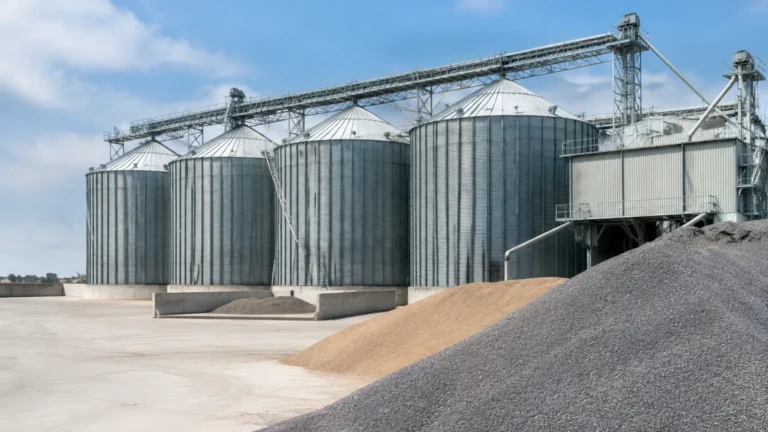
In silos containing grain, cement, or plastic pellets, the surface is rarely flat. It often forms cones or depressions. High-frequency radar is particularly effective here because the shorter wavelength reflects more effectively off inclined surfaces, providing a more reliable average level than ultrasonic alternatives which might be absorbed by the dust.
Selection Criteria for Industrial Applications
When specifying a level meter for a project, engineers should follow a structured evaluation process to ensure the longevity of the instrument.
1. Chemical Compatibility: Ensure the wetted parts of the sensor (e.g., PTFE, PVDF, or Stainless Steel 316L) are resistant to the process media. For highly corrosive acids, a non-contact radar with a PTFE-sealed antenna is often the preferred choice.
2. Process Dynamics: Consider how quickly the level changes. High-speed filling or emptying requires a sensor with a high update rate to prevent lag in the control loop.
3. Environmental Conditions: If the tank is located outdoors, consider the impact of ambient temperature and solar radiation. Sensors with sunlight shields or remote electronics may be necessary.
4. Output and Integration: Determine the required communication protocol. While 4-20mA HART is the industry standard, many modern facilities require Modbus RTU, Profibus, or Foundation Fieldbus for deeper diagnostic integration.

Installation and Commissioning Guidelines
Even the most advanced Garud Vega sensor will underperform if installed incorrectly. Follow these engineering best practices for optimal results:
* Nozzle Geometry: The sensor antenna should ideally extend slightly beyond the bottom of the mounting nozzle to prevent signal interference from the nozzle edge. If using a long nozzle, ensure the sensor is configured to ignore the "near-field" reflections.
* Avoid the Center: In cylindrical tanks with domed tops, do not install the sensor in the exact center. This can lead to multiple reflections (parabolic effect) that confuse the signal processor.
* Obstruction Clearance: Maintain a clear "keep-out zone" around the signal path. If an agitator is present, use the instrument’s "false signal suppression" or "mapping" feature during commissioning. This allows the sensor to learn the location of fixed obstructions and ignore them during operation.
* Orientation: For solids measurement, use an adjustable flange to aim the radar beam at the discharge outlet or the center of the material cone to get the most representative volume reading.
Limitations and Mitigation Strategies
While high-performance level meters are versatile, they are not universal solutions. Understanding their limitations is key to risk mitigation.
* Heavy Foam: Extremely dense, thick foam (like shaving cream) can absorb radar signals. In these rare cases, a guided wave radar (GWR) or a magnetic level gauge may be more appropriate as they are less affected by surface conditions.
* Vacuum Conditions: Ultrasonic sensors cannot operate in a vacuum because sound waves require a medium (air/gas) to travel. Radar, being electromagnetic, is unaffected by vacuum.
* Condensation: Heavy condensation on an ultrasonic transducer face can cause a "loss of echo." Many Welk ultrasonic sensors feature a self-cleaning function or a specialized face material to shed droplets, but in extreme cases, a radar with a drip-off antenna design is superior.
Frequently Asked Questions (FAQ)
Q: Can I use a radar level meter on a plastic tank?
A: Yes. Radar signals can pass through plastic (non-conductive) walls. It is possible to mount a radar sensor above a plastic tank and measure the level through the top without cutting a hole, provided the plastic is not carbon-filled or metallic-lined.
Q: What is the "Dead Zone" or "Blocking Distance"?
A: This is the area directly below the sensor where measurement is not possible. For ultrasonic sensors, this is typically 0.2m to 0.5m. For 80GHz radar, the dead zone is much smaller, often less than 50mm, allowing for measurement right up to the top of the tank.
Q: How often does a Garud Vega class sensor need calibration?
A: Most modern digital level meters are designed for long-term stability and do not require routine re-calibration. However, a "verification check" against a manual tape measure is recommended annually or as per local regulatory requirements.
Q: Is 80GHz always better than 26GHz?
A: While 80GHz offers better focus and accuracy, 26GHz is sometimes preferred for applications with extremely heavy steam or very turbulent surfaces where a slightly wider beam can be more forgiving in maintaining a signal return.
Conclusion
Selecting the right level measurement technology requires a balance of theoretical knowledge and practical application. By adhering to the principles of radar and ultrasonic physics, and by following rigorous installation standards, industrial operators can achieve the precision and reliability associated with the Garud Vega performance tier. For further technical specifications and to explore our full range of industrial measurement solutions, please refer to the Main Page for detailed product documentation and engineering support.