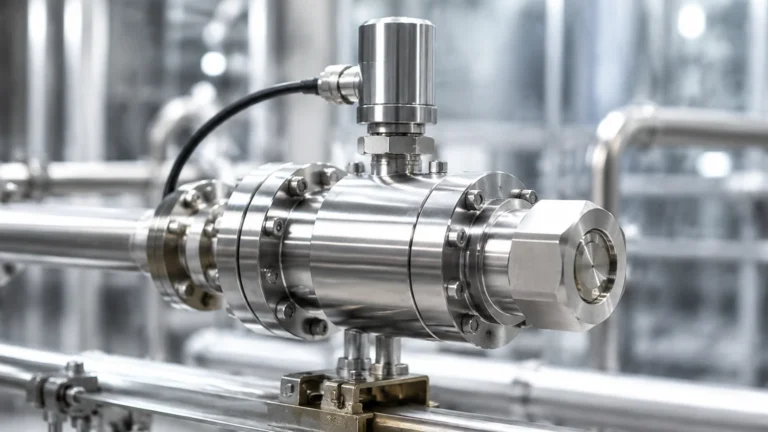
Waste Water Level Monitoring
Waste Water Level Monitoring
Effective waste water level monitoring is a cornerstone of modern industrial and municipal infrastructure. Whether managing a municipal sewage network, an industrial effluent treatment plant (ETP), or a simple lift station, the ability to accurately track liquid levels ensures operational safety, environmental compliance, and process efficiency. Wastewater environments present unique challenges—including corrosive gases, floating debris, foam, and extreme turbulence—that necessitate a deep understanding of measurement technologies before selecting a solution.
This guide examines the primary measurement principles used in the industry, provides practical selection criteria, and outlines the installation best practices required to maintain reliable data in harsh conditions.
Core Measurement Principles for Wastewater Applications
Selecting the right instrument begins with understanding how different technologies interact with the medium. In wastewater, the liquid is rarely pure; it often contains suspended solids, fats, oils, grease (FOG), and dissolved chemicals that can interfere with sensitive electronics.
1. Ultrasonic Level Measurement (Non-Contact)
Ultrasonic sensors operate on the "time-of-flight" principle. The sensor emits a high-frequency sound pulse that travels through the air, reflects off the liquid surface, and returns to the transducer. By measuring the time taken for the round trip and knowing the speed of sound, the device calculates the distance to the surface.
* Advantages: No contact with the corrosive medium, relatively low cost, and easy to install.
* Limitations: Performance can be degraded by heavy foam (which absorbs sound), steam, or significant temperature fluctuations that change the speed of sound.
2. Radar Level Measurement (Non-Contact)
Radar transmitters, particularly those operating at 80 GHz, use Frequency Modulated Continuous Wave (FMCW) technology. They emit microwave signals that reflect off the liquid. Unlike sound waves, microwaves are largely unaffected by air temperature, pressure, or vacuum conditions.
* Advantages: Extremely high accuracy, narrow beam angles that avoid internal tank obstructions, and the ability to penetrate light foam and steam.
* Limitations: Higher initial capital expenditure compared to ultrasonic or hydrostatic methods.
3. Hydrostatic Level Measurement (Contact)
Hydrostatic sensors are submersible pressure transmitters. They are lowered to the bottom of the tank or well and measure the pressure exerted by the liquid column above them. Based on the principle that pressure is proportional to the height of the liquid ($P = \rho gh$), the level is determined.
* Advantages: Ideal for deep wet wells and narrow pipes where non-contact sensors cannot be mounted. They are unaffected by surface foam or turbulence.
* Limitations: The sensor is in constant contact with the fluid, making it susceptible to clogging from sludge or damage from corrosive chemicals. It also requires a vent tube in the cable to compensate for atmospheric pressure changes.
4. Magnetic and Float-Based Measurement
These mechanical systems use a float containing a magnet that moves along a guide tube or gauge. As the float rises and falls with the liquid level, it triggers reed switches or moves a magnetic indicator.
* Advantages: Simple, visual, and requires no external power for basic indication.
* Limitations: Moving parts are highly prone to "sticking" in wastewater due to the buildup of grease and solids.
Comparison and Selection Criteria
Choosing the correct technology for waste water level monitoring depends on the specific site conditions. The following table provides a general comparison of the three most common electronic measurement methods.
| Feature | Ultrasonic | Radar (80 GHz) | Hydrostatic |
| :— | :— | :— | :— |
| Measurement Type | Non-contact | Non-contact | Contact (Submersible) |
| Accuracy | ±0.25% of range | ±1 mm to ±2 mm | ±0.1% to ±0.5% of span |
| Max Range | Up to 15m (49 ft) | Up to 30m+ (98 ft+) | Up to 200m (656 ft) |
| Foam Resistance | Poor to Moderate | Good | Excellent |
| Vapor/Steam Resistance | Poor | Excellent | Excellent |
| Maintenance Req. | Low | Very Low | Moderate (Cleaning needed) |
| Typical Application | Open channels, small tanks | Chemical storage, digesters | Deep wet wells, boreholes |
When evaluating these options, engineers should prioritize the chemical compatibility of the wetted parts. For instance, in a sewage lift station where hydrogen sulfide ($H_2S$) is present, non-contact sensors or sensors with specialized coatings (like PVDF or PTFE) are essential to prevent premature failure. For more detailed technical specifications on these technologies, you can visit the Main Page to review product options and application support.
Installation Guidelines and Best Practices
Even the most advanced sensor will fail if installed incorrectly. Wastewater environments require specific considerations to ensure long-term reliability.
Avoiding the "Dead Zone"
All non-contact sensors (ultrasonic and radar) have a "dead zone" or "blocking distance" directly beneath the sensor face (typically 0.1m to 0.5m depending on the model). The sensor cannot measure level within this range. Ensure the sensor is mounted high enough so that even at the maximum expected flood level, the liquid does not enter the dead zone.
Positioning and Obstructions
Mount the sensor away from the inlet flow. Falling water creates turbulence and air bubbles, which can scatter ultrasonic pulses or cause erratic readings in hydrostatic sensors. For radar and ultrasonic units, ensure the signal beam path is clear of ladders, pipes, or pumps. A narrow beam angle (common in 80 GHz radar) is highly beneficial in cramped wet wells.
Cable Management for Submersible Sensors
For hydrostatic transmitters, the cable must be secured to prevent the sensor from swinging in turbulent flow. Use a cable hanger or a stilling well (a perforated pipe) to protect the sensor. Crucially, ensure the atmospheric vent tube in the cable is protected by a desiccant filter to prevent moisture from entering the sensor housing.
Stilling Wells
In applications with heavy surface agitation or thick foam, a stilling well can be used. This pipe acts as a buffer, providing a calm liquid surface for the sensor to measure. However, in wastewater, stilling wells must be large enough to prevent clogging from solids and grease.

Identifying and Mitigating Common Operational Risks
Waste water level monitoring is rarely a "set and forget" task. Operators must be aware of several risks:
1. Grease and Solid Buildup: In sewage applications, "fatbergs" or grease layers can coat submersible sensors, leading to offset errors. Non-contact sensors are generally preferred here. If using hydrostatic sensors, regular cleaning cycles must be scheduled.
2. Condensation: In enclosed tanks, moisture often condenses on the sensor face. While radar is mostly immune to this, ultrasonic sensors may lose signal. Selecting a sensor with a self-cleaning or "drip-off" face design helps mitigate this issue.
3. Corrosive Atmospheres: Wastewater often releases methane and hydrogen sulfide. Ensure that all housings are rated for the environment (e.g., IP68) and that cable materials (like PUR or FEP) are resistant to the specific chemicals present.
4. Lightning and Surges: Since many wastewater monitoring points are outdoors or in remote lift stations, they are susceptible to lightning strikes. High-quality transmitters should include integrated surge protection or be paired with external lightning arrestors.
Frequently Asked Questions (FAQ)
Q: Can I use an ultrasonic sensor in a tank with heavy foam?
A: It is not recommended. Foam absorbs the sound energy, leading to a "loss of echo" error. Radar or hydrostatic sensors are much more reliable in foaming conditions.
Q: How often should I calibrate my wastewater level sensor?
A: For non-contact sensors, an annual check is usually sufficient. Submersible hydrostatic sensors may require more frequent checks (every 3–6 months) to ensure the pressure diaphragm is not fouled by debris.
Q: What is the best way to monitor level in an open concrete channel?
A: Ultrasonic sensors are the industry standard for open channel flow and level monitoring because they are cost-effective and easy to mount on a bracket over the channel.
Q: Do I need an explosion-proof sensor?
A: Many wastewater wet wells are classified as hazardous areas (e.g., Class I, Div 1 or ATEX Zone 0) due to the potential for methane buildup. Always check the local area classification and select an intrinsically safe (IS) or explosion-proof (Ex d) rated instrument accordingly.
Conclusion and Next Steps
Successful waste water level monitoring requires a balance between technology capability and environmental reality. While ultrasonic sensors offer a cost-effective solution for many standard applications, the declining cost of high-frequency radar has made it the preferred choice for complex environments involving foam, vapor, or narrow spaces. Hydrostatic sensors remain the go-to for deep-well applications where top-down mounting is impossible.
Before finalizing a project specification, engineers should confirm the maximum liquid temperature, the presence of specific chemicals, and the physical constraints of the installation site. For further assistance in selecting the appropriate instrumentation for your specific industrial automation or water treatment needs, you can Review product options and application support to ensure your monitoring system provides the accuracy and longevity required for your operations.