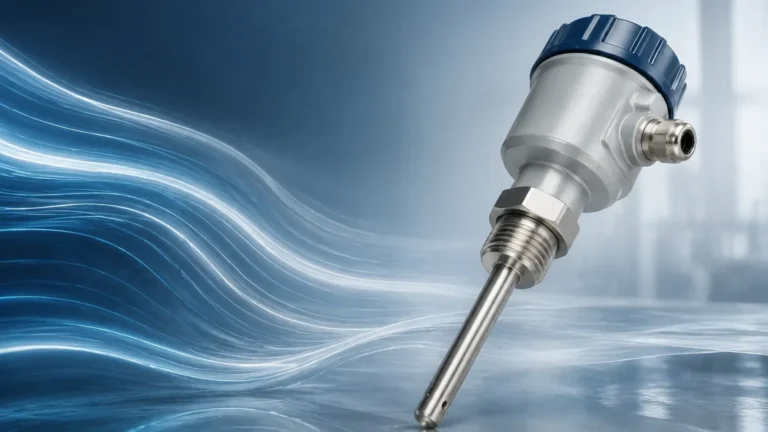
Gas Flow Gauge
Gas Flow Gauge
In the landscape of industrial automation and process control, the accurate measurement of gas movement is a fundamental requirement. A gas flow gauge—a term often used interchangeably with gas flow meter—is an instrument designed to quantify the volume or mass of a gaseous substance passing through a conduit over a specific period. Unlike liquid measurement, gas measurement is significantly more complex due to the inherent compressibility of gases, where changes in temperature and pressure drastically alter density and volume.
For engineers and procurement professionals, selecting the correct gas flow gauge is critical for ensuring process efficiency, safety, and cost-effectiveness. Whether the application involves monitoring natural gas in a pipeline, controlling aeration in water treatment, or managing specialized gases in chemical synthesis, understanding the underlying physics and mechanical constraints of these devices is the first step toward a successful installation. For a broader overview of industrial measurement technologies and how they integrate into plant-wide monitoring systems, professionals often refer to the Main Page of instrumentation specialists to compare different sensing modalities.
Measurement Principles of Gas Flow Gauges
Before selecting a gauge, it is essential to understand the primary technologies used to detect and measure gas flow. Each principle offers distinct advantages depending on the gas type, flow rate, and environmental conditions.
1. Thermal Mass Flow Measurement
Thermal mass flow gauges operate on the principle of heat transfer. They typically employ two sensing elements: a velocity sensor and a temperature sensor. The velocity sensor is heated to a specific temperature above the ambient gas temperature. As gas flows past the sensor, it carries heat away. The instrument measures the amount of electrical power required to maintain the temperature differential. Since the cooling effect is directly related to the number of gas molecules passing the sensor, this method measures mass flow directly, eliminating the need for separate pressure or temperature compensation.
2. Vortex Shedding
Vortex flow gauges utilize the Karman Vortex Street principle. A "bluff body" (a non-streamlined object) is placed in the flow stream. as gas passes this body, vortices are shed alternately from each side. The frequency of these vortices is directly proportional to the velocity of the gas. By detecting these pressure fluctuations with a piezoelectric crystal, the gauge calculates the volumetric flow rate. This technology is highly valued for its lack of moving parts and its robustness in high-velocity applications.
3. Differential Pressure (DP)
Differential pressure remains one of the most common methods for gas measurement. By placing a restriction in the pipe—such as an orifice plate, Venturi tube, or flow nozzle—a pressure drop is created. According to Bernoulli’s equation, the square root of the pressure difference between the upstream and downstream sides is proportional to the flow rate. While reliable, DP gauges often require additional sensors for pressure and temperature to calculate the actual mass flow of the gas.
4. Ultrasonic Transit-Time
Ultrasonic gas flow gauges use sound waves to determine velocity. Two transducers function as both transmitters and receivers, sending ultrasonic pulses diagonally across the pipe. The pulse traveling with the flow moves faster than the pulse traveling against it. The time difference between these two signals is used to calculate the flow velocity. This non-intrusive method is ideal for large-diameter pipes and applications where pressure drop must be minimized.
Key Evaluation Criteria for Industrial Applications
When evaluating a gas flow gauge for a B2B project, technical specifications must be matched against the specific dynamics of the process media.
Gas Composition and Purity
The chemical compatibility of the gauge's wetted parts (the materials in contact with the gas) is paramount. For corrosive gases like hydrogen sulfide (H2S) or chlorine, high-grade alloys or specialized coatings are required. Furthermore, the presence of moisture or particulates can interfere with certain sensors; for instance, thermal mass sensors are sensitive to droplets, while vortex meters can be eroded by high-speed particulates.
Turndown Ratio
The turndown ratio represents the range over which a flow meter can measure accurately. If a process has a wide variation between minimum and maximum flow (e.g., seasonal heating gas usage), a gauge with a high turndown ratio (such as 100:1 for thermal mass) is preferable over a DP meter, which typically offers a 4:1 or 5:1 ratio.
Pressure and Temperature Limits
Gases are highly sensitive to thermal and barometric changes. A gauge must not only withstand the maximum operating pressure and temperature of the system but also provide accurate readings across the expected range. In many cases, "Standard" units (e.g., Nm³/h – Normal cubic meters per hour) are used to normalize readings to a reference pressure and temperature.
Technical Selection Table
The following table provides a comparative overview of common gas flow measurement technologies to assist in the initial selection process.
| Technology | Typical Accuracy | Turndown Ratio | Pressure Drop | Primary Advantage |
| :— | :— | :— | :— | :— |
| Thermal Mass | ±1% of Reading | 100:1 | Very Low | Direct mass flow; no PT compensation needed. |
| Vortex | ±1% to 1.5% | 10:1 to 20:1 | Medium | No moving parts; suitable for high temperatures. |
| Differential Pressure | ±2% to 3% | 4:1 | High | Well-understood; low initial cost for large pipes. |
| Ultrasonic | ±0.5% to 1% | 50:1 | Negligible | High accuracy; non-intrusive; no pressure loss. |
| Coriolis | ±0.5% | 20:1 | Medium | Highest accuracy for mass flow; very expensive. |
Installation Considerations
The performance of a gas flow gauge is heavily dependent on its installation environment. Even the most accurate instrument will provide erroneous data if the flow profile is disturbed.
1. Straight Pipe Runs: Most gas flow gauges require a minimum length of straight pipe upstream and downstream of the sensor to ensure a laminar (stable) flow profile. A common rule of thumb is 10D (ten times the pipe diameter) upstream and 5D downstream. If elbows, valves, or reducers are present, these requirements may increase significantly.
2. Orientation: For gases that may contain moisture (wet gas), the gauge should be installed in a manner that prevents condensate from pooling on the sensor. In horizontal lines, sensors are often mounted on the top or side of the pipe.
3. Pressure and Temperature Taps: If the gauge requires external compensation, the pressure and temperature sensors must be installed at specific distances from the flow element to avoid interference while still capturing representative data.
4. Vibration and Noise: Ultrasonic and vortex meters can be sensitive to mechanical vibration or ultrasonic noise from nearby control valves. Proper isolation or the use of dampeners may be necessary.
Common Risks and Limitations
Engineers must be aware of the inherent limitations of gas measurement to avoid operational failures:
* Compressibility Errors: If a volumetric gauge is used without pressure and temperature compensation, the resulting data can be off by 20% or more if the line pressure fluctuates.
* Flow Profile Distortion: Swirl and turbulence caused by upstream obstructions can lead to over-reading or under-reading. Flow conditioners (vanes or plates) can be used if straight pipe runs are insufficient.
* Calibration Drift: Over time, sensors can become coated with pipe scale, oil, or moisture. Regular calibration cycles are necessary, especially in custody transfer applications where financial transactions depend on the data.
* Low Flow Sensitivity: Many gauges have a "cut-off" point below which they cannot detect movement. If the application requires measuring very low leak rates, thermal mass or specialized low-flow DP cells are required.
Project Confirmation Checklist
Before finalizing a purchase or proceeding with a system design, confirm the following parameters with your technical team or supplier:
* [ ] Gas Type: Is it a single gas or a mixture? If a mixture, are the percentages constant?
* [ ] Operating Conditions: What are the minimum, normal, and maximum operating pressures (bar) and temperatures (°C)?
* [ ] Flow Range: What is the expected minimum and maximum flow rate (e.g., kg/h or m³/h)?
* [ ] Pipe Details: What is the exact internal diameter and schedule of the piping?
* [ ] Output Requirements: Does the system require 4-20mA, Modbus, HART, or a local digital display?
* [ ] Area Classification: Is the installation site a hazardous area requiring explosion-proof (Ex-d) or intrinsically safe (Ex-i) certifications?
For those managing complex facilities where gas flow is just one part of the equation, integrating these gauges with reliable level measurement is often necessary for total mass balance. You can explore integrated solutions and technical support by visiting the Main Page of our industrial measurement resource.
Frequently Asked Questions (FAQs)
Q: Can a gas flow gauge designed for air be used for natural gas?
A: Generally, no. Different gases have different densities, viscosities, and thermal properties. A thermal mass meter, for example, must be calibrated specifically for the gas mixture it will measure. Using a gauge calibrated for air on natural gas will result in significant errors.
Q: What is the difference between Actual Cubic Meters (ACMH) and Normal Cubic Meters (Nm³/h)?
A: ACMH refers to the volume of gas at the actual operating pressure and temperature. Nm³/h refers to the volume the gas would occupy at standard conditions (usually 0°C or 15°C and 1.013 bar). Most industrial processes use Normal or Standard units to ensure a consistent measurement of the amount of gas, regardless of pressure changes.
Q: How often should a gas flow gauge be calibrated?
A: This depends on the criticality of the measurement. For internal process monitoring, every 2-3 years may suffice. For custody transfer or environmental compliance, annual calibration is typically mandated.
Q: Do gas flow gauges require a lot of maintenance?
A: Modern electronic gauges like ultrasonic and vortex meters have no moving parts and require very little maintenance. However, they should be inspected periodically for buildup or corrosion on the sensor elements. DP meters require regular checks of the impulse lines to ensure they are not blocked by debris or condensate.