Gas Mass Flow Meter
Gas Mass Flow Meter
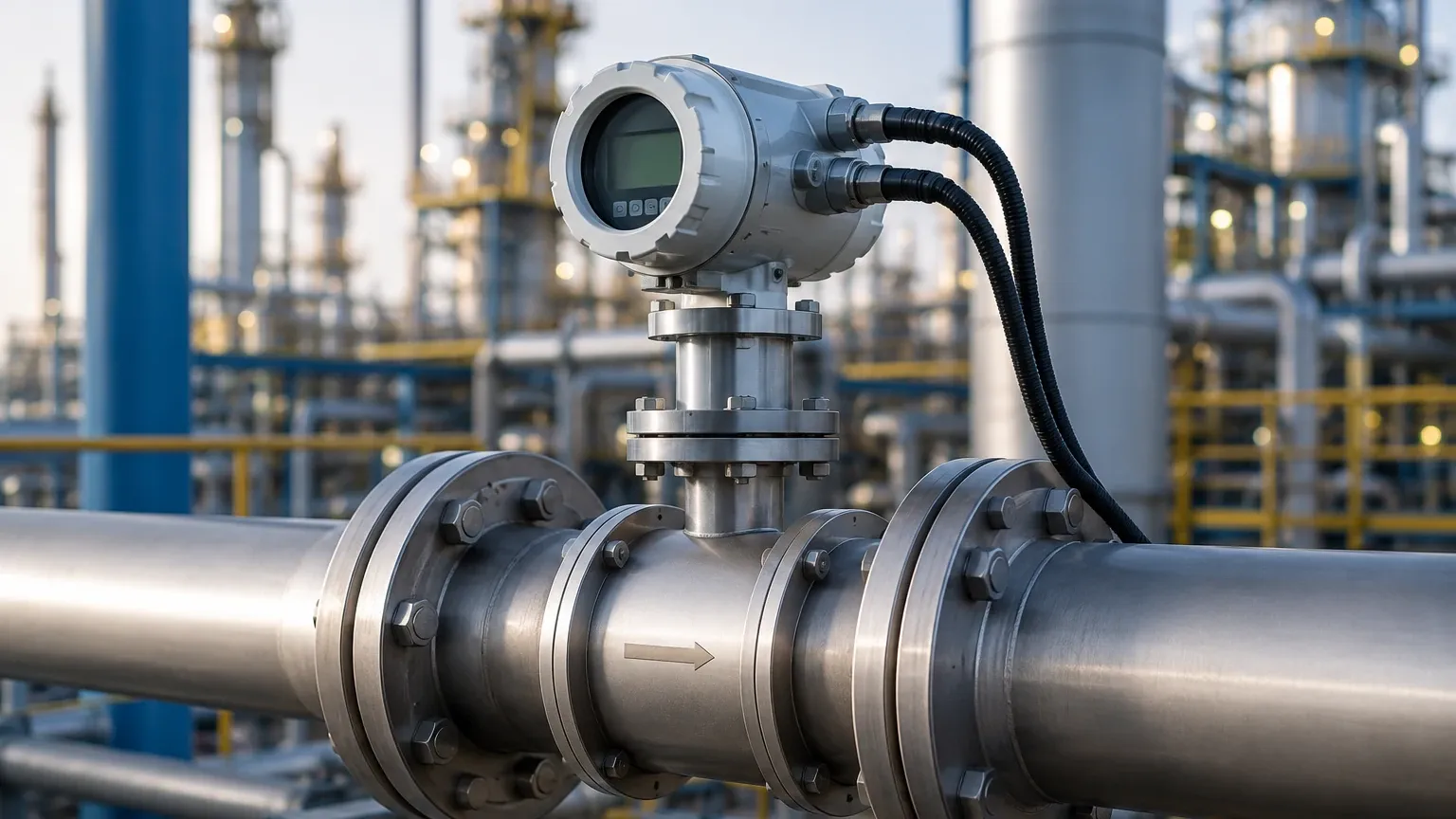
In industrial process control, the accurate measurement of gas is a critical requirement for safety, efficiency, and billing. While volumetric flow measurement has been the historical standard, the adoption of the gas mass flow meter has transformed how engineers manage fluids. Unlike volumetric meters, which require additional sensors to compensate for changes in temperature and pressure, a mass flow meter provides a direct reading of the gas molecules passing through a system. This article explores the principles, selection criteria, and practical applications of gas mass flow measurement within the broader context of industrial automation and level control.
Principles of Gas Mass Flow Measurement
To understand why mass flow is preferred over volumetric flow, one must consider the compressible nature of gases. A cubic meter of air at sea level contains significantly more molecules than a cubic meter of air at high altitudes or high temperatures. Therefore, measuring volume alone does not provide a consistent data point for chemical reactions or combustion processes. Gas mass flow meters solve this by utilizing physical principles that are inherently sensitive to mass.
Thermal Dispersion Technology
Thermal dispersion is the most common principle used in industrial gas mass flow meters. The sensor typically consists of two Resistance Temperature Detectors (RTDs). One RTD acts as a reference, measuring the ambient temperature of the gas. The second RTD is heated to a specific, constant temperature differential above the reference sensor.
As gas flows past the heated sensor, it carries away heat—a process known as heat dissipation. The rate of heat loss is directly proportional to the mass flow rate of the gas. Because denser gases (higher pressure or lower temperature) carry away more heat than less dense gases, the instrument inherently compensates for process variations. This technology is highly valued for its high turndown ratio and ability to measure very low flow velocities.
Coriolis Flow Measurement
While more expensive and physically larger, Coriolis meters provide direct mass measurement for both liquids and gases. They operate on the principle of the Coriolis effect: as gas moves through a vibrating tube, it causes a phase shift in the vibration. This shift is directly proportional to the mass flow. While exceptionally accurate, Coriolis meters are often reserved for high-value gases or applications where extreme precision is mandatory.
Differential Pressure (DP) with Compensation
Traditional DP meters (using orifice plates or Venturi tubes) measure volume. However, modern "multivariable" transmitters can convert this to mass flow by integrating real-time pressure and temperature data. While common in legacy systems, they often suffer from a limited turndown ratio and higher pressure drops compared to thermal dispersion meters.
Key Evaluation Criteria for Selection
Selecting the right gas mass flow meter requires a detailed analysis of the process environment. Engineers must look beyond the initial cost and evaluate the long-term stability and maintenance requirements of the instrument.
Gas Composition and Calibration
Thermal mass flow meters are gas-specific. Because different gases have different thermal properties (specific heat), a meter calibrated for Nitrogen will not provide an accurate reading for Carbon Dioxide without a conversion factor or recalibration. If the gas composition is variable—such as in flare gas or biogas applications—this must be communicated to the manufacturer during the specification phase.
Flow Range and Turndown Ratio
The turndown ratio refers to the range between the maximum and minimum flow the meter can accurately measure. Thermal gas mass flow meters often offer turndown ratios of 100:1 or higher. This is particularly useful in applications like leak detection, where the meter must detect very small flows during standby periods but also handle high-velocity flows during peak operation.
Pressure Drop
In many gas systems, maintaining line pressure is vital. Insertion-type thermal meters have negligible pressure drop because they present a very small profile to the flow. In contrast, inline DP-based meters can cause significant energy loss due to the restriction required to create a pressure differential.
| Feature | Thermal Dispersion | Coriolis | Differential Pressure |
| :— | :— | :— | :— |
| Direct Mass Measurement | Yes (Inferred via heat) | Yes (Direct) | No (Calculated) |
| Turndown Ratio | High (100:1) | Medium (20:1) | Low (5:1) |
| Pressure Drop | Very Low | Medium | High |
| Maintenance | Low (No moving parts) | Low | Medium (Orifice wear) |
| Typical Accuracy | ±1% of Reading | ±0.5% of Reading | ±2% of Full Scale |
Installation Considerations and Best Practices
The accuracy of a gas mass flow meter is heavily dependent on the installation environment. Even the most precise instrument will fail to perform if the flow profile at the point of measurement is turbulent or distorted.
Straight Run Requirements
To ensure a fully developed, laminar flow profile, meters require a specific length of straight pipe both upstream and downstream of the sensor. A common rule of thumb is 20 diameters (20D) of straight pipe upstream and 5 diameters (5D) downstream. If the installation site includes elbows, valves, or reducers, these requirements may increase. In tight spaces, flow conditioners (vane-type or perforated plates) can be used to artificially stabilize the flow.
Orientation and Moisture
For most gas applications, the sensor should be installed in a horizontal pipe. If moisture or condensate is present in the gas stream, the sensor should be mounted at the top of the pipe (the 12 o'clock position) to prevent water droplets from collecting on the sensor tips. Water has a much higher heat capacity than gas; if a water droplet hits a thermal sensor, it will cause a momentary "spike" in the flow reading that does not reflect actual gas movement.
Integration with Level Measurement Systems
In many industrial settings, gas flow measurement is intrinsically linked to tank level management. For example, in pressurized chemical storage, as the liquid level drops, a "blanket gas" (usually Nitrogen) must be injected to maintain pressure and prevent the ingress of oxygen or moisture. By monitoring the gas mass flow, operators can verify that the blanketing system is functioning correctly and detect potential leaks in the tank's headspace. For comprehensive solutions involving both gas flow and liquid level, engineers often consult the Main Page to find compatible instrumentation that ensures total vessel monitoring.
Common Risks and Limitations
While the gas mass flow meter is a robust tool, it is not a "one-size-fits-all" solution. Awareness of its limitations is essential for preventing measurement errors.
1. Condensation: As mentioned, liquid droplets in the gas stream are the primary enemy of thermal mass flow meters. If the gas is saturated, a knockout drum or heater may be required upstream of the meter.
2. Coating and Contamination: In "dirty" gas applications, such as raw wastewater methane or coke oven gas, particulates or oils can coat the sensor. This coating acts as an insulator, slowing the heat transfer and causing the meter to under-report the flow. Regular cleaning or the use of retractable "hot-tap" sensors is recommended for these environments.
3. High Velocity Limits: Thermal sensors have a physical limit to how much heat they can dissipate. At extremely high velocities, the cooling effect plateaus, and the meter may lose accuracy. It is vital to size the pipe and the sensor to stay within the calibrated range.
Confirming Project Requirements
Before procuring a gas mass flow meter, the project team should confirm several technical parameters to ensure the device is fit for purpose:
* Exact Gas Composition: Is it a pure gas or a mixture? Are the percentages of the mixture constant?
* Operating Pressure and Temperature: While the meter compensates for these, the physical construction of the meter (flanges, seals, and housing) must be rated for the maximum possible process conditions.
* Area Classification: Does the installation site require explosion-proof (Ex-d) or intrinsically safe (IS) ratings? This is common in oil and gas or chemical processing.
* Communication Protocol: Does the control system require a simple 4-20mA signal, or is a digital protocol like HART, Modbus, or Profibus needed for remote diagnostics?
Frequently Asked Questions (FAQ)
Q: Can a gas mass flow meter measure steam?
A: Thermal mass flow meters are generally not recommended for steam due to the high temperatures and the constant presence of moisture. Vortex flow meters or DP meters with compensation are typically better suited for steam applications.
Q: Is recalibration necessary?
A: Most manufacturers recommend a factory calibration check every 1 to 2 years, depending on the criticality of the measurement and the cleanliness of the gas. Some modern meters offer "in-situ" calibration validation, allowing the user to check the sensor's health without removing it from the pipe.
Q: How does pipe size affect the choice between insertion and inline meters?
A: Inline meters (where the meter body is a piece of the pipe) are generally used for smaller pipes (DN15 to DN50) to ensure the highest accuracy. For larger pipes (DN80 and above), insertion meters are more cost-effective as they only require a small mounting boss to be welded onto the existing pipe.
Conclusion
The gas mass flow meter is an indispensable tool in the modern industrial toolkit, providing the precise data necessary for carbon footprint reporting, combustion optimization, and process safety. By understanding the thermal dispersion principle and adhering to strict installation guidelines, facilities can achieve reliable measurement with minimal maintenance. As processes become more integrated, the synergy between gas flow data and level measurement data—accessible through specialized providers like Main Page—allows for a holistic approach to industrial automation, ensuring that every molecule and every millimeter of fluid is accounted for.