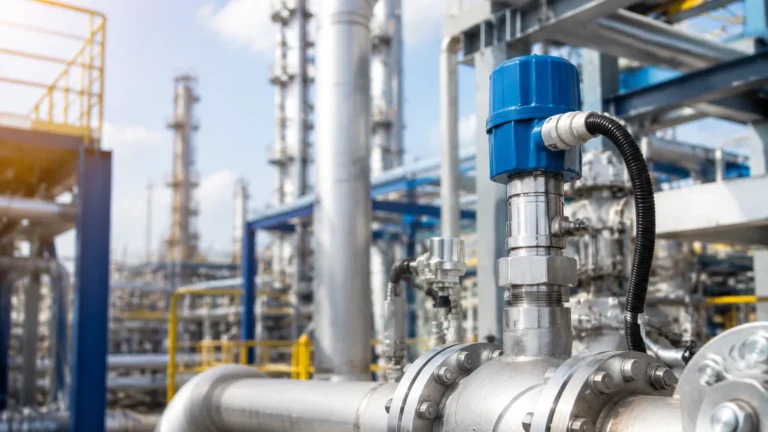
Hh 300
Hh 300
In the landscape of industrial automation and process control, the hh 300 series represents a critical class of level measurement instrumentation designed for precision, durability, and versatility. Whether applied in water treatment facilities, chemical processing plants, or oil and gas storage, the hh 300 serves as the primary interface between physical liquid levels and digital control systems. This article provides a comprehensive engineering reference for the hh 300 series, detailing its measurement principles, technical specifications, selection criteria, and installation best practices.
Measurement Principles of the Hh 300 Series
The hh 300 series typically utilizes non-contact measurement technologies, most commonly ultrasonic or high-frequency radar principles. Understanding these principles is essential for selecting the correct configuration for a specific application.
Ultrasonic Time-of-Flight (ToF)
Most instruments in the hh 300 category operate on the Time-of-Flight principle. The device’s transducer emits an ultrasonic pulse that travels through the air, reflects off the surface of the medium (liquid or solid), and returns to the sensor. The instrument measures the time interval between the emission and the reception of the echo.
Mathematically, the distance ($D$) is calculated as:
$D = (c \times t) / 2$
Where:
* $c$ is the speed of sound in the medium (adjusted for temperature).
* $t$ is the measured time.
The hh 300 then subtracts this distance from the total tank height (programmed during calibration) to determine the actual level of the material. Because the speed of sound is affected by air temperature, the hh 300 series includes an integrated temperature sensor to provide real-time compensation, ensuring accuracy remains within specified tolerances.
Signal Processing and Echo Filtering
A distinguishing feature of the hh 300 is its advanced signal processing capability. In industrial environments, internal tank structures like ladders, agitators, and heating coils can create "false echoes." The hh 300 utilizes digital filtering algorithms to map the internal geometry of the vessel, allowing the processor to ignore static obstructions and focus solely on the dynamic echo from the liquid surface.
Key Technical Specifications
When evaluating the hh 300 for a project, engineers must consider the hardware's performance limits. The following specifications are standard for the series:
* Measurement Range: Typically 0.25 meters to 15 meters (up to 30 meters for specialized long-range variants).
* Accuracy: $\pm$ 0.2% of the full measured span.
* Output Signals: Standard 4-20mA analog output, often with HART (Highway Addressable Remote Transducer) protocol for digital communication and remote configuration.
* Power Supply: 24V DC (two-wire or four-wire configurations).
* Operating Temperature: -40°C to +70°C (-40°F to 158°F).
* Ingress Protection: IP66 or IP67, making it suitable for outdoor installation and wash-down environments.
* Beam Angle: Narrow beam angles (typically 8° to 12°) to minimize interference from vessel walls.
For a broader look at how these specifications integrate into a complete industrial solution, you can visit the Main Page of the manufacturer’s catalog to compare different transmitter series.
Selection Criteria for Hh 300 Applications
Choosing the right hh 300 model requires an analysis of the medium and the environment. Use the following table as a preliminary guide for selection.
Selection Table: Application Suitability
| Factor | Requirement | Hh 300 Suitability | Notes |
| :— | :— | :— | :— |
| Medium Type | Clean Liquids | Excellent | Ideal for water, diesel, and oils. |
| Medium Type | Corrosive Chemicals | Good | Requires PVDF or PTFE transducer housing. |
| Surface Condition | Heavy Foam | Limited | Foam absorbs ultrasonic signals; radar may be preferred. |
| Vessel Type | Open Channels | Excellent | Used with flumes and weirs for flow calculation. |
| Vessel Type | High-Pressure Tanks | Moderate | Check pressure rating; typically limited to 3 bar. |
| Environment | Heavy Vapor/Steam | Moderate | High vapor density can affect sound speed. |
Installation Considerations
The performance of the hh 300 is heavily dependent on correct physical installation. Even the most advanced sensor will fail if placed in an environment where the signal path is compromised.
1. The Dead Zone (Blocking Distance)
Every ultrasonic level meter has a "dead zone" directly beneath the transducer where measurements cannot be taken. For the hh 300, this is usually between 0.20m and 0.50m. The sensor must be mounted high enough so that the maximum liquid level never enters this zone. If the liquid enters the dead zone, the device may report an incorrect "full" or "empty" reading.
2. Positioning and Orientation
* The 1/6th Rule: For cylindrical tanks, the sensor should ideally be placed at 1/6th of the tank diameter away from the wall. This avoids interference from wall reflections while staying clear of the center, where multiple reflections can converge.
* Perpendicular Alignment: The transducer face must be perfectly parallel to the liquid surface. A tilt of even a few degrees can cause the signal to bounce away from the sensor rather than returning to it.
* Avoid the Fill Stream: Never install the hh 300 directly above the inlet pipe. The turbulence and falling liquid will disrupt the signal and cause erratic readings.
3. Mounting Nozzles
If the hh 300 is mounted on a standpipe or nozzle, the internal diameter of the pipe must be smooth. Any welds or burrs inside the nozzle will create false echoes. The length of the nozzle should be kept as short as possible to ensure the ultrasonic beam clears the bottom of the pipe before it begins to spread.
Practical Applications of the Hh 300
Water and Wastewater Management
In municipal water treatment, the hh 300 is frequently used for monitoring reservoir levels and calculating flow rates in open channels. By using the integrated software to input the dimensions of a Parshall flume or V-notch weir, the hh 300 can convert level data into volume-over-time flow data.
Chemical Storage
For bulk storage of acids or bases, the hh 300 provides a non-contact solution that prevents sensor corrosion. By selecting a model with a chemically resistant Tefzel or PVDF coating, the instrument can provide years of service without the maintenance requirements of contact-based probes like float switches or pressure transmitters.
Food and Beverage
In the food industry, hygiene is paramount. The non-contact nature of the hh 300 ensures that there is no risk of cross-contamination between batches. It is commonly used in CIP (Clean-In-Place) environments, provided the temperature limits of the transducer are respected during cleaning cycles.
Limitations and Maintenance
While the hh 300 is a robust instrument, engineers should be aware of its physical limitations:
1. Vacuum Conditions: Ultrasonic waves require a medium (air or gas) to travel. Therefore, the hh 300 cannot function in a vacuum. For vacuum tanks, a guided wave radar or hydrostatic pressure transmitter is required.
2. Dust and Powders: While the hh 300 can measure some solids, heavy dust during filling can scatter the ultrasonic signal. In high-dust applications, high-frequency radar is generally more reliable.
3. Temperature Gradients: If there is a significant temperature difference between the liquid and the air space (e.g., hot liquid in a cold tank), it can create a temperature gradient that bends the sound waves. Proper venting and insulation can mitigate this.
Maintenance Tip: The only regular maintenance required for an hh 300 is a periodic visual inspection of the transducer face. In high-condensation environments, water droplets can form on the sensor. Most hh 300 models feature a self-cleaning transducer face that sheds moisture, but a manual wipe-down during scheduled shutdowns is recommended to prevent mineral buildup.
Frequently Asked Questions (FAQ)
Q: Can the hh 300 be used in explosive atmospheres?
A: Yes, many versions of the hh 300 are available with ATEX or IECEx intrinsic safety ratings (Ex ia) or flameproof enclosures (Ex d). Always verify the specific certification on the product label before installing in a hazardous zone.
Q: How do I calibrate the hh 300 if I cannot fill the tank?
A: The hh 300 can be calibrated using "dry calibration." By entering the known distance from the sensor to the tank bottom (Zero point) and the distance to the desired full level (Span point) via the HART communicator or the local keypad, the device can be accurately set without a liquid trial.
Q: What happens if the power fails?
A: The hh 300 utilizes non-volatile memory. All configuration settings, including tank dimensions and calibration points, are retained even during a total power loss. Once power is restored, the device resumes measurement within seconds.
Q: Can the hh 300 measure the interface between two liquids?
A: No, ultrasonic and standard radar hh 300 units measure the top surface only. For interface measurement (e.g., oil over water), a guided wave radar (GWR) or a magnetic level gauge with a specialized float is necessary.
For further technical assistance or to request a quote for a specific industrial configuration, please refer to the Main Page for comprehensive product documentation and engineering support.