How Does a Ph Sensor Work
How Does a Ph Sensor Work
In industrial process control, monitoring the chemical composition of liquids is as critical as measuring physical parameters like volume or pressure. Among the most vital analytical measurements is pH, which determines the acidity or alkalinity of an aqueous solution. Understanding how does a ph sensor work is essential for engineers and technicians involved in water treatment, chemical processing, and pharmaceutical manufacturing. This guide explores the electrochemical principles, hardware components, and practical application considerations of pH sensing technology.
The Fundamental Principle of pH Measurement
To understand how a pH sensor functions, one must first define pH. It is a logarithmic measurement of the hydrogen ion ($H^+$) activity in a solution. The scale typically ranges from 0 to 14, where 7 is neutral, values below 7 are acidic, and values above 7 are alkaline (basic).
The Electrochemical Theory
At its core, a pH sensor operates as an electrochemical cell—essentially a specialized battery. The measurement relies on the potential difference generated between two electrodes when they are immersed in a liquid. This relationship is governed by the Nernst Equation, which states that the potential of an electrode is directly proportional to the logarithm of the ion activity.
In a standard pH measurement system, the sensor generates a millivolt (mV) signal. At a neutral pH of 7.0, the sensor ideally produces 0 mV. As the solution becomes more acidic, the voltage increases in the positive direction; as it becomes more alkaline, the voltage increases in the negative direction. Under ideal conditions at 25°C (77°F), the change in potential is approximately 59.16 mV per pH unit.
Key Components of a pH Sensor
Modern industrial pH sensors are usually "combination electrodes," meaning both the sensing element and the reference element are housed within a single body. To grasp how does a ph sensor work, we must examine these internal components:
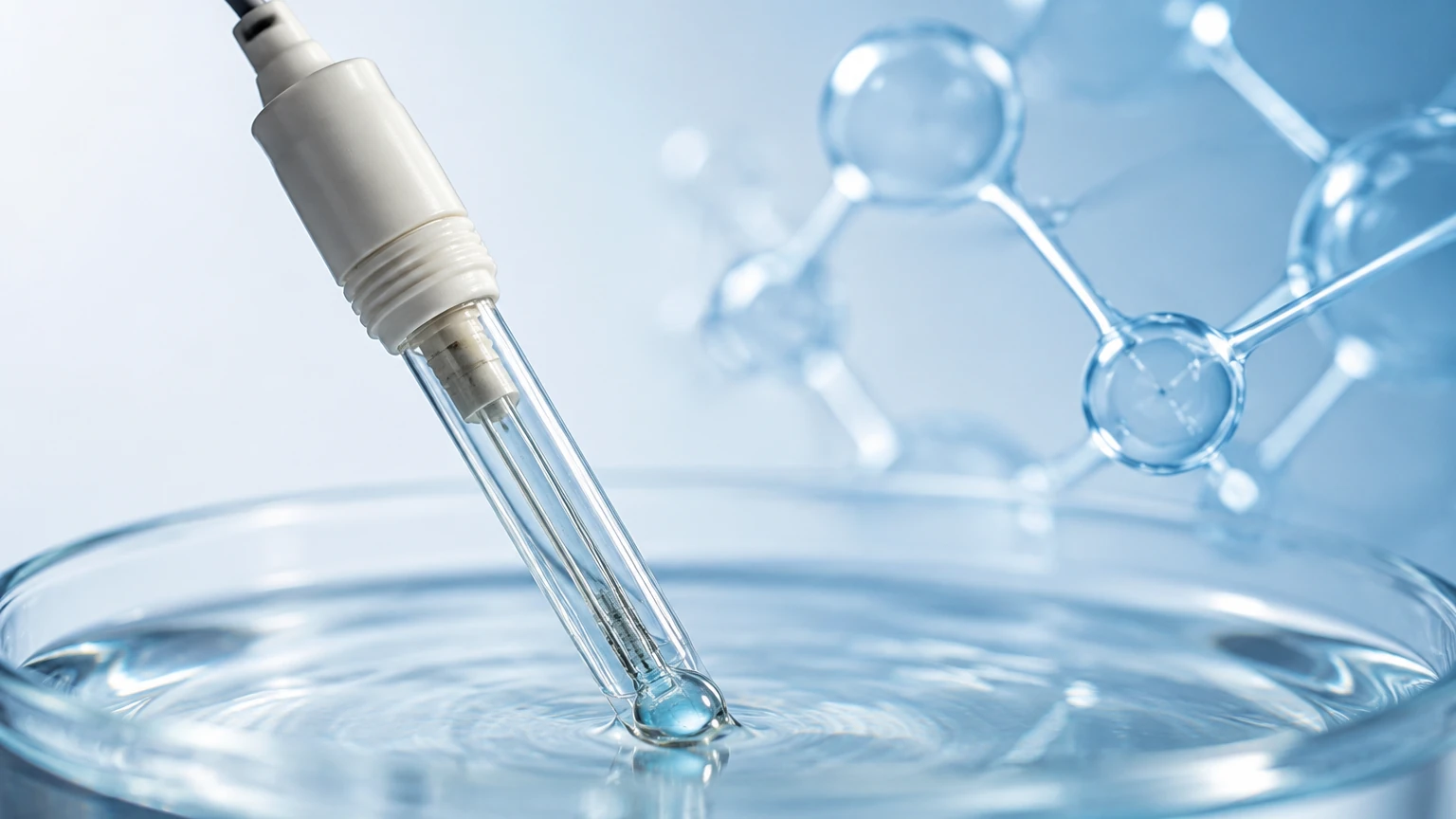
1. The Glass Sensing Electrode: This consists of a thin, pH-sensitive glass membrane (usually a bulb) at the tip. The glass is specially formulated to allow hydrogen ions to interact with it, creating a charge.
2. Internal Buffer Solution: Inside the glass bulb is a solution with a known, stable pH (usually pH 7.0). This provides a constant reference point for the internal side of the glass membrane.
3. The Reference Electrode: This electrode provides a stable, constant potential that is independent of the pH of the liquid being measured. It is typically made of silver/silver chloride (Ag/AgCl).
4. The Reference Junction: Also known as the salt bridge, this is a porous material (such as ceramic, Teflon, or wood) that allows a small amount of internal electrolyte to leak into the process liquid. This completes the electrical circuit between the reference electrode and the sensing electrode.
5. Electrolyte: A concentrated salt solution (often Potassium Chloride, KCl) that fills the reference chamber and maintains electrical continuity.
Step-by-Step: How the Measurement Occurs
When a pH sensor is submerged in a process liquid, a series of physical and chemical interactions occur simultaneously to produce a readable signal:
1. Hydration of the Glass Membrane
Before a sensor can work, the glass membrane must be hydrated. A thin "gel layer" forms on the outer and inner surfaces of the glass. This layer allows hydrogen ions to move into and out of the glass structure.
2. Ion Exchange
Hydrogen ions in the process solution interact with the outer gel layer of the glass bulb. If the solution is acidic (high $H^+$ concentration), more ions migrate into the gel layer. If the solution is alkaline (low $H^+$ concentration), ions move out of the gel layer into the solution.
3. Potential Development
This movement of ions creates a charge imbalance between the inner surface of the glass (exposed to the stable pH 7 buffer) and the outer surface (exposed to the process liquid). This potential difference is what the pH meter measures.
4. Circuit Completion
For the meter to measure the voltage, the circuit must be closed. The reference junction allows ions to flow from the internal electrolyte into the process liquid, establishing an electrical connection without allowing the two liquids to mix rapidly.
5. Signal Conversion
The high-impedance mV signal is sent to a transmitter or controller. The transmitter applies the Nernst Equation to convert the millivolts into a pH value displayed on a screen or transmitted via 4-20mA or digital protocols to a PLC.
Industrial pH Sensor Types and Selection
Not all pH sensors are created equal. The environment—temperature, pressure, and chemical aggressiveness—dictates the required sensor design. When integrating analytical sensors alongside level measurement systems, such as those found on the Main Page, selecting the right sensor body and junction is critical for longevity.
| Sensor Type | Best Use Case | Advantages | Limitations |
| :— | :— | :— | :— |
| General Purpose Glass | Clean water, wastewater | Cost-effective, fast response | Fragile, prone to fouling |
| Flat Surface Glass | Slurries, high-solids liquids | Self-cleaning in high flow | Slower response in low flow |
| Teflon Junction | Oily water, chemical processes | Resists clogging | Higher maintenance |
| ISFET (Non-glass) | Food and beverage | Unbreakable, low drift | Sensitive to light, expensive |
| Differential Sensor | Harsh industrial chemicals | Long life, resists ground loops | Requires more space, higher cost |
Installation and Engineering Considerations
Proper installation is vital to ensure the pH sensor works as intended. Unlike hydrostatic level transmitters that are often mounted at the bottom of a tank, pH sensors require specific orientations.
Mounting Angle
pH sensors should never be installed horizontally or upside down. They must be mounted at an angle of at least 15° above the horizontal. This ensures that the internal buffer solution stays in contact with the glass bulb and that air bubbles do not get trapped inside the electrode, which would break the electrical circuit.
Flow and Velocity
In pipe installations, the sensor should be placed where there is a consistent flow of liquid. However, extremely high velocities (above 3 meters per second) can cause a "streaming potential," leading to noisy or inaccurate readings. Conversely, in stagnant liquids, a coating may form on the sensor, requiring more frequent cleaning.
Temperature Compensation
Since the Nernst Equation is temperature-dependent, almost all industrial pH sensors include an integrated Temperature Compensation (ATC) element (like a PT100 or PT1000). The transmitter uses this data to adjust the pH calculation, ensuring accuracy even as the process temperature fluctuates.
Maintenance: Ensuring Long-Term Accuracy
A pH sensor is a consumable item; it will eventually lose its ability to respond accurately. To extend its life, a strict maintenance regimen is required:
* Calibration: Sensors drift over time due to aging and junction depletion. Regular calibration using standard buffer solutions (usually pH 4, 7, and 10) is mandatory. In critical chemical applications, this may be done weekly; in stable water treatment, monthly may suffice.
* Cleaning: If the glass bulb or junction becomes coated with oil, scale, or biological growth, the sensor will become sluggish or unresponsive. Cleaning agents such as dilute Hydrochloric acid (for scale) or mild detergents (for oils) are commonly used.
* Hydration: A pH sensor must never dry out. If stored, it should always be kept in a storage solution (typically 3.0M or 4.0M KCl). If a sensor dries out, the gel layer collapses, and the sensor may require hours of soaking to recover—or it may be permanently damaged.
Limitations and Common Challenges
While understanding how does a ph sensor work provides the foundation for use, engineers must be aware of common failure modes:
1. Junction Poisoning: Certain chemicals, such as heavy metals or sulfides, can react with the silver ions in the reference electrolyte, forming precipitates that clog the junction.
2. Sodium Error: At very high pH levels (above pH 12), the glass membrane may mistake sodium ions for hydrogen ions, leading to a reading that is lower than the actual pH.
3. Ground Loops: In metal tanks or pipes, stray electrical currents can interfere with the low-voltage signal of the pH sensor. Using a differential sensor or a transmitter with a solution ground can mitigate this.
4. High Pressure: Standard sensors are rated for low pressures (typically up to 6-7 bar). In high-pressure applications, specialized housing or pressure-compensated electrodes are required to prevent the process liquid from forcing its way into the reference chamber.
Integrating pH and Level Measurement
In many industrial setups, pH control and level management go hand-in-hand. For example, in a neutralization tank, an ultrasonic level sensor or a radar level meter monitors the volume of the tank to prevent overfills, while the pH sensor controls the dosing pumps for acid or caustic. Welk provides a comprehensive range of level measurement solutions that complement these analytical processes, ensuring that both the physical and chemical parameters of the storage vessel are maintained within safe limits.
By selecting high-quality instrumentation and understanding the electrochemical mechanics of the sensors, facilities can achieve higher process efficiency and comply with environmental regulations regarding wastewater discharge.
Frequently Asked Questions (FAQs)
How long does a typical industrial pH sensor last?
In clean water applications, a sensor may last 1 to 2 years. In harsh chemical environments or high-temperature processes, the lifespan may be as short as 3 to 6 months.
Can I use a pH sensor to measure non-aqueous liquids like oil?
Standard pH sensors require water to function because the measurement is based on ion activity in an aqueous solution. Measuring pH in pure oils or solvents requires specialized electrodes and non-aqueous bridge electrolytes.
Why does my pH reading jump around when the pump starts?
This is often due to electrical interference or ground loops. Ensure the sensor cable is shielded and kept away from high-voltage power lines, and consider using a transmitter with an isolated input.
What is the difference between a pH sensor and an ORP sensor?
While they look identical and work on similar principles, a pH sensor measures hydrogen ion activity using a glass membrane. An ORP (Oxidation-Reduction Potential) sensor uses a noble metal (like platinum or gold) to measure the overall electron-transferring capability of the solution.