Hydrogen Gas Flow Meter
Hydrogen Gas Flow Meter
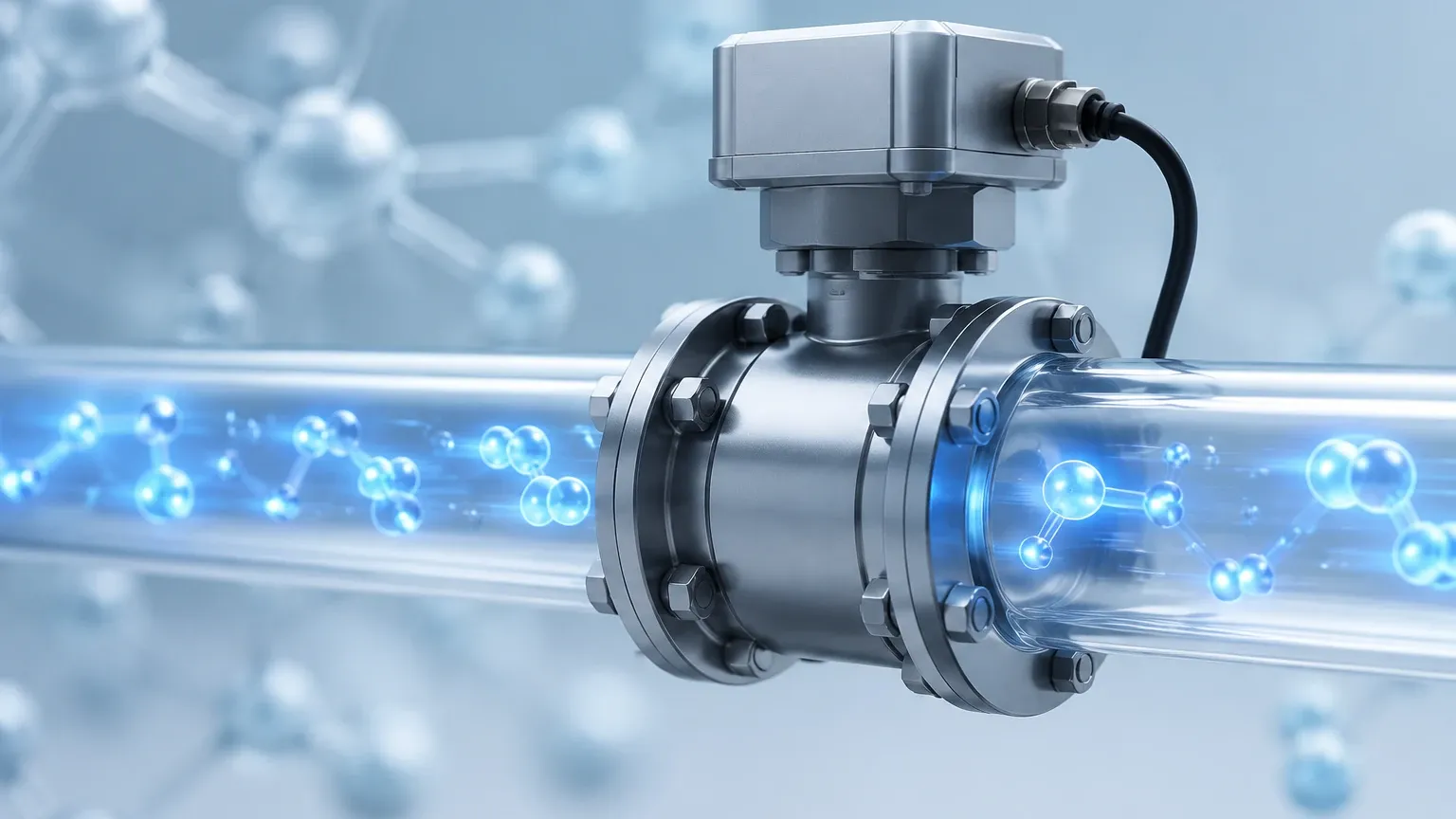
In the rapidly evolving landscape of industrial energy and chemical processing, the accurate measurement of hydrogen gas has become a cornerstone of operational efficiency and safety. As industries transition toward decarbonization, the hydrogen gas flow meter serves as a critical instrument for monitoring production, distribution, and consumption. Hydrogen, being the lightest and smallest molecule, presents unique challenges for traditional flow measurement technologies, requiring specialized engineering considerations to ensure precision and long-term reliability.
This guide explores the underlying measurement principles, selection criteria, and installation requirements for hydrogen flow measurement, providing a practical reference for engineers and plant managers tasked with integrating these systems into industrial automation frameworks.
Measurement Principles for Hydrogen Gas
Selecting a hydrogen gas flow meter requires an understanding of how different physical principles interact with the properties of hydrogen. Hydrogen has a very low density, high thermal conductivity, and a high velocity of sound, all of which influence meter performance.
Thermal Mass Flow Measurement
Thermal mass flow meters operate on the principle of heat transfer. A heated sensor is placed in the gas stream, and as hydrogen flows past it, it carries away heat. Because hydrogen has exceptionally high thermal conductivity (significantly higher than air or nitrogen), thermal mass meters are highly sensitive and effective for hydrogen applications. They measure mass flow directly without needing separate pressure or temperature compensation, which is a significant advantage in fluctuating process conditions.
Coriolis Mass Flow Measurement
Coriolis meters utilize the Coriolis effect, where a vibrating tube experiences a phase shift proportional to the mass flow rate of the fluid passing through it. For hydrogen, Coriolis meters are often considered the "gold standard" for accuracy because they measure mass directly, independent of gas density or flow profile. However, because hydrogen gas is extremely light, Coriolis meters for gas applications must be highly sensitive and are typically used in high-pressure environments where the gas density is high enough to generate a measurable force.
Vortex Shedding Measurement
Vortex flow meters measure flow by placing a bluff body in the stream, which creates alternating vortices (the Kármán vortex street). The frequency of these vortices is proportional to the flow velocity. While robust and having no moving parts, vortex meters require a minimum Reynolds number to function. Due to hydrogen’s low density, high velocities are often required to generate detectable vortices, making this technology more suitable for high-volume distribution lines rather than low-flow leak detection.
Differential Pressure (DP) Measurement
DP meters, such as orifice plates or Venturi tubes, measure the pressure drop across a restriction in the pipe. While a traditional and well-understood technology, the low density of hydrogen means the pressure drop is often very small, which can limit the turndown ratio (the range between maximum and minimum measurable flow). Precision DP transmitters are required to capture these subtle changes in pressure.
Key Evaluation Criteria for Hydrogen Applications
When evaluating a hydrogen gas flow meter, several technical factors must be confirmed to ensure the device is fit for purpose in a B2B industrial environment.
1. Material Compatibility and Hydrogen Embrittlement
Hydrogen can diffuse into the crystalline structure of many metals, leading to "hydrogen embrittlement," which causes materials to become brittle and crack under stress. For flow meters, wetted parts should ideally be constructed from high-quality stainless steel (such as 316L) or specific alloys like Hastelloy. Standard carbon steels are generally avoided for high-pressure hydrogen service.
2. Safety Certifications (ATEX/IECEx)
Hydrogen is highly flammable with a wide flammability range (4% to 75% in air) and a very low ignition energy. Any hydrogen gas flow meter installed in a hazardous area must carry appropriate explosion-proof or intrinsically safe certifications. This includes not only the sensor but also the electronics and cabling interfaces.
3. Leak Integrity
Because the hydrogen molecule is so small, it can escape through seals and joints that would be considered gas-tight for larger molecules like methane or oxygen. High-performance flow meters for hydrogen often utilize all-welded constructions or specialized metal-to-metal seals to minimize the risk of fugitive emissions.
4. Pressure and Temperature Compensation
Unless using a direct mass flow meter (like Coriolis or Thermal Mass), the volumetric flow of hydrogen changes significantly with pressure and temperature. For accurate billing or process control, integrated or external compensation is necessary to convert volumetric readings into Standard Cubic Meters (Nm³) or mass units (kg).
Selection Table: Comparing Hydrogen Flow Technologies
| Technology | Accuracy (Typical) | Pressure Drop | Turndown Ratio | Best Use Case |
| :— | :— | :— | :— | :— |
| Thermal Mass | ±1.0% of Reading | Very Low | 100:1 | Low-pressure lines, burner control, leak detection. |
| Coriolis | ±0.5% of Rate | Medium | 20:1 | High-pressure custody transfer, high-accuracy dosing. |
| Vortex | ±1.0% of Rate | Medium | 10:1 | High-velocity steam or bulk gas distribution. |
| Ultrasonic | ±1.0% to 2.0% | Negligible | 50:1 | Large diameter pipes, non-intrusive monitoring. |
| Differential Pressure | ±1.0% to 3.0% | High | 5:1 | Stable, high-flow industrial processes. |
Installation Considerations and Best Practices
Proper installation is as important as technology selection for ensuring the accuracy of a hydrogen gas flow meter. Engineers should adhere to the following guidelines:
* Straight Pipe Runs: Most flow technologies (especially Vortex and DP) require a specific length of straight pipe upstream and downstream of the meter to eliminate turbulence and ensure a fully developed flow profile. Typically, 10 to 20 diameters upstream and 5 diameters downstream are recommended.
* Orientation: For gas applications, meters should generally be installed in horizontal pipe runs. If installed vertically, the flow should ideally be upward to prevent any moisture or particulates from settling on the sensors.
* Grounding and Shielding: To prevent static discharge—a major risk in hydrogen environments—all meters must be properly grounded. Signal wiring should be shielded to prevent electromagnetic interference (EMI) from affecting the sensitive electronics.
* Sealing and Testing: After installation, the entire flow loop should undergo rigorous leak testing using helium or hydrogen sniffers. Bubble tests may not be sufficient for the high-permeability nature of hydrogen.
Limitations and Common Risks
While modern instrumentation is highly advanced, there are inherent risks and limitations when measuring hydrogen gas:
1. Low Signal-to-Noise Ratio: In low-pressure applications, the force exerted by hydrogen on mechanical or ultrasonic sensors is minimal, which can lead to measurement noise.
2. Velocity Limits: Because hydrogen is light, it can reach very high velocities in small pipes. This can lead to erosion of internal components or exceed the maximum frequency response of vortex or ultrasonic meters.
3. Gas Purity: Contaminants or moisture in the hydrogen stream can coat thermal sensors or erode orifice plates, leading to drift over time. Regular calibration and the use of filtration are recommended.
Integration with Industrial Level Measurement
In many industrial facilities, flow measurement is only one part of the fluid management puzzle. For companies managing hydrogen storage—whether in liquid form (LH2) or high-pressure gas cylinders—integrating flow data with level measurement is essential. For instance, while a hydrogen gas flow meter tracks the output to a fuel cell or chemical reactor, high-precision radar or ultrasonic level sensors monitor the inventory in the storage tanks.
As a professional manufacturer of industrial level measurement instruments, Welk provides the foundational sensing technology required to monitor these storage assets. For more information on how level and flow data integrate into a comprehensive automation strategy, you may visit our Main Page to review product options and application support.
Frequently Asked Questions (FAQs)
Q: Can a standard natural gas flow meter be used for hydrogen?
A: Generally, no. Hydrogen has different density, viscosity, and thermal properties. A meter calibrated for natural gas will provide inaccurate readings for hydrogen and may not have the necessary material compatibility to resist embrittlement.
Q: Why is mass flow preferred over volumetric flow for hydrogen?
A: Hydrogen is highly compressible. Its volume changes drastically with small changes in temperature and pressure. Mass flow (measured in kg/h) provides a consistent measurement of the actual amount of energy or substance being moved, regardless of environmental conditions.
Q: What is the impact of hydrogen purity on flow meter accuracy?
A: Most hydrogen gas flow meters are calibrated for a specific gas mixture (e.g., 99.99% pure H2). If the hydrogen contains significant amounts of CO2, CH4, or water vapor, the physical properties change, which can lead to significant measurement errors in thermal and ultrasonic meters.
Q: How often should a hydrogen flow meter be calibrated?
A: In critical B2B applications such as custody transfer or safety-related process control, annual calibration is standard. For general process monitoring, a biennial check may be sufficient, provided the meter shows no signs of drift or sensor coating.
By understanding these technical nuances, procurement and engineering teams can select the most effective hydrogen gas flow meter for their specific application, ensuring safety and precision in the growing hydrogen economy.