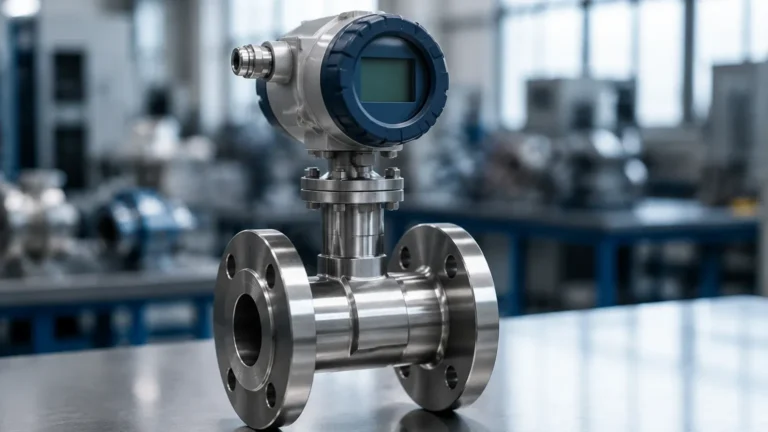
Continuous Chlorine Monitoring
Continuous Chlorine Monitoring
In industrial water treatment, municipal supply, and wastewater management, chlorine remains the primary agent for disinfection and biofouling control. However, the effectiveness of chlorination is not merely a matter of dosing; it requires precise, real-time verification. Continuous chlorine monitoring has evolved from a regulatory requirement into a critical process optimization tool, ensuring that residual levels remain within a narrow window—high enough to guarantee pathogen inactivation, yet low enough to prevent equipment corrosion, environmental toxicity, and the formation of harmful disinfection byproducts (DBPs).
For engineers and plant operators, transitioning from manual grab-sampling to an automated continuous system involves understanding the electrochemical and chemical principles that govern these sensors, as well as the mechanical infrastructure required to support them.
Measurement Principles in Chlorine Analysis
To select the appropriate instrumentation, one must first distinguish between the two primary methodologies used in modern industrial environments: Amperometric and Colorimetric analysis.
Amperometric Sensors
Amperometric measurement is an electrochemical technique that measures the change in current resulting from the chemical reduction of chlorine at a gold or platinum cathode. The current produced is directly proportional to the concentration of chlorine in the sample. There are two main types of amperometric sensors:
1. Membrane-Covered Sensors: These utilize a gas-permeable membrane to separate the electrodes from the sample water. This design reduces the impact of flow fluctuations and prevents the electrodes from fouling due to solids or surfactants. They are ideal for clean water applications where pH is relatively stable.
2. Bare-Electrode Sensors: These operate without a membrane and often include a mechanical cleaning mechanism (such as rotating beads) to keep the electrode surfaces clear. These are typically used in more aggressive industrial cooling water applications.
Colorimetric (DPD) Analysis
The DPD (N,N-diethyl-p-phenylenediamine) method is the laboratory standard for chlorine measurement, adapted for continuous use. In these systems, reagents are automatically mixed with the sample at set intervals. The chlorine reacts with the DPD to produce a pink color, the intensity of which is measured photometrically. While extremely accurate and less sensitive to pH changes than amperometric sensors, these systems require a continuous supply of chemical reagents and involve more moving parts.
Technical Comparison and Selection Criteria
Choosing between these technologies depends on the specific application requirements, including the presence of interfering substances and the desired maintenance interval. For comprehensive product information and system integration support, engineers often Review product options and application support to ensure the selected sensor aligns with their broader automation architecture.
| Feature | Amperometric (Membrane) | Colorimetric (DPD) |
| :— | :— | :— |
| Measurement Speed | Real-time / Continuous | Intermittent (e.g., every 2.5 min) |
| Reagents Required | No | Yes (DPD and Buffer) |
| pH Sensitivity | High (Requires compensation) | Low (Buffered by reagent) |
| Maintenance Frequency | Low (Membrane/Electrolyte change) | High (Reagent replenishment) |
| Common Applications | Drinking water, Cooling towers | Wastewater, Regulatory compliance |
| Operating Range | 0–20 mg/L | 0–5 mg/L (typical) |
Critical Installation and Engineering Guidelines
Regardless of the sensing technology chosen, the physical installation of a continuous chlorine monitoring system determines its long-term reliability. Unlike static level sensors, water quality sensors are highly dependent on the hydraulics of the sample line.
Flow and Pressure Control
Amperometric sensors require a constant flow rate to maintain a stable boundary layer at the electrode or membrane surface. Most industrial sensors operate optimally at a flow rate of 30 to 60 liters per hour (L/h). To achieve this, a flow cell with an integrated pressure regulator or a constant-head overflow tank is recommended. The inlet pressure should typically be maintained between 0.5 bar and 2.0 bar (approx. 7 to 29 psi).
Sample Point Location
The sample should be drawn from a point in the process where the chlorine has had sufficient contact time to react but before any secondary chemical additions that might interfere with the reading. The sample line should be as short as possible to minimize "lag time," which is the delay between a change in the process and the sensor's response. Using 6mm or 10mm OD tubing is standard for most industrial installations.
pH Compensation
In chlorine chemistry, the ratio of Hypochlorous acid (HOCl) to Hypochlorite ion (OCl⁻) is strictly dependent on pH. Because amperometric sensors are primarily sensitive to HOCl, a rise in pH will result in a lower reading even if the total free chlorine remains the same. Modern controllers must either use an integrated pH sensor to provide software-based compensation or utilize a CO2/acid buffering system to stabilize the sample's pH.
Integration with Chemical Storage Level Management
Continuous chlorine monitoring is only one half of the disinfection control loop. While the chlorine sensor monitors the "output," industrial level measurement instruments are required to monitor the "input"—the bulk storage tanks of sodium hypochlorite or other disinfecting agents.
Reliable process automation requires the synchronization of these two data points. For instance, a sudden drop in chlorine residual detected by the monitor should be cross-referenced with the level in the chemical storage tank. If the level meter indicates a full tank, the issue likely lies with the dosing pump or a line blockage. If the level meter shows an empty tank, the system can trigger an automated refill or an emergency shut-off.
For these storage applications, non-contact measurement is preferred due to the corrosive nature of chlorine-based chemicals:
* Radar Level Meters: These provide high-precision (±2mm) measurement and are unaffected by the corrosive vapors found in hypochlorite tanks. They are the preferred choice for large-scale industrial storage.
* Ultrasonic Level Sensors: A cost-effective solution for smaller day tanks or plastic IBCs, provided the vapor concentration does not attenuate the ultrasonic pulse.
* Hydrostatic Transmitters: Used in vented tanks where the density of the chemical is known and constant.
Limitations and Operational Risks
While continuous monitoring significantly reduces the risk of process excursions, it is not without limitations. Practitioners must be aware of the following factors that can compromise data integrity:
1. Biofouling and Scaling: In wastewater or cooling water, biological growth or mineral scaling can coat the sensor membrane. Regular cleaning cycles, often automated using air-blast or chemical cleaning systems, are necessary.
2. Interfering Oxidants: Chlorine sensors are often cross-sensitive to other oxidants such as Bromine, Chlorine Dioxide, or Ozone. If these are present in the sample, the monitor will report a false high reading.
3. Temperature Fluctuations: Electrochemical reaction rates are temperature-dependent. Ensure the system includes an NTC or Pt100/Pt1000 temperature element for automatic thermal compensation.
4. Zero-Point Drift: Over time, the "zero" reference of a sensor may shift. Periodic calibration against a laboratory DPD photometer is required to maintain accuracy, typically on a weekly or bi-weekly basis depending on the stability of the water matrix.
Frequently Asked Questions (FAQ)
Q: How often should I calibrate my continuous chlorine monitor?
A: For most industrial applications, a weekly verification against a handheld DPD photometer is recommended. If the deviation is greater than 10%, a full calibration should be performed. In stable drinking water applications, this interval may be extended to once every two weeks.
Q: Can I use a free chlorine sensor to measure total chlorine?
A: No. Free chlorine sensors are designed to detect HOCl and OCl⁻. Measuring total chlorine (which includes chloramines) requires a specific total chlorine sensor, which usually incorporates a different electrolyte and membrane designed to facilitate the reaction of chloramines.
Q: What is the impact of air bubbles in the flow cell?
A: Air bubbles are a common source of "noise" in the signal. If bubbles collect on the surface of an amperometric membrane, they block the path of the ions, causing the reading to drop or fluctuate wildly. Proper flow cell design and the use of a de-bubbler are essential in applications with high dissolved oxygen or entrained air.
Q: Is a membrane-covered sensor better than a bare-electrode sensor?
A: Membrane-covered sensors generally offer better selectivity and are less affected by changes in water conductivity. However, they are more delicate. Bare-electrode sensors are more robust and better suited for high-fouling environments where mechanical cleaning is necessary.
By combining precise Main Page level data with robust chlorine analysis, facilities can achieve a closed-loop system that maximizes chemical efficiency and ensures consistent water quality. Understanding the physical and chemical boundaries of these instruments allows for the design of systems that are not only compliant with regulations but are also resilient to the challenges of industrial environments.