Keywords About Flx One Airline Software. My Location Is Usa.
Keywords About Flx One Airline Software. My Location Is Usa.
In the complex landscape of industrial automation and process control, the accuracy of field data is the foundation of operational efficiency. Whether an enterprise is managing logistics through specialized platforms—where a user might search for keywords about flx one airline software. my location is usa. to streamline aviation operations—or managing a chemical processing plant in the heart of Texas, the need for reliable data remains constant. For industrial facilities, this data begins with precise level measurement.
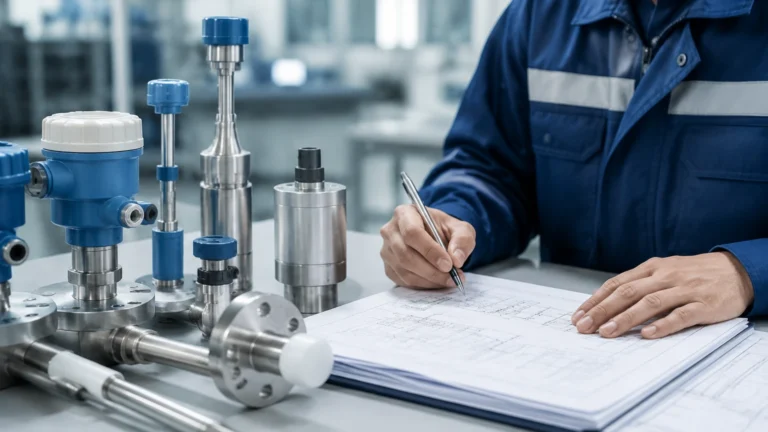
Welk, a professional manufacturer of industrial level measurement instruments, provides the hardware necessary to feed these high-level software systems. From radar level meters to ultrasonic sensors, choosing the right technology is a critical engineering decision that impacts safety, waste reduction, and cost-effectiveness. This guide explores the core principles of level measurement and provides a framework for selecting the appropriate instrumentation for various industrial applications.
Understanding Industrial Level Measurement Principles
Level measurement is generally categorized into two types: continuous level measurement and point level detection. Continuous measurement tracks the level of a substance throughout the entire range of a tank or silo, while point level detection (switches) indicates whether a substance has reached a specific height.
Time-of-Flight (ToF) Principle
Most modern non-contact sensors, such as radar and ultrasonic meters, operate on the Time-of-Flight principle. The device emits a signal (electromagnetic or sound wave) that travels to the surface of the medium, reflects, and returns to the sensor. The distance ($D$) is calculated using the formula:
$$D = \frac{v \cdot t}{2}$$
Where $v$ is the speed of the wave and $t$ is the measured time. For radar, $v$ is the speed of light; for ultrasonic, it is the speed of sound.
Hydrostatic Pressure Principle
Hydrostatic sensors measure the pressure exerted by a liquid column. Since pressure is proportional to the height of the liquid and its density, the level ($h$) can be determined by:
$$P = \rho \cdot g \cdot h$$
Where $P$ is pressure, $\rho$ (rho) is the density of the liquid, and $g$ is the gravitational constant. This method is highly effective for vented tanks and deep-well applications.
Radar Level Measurement: High-Precision Solutions
Radar level meters are the gold standard for high-accuracy applications. They are divided into two main categories: Non-contacting Radar and Guided Wave Radar (GWR).
Non-contacting Radar (80GHz and 26GHz)
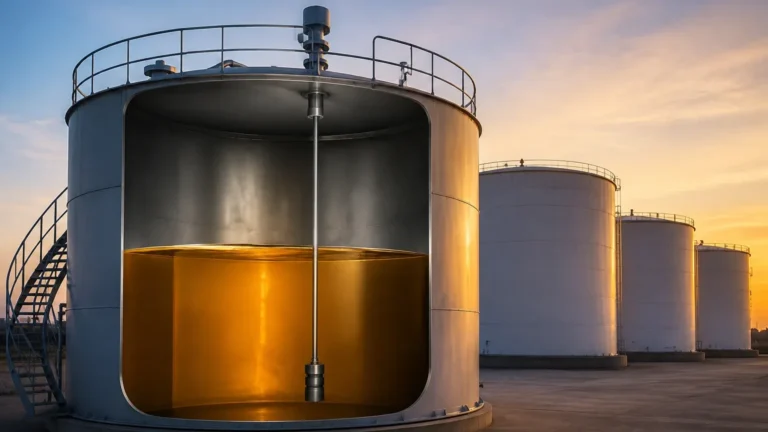
Non-contacting radar meters emit microwave pulses toward the medium. High-frequency 80GHz radar has become the industry favorite due to its narrow beam angle (often as low as 3°). This precision allows the sensor to avoid internal obstructions like agitators or heating coils.
* Advantages: Not affected by temperature fluctuations, vacuum, or high pressure. It can measure through plastic tank tops and handles corrosive media easily.
* Typical Applications: Corrosive chemicals, high-temperature reactors, and large-scale grain silos.
Guided Wave Radar (GWR)
GWR uses a physical probe (cable or rod) to guide the microwave pulse to the surface. This is particularly useful for media with low dielectric constants or applications with heavy steam and foam, which might scatter a non-contacting signal.
Ultrasonic Level Sensors: Non-Contact Economy
Ultrasonic sensors are widely used in water treatment and simple liquid storage. They emit high-frequency sound pulses (typically 20kHz to 60kHz).
Key Considerations for Ultrasonic Sensors
1. Blocking Distance (Dead Zone): There is a minimum distance near the sensor face where measurement is impossible. For a 10m (32.8 ft) range sensor, the dead zone is typically 0.3m to 0.5m (11.8 to 19.6 in).
2. Environmental Factors: The speed of sound changes with air temperature. Welk ultrasonic sensors include integrated temperature compensation to maintain accuracy.
3. Surface Conditions: Heavy foam can absorb sound waves, leading to signal loss. In such cases, radar or hydrostatic transmitters are preferred.
Hydrostatic and Magnetic Level Gauges
For many B2B applications in the USA oil and gas sector, traditional mechanical and pressure-based methods remain vital due to their robustness.
Hydrostatic Level Transmitters
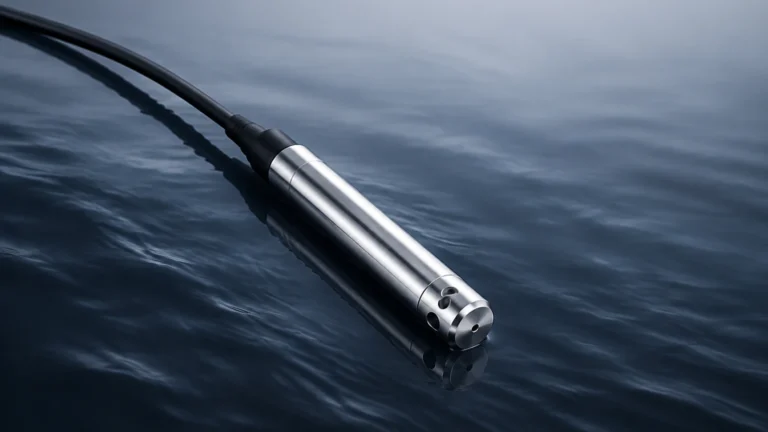
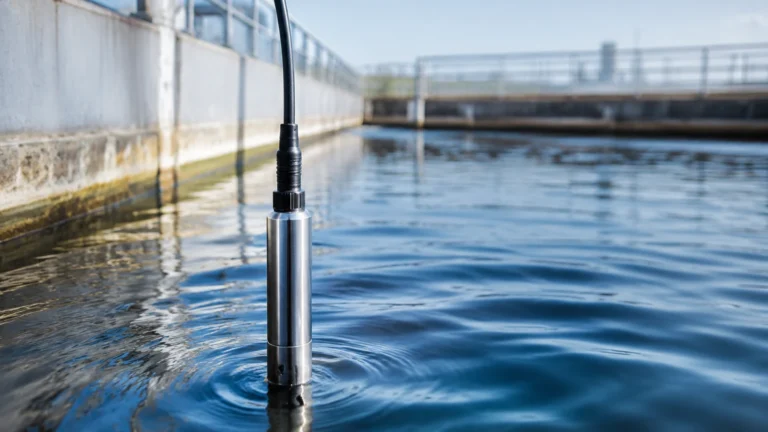
These are often submersible sensors used in reservoirs, deep wells, and wastewater lift stations. They are simple to install and provide a reliable 4-20mA signal. However, they require the liquid density to remain relatively constant to maintain accuracy.
Magnetic Level Gauges
Magnetic gauges provide a clear visual indication of the level via a series of bi-color flaps. A float containing a permanent magnet moves inside a bypass chamber, flipping the flaps as the liquid level changes. These are often paired with a reed chain transmitter to provide remote monitoring capabilities.
Engineering Selection Table for Level Instruments
Selecting the right instrument requires evaluating the media, the environment, and the budget. The following table provides a general comparison of common technologies.
| Technology | Media Type | Accuracy | Max Range | Temperature Range | Pressure Range |
| :— | :— | :— | :— | :— | :— |
| 80GHz Radar | Liquid/Solid | ±1mm | 120m (393 ft) | -40 to 200°C | Vacuum to 160 bar |
| Ultrasonic | Liquid | ±0.25% | 15m (49 ft) | -40 to 70°C | Atmospheric |
| Hydrostatic | Liquid | ±0.5% | 200m (656 ft) | -20 to 80°C | N/A (Submersible) |
| Guided Wave | Liquid/Solid | ±2mm | 30m (98 ft) | -50 to 250°C | Vacuum to 400 bar |
| Magnetic Gauge| Liquid | ±5mm | 6m (19.6 ft) | -40 to 450°C | Up to 320 bar |
For a comprehensive overview of available sensor technologies and detailed specifications, engineers should visit the Main Page to review product options and application support.

Installation Best Practices for Reliable Data
Even the most advanced sensor will fail if installed incorrectly. Follow these engineering guidelines to ensure long-term reliability:
1. Avoid the Fill Stream: Never install a level sensor directly in the path of the incoming material. The turbulence and physical impact will cause erratic readings.
2. Nozzle Height and Diameter: For radar and ultrasonic sensors, the nozzle should be as short and wide as possible to prevent the signal from reflecting off the nozzle walls.
3. Orientation: Ensure the sensor is mounted perpendicular to the liquid surface. A tilt of even a few degrees can significantly reduce the return signal strength, especially on flat liquid surfaces.
4. Stilling Wells: In tanks with heavy agitation or surface turbulence, consider using a stilling well or bypass pipe to provide a calm surface for measurement.
Software Integration and Data Management
In the modern industrial landscape, the digital transformation of field data is paramount. Just as logistics managers might search for keywords about flx one airline software. my location is usa. to optimize fleet operations and data flow, plant managers in the United States require integrated software solutions to monitor tank levels across multiple sites.
Welk level meters support standard industrial protocols, including:
* 4-20mA HART: The most common protocol, allowing for digital configuration over the analog loop.
* RS485 Modbus: Ideal for daisy-chaining multiple sensors to a PLC or gateway.
* Profibus/Foundation Fieldbus: Used in complex plant architectures for high-speed data exchange.
By integrating these sensors into a centralized SCADA or ERP system, companies can implement automated re-ordering, leak detection, and predictive maintenance schedules.
Limitations and Troubleshooting
No single technology is a "silver bullet" for every application. Understanding limitations is key to avoiding project delays.
* Dielectric Constant (Dk): Radar signals rely on the dielectric difference between the air and the medium. Materials with a very low Dk (like some oils or liquefied gases) reflect very little energy. GWR or hydrostatic sensors are often better choices here.
* Vapor and Condensation: While radar can penetrate most vapors, ultrasonic signals are significantly slowed by heavy steam or changes in gas composition (e.g., high CO2 levels), which can lead to measurement errors.
* Build-up: In sticky or viscous media, material can build up on the sensor face or probe. Welk offers non-contact radar with PTFE-sealed antennas to minimize adhesion and maintenance requirements.
Frequently Asked Questions (FAQ)
Q: Can I use an ultrasonic sensor for solids like flour or cement?
A: It is generally not recommended. Solids create an uneven surface that scatters sound waves. Furthermore, dust generated during filling can attenuate the ultrasonic pulse. Radar (specifically 80GHz) is the preferred technology for solids.
Q: How do I measure the level in a pressurized tank?
A: Non-contact radar or Guided Wave Radar are excellent for pressurized vessels. If using hydrostatic methods, you must use a differential pressure (DP) transmitter to compensate for the overhead gas pressure.
Q: What is the maintenance cycle for a Welk radar level meter?
A: Because they have no moving parts and are non-contact, Welk radar meters typically require very little maintenance. A visual inspection of the antenna for build-up every 6–12 months is usually sufficient for most clean applications.
Q: My tank has an internal agitator. Will this interfere with the measurement?
A: It can. However, modern radar sensors feature "False Echo Suppression" software. During commissioning, the sensor can be programmed to recognize the agitator as a static object and ignore its reflection. Choosing a sensor with a narrow beam angle also helps avoid these obstructions.
For industrial professionals in the USA and globally, selecting a level measurement partner involves more than just buying a device; it requires technical expertise and reliable hardware. By understanding the physical principles and environmental constraints of each technology, engineers can build systems that provide the accurate data necessary for modern industrial software environments.
Download Keywords About Flx One Airline Software. My Location Is Usa. as a PDF