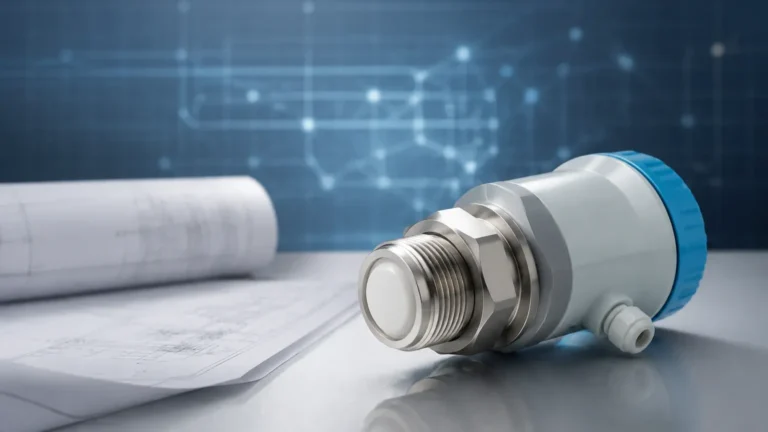
Hydrostatic Level Probe
Hydrostatic Level Probe
In the field of industrial process control, the hydrostatic level probe remains one of the most reliable and widely utilized instruments for continuous level measurement. Based on the fundamental laws of physics, these sensors provide a direct measurement of the liquid column's weight, translating pressure into accurate level data. For engineers and facility managers, understanding the nuances of this technology is essential for ensuring operational efficiency in applications ranging from wastewater treatment to deep-well monitoring.
As a professional manufacturer, Welk provides a diverse range of level measurement instruments designed to meet the rigorous demands of industrial automation. While ultrasonic and radar technologies offer non-contact advantages, the hydrostatic level probe excels in environments where surface foam, narrow tank geometries, or high-pressure vapor spaces might interfere with signal reflection. For those seeking comprehensive technical specifications on various measurement technologies, you can explore the Main Page for detailed product documentation.
The Fundamental Principle of Hydrostatic Measurement
The operation of a hydrostatic level probe is governed by Stevin’s Law, which states that the pressure exerted by a static liquid at a specific depth is directly proportional to the height of the liquid column above it. This relationship is expressed by the formula:
P = ρ · g · h
Where:
* P is the hydrostatic pressure (measured in Pascals or bar).
* ρ (rho) is the density of the liquid (kg/m³).
* g is the local acceleration due to gravity (approximately 9.81 m/s²).
* h is the height of the liquid column (meters).
Because gravity is constant and the density of the liquid is typically known, the pressure measured by the probe's diaphragm can be converted into a precise level reading. It is important to note that a hydrostatic level probe measures the "weight" of the liquid. Therefore, any significant change in the temperature or composition of the liquid that alters its density will affect the accuracy of the level reading unless the system is calibrated for such fluctuations.
Atmospheric Pressure Compensation
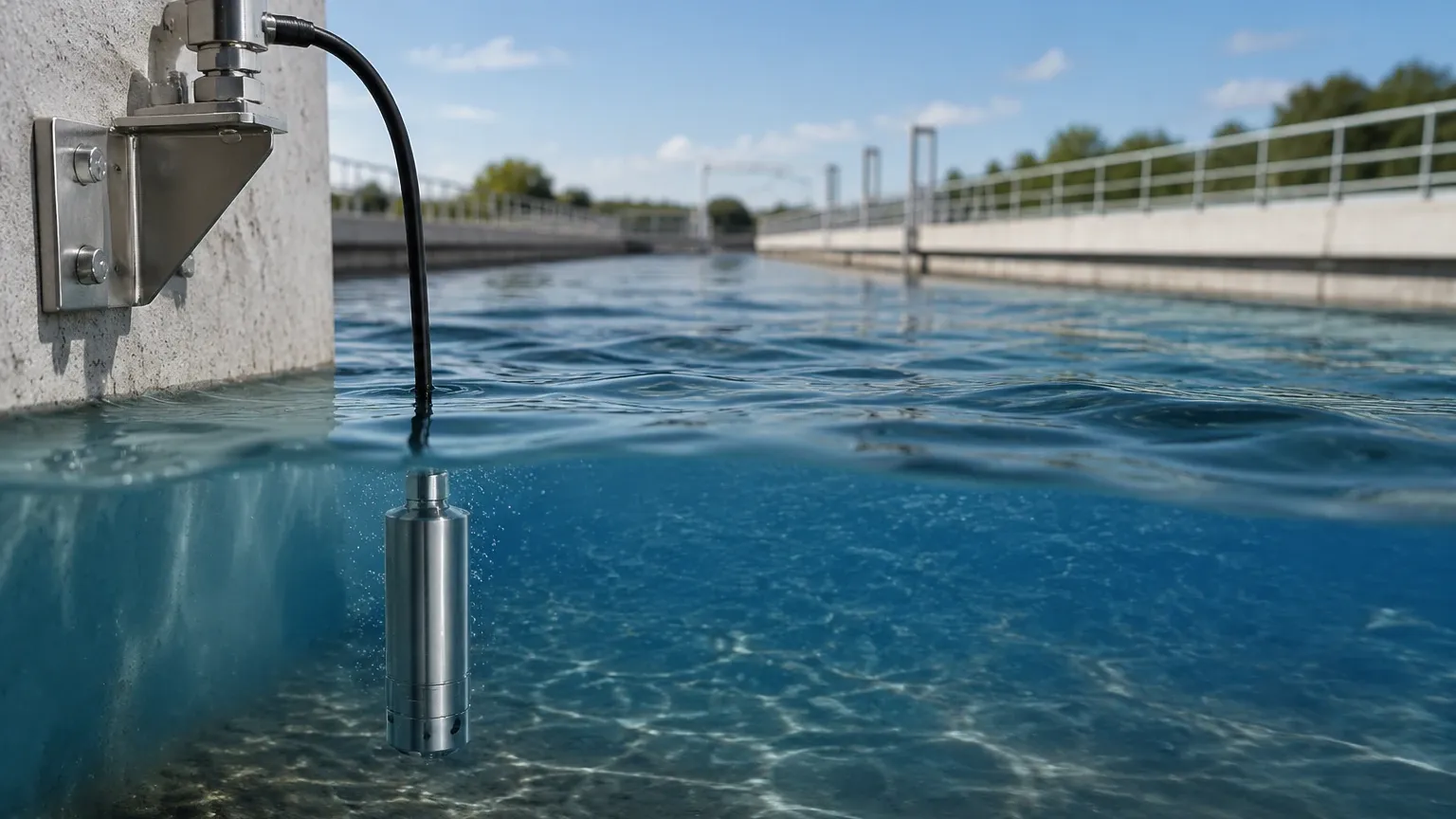
To ensure that the sensor only measures the pressure exerted by the liquid and not the fluctuating atmospheric pressure above the liquid surface, most submersible probes utilize a vented cable. This cable contains a small capillary tube that runs from the sensor body to the surface, allowing the back of the sensing diaphragm to be exposed to the same atmospheric pressure as the liquid surface. This mechanical compensation ensures that the output signal reflects only the true hydrostatic head of the liquid.
Key Components and Construction
A high-quality hydrostatic level probe is engineered to withstand prolonged immersion in potentially harsh environments. The core components typically include:
1. The Sensing Element: Usually a piezoresistive silicon sensor or a ceramic thick-film sensor. Silicon sensors offer high sensitivity and accuracy, while ceramic sensors are often preferred for their robustness and resistance to abrasive or corrosive media.
2. The Diaphragm: This is the interface between the liquid and the internal electronics. It must be flexible enough to transmit pressure but durable enough to resist chemical attack. Common materials include Stainless Steel 316L, Tantalum, or Hastelloy C.
3. The Housing: Typically constructed from corrosion-resistant stainless steel or specialized plastics like PVDF for aggressive chemical applications.
4. The Vented Cable: The cable serves as both the electrical conduit for the 4-20mA or digital signal and the path for atmospheric pressure compensation. The jacket material (PUR, PE, or FEP) must be selected based on the chemical compatibility of the fluid.
Selection Criteria for Industrial Applications
Choosing the correct hydrostatic level probe requires a detailed analysis of the process environment. Failure to account for chemical compatibility or pressure ranges can lead to premature sensor failure or inaccurate data.
1. Media Density and Compatibility
Since the measurement is density-dependent, the specific gravity of the fluid must be known. Furthermore, the materials of the probe must be compatible with the fluid. For example, while 316L stainless steel is suitable for water and mild oils, hydrochloric acid or high-salinity brine may require PVDF housing and FEP cabling.
2. Measurement Range and Accuracy
Probes are rated for specific pressure ranges (e.g., 0-1 bar, 0-10 bar). It is best practice to select a probe with a range slightly higher than the maximum expected liquid level to avoid overpressure damage, while ensuring the resolution remains high enough for the application's requirements.
3. Signal Output
Most industrial probes utilize a standard 2-wire 4-20mA loop-powered output. However, for integration into modern IoT or PLC systems, versions with RS485 Modbus or HART protocols are increasingly common, providing additional diagnostic data and easier remote calibration.
Practical Selection Table
| Application Type | Recommended Housing | Cable Material | Typical Accuracy | Key Feature |
| :— | :— | :— | :— | :— |
| Potable Water | 316L Stainless Steel | Food-grade PE | 0.5% FS | WRAS/NSF compliance |
| Wastewater/Sewerage | 316L SS / Ceramic | PUR (Polyurethane) | 0.5% FS | Clog-resistant diaphragm |
| Chemical Storage | PVDF / Hastelloy | FEP / PTFE | 0.25% FS | High chemical resistance |
| Deep Well/Borehole | 316L Stainless Steel | Reinforced PE | 0.1% FS | High tensile strength cable |
| Fuel/Oil Tanks | 316L Stainless Steel | Oil-resistant PUR | 0.5% FS | ATEX/Ex-proof rating |
Installation Considerations
Proper installation is critical to the longevity and performance of a hydrostatic level probe. Even the most accurate sensor will provide poor data if installed incorrectly.
* Positioning: The probe should be suspended vertically in the tank or well. It should not rest directly on the bottom if there is a risk of silt or sediment buildup, which can block the pressure port or damage the diaphragm. Ideally, it should be positioned 100mm to 300mm above the floor of the vessel.
* Turbulence Protection: In tanks with agitators or high-flow inlets, the probe may swing or experience pressure spikes. In these cases, the probe should be installed inside a "stilling well" (a perforated pipe) to shield it from mechanical stress and ensure a stable reading.
* Cable Management: The vented cable should be secured with a proper cable clamp to prevent it from slipping. Avoid sharp bends in the cable that could kink the internal capillary tube, as this would prevent atmospheric compensation and lead to significant errors.
* Moisture Protection: The open end of the capillary tube (usually located within the junction box) must be protected from moisture. Desiccant cartridges or specialized vent filters are recommended to prevent condensation from forming inside the tube, which could block the vent or damage internal electronics.
Limitations and Technical Constraints
While highly versatile, the hydrostatic level probe is not a universal solution. Engineers must be aware of its inherent limitations:
1. Density Sensitivity: If the process involves mixing different liquids or experiences significant temperature swings that change the liquid's density, the hydrostatic probe will report a change in level even if the actual volume remains constant. In such cases, a non-contact method like radar or a secondary temperature/density compensation system may be required.
2. Pressurized Vessels: Standard submersible probes are designed for vented (open) tanks. If the tank is pressurized (e.g., a boiler or a pressurized chemical reactor), a single hydrostatic probe cannot distinguish between the liquid pressure and the gas headspace pressure. For these applications, a differential pressure (DP) transmitter is required.
3. Mechanical Damage: The sensing diaphragm is a precision component. It can be easily damaged by high-pressure washers, manual cleaning with sharp objects, or the impact of heavy solids in the liquid.
Frequently Asked Questions (FAQ)
Q: How often should a hydrostatic level probe be calibrated?
A: For most industrial water applications, an annual calibration check is sufficient. However, in critical chemical processes or environments with high sediment, bi-annual checks are recommended to ensure the diaphragm has not drifted or become coated with scale.
Q: Can I shorten the cable of a hydrostatic probe?
A: Yes, the electrical cable can be shortened, but extreme care must be taken not to block or seal the internal capillary tube. It is often better to coil the excess cable neatly at the top of the tank rather than cutting it, unless a specific junction box designed for vented cables is used.
Q: What is the maximum depth a hydrostatic probe can measure?
A: Standard industrial probes are available for ranges up to 200 meters or more. The primary limiting factors are the pressure rating of the sensor housing and the tensile strength of the cable used to support the weight of the probe over long distances.
Q: How do I protect the probe from lightning or power surges?
A: For outdoor installations, such as reservoir monitoring or deep wells, it is highly recommended to use a probe with integrated surge protection and to install a dedicated lightning protection module in the control cabinet.
Conclusion
The hydrostatic level probe remains a cornerstone of liquid level measurement due to its simplicity, reliability, and cost-effectiveness. By understanding the underlying physics and carefully selecting materials that match the process environment, engineers can implement a measurement solution that requires minimal maintenance and provides years of accurate service.
For more information on selecting the right instrumentation for your specific industrial application, or to view our full range of radar, ultrasonic, and pressure-based sensors, please visit our Main Page. Our technical team is available to assist with customized OEM/ODM services and site-specific engineering advice.