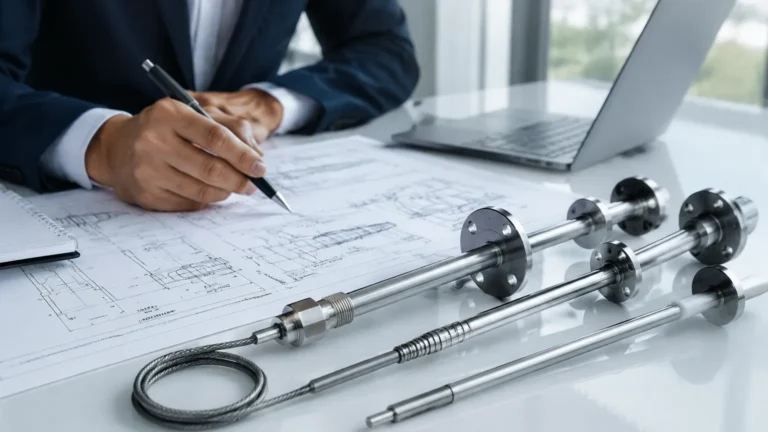
Non-contact Radar
Non-contact Radar
In the landscape of industrial process control, the demand for precise, reliable, and low-maintenance level measurement has led to the widespread adoption of non-contact radar technology. Unlike traditional contact-based methods—such as float switches or guided wave radar—non-contact radar instruments measure the distance to a medium without physical interaction. This characteristic makes them indispensable for applications involving corrosive chemicals, high-temperature liquids, or abrasive bulk solids.
As a professional manufacturer of industrial level measurement instruments, Welk provides advanced radar solutions designed to meet the rigorous demands of water treatment, oil and gas, and chemical processing. Understanding the underlying physics and selection criteria for non-contact radar is essential for engineers seeking to optimize their automation systems. For more detailed technical specifications and product ranges, you can visit our Main Page.
Measurement Principles of Non-contact Radar
Non-contact radar level transmitters operate by emitting electromagnetic waves (microwaves) toward the surface of the monitored medium. These waves travel at the speed of light, reflect off the surface of the material, and return to the sensor's antenna. The instrument then calculates the distance based on the time it took for the signal to return. There are two primary techniques used in modern industrial radar: Pulsed Radar and Frequency Modulated Continuous Wave (FMCW).
Pulsed Radar Technology
Pulsed radar instruments emit short bursts of microwave energy. The sensor measures the "Time of Flight" (ToF) from the moment the pulse is sent until the echo is received. Because the speed of light is constant, the distance (D) is calculated as $D = (c \times t) / 2$, where $c$ is the speed of light and $t$ is the transit time. Pulsed radar is often favored for its lower power consumption, making it suitable for loop-powered (two-wire) installations.
Frequency Modulated Continuous Wave (FMCW)
FMCW radar does not send pulses but rather emits a continuous signal with a frequency that changes over time (a frequency sweep). When the reflected signal returns, it is compared to the signal being emitted at that exact moment. The difference in frequency (the "beat frequency") is directly proportional to the distance. FMCW technology generally offers higher accuracy and a better signal-to-noise ratio compared to pulsed radar, making it the preferred choice for complex applications requiring millimeter-level precision.
Frequency Bands and Their Industrial Applications
The performance of a non-contact radar system is heavily influenced by its operating frequency. In industrial level measurement, three main frequency bands are commonly utilized: C-band (approx. 6 GHz), K-band (approx. 26 GHz), and W-band (approx. 80 GHz).
6 GHz to 10 GHz Radar
Low-frequency radar systems are characterized by longer wavelengths. These waves are less susceptible to interference from steam, foam, or dust. However, they require larger antennas to achieve a narrow beam angle. These are typically used in heavy-duty applications where the surface might be turbulent or covered in a layer of light foam.
26 GHz Radar
Often considered the industrial standard, 26 GHz radar offers a balance between antenna size and beam focus. It is highly versatile, suitable for most liquid storage tanks and many solids applications. The narrower beam (compared to 6 GHz) allows for easier installation in tanks with internal obstructions like agitators or heating coils.
80 GHz Radar
High-frequency 80 GHz radar represents the cutting edge of non-contact radar technology. The very short wavelength allows for extremely small antenna designs and a highly focused beam (as narrow as 3 degrees). This precision makes it possible to measure through narrow nozzles and in tall, thin silos where side-wall reflections would interfere with lower-frequency signals.
Practical Selection Table
Choosing the right instrument requires evaluating the media type, vessel geometry, and environmental conditions. The following table provides a general comparison to assist in the selection process.
| Feature | 6-10 GHz Radar | 26 GHz Radar | 80 GHz Radar |
| :— | :— | :— | :— |
| Beam Angle | Wide (20° – 30°) | Medium (8° – 20°) | Narrow (3° – 8°) |
| Accuracy | ±5mm to ±10mm | ±3mm | ±1mm to ±2mm |
| Max Range | 30 meters | 30 – 70 meters | 120 meters |
| Steam/Dust Resistance | Excellent | Good | Moderate to Good |
| Small Nozzle Compatibility | Poor | Moderate | Excellent |
| Typical Applications | Turbulent liquids, heavy steam | General chemical storage | Small vessels, high-precision solids |
Installation Considerations for Optimal Performance
Even the most advanced non-contact radar can fail if installed incorrectly. To ensure reliable data, engineers must adhere to specific installation guidelines.
1. Avoid the Center: Do not install the radar in the exact center of a circular tank. This can lead to multiple reflections (parabolic effect) that amplify noise and degrade the signal.
2. Nozzle Height and Diameter: The antenna should ideally extend slightly beyond the mounting nozzle to prevent "ringing" or signal interference from the nozzle walls. If using an 80 GHz unit, the narrow beam allows for longer nozzles, but for 26 GHz units, the nozzle height-to-diameter ratio must be carefully managed.
3. Obstruction Clearance: The microwave beam spreads as it travels. Ensure the "keep-out zone" (defined by the beam angle) is free of ladders, pipes, or agitator blades. If obstructions are unavoidable, many modern transmitters offer "false echo suppression" software to mask these static reflections.
4. Filling Inlet Positioning: Never install the radar directly above the filling stream. The falling material will scatter the radar signal and cause erratic readings.
5. Environmental Protection: While non-contact radar is robust, extreme temperatures may require the use of an antenna cooling extension or a high-temperature ceramic pressure seal.

Limitations and Technical Challenges
While non-contact radar is highly versatile, it is not a universal solution for every scenario. There are specific physical limitations that must be acknowledged:
* Dielectric Constant (DK): The strength of the reflected signal depends on the dielectric constant of the medium. Materials with a very low DK (e.g., liquid nitrogen or certain hydrocarbons with DK < 1.4) reflect very little energy. In these cases, guided wave radar or high-sensitivity 80 GHz non-contact units are required.
* Heavy Foam: While some radar frequencies can penetrate light foam, dense, thick foam (like shaving cream) can absorb the microwave signal entirely, leading to a "loss of echo" error.
* Extreme Turbulence: Rapidly moving liquid surfaces can scatter the signal. This is often mitigated by using a stilling well (a bypass pipe) to provide a calm surface for measurement.
* Vacuum Conditions: While radar works perfectly in a vacuum (unlike ultrasonic sensors which require air), the mechanical seals of the instrument must be rated for vacuum service to prevent leakage or damage to the electronics.
Application Examples
Wastewater Treatment
In open channels or wet wells, non-contact radar is preferred over ultrasonic sensors because it is unaffected by air temperature fluctuations, wind, or methane gas layers. A 26 GHz or 80 GHz unit mounted above a flume provides highly accurate flow calculations based on level.
Chemical Processing
For corrosive acids stored in plastic or glass-lined tanks, non-contact radar can often measure through a plastic tank roof or a PTFE (Teflon) flange protector. This ensures the sensor never touches the hazardous medium, extending the instrument's lifespan and increasing safety.
Solids and Powders
Measuring the level of cement, grain, or plastic pellets in large silos is challenging due to dust and the angle of repose (the slope of the material). High-frequency 80 GHz radar is particularly effective here, as its narrow beam can be aimed to avoid wall buildup and its high dynamic range can penetrate significant dust clouds.
Frequently Asked Questions (FAQ)
Q: Does the pressure inside the tank affect the radar measurement?
A: No. Unlike ultrasonic waves, microwaves are electromagnetic and do not require a medium to travel. Therefore, changes in pressure or gas composition (e.g., nitrogen blanketing) do not affect the speed of the signal or the accuracy of the measurement.
Q: Can non-contact radar measure through a closed tank lid?
A: Yes, provided the lid is made of a non-conductive material like plastic, GRP, or glass. Metal lids block radar signals entirely. For metal tanks, the radar must be mounted on a nozzle or flange.
Q: How do I handle heavy condensation on the antenna?
A: Condensation can attenuate the signal. Many Welk radar units feature drip-off antenna designs (pointed or convex shapes) that encourage droplets to run off. Additionally, PTFE-encapsulated antennas provide a non-stick surface that minimizes buildup.
Q: Is non-contact radar better than ultrasonic for all applications?
A: While radar is more versatile, ultrasonic sensors are often more cost-effective for simple water level applications where no foam, steam, or vacuum is present. However, for process-critical or complex environments, radar is generally the superior choice.
Conclusion
Non-contact radar technology has revolutionized level measurement by providing a high-precision, low-maintenance alternative to traditional sensors. By understanding the differences between FMCW and pulsed methods, and selecting the appropriate frequency for the specific media and vessel geometry, engineers can ensure long-term operational reliability.
Whether you are managing a complex chemical reactor or a simple water storage tank, selecting the right instrument is the first step toward efficient process automation. For a comprehensive overview of available technologies and to find the right solution for your facility, please refer to our Main Page.