Ibc Drum Tracking
Ibc Drum Tracking
Intermediate Bulk Containers (IBCs), commonly referred to as IBC drums or totes, are the backbone of modern industrial liquid logistics. Used extensively across the chemical, water treatment, and food and beverage sectors, these containers require precise monitoring to ensure supply chain efficiency and process safety. Effective ibc drum tracking involves more than just locating a container via GPS; it requires real-time visibility into the volume and status of the liquid contents.
For process engineers and logistics managers, understanding the measurement principles behind level sensing is the first step in implementing a robust tracking system. By integrating high-accuracy level sensors with digital communication, facilities can prevent stockouts, optimize replenishment cycles, and ensure that hazardous materials are handled within safety parameters.
Measurement Principles for IBC Level Monitoring
Before selecting a tracking solution, it is essential to understand the physics of how liquid levels are measured within an IBC. Depending on the chemical properties of the fluid and the container material, different technologies are employed.
Non-Contact Radar (80GHz)
Radar level meters operate on the Time-of-Flight (ToF) principle. The sensor emits a high-frequency microwave signal (typically 80GHz) that travels to the liquid surface and reflects back. The time taken for the signal to return is proportional to the distance.
In the context of ibc drum tracking, 80GHz radar is particularly effective because it can often measure through the plastic (HDPE) walls or lids of the IBC. This allows for "non-invasive" monitoring where the sensor never touches the medium, reducing contamination risks and maintenance requirements.
Ultrasonic Level Sensing
Ultrasonic sensors also use the ToF principle but utilize sound waves instead of microwaves. The sensor emits a pulse that bounces off the liquid surface. While cost-effective for water-based liquids, ultrasonic sensors can be affected by air temperature fluctuations, heavy foam, or vapor layers within the drum, which can alter the speed of sound and lead to inaccuracies.
Hydrostatic Pressure
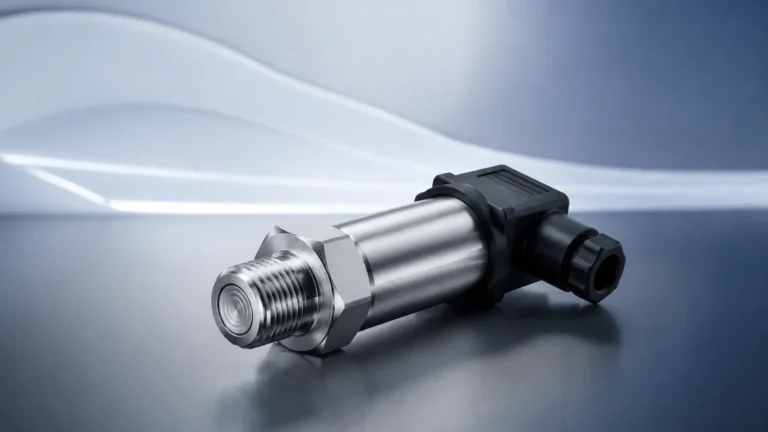
Hydrostatic level transmitters measure the pressure exerted by the liquid column at the bottom of the IBC. According to the formula $P = \rho gh$ (where P is pressure, $\rho$ is density, $g$ is gravity, and $h$ is height), the level can be calculated if the density of the fluid is known. This method usually requires a sensor to be installed at the bottom outlet or submerged into the tank, making it a "contact" measurement method.
Point Level Switches
For applications where only "Full" or "Empty" alerts are required, level switches (such as tuning fork or float switches) are used. These do not provide continuous tracking but serve as critical safety backups to prevent overfills during the filling process of IBCs.
The Role of Level Sensors in IBC Drum Tracking
True ibc drum tracking integrates level measurement with data transmission. When an IBC is deployed in a remote location or a customer site, the level sensor acts as the primary data source for inventory management systems.
By monitoring the rate of consumption, companies can move from reactive ordering to proactive, automated replenishment. For example, a chemical distributor can monitor a fleet of 1,000-liter IBCs across multiple client sites. When the level in a specific drum drops below 15% (150 liters), the system automatically triggers a logistics alert for a replacement. This level of visibility is the core value proposition of modern industrial automation in liquid handling. For those seeking specific hardware specifications for these applications, you can Review product options and application support to see how different sensors integrate with tracking modules.
Technical Selection Criteria
Choosing the right sensor for ibc drum tracking requires an evaluation of the environment and the medium. Engineers should confirm the following criteria before procurement:
1. Media Compatibility: Is the liquid corrosive, flammable, or food-grade? For corrosive acids, non-contact radar or plastic-bodied ultrasonic sensors are preferred.
2. Container Geometry: Most IBCs have a standard footprint (approx. 1200 x 1000 mm), but internal structures like cages or specific lid designs can interfere with sensor signals.
3. Power Availability: Many IBCs are mobile. Sensors must often be battery-powered or compatible with low-power IoT networks (LoRaWAN, NB-IoT, or Sigfox).
4. Accuracy Requirements: Standard industrial applications usually require accuracy within ±2mm to ±5mm. For high-value chemicals, higher precision radar may be necessary.
Technology Comparison Table
| Technology | Accuracy | Contact Type | Best For | Typical Range |
| :— | :— | :— | :— | :— |
| 80GHz Radar | ±2 mm | Non-contact | Corrosives, high-precision, measuring through lids | Up to 30m |
| Ultrasonic | ±0.25% of range | Non-contact | Water, wastewater, simple chemicals | 0.1m – 10m |
| Hydrostatic | ±0.5% FS | Contact | Static storage, oils, non-foaming liquids | 1m – 200m |
| Capacitive | ±1% | Contact | Non-conductive liquids, oils | 0.1m – 3m |
Installation Considerations
Proper installation is critical to the success of an ibc drum tracking project. Because IBCs are often moved, stacked, or subjected to vibration during transport, the mounting must be secure and the sensor protected.
* Threaded Connections: Most IBC lids feature a 2-inch (approx. 50mm) NPT or BSP threaded port. Selecting a sensor with a matching thread simplifies installation without requiring modifications to the container.
* Dead Zones: Every sensor has a "dead zone" (blocking distance) directly beneath the transducer face where measurement is impossible. For a standard 1,000L IBC (approx. 1.2m tall), a sensor with a small dead zone (e.g., <100mm) is necessary to measure the drum when it is nearly full.
* Signal Beam Angle: Narrow beam angles (3° to 8°) are preferred for IBCs. A narrow beam prevents the signal from hitting the side walls of the container or the internal cage structure, which can cause "false echoes" and incorrect readings.
* Venting: If using hydrostatic or ultrasonic sensors, the IBC must be properly vented to atmospheric pressure to ensure accurate readings and to prevent the container from collapsing or bloating.

Limitations and Common Risks
While ibc drum tracking technology is advanced, certain environmental factors can pose challenges:
1. Foaming: Heavy foam on the surface of a liquid can absorb ultrasonic and radar signals, leading to a "loss of echo." In these cases, hydrostatic sensors or radar with advanced signal processing are required.
2. Condensation: In outdoor storage, temperature swings can cause condensation on the sensor face. While radar is largely unaffected, ultrasonic sensors may fail if water droplets block the transducer.
3. Dielectric Constant ($ε_r$): Radar relies on the dielectric constant of the liquid to reflect the signal. Liquids with very low $ε_r$ (like certain oils or solvents) may require specialized high-sensitivity radar units or guided wave radar.
4. Signal Obstruction: If sensors are mounted outside the IBC to measure through the plastic, any metallic labels or heavy dirt buildup on the lid can attenuate the signal.
Frequently Asked Questions (FAQ)
Q: Can I track the level of an IBC while it is being transported?
A: Yes, provided the tracking system is equipped with a battery-powered IoT gateway and the level sensor is designed to filter out "sloshing" (liquid movement) using software damping or averaging algorithms.
Q: Is it possible to measure the level without opening the IBC lid?
A: Yes, 80GHz radar sensors can often penetrate standard HDPE plastic lids. This is ideal for maintaining the integrity of sealed chemicals or food products.
Q: How long do batteries typically last in a remote IBC tracking sensor?
A: Depending on the reporting interval (e.g., once per hour), modern lithium-thionyl chloride batteries can last between 3 to 5 years.
Q: Do I need to recalibrate the sensor if I change the liquid in the IBC?
A: For radar and ultrasonic sensors, recalibration is usually not necessary as they measure distance. However, for hydrostatic sensors, you must update the liquid density settings to maintain accuracy.
Conclusion
Implementing a professional ibc drum tracking system transforms a passive storage container into an active data point in the industrial internet of things (IIoT). By selecting the appropriate measurement principle—whether it be the precision of 80GHz radar or the cost-effectiveness of ultrasonic sensing—facilities can achieve unprecedented control over their chemical and liquid inventories.
For engineers and procurement specialists looking to standardize their level measurement fleet, it is vital to partner with manufacturers who provide both the hardware and the technical application expertise. To explore the full range of industrial level transmitters and switches suitable for these applications, visit the Main Page of Welk's industrial catalog for detailed specifications and engineering support.