Digital Gas Flow Meter
Digital Gas Flow Meter
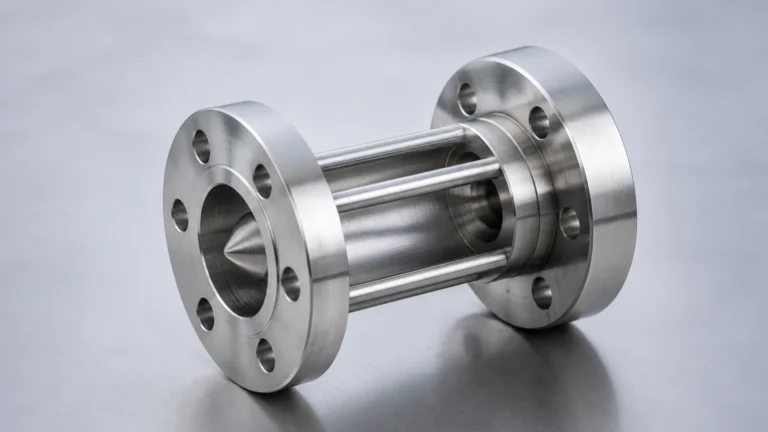
In modern industrial automation, the precise measurement of gas flow is critical for process efficiency, safety, and cost management. A digital gas flow meter serves as a sophisticated instrument designed to measure the volume or mass of gases—such as compressed air, natural gas, nitrogen, or oxygen—passing through a closed conduit. Unlike traditional mechanical meters, digital variants utilize advanced sensors and electronic processing to provide real-time data, often compensating for temperature and pressure fluctuations to ensure high accuracy.
For engineers and facility managers, selecting the right digital gas flow meter requires a deep understanding of fluid dynamics and the specific requirements of the application. This guide explores the fundamental principles, selection criteria, and installation best practices for these essential instruments.
Measurement Principles of Digital Gas Flow Meters
Digital gas flow meters utilize various physical principles to determine flow rates. Each technology offers distinct advantages depending on the gas properties and the environmental conditions of the installation.
Thermal Mass Flow Measurement
Thermal mass flow meters operate on the principle of heat transfer. The sensor typically consists of two Resistance Temperature Detectors (RTDs). One sensor is heated, while the other serves as a reference to measure the ambient gas temperature. As gas flows past the heated sensor, it carries away heat. The instrument measures the electrical power required to maintain a constant temperature difference between the two sensors. Since the rate of heat loss is directly proportional to the mass flow rate of the gas, this technology provides a direct mass flow reading without requiring separate pressure or temperature compensation.
Vortex Shedding Principle
Vortex flow meters are based on the Karman Vortex Street principle. When a gas flows past a non-streamlined object (a bluff body) placed in the stream, it creates alternating vortices. The frequency at which these vortices are shed is directly proportional to the velocity of the gas. Digital vortex meters use piezoelectric sensors to detect these pressure pulses and convert them into a flow rate. This technology is highly valued for its durability and its ability to handle high temperatures and pressures.
Ultrasonic Time-of-Flight
Ultrasonic digital gas flow meters use sound waves to measure velocity. Transducers are mounted on opposite sides of the pipe, sending ultrasonic pulses back and forth. The pulse traveling with the flow moves faster than the pulse traveling against it. The difference in "time-of-flight" is used to calculate the gas velocity. This method is non-intrusive, meaning there is no pressure drop across the meter, and it is highly accurate for large-diameter pipes.
Differential Pressure (DP)
While an older technology, digital DP meters have been modernized with high-precision transmitters. They measure the pressure drop across a restriction in the pipe, such as an orifice plate or a Venturi tube. According to Bernoulli's equation, the square root of the pressure drop is proportional to the flow rate. Modern digital DP transmitters integrate multi-variable sensing to provide compensated mass flow readings in real-time.
Key Evaluation Criteria for Industrial Applications
When evaluating a digital gas flow meter for a project, several technical parameters must be scrutinized to ensure long-term reliability and performance.
1. Gas Composition and Compatibility: Not all meters are suitable for all gases. For instance, thermal mass meters require specific calibration based on the thermal conductivity of the gas. Corrosive gases like chlorine or wet biogas may require specialized materials like Hastelloy or specific coatings to prevent sensor degradation.
2. Flow Range and Turndown Ratio: The turndown ratio represents the range over which the meter can measure accurately (e.g., 100:1). In applications where flow rates vary significantly, such as seasonal heating or variable production cycles, a high turndown ratio is essential to capture both peak and low-flow data.
3. Accuracy and Repeatability: Accuracy is the closeness of the measurement to the true value, while repeatability is the ability of the meter to provide the same result under identical conditions. For custody transfer or high-value gas billing, high accuracy (±0.5% or better) is mandatory.
4. Process Conditions: Maximum and minimum operating pressures (measured in bar or kPa) and temperatures (°C) must be within the meter’s design limits. Gas compressibility becomes a major factor at high pressures, necessitating digital compensation.
Practical Selection Table
| Technology | Best Application | Accuracy (Typical) | Turndown Ratio | Pressure Drop |
| :— | :— | :— | :— | :— |
| Thermal Mass | Compressed air, Nitrogen, Low-flow gas | ±1.0% of Reading | 100:1 | Negligible |
| Vortex | Steam, High-velocity gas, Natural gas | ±1.0% to 1.5% | 20:1 | Medium |
| Ultrasonic | Large pipes, Custody transfer, Clean gas | ±0.5% to 1.0% | 50:1 | None |
| Turbine | Clean, dry gas at steady flows | ±1.0% | 10:1 to 25:1 | High |
Installation Considerations and Best Practices
The performance of a digital gas flow meter is heavily dependent on its installation. Even the most expensive meter will provide inaccurate data if the flow profile is disturbed.
Straight Pipe Requirements
Most gas flow meters require a specific length of straight pipe upstream and downstream of the sensor to ensure a fully developed, laminar flow profile. Generally, a minimum of 10 to 20 pipe diameters (D) upstream and 5D downstream is recommended. If elbows, valves, or reducers are present close to the meter, flow conditioners or longer straight runs may be necessary.
Orientation and Mounting
For gas applications, meters should ideally be installed in a horizontal pipe run. If installed vertically, the flow should generally be upward to prevent the accumulation of any condensates or particulates on the sensor head. Digital displays should be oriented for easy reading, though many modern units allow for rotating the electronic housing.
Moisture and Particulates
Many digital gas flow meters, particularly thermal mass and turbine types, are sensitive to moisture droplets or dust. If the gas is "wet" (contains entrained liquids), a water trap or separator should be installed upstream. Particulates can erode sensors or clog the moving parts of turbine meters, making filtration a critical prerequisite for many installations.

Limitations and Challenges
While digital gas flow meters offer significant advantages over mechanical ones, they are not without limitations:
* Power Requirements: Unlike mechanical meters, digital units require a stable power supply (typically 24V DC or 110/220V AC). In remote locations, this may necessitate solar power or battery-operated versions.
* Sensitivity to Gas Changes: Thermal mass meters are calibrated for a specific gas mixture. If the composition of the gas changes (e.g., a change in the methane content of natural gas), the meter will require recalibration or a correction factor.
* Initial Cost: The sophisticated electronics and high-grade materials used in digital meters result in a higher upfront cost compared to simple rotameters or mechanical bellows meters.
Integration with Process Control Systems
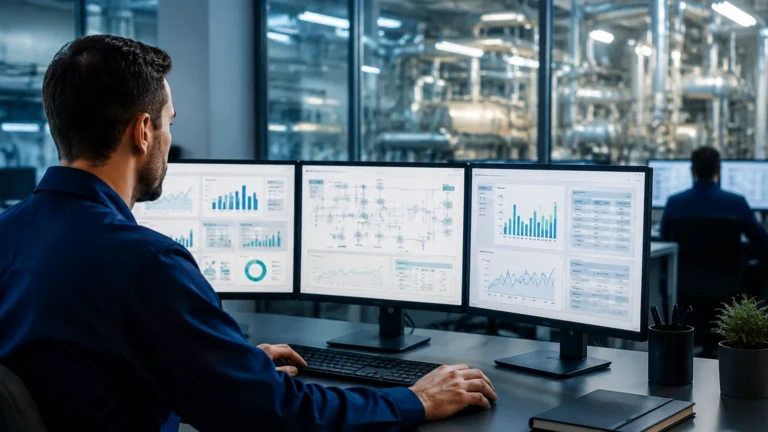
In the context of industrial automation, flow measurement is rarely an isolated task. It is often integrated with level measurement systems to provide a complete picture of inventory and process efficiency. For example, in a chemical storage facility, monitoring the gas blanket pressure and flow is as critical as monitoring the liquid level in the tank.
Professional manufacturers like Welk offer a range of level measurement instruments that complement flow data. By visiting the Main Page, engineers can explore how radar level meters and ultrasonic sensors work in tandem with flow instrumentation to optimize plant operations. For instance, tracking the outflow of gas from a pressurized vessel alongside the liquid level drop allows for precise mass balance calculations, which are vital for leak detection and regulatory compliance.
Frequently Asked Questions (FAQ)
Q: Can a digital gas flow meter measure steam?
A: Yes, but only specific types. Vortex shedding meters are the industry standard for steam measurement due to their ability to handle high temperatures and the lack of moving parts. Thermal mass meters are generally not suitable for steam.
Q: What is the difference between Actual Flow and Standard Flow?
A: Actual flow refers to the volume of gas at the current operating temperature and pressure. Standard flow (often expressed in Nm³/h or SCFM) refers to the volume the gas would occupy at standard reference conditions (e.g., 0°C and 1.013 bar). Most digital gas flow meters can calculate both.
Q: How often should a digital gas flow meter be calibrated?
A: For most industrial applications, an annual calibration check is recommended. However, for custody transfer or highly regulated industries, semi-annual calibration may be required. Many digital meters now feature "self-diagnostics" that can alert users when the sensor performance begins to drift.
Q: Is it necessary to install a pressure transmitter alongside the flow meter?
A: If you are using a volumetric meter (like a vortex or ultrasonic) and need to calculate mass flow or standard volume, yes, you need pressure and temperature compensation. Many "multivariable" digital gas flow meters have these sensors built-in, simplifying installation.
Conclusion
The transition from mechanical to digital gas flow measurement represents a significant step forward in industrial precision. By understanding the underlying physics of measurement—whether thermal, vortex, or ultrasonic—and adhering to strict installation guidelines, operators can ensure their systems deliver accurate and actionable data. When combined with reliable level measurement solutions, these instruments form the backbone of a safe and efficient modern industrial facility.