Ifm Pa3509
Ifm Pa3509
In the landscape of industrial automation and process control, precision in pressure monitoring is a fundamental requirement for both safety and efficiency. The ifm pa3509 is a widely recognized pressure sensor designed to meet the rigorous demands of modern manufacturing and fluid management. While primarily categorized as a pressure transmitter, its role often extends into the realm of level measurement, specifically through hydrostatic pressure calculations. This guide examines the technical capabilities of the ifm pa3509, its operational principles, and how it compares to specialized solutions found on the Main Page of industrial instrumentation providers like Welk.
Understanding the Measurement Principle
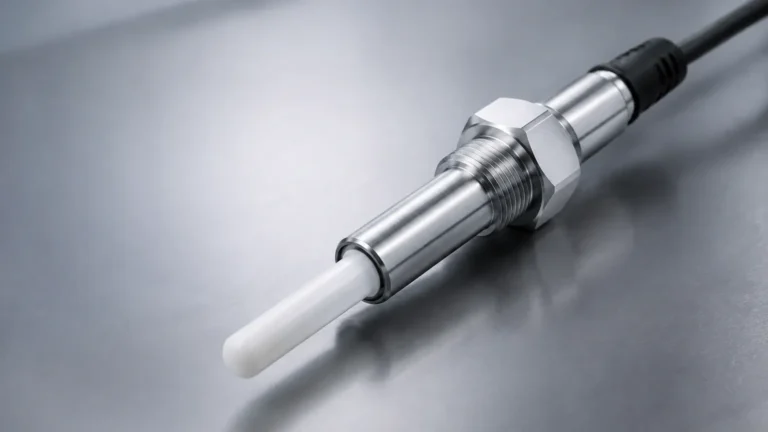
Before selecting a sensor like the ifm pa3509, engineering teams must understand the underlying physics of its operation. The ifm pa3509 utilizes a ceramic-capacitive measuring cell. This technology is preferred in many industrial environments due to its high resistance to mechanical influences and chemical corrosion.
Pressure Sensing Mechanism
In a ceramic-capacitive cell, a ceramic diaphragm moves slightly in response to applied pressure. This movement changes the capacitance between the diaphragm and a substrate. The sensor’s internal electronics convert this change in capacitance into a standardized analog signal—typically 4…20 mA in the case of the ifm pa3509. This method is highly stable over time and offers excellent overpressure resistance compared to metallic strain gauge sensors.
Hydrostatic Level Measurement
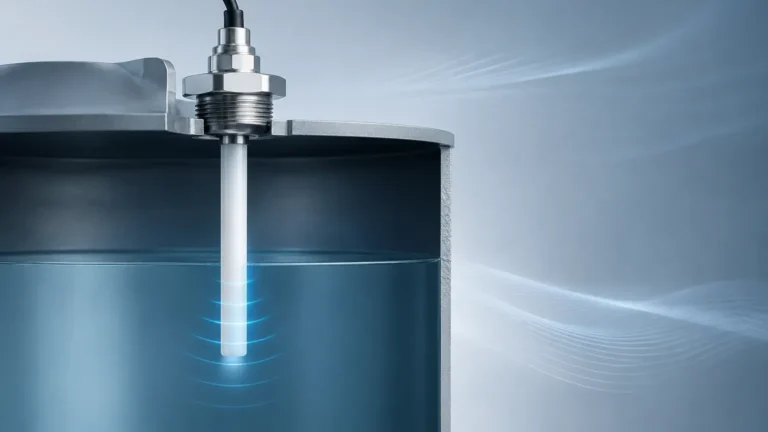
Although the ifm pa3509 is a pressure transmitter, it is frequently used to determine the level of liquids in tanks. This is achieved via the hydrostatic principle, which states that the pressure at the bottom of a liquid column is directly proportional to the height of that column and the density of the liquid. The formula used is:
P = ρ × g × h
* P: Pressure (measured by the ifm pa3509)
* ρ (rho): Density of the liquid
* g: Acceleration due to gravity
* h: Height of the liquid column
By mounting the ifm pa3509 at the base of a tank, operators can accurately infer the fluid level. However, this requires the tank to be vented to the atmosphere or for the sensor to account for headspace pressure in sealed vessels.
Technical Specifications of the Ifm Pa3509
The ifm pa3509 is engineered for versatility. Below are the core technical parameters that define its performance envelope:
* Measuring Range: 0 to 10 bar (0 to 145 psi).
* Output Signal: 4…20 mA analog.
* Process Connection: G 1/4 A male thread.
* Operating Voltage: 18 to 32 V DC.
* Housing Materials: Stainless steel (1.4404 / 316L), FKM, and PA.
* Protection Rating: IP 65, which ensures resistance to dust and moisture ingress.
* Display: Integrated 4-digit alphanumeric display for local monitoring.
The inclusion of a local display is a significant feature of the ifm pa3509, allowing maintenance personnel to verify readings at the point of measurement without needing to access the central control system.
Selection Criteria for Industrial Applications
Choosing the right sensor involves more than just matching a pressure range. When evaluating the ifm pa3509 against other options, such as the radar or ultrasonic sensors offered by Welk, several factors must be considered.
Media Compatibility
The ceramic cell of the ifm pa3509 is highly compatible with aggressive media, including many acids and alkalis. However, the seal material (FKM) must be checked against the specific chemical composition of the process fluid. For highly abrasive slurries, a flush-mount diaphragm might be preferable to the recessed G 1/4 connection found on the pa3509 to prevent clogging.
Accuracy and Stability
The ifm pa3509 offers a high degree of repeatability and long-term stability. In applications where the density of the liquid remains constant, it provides a reliable level measurement solution. If the liquid density fluctuates significantly (e.g., due to temperature changes or mixing of different fluids), a non-contact method like radar might be more appropriate.
Environmental Conditions
With an IP 65 rating, the ifm pa3509 is suitable for indoor industrial environments. If the application involves high-pressure washdowns or outdoor exposure in tropical climates, sensors with IP 68 or IP 69K ratings—often found in Welk’s specialized level transmitter lines—should be prioritized.
Comparison: Pressure Transmitters vs. Dedicated Level Meters
While the ifm pa3509 is a robust tool, it is essential to understand where it sits in the broader hierarchy of level measurement technology.
| Feature | ifm pa3509 (Hydrostatic) | Ultrasonic Level Sensor | Radar Level Meter |
| :— | :— | :— | :— |
| Measurement Type | Contact (Pressure) | Non-contact (Sound) | Non-contact (Microwave) |
| Installation | Bottom or side of tank | Top of tank | Top of tank |
| Density Dependence | High | Low | None |
| Foam Sensitivity | Low | High | Moderate |
| Typical Accuracy | ±0.5% of FS | ±0.25% of range | ±2mm to ±5mm |
| Primary Use Case | Small tanks, hydraulics | Water treatment, sumps | Chemical tanks, solids |
For users requiring advanced non-contact solutions, exploring the Main Page of specialized manufacturers provides access to radar and ultrasonic technologies that bypass the limitations of hydrostatic measurement.

Installation and Configuration Best Practices
Correct installation is paramount to the longevity and accuracy of the ifm pa3509. Failure to follow engineering guidelines can lead to signal drift or premature sensor failure.
1. Mounting Position: The sensor should be installed in a location where it is not subjected to direct turbulence or the impact of filling streams. If used for level measurement, it must be located at the lowest point of interest in the tank.
2. Pressure Surges: In hydraulic systems, the ifm pa3509 can be sensitive to rapid pressure spikes. The use of a pressure snubber or a capillary tube can help dampen these surges and protect the ceramic cell.
3. Wiring and Grounding: To minimize electromagnetic interference (EMI), shielded cables should be used. The 4…20 mA loop is inherently robust against noise, but proper grounding of the sensor housing is still necessary for stable readings.
4. Zero Point Calibration: After installation, the sensor should be zeroed under atmospheric conditions to account for any mounting stress or orientation-related shifts in the diaphragm.
Limitations and Potential Risks
Every instrument has boundaries. The ifm pa3509 is no exception. Awareness of these limitations prevents costly downtime.
* Viscous Fluids: The recessed diaphragm of the G 1/4 connection can become blocked if used with highly viscous fluids or liquids that tend to crystallize. In such cases, a flush-diaphragm transmitter is required.
* Temperature Extremes: While the sensor is rated for standard industrial temperatures, extreme heat can cause the FKM seals to degrade or cause the electronics to drift. Always verify that the process temperature stays within the specified range of the ifm pa3509.
* Vacuum Applications: Ceramic cells are generally good for vacuum, but the specific rating of the ifm pa3509 should be checked if the application involves deep vacuum conditions, as this can affect the internal reference pressure.
Frequently Asked Questions (FAQ)
Can the ifm pa3509 be used in explosive atmospheres?
The standard ifm pa3509 is not typically rated for ATEX/Ex zones. For hazardous environments, an intrinsically safe version or a different sensor model with appropriate certifications must be selected.
How often should the ifm pa3509 be calibrated?
In most stable industrial applications, an annual calibration check is sufficient. However, if the sensor is used in critical safety loops or harsh chemical environments, semi-annual checks are recommended.
What is the difference between the ifm pa3509 and a hydrostatic submersible probe?
The ifm pa3509 is designed for external mounting via a threaded connection. A submersible probe (like those offered by Welk) is dropped directly into the liquid and is vented through a specialized cable to account for atmospheric pressure changes.
Can I change the display units on the device?
Yes, the integrated display allows users to switch between various units, such as bar, psi, or MPa, through the programming buttons located on the sensor head.
Conclusion
The ifm pa3509 remains a versatile and reliable choice for 0…10 bar pressure monitoring and basic hydrostatic level measurement. Its ceramic-capacitive technology and integrated display offer a blend of durability and user convenience. However, for complex level measurement tasks involving varying densities, non-contact requirements, or extreme environmental conditions, engineers should evaluate the broader range of radar and ultrasonic instruments available at the Main Page of industrial level measurement specialists. By matching the specific physics of the application to the appropriate sensor technology, facilities can ensure long-term operational success and accuracy.