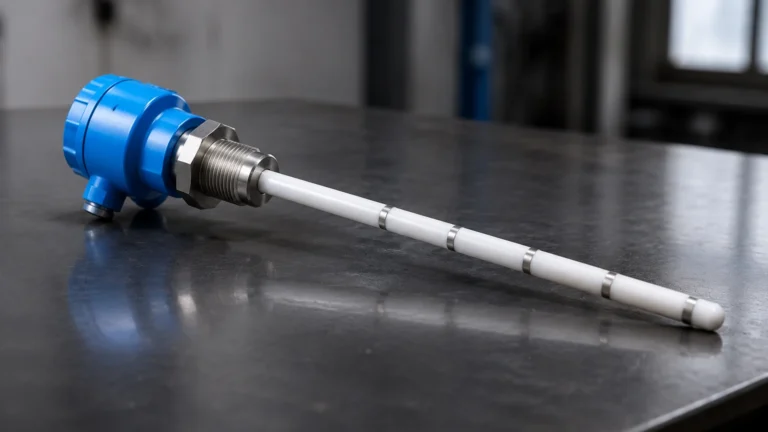
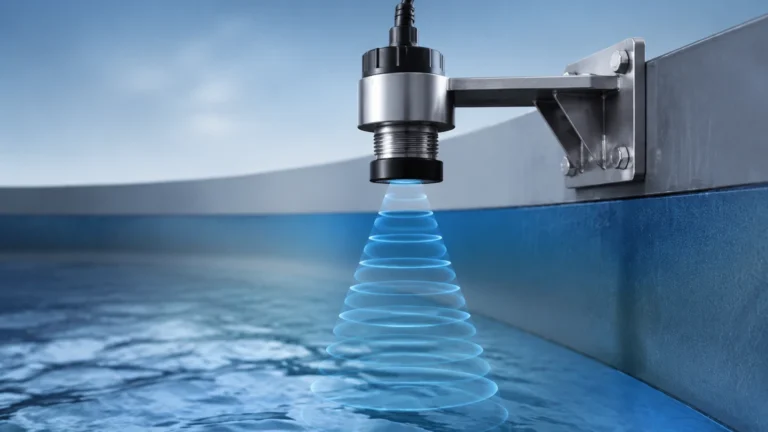
Level Sensor Capacitive
Level Sensor Capacitive
In the landscape of industrial automation and process control, the ability to accurately monitor the level of liquids and solids within a vessel is fundamental. Among the various technologies available, the level sensor capacitive stands out as a versatile, robust, and cost-effective solution. This technology relies on the electrical property of capacitance to determine the height of a medium, offering a reliable alternative to mechanical floats or complex ultrasonic systems in many applications.
As a professional manufacturer of industrial level measurement instruments, Welk provides a diverse range of solutions, including radar level meters and ultrasonic sensors. However, understanding the specific mechanics and selection criteria for capacitive technology is essential for engineers and procurement professionals looking to optimize their process efficiency. This guide serves as a practical engineering reference for implementing capacitive level measurement in industrial environments.
Understanding the Measurement Principle
The operation of a level sensor capacitive is based on the principle of a capacitor. In basic physics, a capacitor consists of two conductive plates separated by an insulating material known as a dielectric. The ability of this setup to store an electrical charge is called capacitance ($C$), which is defined by the formula:
$$C = \epsilon_0 \epsilon_r \frac{A}{d}$$
Where:
* $C$ is the capacitance.
* $\epsilon_0$ is the permittivity of free space.
* $\epsilon_r$ is the relative permittivity (dielectric constant) of the material between the plates.
* $A$ is the area of the plates.
* $d$ is the distance between the plates.
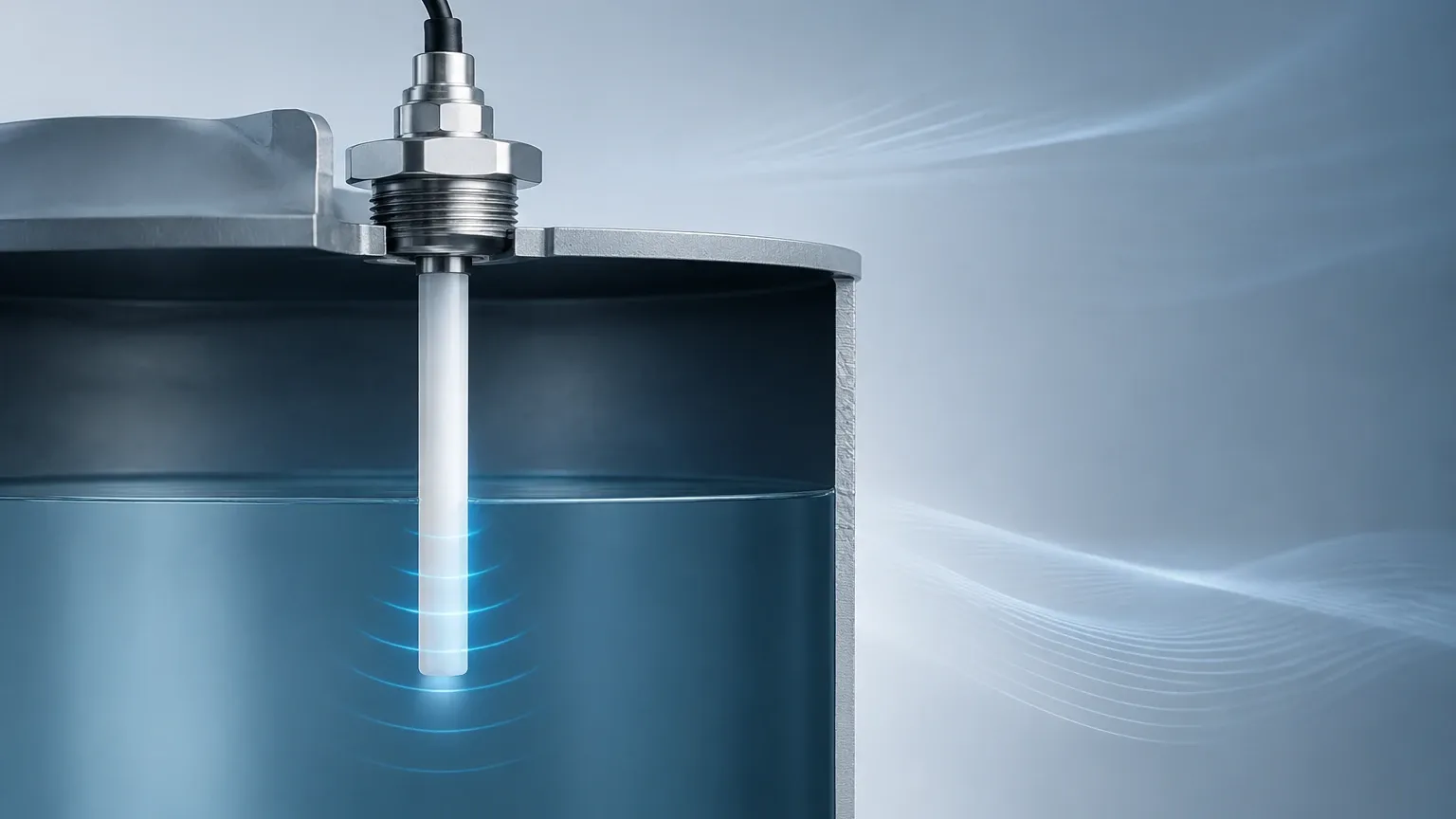
In a typical industrial level application, the sensor probe acts as one "plate" of the capacitor, while the vessel wall (if metallic and grounded) acts as the second "plate." If the tank is non-metallic, a second reference probe or a grounding strip is required. The material being measured (the medium) acts as the dielectric.
As the level of the medium rises and falls, it displaces the air or gas above it. Since most industrial liquids and solids have a significantly higher dielectric constant than air (which has an $\epsilon_r$ of approximately 1), the total capacitance of the system changes in direct proportion to the level of the material. The electronics within the sensor head convert this change in capacitance into a usable signal, such as a 4-20mA analog output or a digital switching state.
Dielectric Constants and Their Impact
The success of a capacitive measurement depends heavily on the dielectric constant of the medium.
* Conductive Media: For water-based liquids or acids, the medium itself acts as an extension of the tank wall. In these cases, the probe must be insulated with a material like PTFE or PFA. The capacitance is then measured between the probe conductor and the outer surface of the insulation.
* Non-Conductive Media: For oils, hydrocarbons, or dry solids, the medium acts as the dielectric. The probe does not necessarily need insulation, and the capacitance changes based on the $\epsilon_r$ of the bulk material.
Types of Capacitive Level Sensors
Capacitive sensors are generally categorized into two functional types based on the required output: point level detection and continuous level measurement.
1. Capacitive Level Switches (Point Level)
These are used to detect the presence or absence of material at a specific height. They are commonly used for high-level alarms to prevent overfills or low-level alarms to protect pumps from running dry. They are valued for their lack of moving parts, making them more durable than mechanical float switches.
2. Capacitive Level Transmitters (Continuous)
These provide a constant signal representing the exact level within the tank. They are ideal for inventory management and process control where the volume must be monitored in real-time. For more advanced continuous monitoring options, users often compare these with radar or ultrasonic technologies found on the Welk Main Page.
Selection Criteria for Industrial Applications
Choosing the right level sensor capacitive requires a thorough analysis of the process conditions. Failure to account for the physical properties of the medium or the vessel can lead to measurement drift or total sensor failure.
Key Evaluation Factors
1. Medium Conductivity: Determine if the material is conductive or non-conductive to select the appropriate probe insulation.
2. Dielectric Constant ($\epsilon_r$): The material must have a stable dielectric constant. If the $\epsilon_r$ varies significantly with temperature or moisture content, the accuracy will suffer.
3. Vessel Material: Metallic tanks provide a natural ground. Plastic or fiberglass tanks require a dual-probe sensor or a metallic grounding rod.
4. Temperature and Pressure: Capacitive probes are available in high-temperature versions (up to 200°C or more) and can withstand high pressures, but the seals and insulation materials must be rated accordingly.
5. Probe Length: For continuous measurement, the probe must span the entire height of the measurement range. Rod probes are used for shorter distances (up to 3m), while flexible cable probes are used for deep silos or tanks (up to 30m).
Selection Table
| Application Type | Medium Example | Recommended Probe Type | Key Benefit |
| :— | :— | :— | :— |
| Water-based liquids | Wastewater, Juice | Insulated Rod (PTFE/PFA) | Resists corrosion and conductivity interference |
| Oil & Hydrocarbons | Diesel, Lube Oil | Non-insulated Coaxial Probe | High accuracy in low $\epsilon_r$ fluids |
| Dry Bulk Solids | Plastic pellets, Grain | Heavy-duty Cable Probe | Withstands mechanical pull of solids |
| Corrosive Chemicals | Sulfuric Acid | Fully Encapsulated Probe | Maximum chemical resistance |
| Small Vessels | Laboratory Beakers | Compact Integrated Switch | Space-saving and easy installation |
Installation Guidelines and Best Practices
Proper installation is critical to ensure the level sensor capacitive performs within its specified accuracy limits. Engineers should follow these standard procedures:
* Avoid the Inflow: Do not install the sensor directly in the path of the material entering the tank. Turbulence and the direct impact of the material can cause false readings and mechanical wear.
* Distance from Walls: The probe should be installed at a sufficient distance from the tank wall to avoid "parasitic capacitance." A general rule of thumb is a minimum distance of 100mm (approx. 4 inches) from the wall, unless using a coaxial probe.
* Grounding: Ensure the sensor housing and the metallic tank are common-grounded. Inconsistent grounding is the leading cause of signal instability in capacitive systems.
* Vertical Alignment: For continuous measurement, the probe must be installed vertically. Any tilt will change the effective distance between the probe and the wall, altering the capacitance curve.
* Blind Zones: Be aware of the "dead zones" at the very top and bottom of the probe (typically 50mm to 100mm) where measurement is not possible due to the mechanical construction of the seals and mounting threads.
Limitations and Common Risks
While highly effective, the level sensor capacitive is not a "one-size-fits-all" solution. Understanding its limitations prevents costly application errors.
1. Material Build-up (Coating)
If the medium is viscous or sticky (like molasses or heavy slurry), it may leave a coating on the probe. For conductive media, this coating can create a "bridge" to the tank wall, causing the sensor to indicate a high level even when the tank is empty. Active shield technology or specialized probe geometries are often required to mitigate this.
2. Changes in Dielectric Constant
Capacitive sensors are calibrated for a specific material. If the tank is used for different products with different dielectric constants without recalibration, the level reading will be incorrect. For example, switching from vegetable oil ($\epsilon_r \approx 2.5$) to water ($\epsilon_r \approx 80$) would result in a massive error.
3. Moisture Sensitivity in Solids
In dry bulk applications, a change in the moisture content of the solid material significantly alters its dielectric constant. A capacitive sensor measuring dry sand will give a different reading if the sand becomes damp, even if the physical level remains the same.
Frequently Asked Questions (FAQ)
Q: Can a capacitive level sensor be used in a plastic tank?
A: Yes, but you must use a dual-probe version or a sensor with a concentric (coaxial) shield. This provides the necessary second "plate" for the capacitor since the plastic tank wall is non-conductive.
Q: How does temperature affect the measurement?
A: Temperature can affect the dielectric constant of the medium and cause thermal expansion of the probe. High-quality sensors include temperature compensation electronics to minimize these effects.
Q: Is it possible to cut a capacitive probe to length in the field?
A: Some cable-type probes are designed to be field-shortened, but many rod-type probes are factory-sealed and cannot be cut without damaging the insulation or the internal circuitry. Always check the manufacturer's specifications before attempting to modify a probe.
Q: How does capacitive technology compare to radar?
A: Capacitive sensors are generally more affordable and better suited for small tanks or media with very low dielectric constants where non-contact radar might struggle. However, radar is often preferred for applications where the material properties change frequently, as radar is less dependent on the dielectric constant for surface detection.
Conclusion
The level sensor capacitive remains a cornerstone of industrial level measurement due to its versatility across liquid and solid applications. By understanding the underlying physics of capacitance and carefully evaluating the dielectric properties of the process medium, engineers can implement highly reliable monitoring systems.
For those requiring high-precision instruments or customized OEM/ODM services, Welk offers a comprehensive portfolio of measurement technologies. From robust hydrostatic transmitters to advanced radar systems, you can explore the full range of professional solutions by visiting the Main Page. Selecting the right tool for the job—whether it is a capacitive switch for overfill protection or a radar meter for complex chemical processing—is the first step toward operational excellence and safety in industrial automation.