Industry Temperature
Industry Temperature
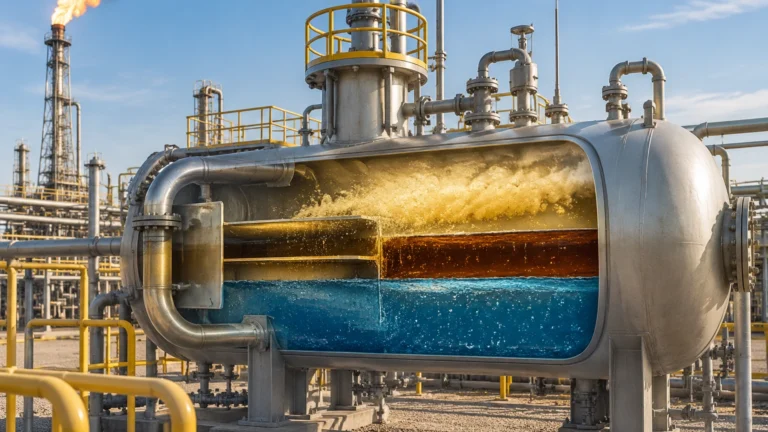
In industrial process control, temperature is rarely a static variable. It is a dynamic force that influences the physical properties of stored liquids, the behavior of gases in the tank headspace, and the structural integrity of measurement instrumentation. When addressing industry temperature challenges, engineers must look beyond the simple ambient conditions and account for process extremes that can range from cryogenic levels in liquefied gas storage to the searing heat of molten salts or pressurized steam.
For manufacturers like Welk, designing level measurement solutions requires a deep understanding of how thermal energy interacts with different sensing technologies. Accurate level detection is not merely about measuring distance or pressure; it is about compensating for the variables introduced by the thermal environment. This guide examines the relationship between industry temperature and level measurement, providing technical insights into selection, installation, and maintenance.
The Physics of Temperature in Level Sensing
Temperature affects level measurement through three primary channels: the physical expansion of the medium, the change in the medium’s state or density, and the alteration of signal propagation speeds.
Thermal Expansion and Density
Most liquids expand as temperature increases, leading to a decrease in density. In mass-based or hydrostatic level measurement, a change in industry temperature can result in a significant volume change even if the mass remains constant. For example, water at 20°C (68°F) has a density of approximately 998 kg/m³, but at 80°C (176°F), it drops to approximately 971 kg/m³. Without compensation, a hydrostatic sensor would report a lower level than what is physically present because the pressure exerted by the column has decreased.
Signal Velocity
For non-contact technologies like ultrasonic sensors, temperature is the single most influential factor. The speed of sound in air is approximately 331.5 m/s at 0°C, but it increases by about 0.6 m/s for every degree Celsius rise. In an industrial tank where the headspace temperature might fluctuate by 50°C (122°F) between day and night, an uncompensated ultrasonic sensor could produce errors exceeding 5% of the total span.
Dielectric and Vapor Effects
In radar level measurement, while the speed of electromagnetic waves is largely independent of temperature, the industry temperature of the process can affect the dielectric constant ($ε_r$) of the medium. Furthermore, high temperatures often lead to increased vapor pressure in the headspace. If the vapor is heavy or polar (like steam), it can attenuate the radar signal or change the propagation speed slightly, requiring advanced signal processing to maintain accuracy.
Technology-Specific Temperature Considerations
Choosing the right instrument requires matching the technology's inherent strengths to the thermal profile of the application. For a detailed look at product specifications across these categories, you may visit the Welk Main Page.
1. Ultrasonic Level Sensors
Ultrasonic sensors are cost-effective but highly sensitive to industry temperature gradients.
* Principle: They emit sound pulses and measure the Time-of-Flight (ToF).
* Temperature Handling: High-quality ultrasonic sensors include integrated thermistors to measure the air temperature near the transducer face.
* Limitations: They are generally limited to processes below 80°C (176°F). Beyond this, the piezoelectric crystals can degrade, and the temperature gradient within the tank becomes too complex for simple compensation algorithms to manage.
2. Radar Level Meters (GWR and Non-Contact)
Radar is the gold standard for high-temperature applications.
* Principle: Radar uses high-frequency electromagnetic pulses (typically 26GHz or 80GHz).
* Temperature Handling: Since radar does not rely on a medium for propagation (it can work in a vacuum), it is unaffected by air temperature. However, the electronics must be protected. Welk radar units often utilize high-temperature horn antennas with ceramic or PTFE seals and cooling fins to dissipate heat away from the transmitter head.
* Capability: Specialized radar units can handle industry temperature peaks up to 450°C (842°F) and pressures up to 160 bar (2320 psi).
3. Hydrostatic Level Transmitters
Hydrostatic sensors measure the weight of the liquid column.
* Principle: $P = ρgh$ (Pressure = Density × Gravity × Height).
* Temperature Handling: These sensors are sensitive to density changes. To maintain accuracy, a secondary temperature sensor is often used to calculate the real-time density of the fluid, allowing the PLC or the transmitter itself to correct the level reading.
* Limitations: If the sensor is submerged, the diaphragm and internal fill fluid must be rated for the process temperature to prevent "thermal drift."
4. Magnetic Level Gauges
Magnetic gauges provide a visual and automated level solution.
* Principle: A float containing a magnet moves with the liquid level, actuating external flaps or a transmitter.
* Temperature Handling: The float must be engineered to withstand the industry temperature without losing buoyancy or structural integrity. High-temperature magnetic gauges use specialized alloys and high-pressure chambers to prevent the float from collapsing.
Practical Selection Table for Industry Temperature Ranges
The following table provides a general guideline for selecting level measurement technologies based on the process temperature.
| Technology | Typical Temp Range (°C) | Max Temp (Specialized) | Key Temperature Challenge |
| :— | :— | :— | :— |
| Ultrasonic | -40°C to +80°C | +100°C | Sound speed variation and transducer damage. |
| Radar (80GHz) | -60°C to +200°C | +450°C | Electronic component protection and seal integrity. |
| Hydrostatic | -20°C to +100°C | +200°C (with capillary) | Density changes and fill fluid expansion. |
| Magnetic Gauge| -196°C to +400°C | +500°C | Float buoyancy and magnetic Curie point. |
| Capacitance | -50°C to +200°C | +400°C | Change in dielectric constant of the material. |

Installation Considerations for Thermal Management
Even the most robust sensor can fail if the installation does not account for industry temperature dynamics. Proper engineering at the mounting stage can extend the lifespan of the equipment significantly.
1. Thermal Decoupling
When measuring high-temperature liquids, the transmitter electronics are the most vulnerable part. Using extension necks or "heat sinks" allows the heat to dissipate into the atmosphere before it reaches the sensitive circuit boards. For hydrostatic sensors, using capillary tubes with remote seals can move the transmitter several meters away from the hot process vessel.
2. Insulation and Heat Tracing
In some industries, the challenge is not just heat, but the lack of it. In cold climates or for viscous materials like bitumen, tanks are often insulated. Level sensors must be installed such that the insulation does not interfere with the signal path, yet the mounting nozzle must be protected to prevent the medium from freezing or solidifying inside the nozzle (a common cause of sensor failure).
3. Nozzle Length and Diameter
High industry temperature often correlates with heavy condensation. If a nozzle is too long and narrow, it acts as a chimney, channeling hot vapors directly onto the sensor face. This can lead to heavy buildup or moisture ingress. Engineers should follow manufacturer guidelines regarding nozzle geometry to ensure adequate ventilation and drainage.
4. Sunshades
For outdoor installations, ambient industry temperature includes solar gain. Direct sunlight can heat a transmitter housing to 20°C (36°F) above the ambient air temperature. Installing a simple stainless steel sunshade can prevent electronic overheating and prolong the MTBF (Mean Time Between Failures).
Limitations and Risks
While modern instrumentation is highly advanced, certain industry temperature extremes present unavoidable limitations:
* Thermal Shock: Rapid changes in temperature (e.g., during a CIP – Clean In Place process where a tank is flushed with hot caustic and then cold water) can cause ceramic diaphragms to crack or seals to fail due to different expansion rates.
* The Curie Point: In magnetic level gauges, if the temperature exceeds the Curie point of the magnets used in the float, the magnetic field will vanish, rendering the system inoperable. This usually occurs at very high temperatures (above 500°C), but it is a critical safety boundary.
* Gas Stratification: In large tanks, temperature layers (stratification) can form. This creates different sound speed zones for ultrasonic sensors or different refractive indices for radar, leading to "ghost" echoes or signal jumping.
FAQs
Q: How does industry temperature affect the accuracy of a radar level meter?
A: Temperature has a negligible effect on the radar signal itself. However, high temperatures can increase the pressure and density of vapors in the tank. If the vapor density is high enough, it can slightly slow down the radar pulse, causing the level to appear lower than it is. Most modern radars have vapor compensation features to correct this.
Q: Can I use an ultrasonic sensor in a steam-filled tank?
A: Generally, no. Steam is not only hot (affecting sound speed), but it is also an inhomogeneous medium that absorbs and scatters sound waves. For steam-heavy applications, radar or magnetic level gauges are far more reliable.
Q: What is the best way to protect a pressure transmitter from 200°C oil?
A: Use a hydrostatic transmitter with a remote diaphragm seal and a capillary tube. The capillary tube acts as a thermal barrier, allowing the oil to stay at 200°C while the transmitter electronics remain at ambient temperature.
Q: Does temperature affect the dielectric constant of a liquid?
A: Yes, for many liquids, the dielectric constant decreases as temperature increases. This is particularly important for capacitance-based level sensors and Guided Wave Radar (GWR), where the signal strength depends on the dielectric contrast between the air and the liquid.
By carefully evaluating the industry temperature profile of an application, engineers can select level measurement systems that provide long-term reliability and precision. Whether dealing with the extreme cold of LNG or the intense heat of chemical reactors, Welk provides the technical expertise and hardware necessary to overcome thermal challenges in the field.