Inert Gas Fusion
Inert Gas Fusion
Inert gas fusion (IGF) is a sophisticated analytical technique primarily used in metallurgy and materials science to determine the concentration of interstitial elements—specifically oxygen, nitrogen, and hydrogen—within inorganic materials. As industries such as aerospace, automotive, and semiconductor manufacturing demand higher purity levels in metals and alloys, the precision of inert gas fusion has become a cornerstone of quality control.
While the analytical process occurs within a specialized furnace, the industrial infrastructure required to support these measurements—ranging from high-purity gas storage to cooling water systems—relies heavily on precise instrumentation. For engineering professionals managing these facilities, understanding both the measurement principle and the supporting level control systems is essential for maintaining operational efficiency and safety.
Understanding the Principles of Inert Gas Fusion
The fundamental principle of inert gas fusion involves the extraction of gases from a solid sample by melting it at extremely high temperatures within an inert atmosphere. The process is often referred to as the "melt extraction" method.
The Fusion Process
To initiate the analysis, a sample (typically in the form of a pin, chip, or powder) is placed in a high-purity graphite crucible. This crucible is held between two electrodes in an impulse furnace. An inert carrier gas, usually argon or helium, flows through the furnace chamber to prevent atmospheric contamination and to transport the released gases to the detection system.
When a high electrical current passes through the graphite crucible, it generates intense localized heat through resistance, often reaching temperatures in excess of 3,000°C. At these temperatures, the sample melts completely, and the interstitial gases are released:
1. Oxygen: Reacts with the carbon in the graphite crucible to form carbon monoxide (CO) and carbon dioxide (CO2).
2. Nitrogen: Is released as molecular nitrogen (N2).
3. Hydrogen: Is released as molecular hydrogen (H2).
Detection Mechanisms
Once the gases are liberated and swept away by the carrier gas, they pass through a series of detectors. Oxygen is typically measured using Non-Dispersive Infrared (NDIR) cells, which detect the absorption of infrared light by CO and CO2. Nitrogen and hydrogen are commonly measured using a Thermal Conductivity (TC) detector, which identifies changes in the gas mixture's ability to conduct heat compared to the pure carrier gas.
The Role of Level Measurement in IGF Infrastructure
Inert gas fusion does not operate in isolation. The analytical equipment requires a steady supply of consumables and cooling media. This is where industrial level measurement instruments, such as those found on our Main Page, become critical for facility management.
Cryogenic Gas Storage
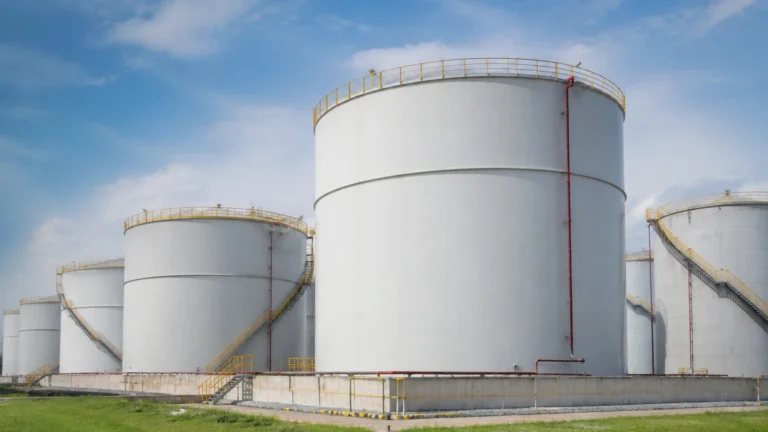
IGF systems consume significant volumes of high-purity argon or nitrogen. In large-scale metallurgical labs, these gases are stored in cryogenic liquid tanks. Monitoring the level of liquid argon (at -186°C) requires specialized level transmitters that can withstand extreme temperature differentials without losing accuracy. Hydrostatic level transmitters or non-contact radar sensors are frequently employed to ensure the lab never runs out of carrier gas mid-analysis.
Cooling Water Management
The impulse furnace used in inert gas fusion generates substantial heat that must be dissipated to protect the electrodes and the furnace housing. Closed-loop cooling water systems are standard. Level sensors in the expansion tanks or reservoir tanks ensure that the cooling system remains primed. A drop in water level could lead to pump cavitation or furnace overheating, resulting in costly downtime and equipment damage.
Chemical Reagent Monitoring
Before gases reach the detectors, they often pass through chemical reagents to remove interferents (such as anhydrous magnesium perchlorate to remove moisture). While these are often small-scale, the bulk production of these reagents or the management of liquid waste from associated cleaning processes requires robust level monitoring to comply with environmental and safety standards.
Technical Comparison: Level Sensing Technologies for IGF Utilities
When selecting instrumentation for the utilities supporting inert gas fusion, engineers must consider the physical properties of the media and the environmental conditions. The following table provides a comparison of common technologies used in these applications.
| Technology | Principle | Ideal Application | Advantages | Limitations |
| :— | :— | :— | :— | :— |
| Radar (80GHz) | Microwave Time-of-Flight | Cryogenic Argon/Nitrogen Tanks | Non-contact, high precision (±1mm), unaffected by gas layers. | Higher initial cost. |
| Ultrasonic | Sound Wave Reflection | Cooling Water Reservoirs | Cost-effective, easy to install for aqueous liquids. | Sensitive to foam, steam, and heavy gas vapors. |
| Hydrostatic | Pressure Differential | Deep Storage Tanks | Reliable, simple electronics, measures mass/level. | Requires contact with media; density changes affect accuracy. |
| Magnetic Level Gauge | Buoyancy & Magnetism | High-Pressure Gas Buffers | Visual indication plus electronic output; no power required for local reading. | Mechanical parts can wear; restricted to clean liquids. |
| Level Switches | Vibration or Conductivity | Overfill Protection/Low-Level Alarm | Simple "Point" detection; high reliability for safety loops. | Does not provide continuous level data. |
Installation Considerations for Supporting Systems
Proper installation of level sensors in a facility utilizing inert gas fusion is vital to ensure long-term reliability. Because IGF involves high-current impulse furnaces, the electrical environment can be "noisy."
1. Electromagnetic Interference (EMI): Ensure that level transmitters, especially those using digital protocols like HART or Modbus, are properly shielded. The high-current pulses from the IGF furnace can induce noise in poorly shielded signal cables.
2. Vibration Isolation: If level sensors are mounted on tanks near heavy industrial machinery (like sample grinders or pneumatic tube systems), vibration damping may be required to prevent signal jitter in ultrasonic or radar units.
3. Temperature Compensation: For cooling water tanks located near the furnace, ensure the sensors have integrated temperature compensation. Air density changes caused by heat can affect the speed of sound in ultrasonic sensors, leading to measurement errors.
4. Nozzle Geometry: When installing radar level meters on cryogenic tanks, the nozzle height and diameter must be optimized to prevent internal reflections that could be mistaken for the liquid level.

Limitations and Technical Challenges
While inert gas fusion is a highly accurate analytical method, it faces specific challenges that can impact the quality of the data and the longevity of the equipment:
* Sample Contamination: The accuracy of IGF is heavily dependent on sample preparation. Surface oxides or oils can lead to falsely high oxygen or hydrogen readings. Similarly, the level sensors in the gas supply line must ensure no atmospheric air enters the system due to a tank running empty.
* Crucible Consistency: Variations in the quality of graphite crucibles can affect the fusion temperature and the background signal.
* Gas Purity: If the carrier gas level drops too low in the storage tank, the remaining gas may have a higher concentration of impurities. Continuous level monitoring prevents the use of the "bottom of the tank" gas, which might be contaminated.
* Maintenance of Detectors: IR cells and TC detectors require periodic calibration using certified reference materials (CRMs). Similarly, level instruments should be part of a routine calibration cycle to ensure the supporting infrastructure remains reliable.
Frequently Asked Questions (FAQs)
Q: Why is Argon preferred over Helium in some inert gas fusion applications?
A: While Helium has better thermal conductivity, Argon is often preferred because it is more cost-effective for high-volume use and has a higher density, which can be more efficient at sweeping heavier evolved gases through the system. From a level measurement perspective, liquid Argon is easier to monitor than liquid Helium due to its higher boiling point.
Q: How often should level sensors in the cooling system be calibrated?
A: For critical cooling systems supporting an impulse furnace, we recommend a functional check every six months and a full calibration annually. This ensures that the low-level safety interlocks will trigger correctly in the event of a leak.
Q: Can radar level meters work through the walls of a plastic tank?
A: Yes, certain high-frequency radar sensors (80GHz) can measure through the top of plastic or fiberglass tanks, allowing for non-contact measurement without needing to cut a hole in the vessel. This is particularly useful for corrosive chemical reagents used in sample etching.
Q: What is the typical accuracy required for gas supply level monitoring?
A: For inventory management, an accuracy of ±0.5% to ±1% of the total tank volume is usually sufficient. However, if the level data is used for process control or automated ordering, higher precision non-contact radar is recommended.
Conclusion
Inert gas fusion remains the gold standard for elemental analysis in high-performance materials. However, the success of the laboratory depends on more than just the analytical instrument; it requires a robust and well-monitored infrastructure. By implementing reliable level measurement solutions for gas storage and cooling systems, facilities can ensure the continuity of their operations and the integrity of their results. For a detailed look at the various technologies available for industrial level control, engineers are encouraged to review the technical specifications on our Main Page.
By understanding the intersection of analytical chemistry and process instrumentation, B2B professionals can better design systems that are both accurate and resilient, meeting the rigorous demands of modern industrial manufacturing.