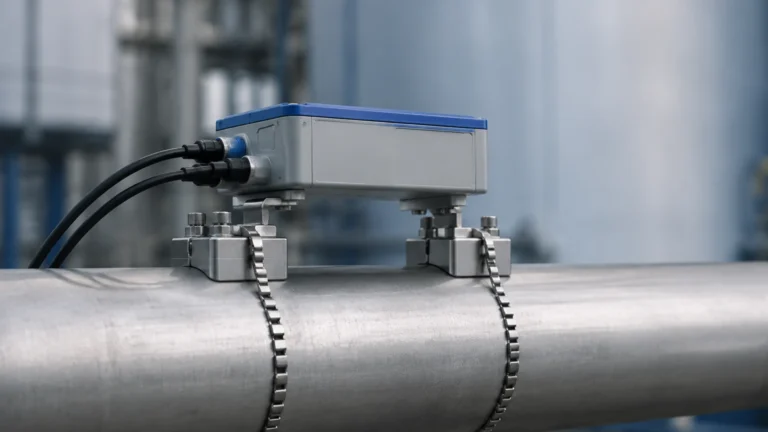
Inline Concentration Measurement
Inline Concentration Measurement
In the landscape of modern industrial automation, the ability to monitor process fluids in real-time has transitioned from a luxury to a fundamental requirement. Inline concentration measurement refers to the continuous, real-time analysis of a liquid's composition directly within a process pipe or vessel. Unlike traditional laboratory sampling—which introduces significant time delays and potential for human error—inline measurement provides immediate feedback to control systems, enabling tighter process tolerances, reduced waste, and improved product consistency.
For engineers and plant managers, selecting the appropriate technology for inline concentration measurement requires a deep understanding of fluid dynamics, chemical properties, and the physical principles that govern how different sensors interact with a medium. This guide explores the primary measurement technologies, their selection criteria, and the practical considerations for successful integration into industrial workflows.
Core Principles of Inline Concentration Measurement
To achieve accurate results, sensors must leverage a physical property of the fluid that changes predictably as the concentration of a specific component increases or decreases. The most common physical properties used in industrial settings include refractive index, ultrasonic velocity, density, and electrical conductivity.
1. Refractive Index (Refractometry)
Refractometry is based on Snell’s Law, which describes how light bends as it passes from one medium (the sensor’s prism) into another (the process fluid). The angle at which light is reflected or refracted is directly proportional to the concentration of dissolved solids in a liquid, often measured in degrees Brix or as a percentage of weight.
* Measurement Principle: A light source (typically an LED) shines through a sapphire or glass prism in contact with the fluid. The sensor measures the "critical angle" of total internal reflection. As the concentration of the liquid changes, the refractive index shifts, altering this angle.
* Best Use Cases: Dissolved solids, sugars, acids, and solvents where the liquid is relatively clear or has consistent optical properties.
2. Ultrasonic Velocity
Ultrasonic concentration measurement relies on the speed of sound through a liquid. The velocity of an ultrasonic wave is influenced by the density and compressibility of the medium, both of which are functions of concentration and temperature.
* Measurement Principle: A transducer sends an ultrasonic pulse across a known distance to a receiver. By measuring the "time of flight" (the time it takes for the pulse to travel), the system calculates the sound velocity. Since temperature significantly impacts sound speed, high-precision temperature compensation is mandatory.
* Best Use Cases: Binary mixtures (two-component liquids), such as sulfuric acid or sodium hydroxide concentrations, and emulsions.
3. Vibrating Element (Density-Based)
This method measures the density of the fluid to infer concentration. It is particularly effective when there is a significant density difference between the solute and the solvent.
* Measurement Principle: The sensor contains a vibrating element, such as a tuning fork or a tube. The resonant frequency of this element changes depending on the density of the fluid surrounding it. By monitoring the frequency shift, the transmitter calculates the density and, subsequently, the concentration.
* Best Use Cases: Slurries, hydrocarbons, and heavy chemical processing where density is a primary indicator of quality.
4. Electromagnetic Conductivity
Conductivity measurement is used specifically for ionic solutions. It measures the ability of a liquid to conduct an electrical current, which is directly related to the number of ions present.
* Measurement Principle: Toroidal (inductive) or contact-based sensors apply an alternating current to the fluid. The resulting voltage drop or induced current is measured. This is highly sensitive to the concentration of acids, bases, and salts.
* Best Use Cases: CIP (Clean-in-Place) solutions, brine concentration, and acid/base dilution control.
Technology Selection Criteria
Choosing the right instrument for inline concentration measurement depends on the specific characteristics of the process fluid and the environmental conditions of the plant. The following table provides a comparison of common technologies.
| Technology | Primary Property | Ideal Media | Sensitivity to Bubbles | Maintenance Level |
| :— | :— | :— | :— | :— |
| Refractometry | Refractive Index | Dissolved solids, syrups | Low | Moderate (Prism cleaning) |
| Ultrasonic | Sound Velocity | Acids, bases, emulsions | High | Low (No moving parts) |
| Density (Vibrating) | Resonant Frequency | Hydrocarbons, slurries | Moderate | Moderate (Coating risk) |
| Conductivity | Ion Mobility | Ionic solutions, salts | Low | Low (Toroidal types) |
Evaluating Fluid Characteristics
Before finalizing a selection, engineers must confirm several parameters:
1. Chemical Compatibility: Ensure sensor wetted parts (e.g., 316L stainless steel, Hastelloy, PTFE, or Sapphire) are resistant to the process medium.
2. Temperature and Pressure: Most concentration measurements are highly temperature-dependent. Ensure the sensor has integrated PT100/PT1000 sensors and robust compensation algorithms. Standard industrial limits often range from -20°C to +150°C.
3. Presence of Solids/Air: Suspended solids can scatter light in refractometers or dampen signals in ultrasonic sensors. Entrained air (bubbles) is a major disruptor for ultrasonic and density-based measurements.
Installation Best Practices
The accuracy of an inline concentration measurement is often determined more by its installation than by the sensor's theoretical precision. To ensure reliable data, follow these engineering guidelines:
Sensor Orientation
* Vertical Pipes: For fluids that may contain bubbles or solids, vertical upward flow is preferred. This ensures the pipe remains full and prevents the accumulation of air pockets at the sensor face.
* Horizontal Pipes: If horizontal installation is necessary, the sensor should be mounted on the side of the pipe (3 o'clock or 9 o'clock position). Mounting on the top can lead to air interference, while mounting on the bottom can lead to sediment buildup covering the sensor.
Flow Velocity and Turbulence
Most sensors require a stable flow to provide accurate readings. However, extremely low flow can lead to "stagnant zones" around the sensor, while extremely high flow can cause cavitation or excessive vibration. A typical target velocity is between 0.5 m/s and 3.0 m/s. If the process involves high-viscosity liquids, specialized flow cells or bypass loops may be required to ensure the sensor sees a representative sample of the main stream.
Temperature Stabilization
Because concentration is calculated based on temperature-sensitive variables, the sensor should be installed in a location where the temperature is relatively stable. Avoid installing sensors immediately downstream of heat exchangers or chemical injection points where the fluid may not be fully mixed or thermally equilibrated.
Limitations and Challenges
While inline concentration measurement is a powerful tool, it is not without its limitations. Understanding these challenges is key to preventing system failures.
* Multi-Component Mixtures: Most inline sensors are designed for binary or quasi-binary mixtures (one solute in one solvent). If a third or fourth variable changes independently (e.g., adding a second salt to an acid solution), the sensor may not be able to distinguish which component is changing. In these cases, combining multiple technologies (e.g., density and conductivity) may be necessary.
* Scaling and Coating: In industries like wastewater or pulp and paper, fluids often leave deposits on sensor surfaces. For refractometers, a coated prism will result in a lost signal. For vibrating sensors, a coating changes the mass of the element, leading to a drift in density readings. Automated cleaning systems, such as ultrasonic cleaners or high-pressure water jets, can mitigate this.
* Pressure Spikes: Sudden changes in pressure can affect the density of gases dissolved in liquids, creating micro-bubbles that interfere with ultrasonic and optical paths.

Integration with Level Measurement Systems
In many industrial applications, concentration measurement is used in tandem with level measurement to provide a complete picture of tank inventory and mass balance. For instance, in a chemical storage tank, a Main Page radar level meter provides the volume of the liquid, while an inline concentration sensor provides the purity or strength of the chemical. By combining these two data points, operators can calculate the total mass of the active ingredient currently in stock.
Welk provides a range of level measurement solutions, including radar and ultrasonic level meters, that complement concentration monitoring systems by ensuring that vessels are operating within safe volume limits while the inline sensors manage the chemical composition.
Frequently Asked Questions (FAQ)
Q: How often do inline concentration sensors need calibration?
A: Most modern sensors are designed for long-term stability. However, a "zero-point" check with deionized water or a reference standard is typically recommended every 6 to 12 months, or whenever the process medium changes significantly.
Q: Can inline sensors measure concentration in opaque liquids?
A: Yes. While traditional transmission-based optical sensors struggle with opaque liquids, modern critical-angle refractometers only require light to interact with the surface layer of the fluid, making them highly effective for dark or opaque substances like molasses, black liquor, or ink.
Q: What is the impact of pipe vibration on measurement accuracy?
A: Vibrating element density meters are the most sensitive to external pipe vibration. These should be installed with flexible couplings or on reinforced pipe sections. Ultrasonic and refractometer-based systems are generally unaffected by standard industrial vibrations.
Q: How do I handle air bubbles in my process line?
A: If bubbles are unavoidable, an air eliminator should be installed upstream of the sensor. Alternatively, increasing the line pressure can sometimes force small amounts of entrained air back into solution, minimizing their impact on the measurement.
Conclusion
Implementing inline concentration measurement is a strategic investment in process efficiency. By moving away from manual sampling and toward continuous digital monitoring, facilities can achieve higher yields and more rigorous quality control. Success depends on selecting a technology—whether refractive, ultrasonic, or density-based—that aligns with the chemical and physical properties of the fluid, followed by a disciplined approach to installation and maintenance. When integrated with reliable tank level monitoring, these systems provide the essential data required for fully optimized industrial automation. For more information on coordinating level and process measurement, you may Review product options and application support.