Level Sensor Transmitter
Level Sensor Transmitter
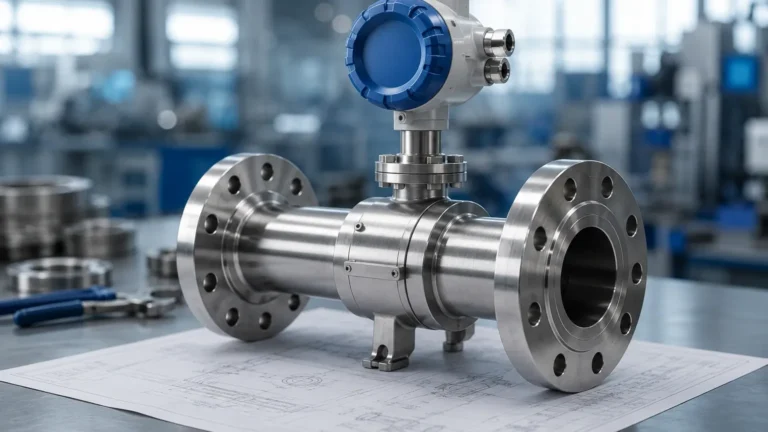
In the landscape of industrial automation and process control, the level sensor transmitter serves as a critical bridge between physical liquid or solid states and digital control systems. Unlike a simple level switch, which only indicates whether a substance has reached a specific point, a level sensor transmitter provides continuous measurement, converting the detected level into a standardized electrical signal—typically 4-20mA, HART, or RS485 Modbus. This data allows for real-time monitoring, inventory management, and precise process regulation.
Selecting the appropriate level sensor transmitter requires a deep understanding of the underlying measurement principles, the physical properties of the media, and the environmental conditions of the installation site. This guide provides a technical overview of the primary technologies used in modern industrial level measurement, offering engineering insights for selection and implementation.
Measurement Principles of Level Sensor Transmitters
Before selecting hardware, it is essential to understand the physics of how different transmitters interact with the medium. Industrial level measurement generally falls into two categories: contact and non-contact methods.
Radar Level Measurement (ToF)
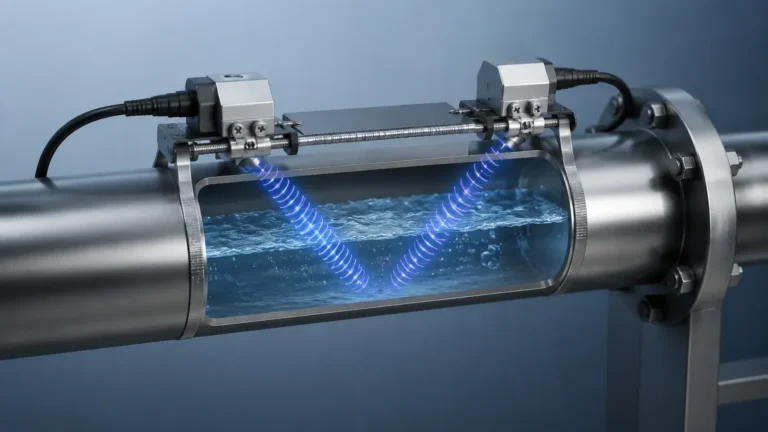
Radar transmitters utilize Time of Flight (ToF) technology. The device emits high-frequency electromagnetic waves (microwaves) toward the product surface. These waves are reflected back to the sensor. The transmitter measures the time difference between emission and reception to calculate the distance.
* Non-Contact Radar: Emits waves through the air. It is highly effective for corrosive media or high-temperature applications because the sensor does not touch the liquid.
* Guided Wave Radar (GWR): Uses a physical probe (rod or cable) to guide the microwave signal. This is particularly useful in low-dielectric liquids or applications with heavy foam, as the probe concentrates the signal energy.
Ultrasonic Level Measurement
Similar to radar, ultrasonic transmitters use ToF, but instead of electromagnetic waves, they utilize sound waves. A transducer emits an ultrasonic pulse that reflects off the surface of the medium. The time taken for the echo to return is proportional to the distance. Because sound speed is affected by air temperature, these transmitters typically include an integrated temperature sensor to compensate for fluctuations and maintain accuracy.
Hydrostatic Level Measurement
This principle is based on the relationship between liquid height and the pressure exerted at the base of a vessel. The formula $P = \rho \cdot g \cdot h$ (where $P$ is pressure, $
ho$ is density, $g$ is gravity, and $h$ is height) allows the transmitter to determine the level by measuring the head pressure. Hydrostatic transmitters are often submersible or mounted to the bottom of a tank via a flange or thread.
Magnetic Level Measurement
Magnetic level transmitters often work in conjunction with magnetic level gauges. A float containing a permanent magnet moves with the liquid level inside a bypass chamber. The transmitter, mounted on the outside of the chamber, detects the position of the float via a series of reed switches or a magnetostrictive element, converting that position into a continuous signal.
Technology Comparison and Selection Criteria
Choosing the right level sensor transmitter involves balancing accuracy requirements, chemical compatibility, and budget. The following table summarizes the performance of common technologies across various process conditions.
| Feature | Radar (Non-Contact) | Ultrasonic | Hydrostatic | Guided Wave Radar |
| :— | :— | :— | :— | :— |
| Accuracy | High (±1mm to ±3mm) | Moderate (±0.25% of range) | Moderate (±0.1% to ±0.5%) | Very High (±2mm) |
| Media Type | Liquids, Solids, Slurries | Liquids, Coarse Solids | Liquids only | Liquids, Interface |
| Pressure Range | Up to 160 bar | Atmospheric | Up to 40 bar | Up to 400 bar |
| Temperature | Up to +450°C | -40°C to +80°C | -40°C to +120°C | Up to +450°C |
| Foam/Vapor | Excellent resistance | Poor (Signal absorption) | Unaffected | Good resistance |
| Installation | Top-mounted | Top-mounted | Bottom or Submerged | Top-mounted |
For engineers looking to explore specific models and technical specifications, you can Review product options and application support on our Main Page to find tailored solutions for chemical, water treatment, or oil and gas sectors.
Detailed Analysis of Transmitter Types
1. Radar Level Meters
Modern radar transmitters, particularly those operating at 80GHz frequency, offer narrow beam angles. This is a significant advantage in tanks with internal obstructions like agitators, heating coils, or ladders. The 80GHz signal can easily "miss" these obstacles, providing a cleaner return signal from the liquid surface. Radar is the preferred choice for volatile organic compounds (VOCs) and high-pressure reactors where the dielectric constant of the medium is sufficient to reflect the signal.
2. Ultrasonic Level Sensors
Ultrasonic transmitters are the cost-effective workhorse for water and wastewater applications. They are ideal for open channel flow measurement and plastic storage tanks. However, they have distinct limitations: they cannot operate in a vacuum (sound requires a medium to travel) and are sensitive to heavy foam, which absorbs the sound energy, and heavy dust, which can scatter the signal.
3. Hydrostatic Level Transmitters
For deep wells, reservoirs, or vented tanks, hydrostatic transmitters offer a reliable, contact-based solution. In a submersible configuration, the transmitter is lowered to the bottom of the tank. A critical component here is the vented cable, which allows the internal side of the pressure diaphragm to be open to atmospheric pressure, automatically compensating for changes in barometric pressure. This ensures that the measurement reflects only the liquid column height.
4. Magnetic Level Gauges and Transmitters
In high-risk industries like oil and gas, magnetic level gauges provide a redundant system. The visual indicator works without power, while the attached transmitter sends data to the PLC. This "dual-check" capability is vital for safety-critical boiler drum levels or toxic chemical storage where visual verification is required by regulation.
Installation Considerations and Best Practices
Correct installation is as important as selecting the right technology. Even the most advanced level sensor transmitter will fail to provide accurate data if poorly positioned.
* The Dead Zone (Blocking Distance): Every ToF transmitter (Radar and Ultrasonic) has a "dead zone" directly beneath the sensor where it cannot measure. Ensure the maximum liquid level never enters this zone, or the sensor will provide a false reading or an error signal.
* Nozzle Geometry: For radar and ultrasonic units, the mounting nozzle should be as short and wide as possible. If the nozzle is too narrow or long, the signal may reflect off the nozzle walls before reaching the media, causing "ringing" or false echoes.
* Turbulence and Agitation: In tanks with agitators, use a stilling well or a guided wave radar to protect the measurement from surface turbulence. For non-contact radar, software-based "false echo suppression" can be used to map out the reflections from agitator blades.
* Submersible Anchoring: Hydrostatic sensors in moving water (like a river or an agitated tank) should be housed in a protective pipe or anchored to prevent the sensor from moving, which would introduce pressure spikes and noise into the signal.

Limitations and Common Risks
While highly versatile, level sensor transmitters are not "one size fits all." Engineers must be aware of the following risks:
1. Dielectric Constant (Dk): Radar signals rely on the difference in dielectric constants between the air/gas and the liquid. If the Dk of the liquid is too low (e.g., certain oils or liquefied gases), the signal may pass right through the liquid and reflect off the tank bottom. In these cases, guided wave radar with a coaxial probe is necessary.
2. Build-up and Coating: In wastewater or slurry applications, material can build up on the sensor face or probe. While some radar units can "see through" thin coatings, heavy build-up on an ultrasonic transducer will eventually block the signal entirely.
3. Gas Stratification: In tanks containing different gases, the speed of sound can change unpredictably, causing ultrasonic sensors to be off by several centimeters. Radar, which travels at the speed of light, is unaffected by gas composition.
Frequently Asked Questions (FAQ)
Q: Can I use an ultrasonic transmitter on a vacuum tank?
A: No. Sound waves require a medium (like air or gas) to travel. In a vacuum, the ultrasonic pulse cannot propagate. Radar is the correct choice for vacuum applications.
Q: How does temperature affect hydrostatic level measurement?
A: Temperature affects the density ($
ho$) of the liquid. Since the transmitter measures pressure, if the density changes due to temperature but the transmitter is programmed for a fixed density, the calculated height will be slightly inaccurate. High-end transmitters can compensate for this if integrated with a temperature sensor.
Q: What is the benefit of a 4-20mA HART output?
A: HART (Highway Addressable Remote Transducer) allows the digital signal to be superimposed on the 4-20mA analog loop. This enables remote configuration, diagnostics, and the transmission of multiple variables (like level and temperature) over a single pair of wires.
Q: When should I choose Guided Wave Radar over Non-Contact Radar?
A: Choose Guided Wave Radar (GWR) when you have very low dielectric media, heavy foam, or when you need to measure the interface between two liquids (e.g., oil and water). GWR is also better suited for narrow tanks with many internal obstructions.
Conclusion
The implementation of a level sensor transmitter is a foundational step in optimizing industrial processes. By understanding the specific strengths and limitations of radar, ultrasonic, and hydrostatic technologies, engineers can ensure long-term reliability and accuracy. Whether managing water resources or monitoring complex chemical reactions, the right transmitter provides the data necessary for safety, efficiency, and environmental compliance.
For further technical guidance or to explore our full range of industrial measurement instruments, please visit our Main Page for comprehensive product data and engineering support.