Liquid Samplers
Liquid Samplers
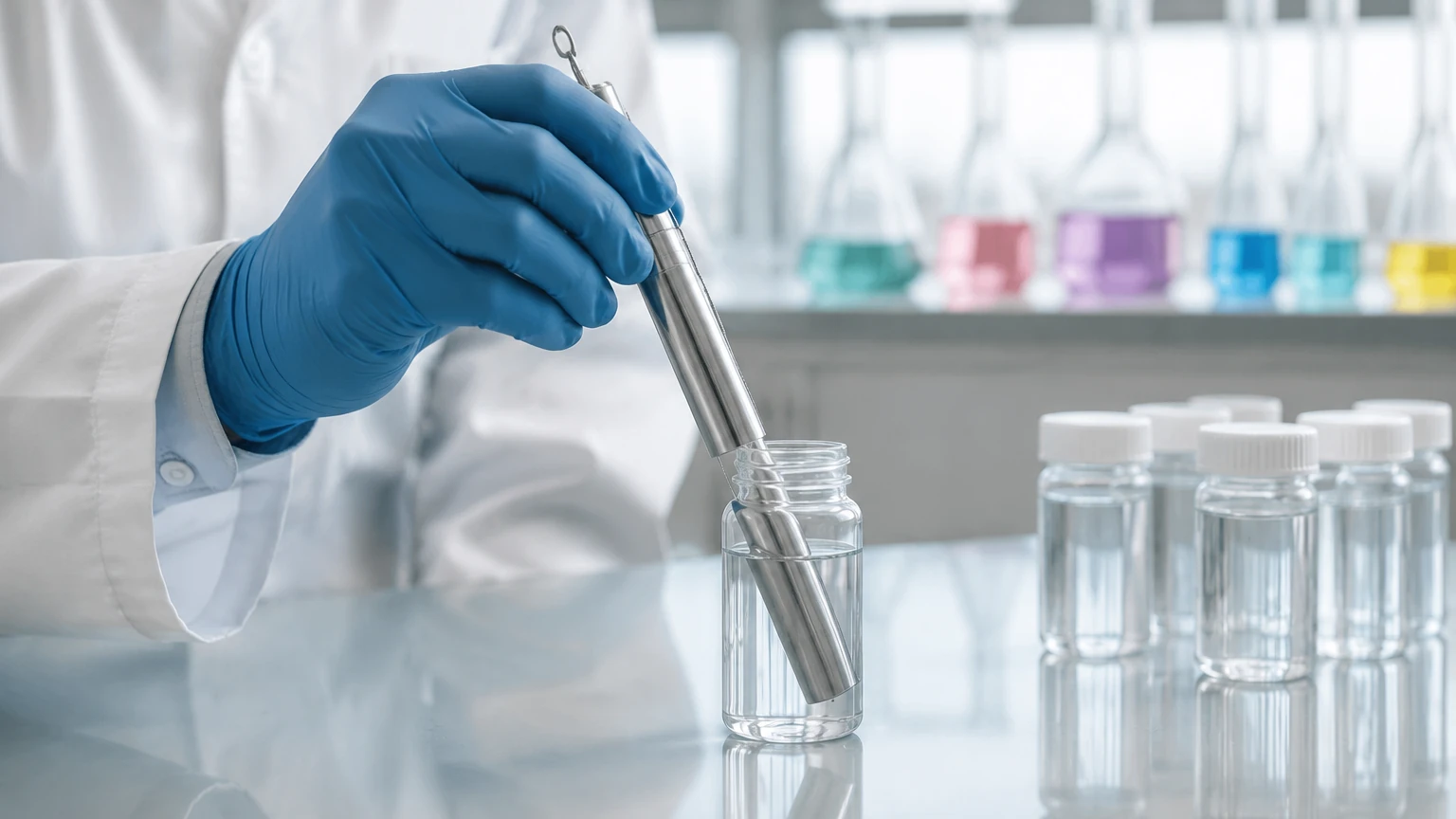
In industrial process management, the ability to analyze the chemical and physical properties of a fluid is as critical as monitoring its volume or pressure. Liquid samplers are specialized instruments designed to extract a representative portion of a liquid from a source—such as a tank, open channel, or pressurized pipe—for laboratory analysis or real-time monitoring. While level measurement instruments provide data on "how much" material is present, liquid samplers provide the data on "what" that material is.
For engineers and plant managers in sectors like water treatment, chemical processing, and oil and gas, selecting the correct sampling technology is essential for regulatory compliance, quality control, and process optimization. This guide explores the principles of liquid sampling, its integration with level measurement systems, and the technical criteria for selecting the appropriate equipment.
Understanding Liquid Sampling Principles
Before selecting a sampler, it is necessary to understand the physics of how these devices move liquid from the source to the container. Liquid samplers generally operate based on three primary transport principles: vacuum-pressure, peristaltic pumping, and gravity flow.
Vacuum-Pressure Sampling
Vacuum-pressure samplers use a vacuum pump to create a pressure differential that draws the liquid into a calibrated metering chamber. Once the chamber is full, the vacuum is released, and the sample is discharged into a collection bottle. This method is highly accurate in terms of volume repeatability and is often preferred for applications where the sample must not come into contact with mechanical pump components, reducing the risk of cross-contamination.
Peristaltic Pump Sampling
Peristaltic samplers utilize a rotating roller assembly that compresses a flexible tube to create a vacuum. This suction draws the liquid through the tube and into the sample container. The main advantage of peristaltic pumps is that the liquid only touches the interior of the tubing, making them ideal for corrosive chemicals or fluids with suspended solids. However, the tubing is a wear item that requires regular replacement to maintain suction lift performance.
Representative Sampling Methods
Beyond the mechanical transport, the method of timing the sample is critical for accuracy:
* Time-Proportional Sampling: Samples are taken at fixed time intervals (e.g., every 30 minutes). This is suitable for stable processes.
* Volume-Proportional (Flow-Proportional) Sampling: Samples are taken based on the volume of fluid passing a point (e.g., every 1,000 liters). This requires integration with a flow meter.
* Event-Based Sampling: Sampling is triggered by a specific condition, such as a pH spike or a level threshold reached in a tank.
The Synergy Between Level Measurement and Sampling
Liquid samplers rarely operate in isolation. In most industrial setups, they are part of a broader instrumentation loop that includes level measurement. For instance, in a wastewater treatment plant, an ultrasonic or radar level meter monitors the height of the fluid in a flume to calculate flow rate. This flow data is then used to pace the liquid samplers, ensuring that the collected composite sample accurately reflects the total discharge over a 24-hour period.
When designing a monitoring station, engineers often look to the Main Page of instrumentation providers to find compatible level transmitters that can provide the 4-20mA or Modbus signals required to trigger a sampler. Accurate level data ensures that the sampler's suction intake remains submerged and prevents the system from attempting to draw a sample from an empty tank, which could damage vacuum pumps or peristaltic motors.
Key Evaluation Criteria for Industrial Liquid Samplers
Selecting liquid samplers requires a detailed assessment of the application environment and the physical properties of the liquid. The following criteria should be confirmed before procurement:
1. Suction Lift and Distance
Most automatic samplers have a maximum vertical suction lift of approximately 6 to 8 meters (20 to 26 feet). If the liquid surface is deeper than this, a submersible pump or a pressurized system may be required. The horizontal distance between the sampler and the source also affects the transport velocity, which must be high enough (typically >0.5 m/s) to prevent suspended solids from settling in the intake line.
2. Chemical Compatibility
The wetted parts—including the intake strainer, suction line, and internal valves—must be compatible with the process fluid. Common materials include PVC, PTFE (Teflon), and 316 Stainless Steel. For petrochemical applications, explosion-proof (ATEX/IECEx) ratings are often mandatory for the sampler housing.
3. Sample Preservation
Many biological and chemical samples are temperature-sensitive. In these cases, refrigerated liquid samplers are necessary to maintain the sample at 4°C (±1°C) to inhibit bacterial growth or chemical degradation until the bottles can be transported to a laboratory.
4. Container Configuration
Samplers can be configured for single-bottle composite sampling (where all samples go into one large container) or multi-bottle discrete sampling (where each sample goes into a separate bottle for time-series analysis). The choice depends on whether the goal is to find the average concentration or to identify when a specific contamination event occurred.
Technical Comparison of Sampling Technologies
| Feature | Vacuum-Pressure Samplers | Peristaltic Pump Samplers | Gravity/Bypass Samplers |
| :— | :— | :— | :— |
| Volume Accuracy | High (±0.5% typical) | Moderate (±5% typical) | Low |
| Solids Handling | Excellent (high velocity) | Moderate | Depends on valve size |
| Maintenance | Low (few moving parts) | Moderate (tube replacement) | Low |
| Best Use Case | High-precision industrial discharge | General wastewater/environmental | Pressurized process lines |
| Suction Lift | Up to 8 meters | Up to 7 meters | N/A (requires pressure) |
Installation Guidelines and Best Practices
Proper installation is the most significant factor in ensuring the longevity and accuracy of liquid samplers. Engineers should follow these standard practices:
* Intake Placement: The intake strainer should be positioned in the center of the flow stream, away from the bottom where heavy sediment settles and away from the surface where oils and grease accumulate. In open channels, it should be placed upstream of any level-measuring weir or flume to avoid turbulence.
* Line Slope: The suction line must have a continuous downward slope toward the source. This allows the line to drain completely between samples, preventing cross-contamination and protecting the line from freezing in cold climates.
* Power Supply: While portable samplers run on 12V DC batteries, stationary units usually require 110V/230V AC. Ensure that the power source is stable, as voltage drops can affect the timing and pump speed of the sampler.
* Integration with Level Sensors: If using the sampler for flow-proportional sampling, ensure the level meter (such as those found on the Main Page) is calibrated correctly. A 1% error in level measurement can lead to significant errors in the totalized flow and, consequently, the representativeness of the sample.
Limitations and Mitigation of Sampling Risks
Despite their automation, liquid samplers have inherent limitations that must be managed:
* Volatile Organic Compounds (VOCs): Standard vacuum or peristaltic sampling can cause "off-gassing" of volatile components due to the pressure changes. For VOC analysis, specialized bladder pumps or closed-loop samplers are required.
* Cross-Contamination: If the system does not perform a "pre-rinse" or "post-purge" (blowing air through the line to clear it), residues from the previous sample may remain. Most modern industrial samplers include an automated air purge cycle as a standard feature.
* Blockages: In high-solids applications, such as raw sewage or pulp slurries, the intake strainer can become blinded. Regular manual cleaning or the use of high-pressure back-flush systems is necessary to maintain operation.
Frequently Asked Questions (FAQ)
Q: How often should the suction tubing be replaced in a peristaltic sampler?
A: In continuous use, tubing should typically be inspected monthly and replaced every 3 to 6 months. However, if the liquid is abrasive or contains high levels of chemicals that degrade elastomers, replacement may be required more frequently.
Q: Can liquid samplers be used for high-temperature fluids?
A: Most standard samplers are rated for fluids up to 40°C or 50°C. For higher temperatures, a cooling coil or heat exchanger must be installed in the sample line to protect the instrument's internal components.
Q: What is the difference between a composite and a discrete sample?
A: A composite sample is a single container filled with multiple small aliquots over time, representing the "average" of the fluid. A discrete sample involves filling individual bottles at specific times, allowing the lab to see how the fluid composition changed hour-by-hour.
Q: How do I ensure the sampler doesn't freeze in winter?
A: Stationary samplers should be housed in insulated, heated enclosures. For the suction line, ensuring a proper slope for self-draining is the most effective way to prevent ice blockages.
Conclusion
Liquid samplers are indispensable tools for modern industrial process control, providing the chemical data that level and flow meters cannot. By understanding the transport principles—whether vacuum-pressure or peristaltic—and ensuring proper integration with level measurement systems, facilities can maintain high standards of quality and environmental compliance. When selecting a system, always prioritize chemical compatibility, the required suction lift, and the need for refrigeration to ensure that the data generated in the lab is a true reflection of the process in the field.