Liquidine
Liquidine
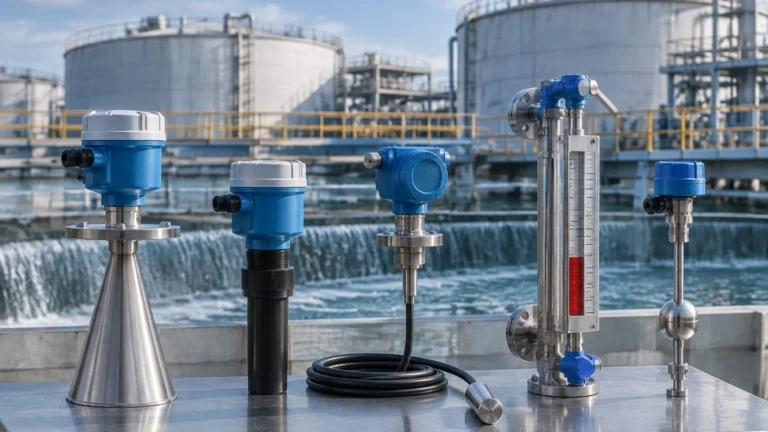
In the landscape of industrial automation and process control, the term "liquidine" is frequently associated with specialized liquid level measurement technologies, particularly those utilizing radio frequency (RF) capacitance or advanced probe-based sensing. For engineers and facility managers, selecting the correct liquid level measurement system is critical to ensuring operational safety, inventory accuracy, and process efficiency. Whether managing water treatment facilities, chemical processing plants, or oil and gas storage, understanding the underlying physics of these instruments is the first step toward a successful installation.
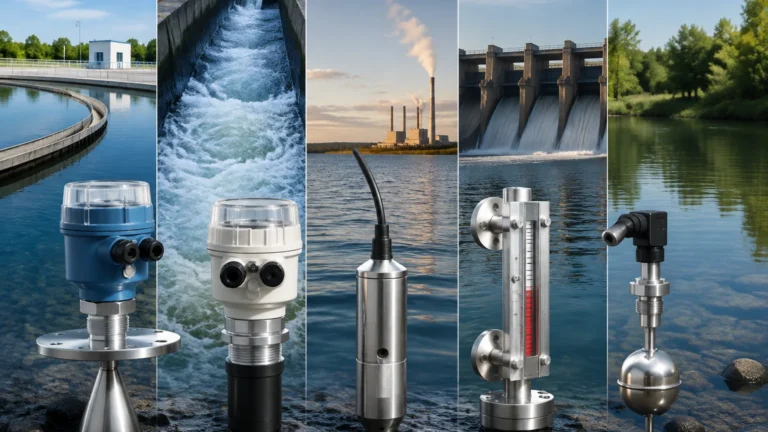
This guide explores the principles of liquid level measurement, compares the technologies often categorized under the liquidine umbrella—such as RF capacitance—with alternative methods like radar and ultrasonic sensing, and provides practical selection criteria for industrial applications.
Measurement Principles of Industrial Level Sensors
To effectively monitor liquid levels, several physical principles are employed. Each technology has specific strengths depending on the dielectric constant, conductivity, and physical state of the media.
RF Capacitance (Liquidine Principle)
RF capacitance sensors operate on the principle of an electrical capacitor. In a typical installation, the sensor probe acts as one plate of the capacitor, while the tank wall (if metal) acts as the second plate. The liquid between them serves as the dielectric material. As the level of the liquid rises and falls, the total capacitance of the system changes because the dielectric constant of the liquid is significantly different from that of air.
For non-conductive liquids, the probe is usually insulated. For conductive liquids, the insulation on the probe acts as the dielectric, and the liquid itself acts as the second plate. This technology is highly versatile and can be used for both continuous level measurement and point level detection.
Radar Level Measurement
Radar level meters, such as those found on the Main Page of leading instrument manufacturers, utilize electromagnetic waves. These instruments emit a high-frequency signal (typically in the GHz range) toward the liquid surface. The time it takes for the signal to reflect back to the sensor is measured. Since the speed of light is constant, the distance—and thus the level—can be calculated with extreme precision. Radar is particularly effective in high-temperature or high-pressure environments where contact-based sensors might fail.
Ultrasonic Level Sensing
Similar to radar, ultrasonic sensors use the time-of-flight principle but rely on sound waves rather than electromagnetic waves. A transducer emits an ultrasonic pulse that reflects off the surface of the liquid. This method is non-contact and cost-effective for many water and wastewater applications. However, it is sensitive to air temperature fluctuations and the presence of heavy foam or steam, which can attenuate the sound signal.
Hydrostatic Pressure
Hydrostatic level transmitters measure the pressure exerted by a liquid column at a specific point. The pressure is directly proportional to the height of the liquid and its density ($P = \rho gh$). This is a reliable method for vented tanks and deep wells, provided the density of the liquid remains relatively constant.
Comparing Technologies: Selection Table
Choosing between a liquidine-style capacitance probe and a non-contact radar or ultrasonic sensor requires a comparison of process conditions. The following table provides a general guideline for technology selection.
| Technology | Typical Accuracy | Media Type | Max Temp (Approx.) | Max Pressure (Approx.) | Best For |
| :— | :— | :— | :— | :— | :— |
| RF Capacitance | ±0.5% to 1% | Conductive & Non-conductive | 250°C | 100 bar | High-pressure tanks, interface measurement |
| Radar (80GHz) | ±1 mm to 3 mm | Most liquids/slurries | 450°C | 160 bar | Chemical reactors, volatile liquids, precision |
| Ultrasonic | ±0.25% of range | Water-based liquids | 80°C | 3 bar | Open channels, sumps, water treatment |
| Hydrostatic | ±0.1% to 0.5% | Homogeneous liquids | 120°C | N/A (Submersible) | Deep wells, water tanks, fuel storage |
Key Evaluation Criteria for Liquid Level Measurement
When evaluating a liquidine solution or any level measurement instrument, engineers must confirm several parameters to ensure long-term reliability.
1. Dielectric Constant (εr): For RF capacitance and radar sensors, the dielectric constant of the liquid is paramount. Radar requires a minimum εr (usually >1.4) to reflect the signal, while capacitance sensors require a stable εr to maintain calibration accuracy.
2. Chemical Compatibility: The wetted parts of the sensor (e.g., PTFE, 316L Stainless Steel, Hastelloy) must be resistant to the process media. This is especially critical for contact-based liquidine probes in corrosive chemical environments.
3. Process Dynamics: Consider whether the tank features an agitator, internal baffles, or heating coils. Non-contact radar with a narrow beam angle is often preferred in tanks with internal obstructions to avoid false reflections.
4. Vapor and Foam: Heavy foam can absorb ultrasonic and radar signals. If foam is a persistent issue, a stilling well or a contact-based technology like a magnetic level gauge or a capacitance probe may be more effective.
Installation Considerations and Best Practices
Proper installation is as important as selecting the right technology. Failure to follow engineering best practices often leads to signal instability or premature sensor failure.
* The Dead Zone (Blocking Distance): All top-mounted sensors have a "dead zone" directly beneath the sensor where measurement is not possible. For ultrasonic sensors, this might be 0.25m to 0.5m. Ensure the sensor is mounted high enough so the maximum liquid level never enters this zone.
* Mounting Position: Sensors should generally be mounted away from the tank wall (to avoid interference) and away from the fill inlet (to avoid turbulence and splashing). For radar and ultrasonic units, the sensor must be perpendicular to the liquid surface.
* Stilling Wells: In applications with heavy turbulence or surface agitation, installing the sensor inside a stilling well (a vertical pipe) can provide a calm surface for more accurate readings. This is a common practice for liquidine probes in oil-water separators.
* Grounding: For RF capacitance sensors, proper grounding of the tank and the instrument is essential. In non-metallic tanks, a ground rod or a dual-probe configuration must be used to provide a reference point for the capacitance measurement.
Limitations and Common Risks in Liquid Level Monitoring
Every technology has its boundaries. Recognizing these limitations prevents costly downtime.
* Build-up and Coating: Contact-based probes can suffer from material build-up. While many modern liquidine-style transmitters include "active shield" technology to ignore coating on the probe, extreme build-up can still cause measurement drift.
* Density Fluctuations: Hydrostatic transmitters are sensitive to changes in liquid density. If a process involves mixing different chemicals or significant temperature swings that change the liquid's density, the level reading will become inaccurate unless compensated.
* Environmental Interference: Ultrasonic sensors can be affected by high wind speeds in outdoor open-channel applications or by nitrogen blanketing in closed tanks, as the speed of sound changes in different gases.
Frequently Asked Questions (FAQs)
Q: Can liquidine-style capacitance probes be used for solids?
A: Yes, RF capacitance technology is frequently used for point level detection of bulk solids and powders, provided the material has a consistent dielectric constant.
Q: What is the advantage of 80GHz radar over 26GHz radar?
A: 80GHz radar offers a much narrower beam angle and a shorter wavelength. This allows for better performance in small tanks, better penetration through steam, and the ability to ignore internal tank obstructions more effectively.
Q: How often do these sensors require recalibration?
A: Non-contact radar and ultrasonic sensors typically require very little maintenance once commissioned. Hydrostatic and capacitance sensors should be checked annually, especially if the media properties (like density or dielectric constant) are prone to change.
Q: Is it possible to measure the interface between two liquids?
A: Yes, liquidine probes (capacitance) and Guided Wave Radar (GWR) are excellent for interface measurement, such as the boundary between oil and water, because they can detect the change in dielectric properties between the two layers.
Conclusion
Selecting a level measurement solution requires a thorough understanding of the process environment and the physical properties of the liquid. While "liquidine" technologies like RF capacitance offer robust solutions for high-pressure and interface applications, modern advancements in non-contact radar and ultrasonic sensing have expanded the options available to process engineers. By matching the measurement principle to the specific needs of the application, facilities can achieve higher precision and reduced maintenance requirements. For a comprehensive overview of available technologies and technical specifications, professionals are encouraged to Review product options and application support to find the optimal fit for their industrial requirements.